
Garden Storage under £200 - Best Deals in UK!
Showing all 12 results
-
33% OFF: 3’6 x 2′ Forest Shiplap Pent Midi Wooden Garden Storage – Outdoor Patio Storage (1m x 0.55m) £179.9933%

-
28% OFF: 3’6 x 2′ Forest Shiplap Pent Midi Wooden Garden Storage – Outdoor Patio Storage (1m x 0.55m) £194.9928%
-
26% OFF: 6’5 x 2’10 Forest Overlap Double Door Wooden Bike Shed / Pressure Treated (no floor) £199.9926%

-
25% OFF: 3’6 x 2′ Forest Overlap Tall Pent Wooden Garden Storage Tool Store – Outdoor Patio Storage (1m x 0.55m) £170.9925%

-
25% OFF: 3’6 x 2′ Forest Overlap Pent Midi Wooden Garden Storage – Outdoor Patio Storage (1m x 0.55m) £164.9925%

-
24% OFF: 3’7 x 1’8 Forest Overlap Tall Apex Wooden Garden Storage Tool Store – Outdoor Patio Storage (1.1m x 0.5m) £189.9924%

-
18% OFF: Toomax Extra Large 842L Outdoor Shed £170.9918%

-
16% OFF: 2′ x 2′ Wooden Garden Storage Unit – Shire Garden Store 22 £174.9916%

-
15% OFF: 2’4 x 1’3 Shire Large Plastic Garden Storage Cupboard (0.73m x 0.39m) £104.9915%

-
13% OFF: 5′ x 3′ Keter Hideaway Large 1200L Plastic Storage Unit/ Wheelie Bin Store (1.46m x 0.82m) £199.9913%

-
10% OFF: 5’1 x 2’4 Keter Rockwood Plastic Garden Storage Box – Brown (1.55m x 0.72m) £179.9910%

-
5% OFF: 2′ x 2′ Wooden Garden Storage Unit – Shire Garden Store 22 £197.995%
Garden storage under £200 offers compact sheds, lockable boxes, log stores and deck chests that keep tools, cushions and garden kit tidy without pushing your budget too far.
Small budget, proper storage, less clutter
Choosing garden storage under £200 does not mean settling for something flimsy or awkward. In this price range, you can still find practical pieces that help clear patios, protect cushions from sudden rain, and keep hand tools from ending up in a jumble by the back door. The trick is to match the storage type to what you actually need to put away, because a slim vertical cabinet and a low deck box do very different jobs, even if they cost about the same.
For buyers watching spend, this category is useful because it brings together small sheds, storage boxes, bench-style units and log stores in one place. That makes it easier to compare footprint, access, and weather resistance before you order. It’s not only about price either; it’s about making a modest space feel better organised without overfilling it with bulky kit.
What you’ll usually find in this price band
When people search for garden storage under £200, they are often looking for a middle ground between a flimsy box and a full-size shed. The range tends to include different shapes and constructions, each with its own strengths:
Bestseller der Kategorie Garden Storage under £200
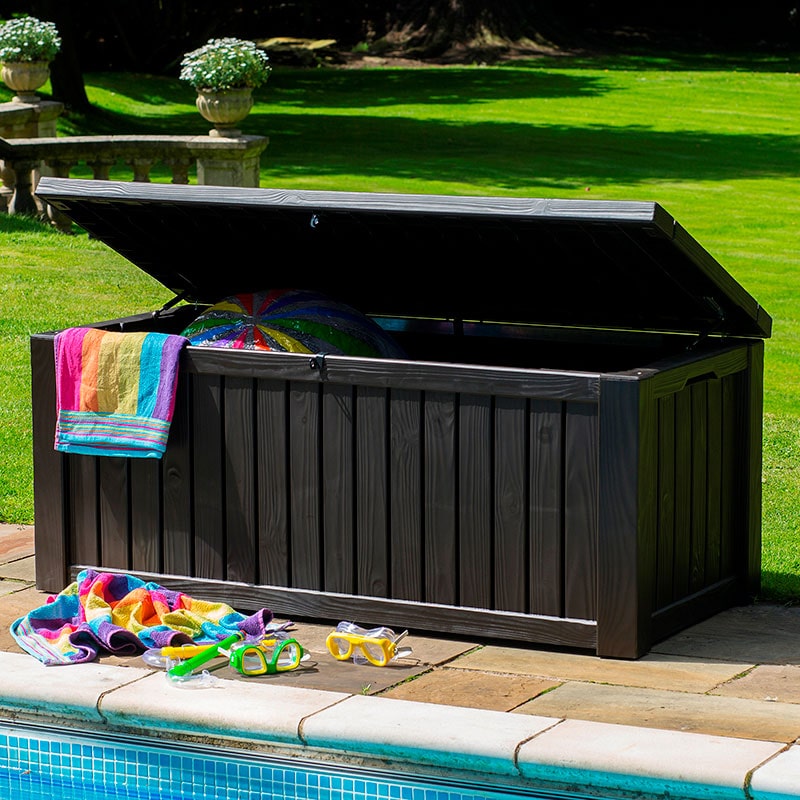


- Deck boxes – low, chest-like storage for seat pads, kids’ outdoor toys, small tools and garden games.
- Vertical storage cabinets – tall and narrow, suited to slim gardens, side passages and corners where floor space is tight.
- Horizontal storage units – wider than they are tall, often easier for stacking cushions, pots or watering cans.
- Mini sheds – compact enclosed units for tools, hoses and general garden clutter that you’d rather not leave out.
- Log stores – open or partly enclosed structures for wood, usually chosen for airflow and easy access.
- Storage benches – dual-purpose pieces that give you a seat and a hidden compartment, handy for terraces and smaller patios.
The best choice depends on whether you need quick access, weather protection, or a piece that blends into the garden without taking over. A deck box may be simpler to open every day, while a mini shed gives more separation between stored items and the rest of the space. Different jobs, different shapes.
Deck boxes that do more than hide the mess
Deck boxes are one of the most useful options in this category because they sit neatly on patios, decking or gravel and handle a mixed load of items. They’re often chosen for cushions, lanterns, small watering accessories and lightweight tools. Their lid format means you can access everything from the top, which is practical when space in front is limited.
Compared with a shed, a deck box is usually quicker to place and easier to use. Compared with an open rack, it keeps things out of sight and offers better protection from dust and splashes. Some buyers like them because they are less visually heavy than a larger structure, especially in a courtyard or town garden where every bit of room matters.
If you’re comparing sizes, look at the internal height as well as the external length. A box may seem roomy on the outside but not take taller items like a pump sprayer or folded parasol base. That is one of those details people often miss until the box arrives and the items won’t quite fit. Bit annoying, but easy to avoid with a quick check.
Vertical cabinets for narrow gaps and awkward corners
Vertical storage cabinets are a smart pick when the garden has a slim side return, a narrow patio edge or a corner where a wider unit would block movement. Their tall footprint makes them useful for long-handled tools such as spades, brooms, rakes and brushes. Many buyers also use them for smaller pots, spare feed bags or folded netting.
The main difference between a vertical cabinet and a deck box is access. Cabinets usually open like a cupboard, so you can stand items upright inside and see them more easily. That makes them good for mixed-height contents. They also tend to feel less squat, which helps in smaller outdoor spaces where you want storage without a heavy visual block.
When looking at these, check the door opening and internal shelving layout if the listing shows it. A cabinet with a deep single compartment works well for tools, while one with shelves can be better for smaller containers. There’s no point paying for height if the inside is awkwardly split for what you want.
Mini sheds when you want storage to feel a bit more separate
Mini sheds are for buyers who want a proper enclosed space but do not have room, or budget, for a full garden shed. Under £200, these are generally compact and designed for smaller collections of equipment rather than bulkier items like bikes or large furniture. Even so, they can make a real difference if your current setup is just a cluster of items under a tarp or leaning against a fence.
Compared with a box or cabinet, a mini shed gives a stronger sense of enclosure. That can be handy if you want gardening bits kept out of everyday sight, or if the garden is shared and you need a defined storage spot. They often suit patios, narrow lawns, and side alleys where a little structure is better than nothing, but a full-sized shed would overwhelm the area.
What to notice here is the opening style. Some mini sheds have a single front access point, while others use double doors, which can make larger tools easier to move in and out. If you’re storing awkward shapes, like a long-handled hoe or a folded parasol, wider access can save a lot of fiddling about.
Log stores and open-sided designs for airflow
Log stores are different from sealed garden boxes because they are made with air circulation in mind. That matters if you want to keep firewood stacked tidily while allowing moisture to escape. In the under-£200 range, log stores often focus on simple, practical frames that keep wood off the ground and neater than a loose pile against the wall.
They are not the right choice for everything, though. A log store is ideal for firewood, kindling and sometimes garden stakes, but it is not designed to hide cushions or delicate items. The open structure helps with drying, yet it gives less privacy and less all-round weather cover than a closed chest. So if you need a bit of both, it’s worth thinking about whether your priority is drying, concealment, or day-to-day convenience.
Some buyers choose open-sided styles because they feel lighter in the garden. They can sit along a fence or beside a shed without looking too boxy. That visual difference matters more than people expect, especially in smaller gardens where every structure is visible from the house.
Storage benches that earn their place twice
A storage bench is a tidy compromise when seating and storage need to share the same spot. Under £200, these are often chosen for courtyards, balcony-like patios or family gardens where extra sitting space is handy. The hidden compartment underneath can store seat pads, outdoor toys, gloves or smaller bits that otherwise drift around the garden.
The benefit is simple: you are not using space for just one purpose. That matters when you are trying to keep a garden usable rather than packed with separate items. Compared with a standard storage box, a bench gives you a place to sit while shoes are off, while gardening jobs are sorted, or while kids muck about outside. It’s functional without feeling too utilitarian.
One thing to watch is access. Because the seating top also acts as the lid, you’ll want to think about how often you’ll open it. For items used daily, a bench can be very handy. For things you only need once in a while, a dedicated box may be a little easier. It’s a small difference, but it can shape how annoyed you feel after a month.
Materials: what changes the feel, the weight and the finish
In garden storage under £200, material choice affects more than appearance. It changes the weight, the feel of the doors or lid, how easy it is to move into position, and how the unit sits in the garden. Common options include plastic resin, wood, and metal, each with a different look and level of practicality.
- Plastic resin tends to be lighter and easier to position, with a cleaner wipeable finish and a more neutral, modern look.
- Wood often blends in well with planting and fencing, giving a more traditional garden feel, though the appearance can vary a lot depending on finish.
- Metal can feel more rigid and secure, especially for compact cabinets, but may look more industrial depending on the design.
There are trade-offs. Plastic is often easier to handle and can suit busy family gardens, while wood may be chosen for a softer, more natural look. Metal can feel neat and structured, but it may not suit every setting. If your garden is already full of timber planters and a wooden fence, a resin unit might stand out less than expected, and that may be exactly what you want.
Shapes and layouts that change how easy it is to live with
The shape of a storage piece matters almost as much as the label on the product page. A low chest is easier to keep beside seating, a tall cabinet uses height instead of width, and a long horizontal box can fit under a window or along a wall. Choosing the wrong shape is one of the quickest ways to make storage feel awkward.
Think about how you move around the garden. If you need to walk past the unit every day, a narrower footprint may be better. If the unit will sit at the back edge of a patio, a wider chest could be more convenient and less cluttered to use. A fence line might take a slim cabinet nicely, while a terrace corner can suit a bench or low box.
It also helps to picture the lid or door clearance. A storage box that opens upwards needs free space above it, whereas a cabinet needs room at the front. Those small spatial details often decide whether the unit feels like part of the layout or something you keep bumping into.
What people usually store in these pieces
Garden storage under £200 works best when the contents are fairly specific. These units are usually chosen for:
- cushions and seat pads
- hand tools and trowels
- watering cans and hose accessories
- children’s outdoor toys
- plant pots, trays and small containers
- log piles or firewood
- folded covers and garden textiles
The key is not to overfill the unit with items that need a very different storage environment. Cushions and textiles benefit from a closed box or cabinet. Logs need airflow. Tools often work best in a tall cabinet or mini shed where they can stand upright. If you mix all of them in one place, the storage can become more frustrating than useful.
Useful buying points that make a real difference
Before choosing from the garden storage under £200 range, there are a few checks that are worth doing. These are not flashy details, but they do affect whether the unit feels sensible once it’s in place.
- Footprint – measure the exact space, including room for opening lids or doors.
- Internal height – useful for bottles, tools and taller items that do not lie flat.
- Access style – top-opening, front-opening or double-door access each suit different contents.
- Visual weight – some units look bulky in a small garden, even when the measurements are reasonable.
- Weather protection level – closed boxes offer more cover than open log stores, so match the unit to the items.
- Placement – against a fence, along a wall, under cover or out in the open changes what type makes sense.
These details help you avoid buying something that looks fine online but turns out to be slightly wrong in the garden. Happens more than people admit. A unit can be the right price and still be the wrong shape, and then it ends up being used only half the time.
Why this category is worth browsing properly
The appeal of garden storage under £200 is that it gives you room to sort out the mess without turning the budget into a project of its own. You can compare deck boxes, cabinets, mini sheds, bench storage and log stores side by side and decide what suits the way your garden is actually used. That matters because storage is not just about hiding things away; it shapes how easy the outdoor space is to use day after day.
A good choice can make the garden feel less crowded, make tools easier to reach, and stop seasonal kit from being scattered across the patio. It can also help the space look more considered, which is useful if you want the garden to feel tidy without spending on larger structures. In other words, the right storage piece does a job quietly, and that is often what makes it worth buying in the first place.
Final thought: pick the shape that fits your habits
If you’re narrowing down garden storage under £200, start with the item you reach for most often. Cushions and soft furnishings usually suit a box or bench. Long tools prefer a cabinet. Logs need airflow. Shared gardens and tight corners often benefit from compact enclosed units rather than oversized storage that gets in the way.
Once the shape matches the job, the budget becomes easier to work with. That’s the bit that buys satisfaction later on: not just a storage piece that fits the space, but one that fits the way you use the space too.
[Sassy_Social_Share]