
Garden Storage 45 sq ft / 4 m² - Best Deals in UK!
Showing the single result

Garden Storage 45 sq ft / 4 m² offers a compact, practical way to keep tools, cushions, bikes and seasonal kit neatly out of sight, with enough room for everyday garden life.
A small footprint with proper breathing room
A 45 sq ft / 4 m² garden storage space sits in that useful middle ground: bigger than a basic box, but far from needing a full outbuilding. It suits gardens where every metre matters, yet clutter still needs a proper home. This size is often chosen for lawns, patios, side returns and narrow plots because it gives you storage without swallowing the garden.
That makes it a sensible choice for households that want to keep things tidy without building something oversized. You can think of it as a category for people who need a clear, organised zone for tools, folded furniture, watering kit, planters, or the sort of bits that usually end up under a bench and never stay there.
What fits inside 4 m², really?
The exact contents depend on the shape and internal layout, but this footprint can handle more than many buyers expect. A garden storage unit of 45 sq ft may take:
Bestseller der Kategorie Garden Storage 45 sq ft / 4 m²
- Hand tools such as spades, rakes, forks and hoes
- Power tools like a mower, trimmer or blower
- Garden furniture cushions and seat pads
- Foldable chairs or a compact table
- Bikes or scooters, depending on the interior width
- Compost bins, pots and trays
- Children’s outdoor toys and play items
Some buyers underestimate how useful a small building can be once shelves, hooks or a raised floor are added. Even without a huge floor area, the vertical space can make a real difference. That is where this category often feels more flexible than a simple storage chest.
Cabin, shed or store: the shapes that change the feel
Within this size category, form matters nearly as much as floor area. A traditional apex shed gives a familiar profile and often feels easier to place in a standard garden corner. It usually offers good headroom down the centre, which helps if you want to stand tools upright or move about without ducking too much.
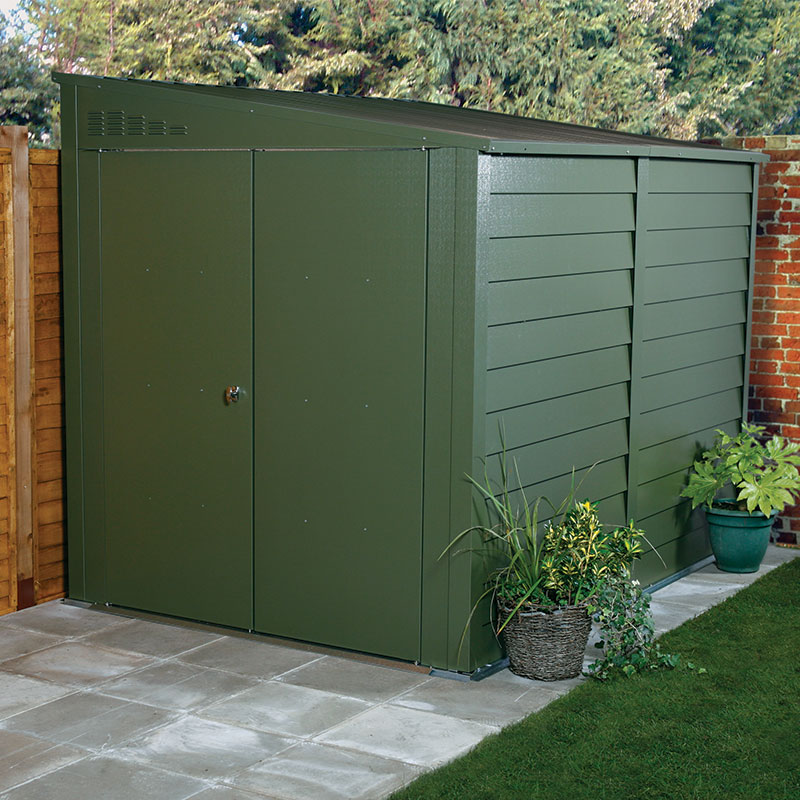
A pent storage building has a single sloping roof and a slightly more compact look, which can sit neatly against a boundary wall or fence. It often suits modern gardens where clean lines matter. Then there are lean-to designs, which use the side of another structure and can be handy where space is tight and a full freestanding unit would feel too bulky.
Some 4 m² units are closer to a compact cabin store, blending storage with a more room-like feel. These tend to have a bit more presence in the garden, and the interior can feel less boxy. That does not mean they are bigger in usable terms, but the shape can make loading and sorting easier.
Different materials, different priorities
The material you choose changes both the look and the practical use of the storage. Timber garden storage is popular because it looks at home in planting-heavy gardens and can soften the appearance of a compact structure. It often appeals to buyers who want the storage to feel part of the landscape rather than just an add-on.
Metal storage has a different character: neat, straight-edged and less inclined to absorb the garden’s mood. It can be a good fit where low-profile storage is the goal and the priority is keeping contents covered in a straightforward way. Buyers often choose metal when they want a more utilitarian finish and a precise footprint.
Plastic or resin storage in this category is usually about convenience and lightweight handling. It may suit smaller gardens, patios or renters who want something less heavy-looking. The finish can be cleaner and more uniform, though the feel is quite different from timber. If you are comparing materials, it helps to ask yourself whether you want the unit to blend in, stand out, or simply disappear into the corner.
Rooflines, doors and access: the details that make daily use easier
In a 45 sq ft / 4 m² storage unit, access matters a lot because the space is not huge. Wide double doors can make a surprisingly practical difference if you are storing a mower, barrow or folding furniture. A single door may suit lighter items and a tighter site, but it can feel less convenient when moving larger kit in and out.
The roof shape also changes how the storage works. An apex roof gives a central high point, which can be useful for hanging items or just making the space feel less compressed. A pent roof offers a lower, more directional profile, and that can be useful where height is restricted by fencing or local layout. Flat-roof styles can look neat and compact, though the internal feel is different again, with less variation in headroom.
Some units include window panels or top lights, which can help you see what you’ve stored without leaving the door open. For buyers who use the store often, this can be a small but noticeable advantage. The point is not decoration alone; it is about making the inside feel easier to use.
Why 45 sq ft can suit more gardens than you might think
This category is often chosen because it balances capacity with restraint. A bigger storage building can dominate a modest outdoor area, while a smaller box may quickly feel overfilled. The 4 m² footprint usually gives enough room for sensible sorting without turning the garden into an outdoor depot.
It can work well where you want to keep the main seating or planting areas open. That is especially useful in urban gardens, terraced homes and side passages where the available space has to do several jobs. If you are trying to separate clean storage from active garden space, this size can do that with a fair amount of efficiency.
Another reason buyers look at this size is visual balance. A garden store that is too large can pull attention away from borders, paving or lawn. A 45 sq ft unit may still be visible, of course, but it is less likely to overwhelm the setting, especially if the colour and roofline are chosen with the existing garden in mind.
Inside layout: small space, smarter sorting
The internal layout is where the difference between merely owning storage and actually using it properly becomes clear. A compact garden store works best when long tools are separated from boxes, and flat items are not left loose on the floor. Wall hooks, corner shelving and simple racks can make a modest unit feel much more useful, even though the footprint itself stays the same.
Buyers often make a choice between an open interior and a more divided one. An open layout gives freedom for larger items, but it can become untidy if everything is left in a pile. A more structured interior helps with quick access and makes it easier to keep seasonal items apart from everyday tools. That matters when you do not want to search behind a stack of bags just to find the secateurs.
If the unit will store mixed items, think about what you reach for most often. Put the frequent things near the door, and keep less-used kit further back. It is a small point, but in a 4 m² store, a good layout can save a lot of faffing about.
What to compare before choosing one
Not all garden storage in this size band behaves the same way. One unit may prioritise height, another depth, and another easy access. When comparing options, it helps to look beyond the headline size and check the usable internal dimensions, door opening, roof style and wall thickness.
- Footprint: does the external size actually fit your plot and pathways?
- Height: can you stand tools upright without awkward angles?
- Door width: will a mower, bike or chair pass through without a fight?
- Shape: apex, pent, lean-to or cabin-style?
- Material: timber, metal or plastic, depending on the look and use
- Interior layout: open space, shelves, hooks or mixed storage zones
These differences may sound small, but in a compact store they can change whether the unit feels easy to use or a bit cramped. That is why it is worth measuring the items you actually plan to keep inside, not just guessing by eye.
Good uses beyond the obvious tools-and-tin category
Although people first think of spades and lawnmowers, this category can solve other storage problems too. It is often a sensible place for garden cushions, barbecue accessories, spare pots, watering cans and even folded parasols. For homes with little indoor utility space, it can also act as a tidy buffer zone between the house and the garden.
Some buyers use it as a sort of seasonal holding area. For example, items that only come out for summer or planting season can stay together instead of being split between garage corners and the shed at the back. That keeps things easier to locate when the weather changes and you suddenly need the rake, the seed trays and the outdoor lights all at once.
For family gardens, this size is also useful because it can absorb the odd collection of things that seem to multiply outdoors: balls, helmets, folding stools, kids’ buckets, watering toys and spare covers. It is not glamorous, but it is practical, and that usually sells the idea quite well.
How the right store changes the look of the garden
A storage unit does more than hold objects. It changes how the garden feels when you look at it from the house. A neat 4 m² store can create order at the edge of the plot, which makes the whole space seem calmer and more intentional. That effect is especially noticeable if the surrounding area has been busy with pots, tools or stacked furniture.
The shape can either help or hinder that effect. A slim pent roof may seem discreet, while an apex form can feel more established. Timber finishes often sit well beside planting, gravel and decking, whereas metal and resin can look more exact and structured. None of these is automatically better; the right one depends on whether you want the unit to recede or be part of the garden’s visual language.
It is worth saying that a well-chosen store can make the rest of the space easier to enjoy. When the clutter has somewhere proper to go, the seating area feels more usable, and the planting can do more of the talking.
Buying tips that are actually useful
Before choosing a Garden Storage 45 sq ft / 4 m² unit, measure the exact spot where it will sit, including room to open the doors fully. People often measure the footprint and forget the movement around it, which can lead to a slightly annoying fit. Also check whether any overhang, guttering or roof slope changes the space needed at the top.
Think about what you are storing most often. If it is long-handled tools and a mower, door width and internal height matter more than decorative details. If you want tidy boxed storage for cushions and seasonal items, shelving potential may be more useful. If you need a unit for mixed use, an open interior with strong access will probably suit better than a compartment-heavy design.
Also consider how the unit will sit with the rest of the garden. A compact storage building placed beside a boundary can free up the centre of the garden, while a corner position may work better if you want the structure to be less visible from the house. There is a bit of judgement in that choice, and it is worth taking your time with it.
Why this category makes sense for organised outdoor living
What buyers often want from this category is simple: a place where garden things have a proper home. The appeal of 45 sq ft / 4 m² garden storage lies in how it handles everyday mess without needing a huge footprint or a complicated setup. It is big enough to be useful, small enough to stay sensible, and varied enough in style to suit different gardens.
Whether you lean towards a timber shed-style store, a pent-roof utility unit, a metal lockable box-style building or a more cabin-like form, the choice comes down to how you use your outdoor space. Some buyers want the building to blend in quietly. Others want easy access and a cleaner, more practical feel. Both approaches fit this category, which is part of the reason it stays popular.
For anyone looking to clear the patio, sort the tools and give seasonal kit a proper place, this size is a very workable middle option. It does not try to be too much. It just offers a tidy amount of storage in a form that can sit naturally in a garden, and that is often the part that makes people decide.
[Sassy_Social_Share]