
Garden Storage 35 sq ft / 3 m² - Best Deals in UK!
Showing the single result

Garden storage 35 sq ft / 3 m² for tools, cushions, bikes and seasonal kit. Compare compact sheds, tall cabinets, low stores and corner units in sizes that fit smaller gardens, patios and side return spaces.
Small footprint, proper space
Garden storage in the 35 sq ft / 3 m² range sits in that useful middle ground: not a tiny box, not a bulky shed that swallows the garden. It gives enough room for the bits that usually end up in the way, while still leaving breathing space around the rest of the plot. For many homes, this size works where a larger outbuilding would feel too dominant or simply would not fit.
What makes this category practical is the balance between capacity and compact footprint. You can store garden tools, folding chairs, hosepipes, barbecue items, plant pots, lawn care kit and a fair amount of seasonal clutter without needing to turn half the garden into storage. It is a size that often suits town gardens, narrow plots, terraced houses and shared outdoor areas where every square metre counts.
Different shapes, different jobs
This category covers more than one shape, and the shape matters as much as the size. A traditional shed-style store gives you a familiar square or rectangular layout, making it easier to stack boxes and keep long-handled tools upright. A tall vertical storage unit uses height rather than floor area, which is handy if the available space is narrow but you still want room for spades, rakes and smaller equipment. A low horizontal store can sit neatly against a fence or wall and is often chosen when access is more important than head height.
Bestseller der Kategorie Garden Storage 35 sq ft / 3 m²
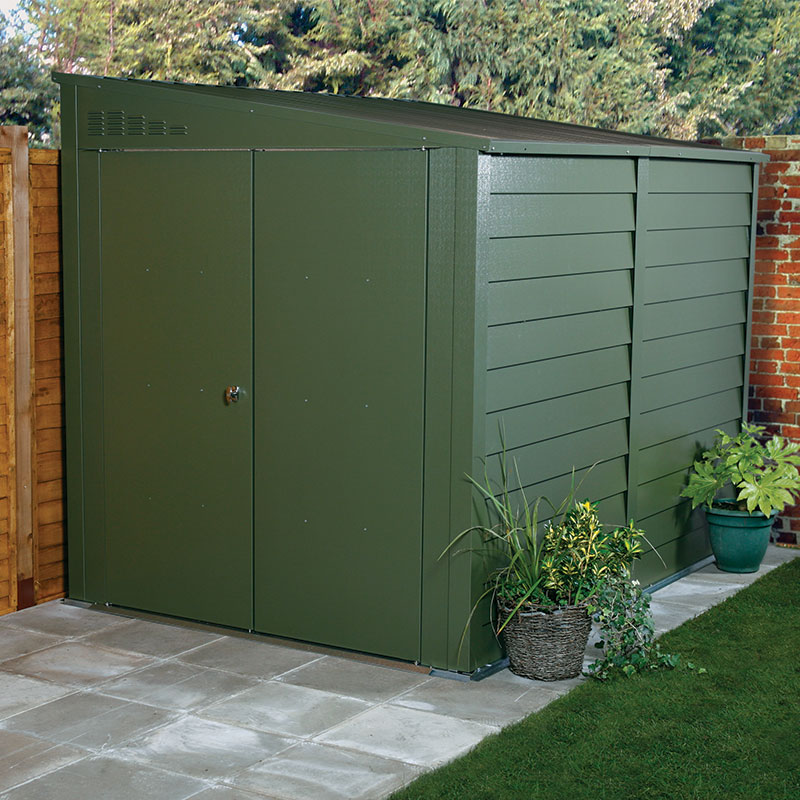
There are also corner units shaped to tuck into awkward unused spaces, plus lean-to designs that work against a boundary wall or the side of a garage. These options are useful when the garden layout is irregular or when you want the unit to look like it belongs in the space rather than sitting in the middle of it. The difference is not just visual. A corner unit may save ground space, while a lean-to can give you a cleaner path around the garden and a more organised feel overall.
What fits inside without cramming it all in
At around 35 sq ft / 3 m², the category is suited to the items people reach for often, but do not want left out in the weather. Typical use includes hand tools, pots and trays, buckets, watering cans, garden cushions, folding furniture, children’s outdoor toys and smaller power tools. Some buyers use the space for a mix of garden and household overflow, which can make sense if the unit is dry, secure and easy to open.
The key is how you arrange the interior. A well-planned 3 m² store can feel generous because the space is used vertically and not wasted on awkward gaps. Wall hooks, internal shelves and simple stacking boxes can make a big difference. Even without elaborate fittings, the right shape can help you separate long items from small ones and avoid that usual pile-up where everything leans against everything else.
Why this size suits real gardens
One reason people choose this category is that it feels manageable. Larger storage can be useful, but it can also dominate a patio, cast a shadow over planting beds or make a small garden seem tighter. A 3 m² garden storage unit tends to sit more comfortably in its setting. That can matter if you want the outdoor space to still feel like a garden, not just a place where things are stored.
It is also a good fit when the main aim is to clear clutter rather than create a full workshop. If you only need space for the essentials, a 35 sq ft unit often hits the mark without becoming overcomplicated. In practice, that can mean faster access, less searching and a tidier view from the house. It may sound simple, but being able to find the shears, the cushions or the barbecue tools without moving three other things first is a genuine advantage.
Materials that change the feel of the space
In this category, material choice affects both the look and the way the store sits in the garden. Wooden storage tends to blend in with planting, fencing and natural finishes, so it often appeals to buyers who want the unit to feel part of the garden rather than a separate box. It can look softer and more traditional, with a more domestic feel. Metal storage usually gives a cleaner, sharper outline, which can work well in modern gardens or alongside paving and contemporary boundary walls.
Plastic or resin storage often suits those who want a lighter visual presence and a simpler exterior finish. It can look neat in smaller gardens where a heavy visual block would be too much. Each material changes the character of the unit. Wood may feel warmer, metal more structured, resin more understated. None of them is the automatic right choice; it depends on what you want the storage to do in the garden, not just what it holds.
Door styles that make access easier
The door design is one of those details that matters more once you start using the unit. Single doors can be fine for everyday items and narrower footprints, especially where the opening space in front of the store is limited. Double doors make larger items easier to load in and out, and they can reduce the awkward shuffle that comes with bulky bags, boxes or a folded mower. For a 35 sq ft / 3 m² storage unit, the door choice often decides whether the space feels easy or slightly annoying.
Some designs include a wide front opening with lower access, useful for items such as bike gear, garden furniture cushions or storage boxes that need to be taken out all at once. Others are more upright and compact, better for tools and vertical organisation. If access is frequent, the opening style is worth more than an extra shelf or two. A store that is hard to get into soon becomes one that stays half-used.
Internal layout: plain space or organised zones
Not every buyer wants the same inside layout. Some prefer a simple open interior so they can change what goes where through the year. Others want shelving, tool racks or a mix of both. In a 3 m² unit, organisation can make the difference between useful storage and a cramped corner of forgotten things. Vertical space is especially important, since floor space is limited and every bit of wall area should probably earn its keep.
A tall narrow store may suit long-handled tools and smaller boxes stacked above them. A wider rectangular unit may be better if you need to store patio cushions, watering equipment and a few larger items together. If you use the space for more than one type of item, think in zones: one area for garden tools, one for seating accessories, one for seasonal extras. That sort of split keeps the unit from turning into a jumble, which is easy to do when the footprint is compact.
Where this category works best
Garden storage 35 sq ft / 3 m² is especially useful in narrow side passages, beside garages, against boundary fences or on paved areas that are too small for larger sheds. It can also suit courtyards and enclosed gardens where there is not much room to spare. Because the footprint is modest, it is often chosen where the storage needs to feel planned rather than forced in.
For some gardens, the location matters as much as the item itself. A slim unit placed near the back door may save repeated trips across the lawn. A corner design may free up the main seating area. A lean-to store can sit neatly along a wall and keep the centre of the garden open. This is one of the useful things about the category: it gives options for awkward spaces, not just standard rectangular ones.
Practical advantages buyers notice quickly
One of the main benefits is tidier outdoor living. Things that are used regularly but not every day can be kept together without being left in the open. That can make the garden feel calmer and easier to use. Another advantage is that a compact store is often easier to place within the existing layout, so you do not end up redesigning the whole garden around the storage solution.
There is also the simple fact that smaller storage can be quicker to organise. Because there is less room, there is less temptation to keep things “just in case” or bury useful items under piles of older bits and pieces. That may sound unromantic, but it is actually one of the reasons this size works so well. The unit encourages a cleaner selection of what stays outside and what does not.
Choosing between a shed, cabinet or box
Within this size range, you will usually see three broad subtypes. A mini shed gives the feel of a classic garden building, often with a pitched or pent roof and a more enclosed structure. A storage cabinet is generally narrower, more upright and better for tools, chemicals or small equipment. A storage box or chest is lower and easier to place under windows, along walls or on patios where height is limited.
The differences are not only about appearance. A mini shed may offer the most versatile internal space, while a cabinet may be better for quick grabbing and simple stacking. A storage box can be the easiest to position, but it may suit cushions and smaller items more than long tools. Buyers often narrow the choice by asking a basic question: do I need maximum use of height, easy access, or the least visual impact? The answer usually points to the right subtype.
Details that make a small store feel bigger
In compact garden storage, small design details matter a lot. A light-coloured interior can help you see what is inside more easily. A wide opening can stop larger items from becoming a struggle. Simple height inside the unit allows brooms, spades and garden poles to stand upright rather than lying across the floor. Even the roof shape can affect how the space feels, especially if you prefer a little more head room in one section.
Buyers often appreciate units with a straightforward layout, because the simpler the interior, the less likely the space becomes awkward to use. A store with a clear front access point and clean side walls can feel more usable than one that looks clever on paper but is fiddly in real life. In this category, usability often matters more than decoration.
Useful buying pointers without the waffle
Think first about what you are storing most often. If it is a mix of tools and boxes, look for a shape that gives both floor and vertical room. If it is mainly cushions and seasonal extras, a low chest or wider cabinet may be enough. If you have a narrow boundary space, measure the access route as well as the unit itself, because a store that fits on paper but not through the gap is a bit of a pain.
It also helps to look at the way the doors open, whether the roof line will suit the position you have in mind, and how much of the garden you are willing to give over to storage. A 35 sq ft / 3 m² unit can feel modest or substantial depending on where it sits. That is why this category is so useful for careful planners: it gives enough capacity to be useful, but not so much that you have to sacrifice the whole outdoor space.
Why it can be a sensible long-term choice
Garden needs change. A storage solution that only covers today’s clutter may become awkward later on, while something too large can be hard to justify from the start. This category sits in a flexible middle zone. It can serve basic tool storage now, then adapt later for cushions, children’s outdoor kit or seasonal garden furniture. That sort of flexibility is often what buyers really want, even if they do not spell it out at first.
Garden storage 35 sq ft / 3 m² is a practical purchase when you want order without taking over the garden. It offers enough space to make a difference, while still leaving room for planting, seating and movement. For many homes, that balance is the whole point.
- Compact footprint for smaller gardens and patios
- Different shapes including shed-style, cabinet, box, corner and lean-to designs
- Useful for tools, cushions, pots and seasonal outdoor items
- Door style matters for easy access and loading
- Vertical organisation helps make the most of the limited floor area
- Material choice changes the look and how the unit sits in the garden
- Good for awkward spaces where larger storage would feel heavy or out of place
If you need a storage size that is small enough to stay discreet yet large enough to earn its keep, this category gives you a lot to work with. It is the sort of purchase that quietly improves how the whole garden functions, which is often more useful than a flashy option that looks nice for a week and then gets in the way.
[Sassy_Social_Share]