
Garden Offices with Pent Roof - Best Deals in UK!
Showing all 5 results
-
27% OFF: Forest Xtend 2.5 Insulated Garden Office 2.54m x 2.9m (97mm) £9,479.9927%

-
20% OFF: Forest Xtend 4.0+ Fully Insulated SIP Garden Room Office with UPVC Double Doors 4.05m x 3.42m (97mm) £12,619.9920%

-
19% OFF: Forest Xtend 4.0 Insulated Garden Office 4.05m x 3.42m (97mm) £11,999.9919%

-
10% OFF: Forest Xtend 3.0+ Insulated Garden Office 2.98m x 2.9m (97mm) £12,629.9910%

-
8% OFF: Forest Xtend 3.0 Insulated Garden Office 2.98m x 2.9m (97mm) £11,979.998%

Garden offices with pent roof create a neat, modern workspace in the garden, with a single-slope roof that brings in height, light and a clean profile. Explore sizes, layouts, cladding and glazing options.
Why the Pent Roof Shape Works So Well
A pent roof garden office has a simple single-pitch form, usually sloping from front to back or from one side to the other. That shape looks crisp and practical, but it also does something useful inside: it gives a sense of height where you want it most. In a workspace, that extra headroom can make the room feel less boxed in, especially when you are sitting at a desk for several hours.
Compared with a pitched roof with two slopes, the pent roof often feels more compact from the outside, which can be useful if you want a building that sits quietly in the garden. It can also suit tighter plots, boundary lines and modern landscaping better than more traditional roof forms. The shape is not only about looks; it often helps the building feel more architectural, with clear lines and a tidy finish.
Many buyers choose this roof style because it gives a balance between practical workspace design and a more understated garden presence. If you want an office that does not dominate the outdoor space, the pent roof form is a strong fit.
Bestseller der Kategorie Garden Offices with Pent Roof
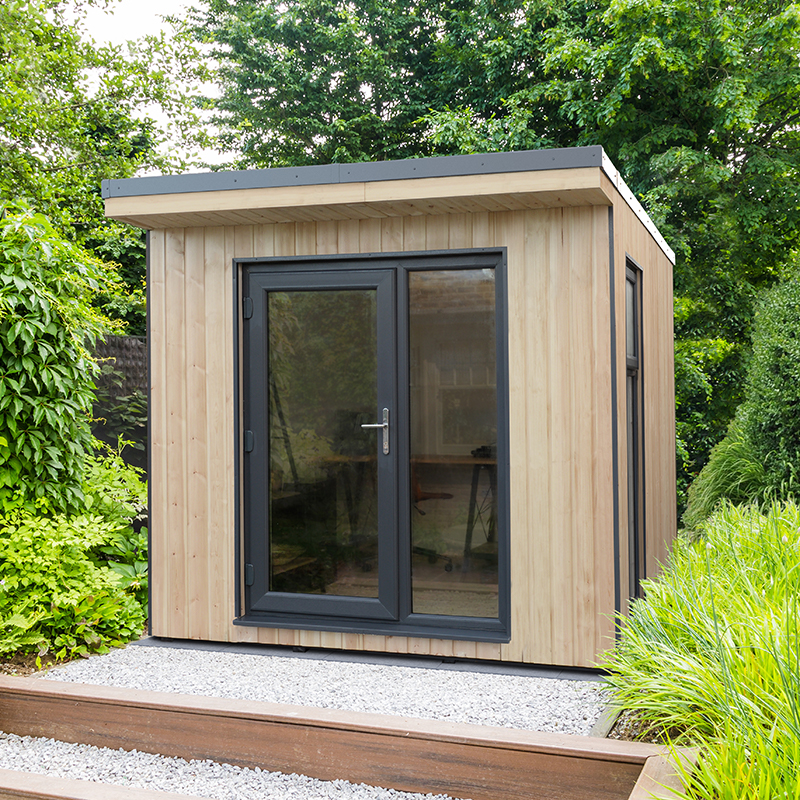
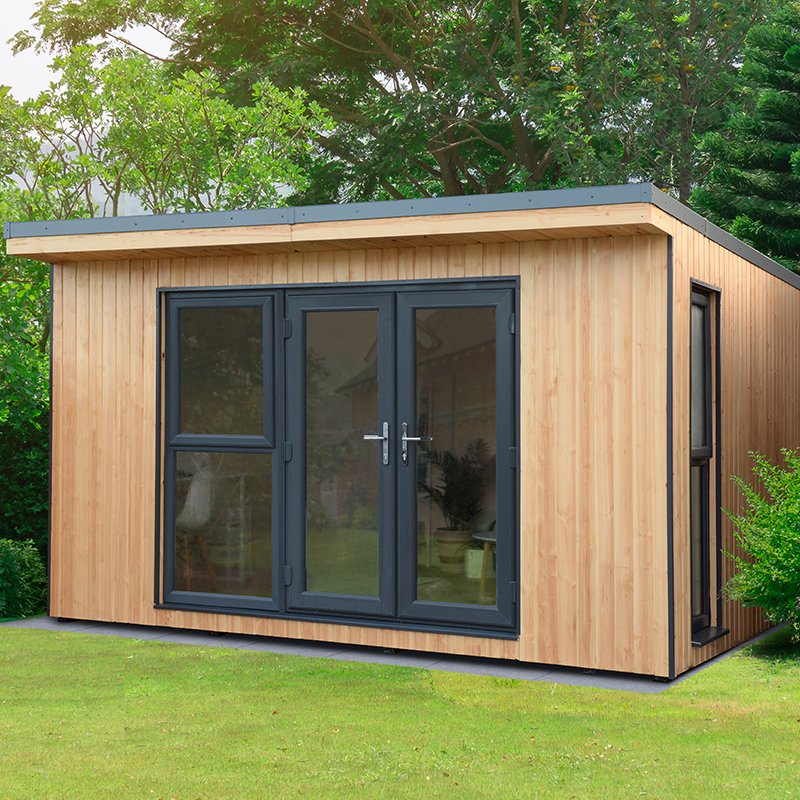
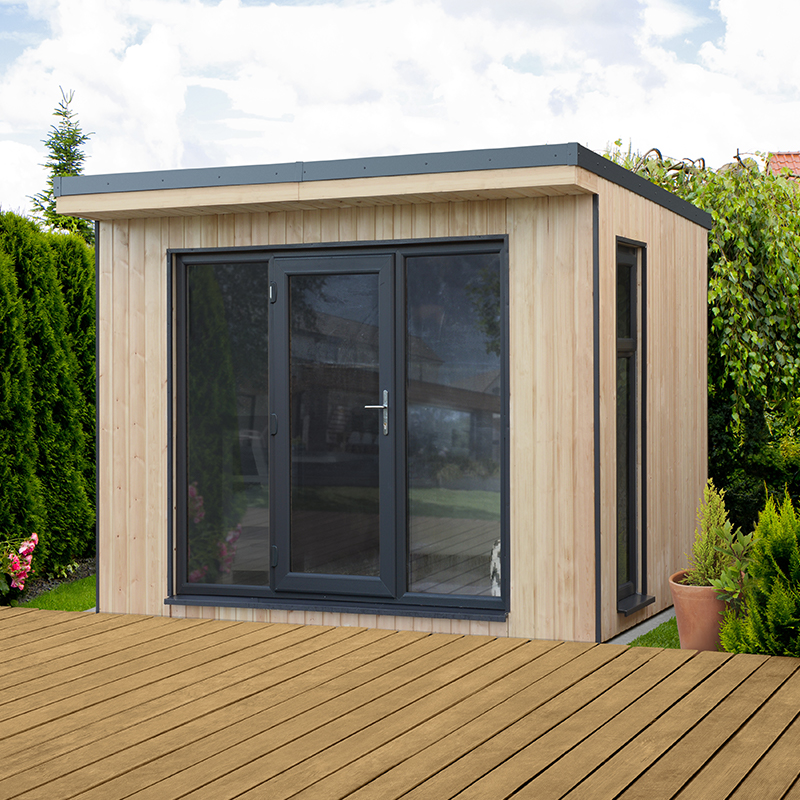
Forms That Change the Feel of the Room
Not every pent roof office feels the same. Small changes in proportions, wall height and roof direction can alter the whole character of the building. Some are more studio-like, others feel closer to a compact garden room with a focused work zone.
- Front-high pent roof offices lift the entrance side and often give a more open first impression when you step inside.
- Rear-high pent roof offices can allow the glazing to face the garden, which suits a desk placed under a brighter outlook.
- Side-pitch designs work well where one edge of the building needs to sit lower, perhaps near a fence or boundary.
- Wide-span layouts create a room that feels more generous across the front, useful if you want a larger desk arrangement or shelving run.
- Compact pod-style offices keep the footprint smaller while still using the pent roof to avoid a boxy appearance.
The form you choose affects not just how the office looks, but how the inside is used. A higher wall on one side can suit full-height shelving or a standing desk area, while a lower edge may work better for storage or a quieter corner. Even a small shift in roof orientation can change where daylight lands during the day.
Modern Cladding, Calm Lines
The pent roof is often paired with cladding that reinforces the clean geometry of the building. That might mean horizontal timber boards, vertical battens, shiplap-style finishes or more minimalist external surfaces. Each one creates a different mood. Horizontal cladding can emphasise width and make the office feel grounded. Vertical cladding can draw the eye upward and suit the angled roofline.
For a garden office, the cladding choice is not just decorative. It influences how the building sits alongside planting, paving and fences. A darker finish can help the office recede into the background, which some buyers prefer if they want the workspace to feel tucked away. A lighter tone can make the structure appear sharper and more contemporary. The pent roof itself tends to suit both approaches well because its silhouette is already uncomplicated.
If you are comparing finishes, look at how they work with the roof pitch, frame depth and glazing layout. A strong match between those elements often makes the whole building feel more considered, even before it is furnished.
Glazing Choices That Shape the Workday
One of the key differences between pent roof garden offices is how the glazing is arranged. The roof style can support a range of window placements, from full-width front elevations to narrower side openings. The way glazing is used will strongly affect the atmosphere inside.
- Full-height front glazing brings in a lot of daylight and connects the workspace with the garden view.
- Corner glazing can open up two directions at once, making a small office feel less enclosed.
- Side windows are useful when privacy matters or when a side boundary has the better light.
- High-level glazing adds brightness without giving direct views in, which can suit more private plots.
- Door-and-window combinations can help divide the room visually into work and break areas without adding walls.
Because a pent roof leans in one direction, it can make glazing feel especially intentional. The higher wall often becomes the main light side, while the lower side can be used more efficiently for storage or a cleaner backdrop. That contrast is one reason the layout works well for focused work.
Different Interior Layouts for Different Ways of Working
A garden office is not just a box with a desk in it. The internal arrangement has a big say in whether the building feels useful day after day. Pent roof offices often suit a range of working styles because the roofline creates a natural sense of zone without needing partitions.
Single-desk layouts are common in smaller pent roof offices, especially where the building is intended for remote work, writing or design tasks. The roof slope can be used to frame the desk area, with the higher side supporting shelves or display space. In slightly wider versions, a desk-plus-meeting-zone layout may work, where one side is kept open for a chair or small guest seat.
For buyers who need more than a simple workstation, the pent roof can support a multi-use setup with storage, printer space and a separate corner for calls. Because the roof shape is restrained, the interior can be arranged without feeling busy. That is a useful difference from some more decorative structures, where the architecture itself competes with the workspace.
Roomier Than It Looks, If You Pick the Right Dimensions
The footprint of a pent roof office can range from very compact to fairly generous, and the sense of room depends a lot on proportions. A shallow building with a low roof edge can work well for a single user, but it may feel tight if you plan to add a second chair, filing space or a wider screen setup. A slightly taller build can change that quickly.
When comparing options, think about the usable wall height, not only the floor area. Pent roof offices often gain their usefulness from the high side wall, where tall storage, notice boards or bookcases can fit neatly. The lower side is better for lower furniture or unobtrusive storage. This makes the room feel organised rather than cramped.
It is also worth considering how the roof direction relates to your plot. If the building faces a garden view, a higher front wall may create a stronger sense of welcome when you walk in. If the view is to the side, a side-pitch or offset layout can suit the land better. Small spatial choices like this can make a big difference to daily use.
What Sets Pent Roof Offices Apart from Pitched Roof Alternatives
Many buyers compare pent roof offices with more traditional pitched roof garden buildings. The differences are fairly clear once you look closely. A pitched roof usually gives a familiar house-like look, with two slopes meeting at a ridge. A pent roof is simpler, with one continuous slope and a more linear outline.
The pitched form often feels more traditional and can create a taller central ceiling line, which some people like for a classic garden room look. The pent roof, by contrast, tends to read as more contemporary and straightforward. It can also be easier to position in a garden where height needs to be kept down along one edge, such as near a fence or under certain planning considerations.
In practical terms, a pent roof office may suit buyers who want a sharper, less decorative appearance. It often pairs well with modern doors, slim frames and restrained cladding. If your garden already has strong lines from decking, paving or fencing, the pent roof can echo that language nicely rather than competing with it.
Good Fits for Small Gardens, Wider Plots and Corner Spots
One reason these offices are popular is their flexibility in placement. A pent roof can work particularly well where the building needs to settle into a corner, run alongside a boundary or align with an existing patio. Its angled roofline lets the office sit with purpose without making the garden feel crowded.
- Small gardens benefit from the compact outline and low visual bulk.
- Long narrow plots can suit side-pitch or front-pitch arrangements that follow the land shape.
- Corner locations work well when you want to create a distinct workspace zone away from the main house.
- Shared outdoor areas often benefit from the tidy, unobtrusive profile of a pent roof office.
The shape is also useful if you want the office to feel separate without looking overdone. It gives the impression of a dedicated building, but one that understands the garden around it. That is a neat balance for buyers who do not want the structure to take over the plot.
Where the Pent Roof Earns Its Keep
A garden office should do more than look good on paper. The pent roof shape can support a calmer, more work-focused interior because the design is stripped back and purposeful. That can matter for people who use the room every day, not just occasionally.
Natural light can be directed more deliberately in a pent roof office, and that can help the room feel alert without becoming overly busy. The roof angle may also encourage a cleaner exterior line, which makes the building easier to pair with contemporary garden furniture, path materials and planting schemes. If you like a space that feels measured and tidy, this roof form often lands well.
Another benefit is the way it can create a strong sense of private retreat without looking like a bulky outbuilding. The office is clearly separate from the house, yet it can remain visually calm. For many buyers, that is part of the appeal: a working place with its own identity, but not a loud one.
Features Buyers Tend to Notice First
When people compare pent roof garden offices, the first things they often notice are the roof angle, the size of the glazing, the way the door sits in the front elevation and how the cladding frames the whole structure. These are not small details; they define the character of the building.
- Roof direction affects the external profile and internal headroom.
- Glazing balance changes the light level and sense of openness.
- Cladding style can make the office feel bold, quiet or somewhere in between.
- Door position influences how the interior layout flows.
- Wall height matters for storage, desk placement and overall comfort.
These features are worth comparing side by side, because a small difference in one element can alter how the whole office feels in use. A building that looks compact from the outside might still feel generous inside if the proportions are well judged. Likewise, a larger office can feel awkward if the window and door layout do not suit the way you work.
Practical Tips Before Choosing One
Before settling on a pent roof garden office, it helps to think about how the room will be used in real life rather than only how it looks in photos. Start with the main purpose. Is it for one person working quietly, for longer hours at a desk, or for a mix of work and occasional meetings? That answer changes the layout more than people expect.
Check the roof height on the lower side as well as the higher side, because both affect furniture placement. If you plan to use tall shelving, make sure the wall that carries it gives enough space. If you want a desk facing outward, look at where the light will fall and whether the glazing gives a comfortable outlook rather than glare.
Also think about whether you prefer a more architectural look or a softer garden-room style. Pent roof offices can lean either way depending on the cladding, frame colour and window arrangement. Some are quite crisp and modern; others feel more subtle and tucked in. That variety is one of the reasons this category is easy to tailor to different gardens.
Why This Category Stands Out for Buyers
Garden offices with pent roofs offer a useful mix of style and function. They are not trying to imitate a house, and that makes them feel direct and contemporary. At the same time, they are not stark or purely industrial. The result is a workspace that can look calm in the garden and still feel comfortable to spend time in.
For buyers, the appeal often comes down to three things: clear form, flexible internal use and a tidy external presence. Those qualities make the pent roof a strong choice for people who want a dedicated office without visual fuss. If your aim is to add a work room that fits neatly into the outdoor setting, this category gives you plenty to compare without overcomplicating the decision.
And sometimes that is the real advantage: a well-shaped garden office that feels practical from day one, looks considered from the path, and gives you a proper place to work just a few steps from the house.
[Sassy_Social_Share]