
Garden Building Solar Lighting 100 sq ft / 9 m² - Best Deals in UK!
Showing all 4 results
-
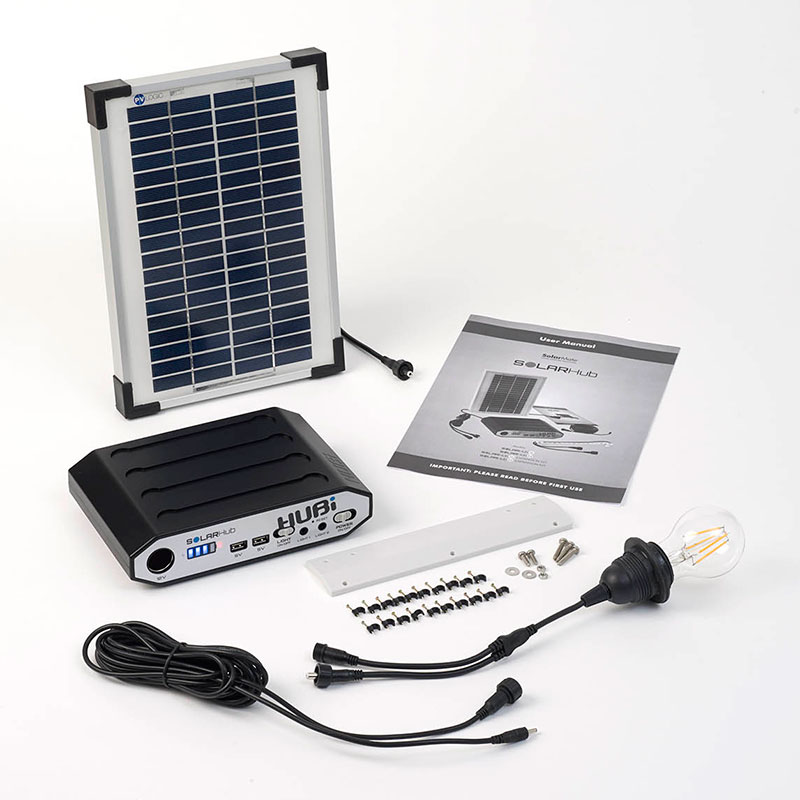
14% OFF: Solartech Premium Garden Building Solar Lighting & Charging Kit 1 – Suitable for Gazebos up to 3m x 3m (10′ x 10′) £136.9914%

-
12% OFF: Solartech Premium Garden Building Solar Lighting Kit 6 – Suitable for Buildings upto 3m x 3m (10′ x 10′) £252.9912%

-
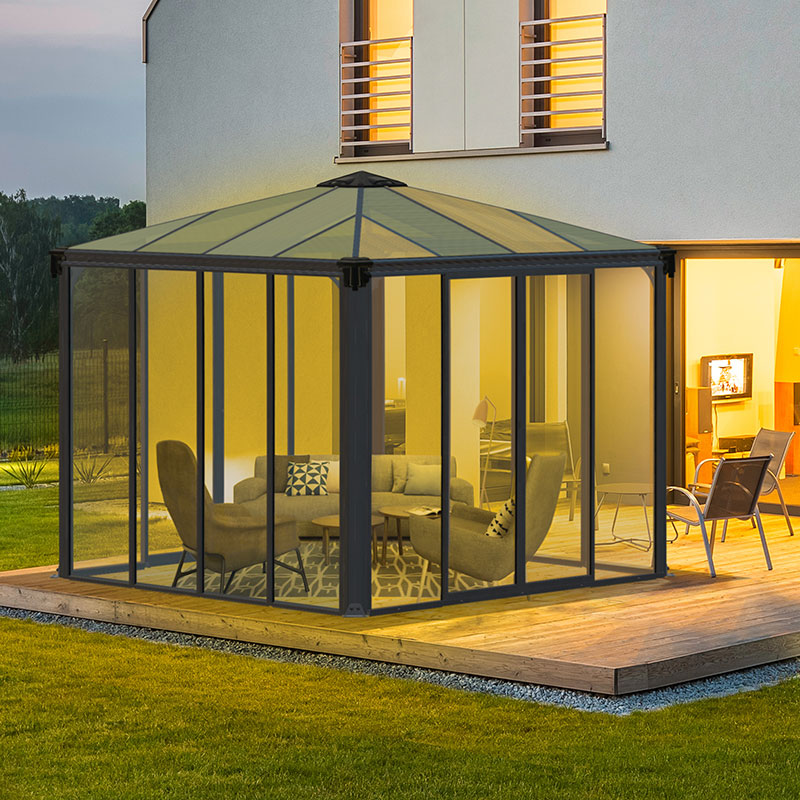
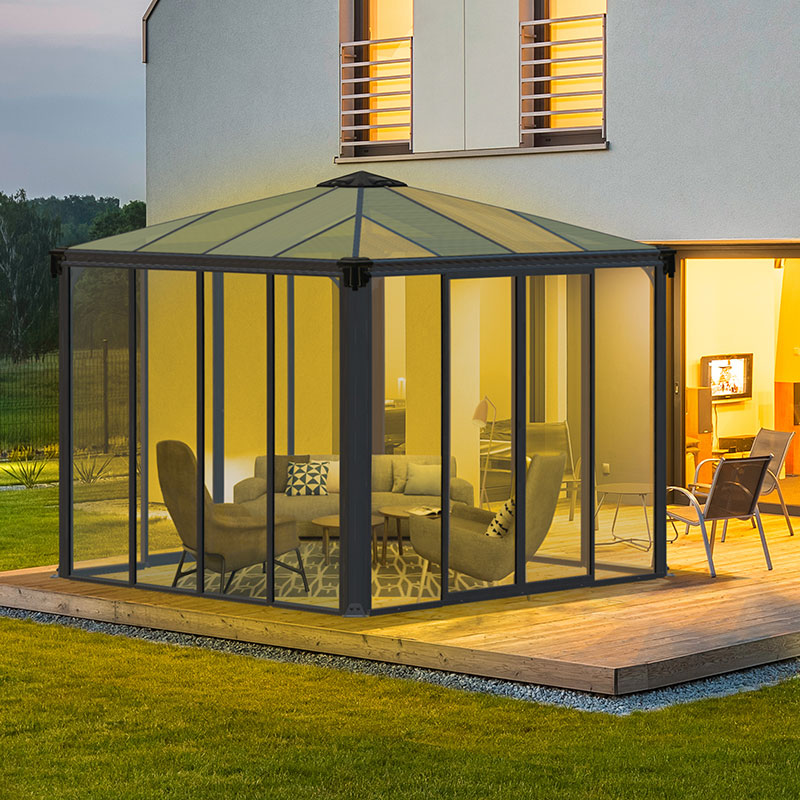
10% OFF: 10’x10′ (3x3m) Palram Canopia Ledro 3000 Enclosed Grey Gazebo £3,189.9910%

-
10’x10′ (3x3m) Palram Canopia Ledro 3000 Enclosed Grey Gazebo £3,529.00
Garden building solar lighting for 100 sq ft / 9 m² spaces brings practical, low-fuss light to sheds, summerhouses and compact outdoor rooms, with wall, roof and path options to suit different layouts.
Small footprint, clever light
When a garden building measures around 100 sq ft / 9 m², every fitting has to earn its place. Solar lighting works well here because it avoids heavy wiring, keeps the floor clear, and gives you light exactly where a small structure needs it most. In a compact shed, workshop, hobby room or garden office, the right solar setup can make the space feel more usable after dusk without turning it into a tangle of cables and plugs.
This category is all about space-saving lighting that suits buildings with limited wall area, narrow doorways and simple roof lines. It is not just about brightness; it is about matching the light to the shape of the building. A slim wall lantern may suit one structure, while a low-profile strip or motion-sensor unit makes more sense in another. For buyers, that difference matters because a 9 m² building can feel cluttered very quickly if the fittings are too bulky or poorly placed.
What fits a 9 m² building best
Solar lighting for this size is usually chosen in one of a few forms, each with a different purpose. The compact nature of the building means the light source often has to do double duty: practical visibility and a bit of atmosphere too. Here are the main types people look for:
Bestseller der Kategorie Garden Building Solar Lighting 100 sq ft / 9 m²
- Solar wall lights for fixed illumination near doors, worktops or seating areas.
- Solar strip lights for a clean, low-profile run along beams, shelves or inside roof edges.
- Solar pendant-style lights for a more room-like feel inside garden rooms and summerhouses.
- Solar spike lights for paths, steps or the approach to the building.
- Solar motion-sensor lights for entry points where quick light is needed without leaving anything on all evening.
- Solar decorative lights for ambience around the exterior, not just plain function.
The best choice depends on how the building is used. A storage shed needs a different lighting pattern from a small studio or an outdoor reading nook. In a work space, directional light is useful. In a relaxing room, softer and more diffused lighting usually feels better. That distinction is worth thinking about before buying, because one solar light can be bright enough for a doorway but not much use over a bench or table.
Three kinds of light, three different jobs
Most buyers end up mixing lighting styles rather than picking just one. For a 100 sq ft / 9 m² garden building, that often gives the neatest result. A single fitting can be enough for basic access, but layered light makes the space easier to use. It also helps if the building has more than one function.
Task lighting is the practical one. It sits above a work surface, near a shelf or by the entrance, and gives you focused light where your hands are busy. This is useful for potting sheds, small workshops and craft spaces. Ambient lighting is softer and more even, designed to make the whole room feel comfortable instead of stark. Then there is accent lighting, which is more about shape and mood: a beam lit from above, a bench edged with glow, or a path marked with small points of light.
In a compact building, the difference between these types is easy to feel. Too much task light everywhere can make the room look harsh. Too little task light and the room is awkward to use. A balanced mix is often the best answer, even if that mix is very simple.
Mounting styles that suit tight spaces
One of the strongest reasons people choose solar lighting here is the range of mounting styles. A small building does not usually have room for complicated fittings, so the way the light attaches can be just as important as the light itself.
- Wall-mounted lights keep the floor free and work well beside doors or along the long side of the building.
- Ceiling or roof-mounted units create a more central pool of light, useful inside a single-room structure.
- Clip-on or bracket-style lights can suit shelves, rafters or temporary setups.
- Freestanding solar lanterns are flexible and can be moved around depending on how the space is used.
- Ground lights help guide the route to the building and are handy where the entrance is a little dark.
The difference between wall and ceiling mounting matters more than many buyers expect. A wall unit leaves the middle of the room open, which is useful if the building is narrow. A ceiling fitting gives more even coverage, but may not help if the ceiling is low or if there are beams in the way. Freestanding lanterns are the least fixed option, which can be a plus if the layout changes often, though they may not suit a room used for regular tasks.
Shapes that do more than just look neat
Shape is not only about style. In solar lighting, the form of the fixture often affects how the light spreads, how much space it takes, and how obvious it is once fitted. For a small garden building, those points can be quite important.
Boxy lantern styles give a traditional look and can frame an entrance well. Slim bar lights are more discreet, which suits modern sheds, home offices and narrow interiors. Round lights tend to feel softer and less technical, good where the building is used for relaxing rather than heavy work. Flat panel lights are useful when you want the solar part and the lamp to sit neatly without drawing too much attention. String or festoon-style lights are more decorative and work better for atmosphere than strong illumination.
Buyers often overlook how much the shape affects the room. A chunky lantern can feel right on a timber shed but less so in a neat painted garden room. A slim panel may suit a modern building, though it can look too plain if the rest of the space has a softer, cottage feel. That’s the kind of small design choice that changes the overall impression quite a bit.
Solar panel setups: attached, separate, or built in
Another important difference is how the solar part is arranged. In this category, you will often see lights with an integrated solar panel, a separate panel, or a more self-contained unit that sits entirely on its own. Each version has a different advantage for a 9 m² building.
An integrated panel keeps everything together. It is neat, simple and usually easier to place, which is handy if the building has a clear line of sun. The trade-off is that the light itself must be positioned where the panel can still see daylight. A separate solar panel gives more freedom, because the panel can sit in the brightest spot while the lamp stays exactly where the light is needed. That can be very useful on a small building with one shaded wall or a roof overhang. A self-contained lamp is the simplest visually, though it may be less flexible in tricky layouts.
For buyers, the real question is how much direct sun the building gets. If the roof is shaded by trees, fences or a neighbouring structure, a separate panel can make a noticeable difference. If the building is open and south-facing, a compact integrated design may be all that is needed. Not fancy, just practical.
Motion sensor or steady glow?
Choosing between motion-sensor lighting and constant lighting changes how the building feels and how it gets used. In a small garden building, both have clear roles. Motion sensor lights are good at the entrance, along a side path or near a door that is used only now and then. They turn on when needed and then stay out of the way. That makes them a sensible choice for storage sheds, bike stores and occasional-use spaces.
Steady solar lights suit rooms where people stay for longer periods. If the building is a garden office, reading space or hobby room, a constant glow can feel more settled. It gives the room a calmer look and means you are not waiting for a sensor to trigger every time you move. A few products combine the two approaches, with a low background level and a brighter mode when movement is detected. That can be useful, though it is not always necessary in a room this size.
Why solar makes sense in a 100 sq ft / 9 m² building
The advantages are fairly direct, but they matter more in a small building than they might in a large one. First, no wiring means less visual clutter and fewer planning headaches. Second, the fittings can be placed where they are useful rather than where a cable allows. Third, solar lighting often works well for buildings that are used irregularly, because the light is there when you need it without a fixed power setup.
There is also a neatness to it. In a compact building, visible extension leads and plug points can take over the room. Solar helps avoid that. For many buyers, the appeal is not just lower energy use but a tidier interior and a simpler exterior. That tends to suit small sheds and garden rooms especially well.
There is a visual advantage too. Solar lights can create a sense of separation between the building and the garden around it. A softly lit entrance, a line of ground lights or a warm wall lamp can make the structure feel more intentional, not just parked at the end of the lawn. That can be a quiet selling point for anyone wanting the building to look finished as well as functional.
Picking the right brightness for the size
Brightness in a small building is a balancing act. Too little and the space is hard to use. Too much and the room can feel flat or over-lit, especially if the walls are close together. The right level depends on what the building is for. For general access, softer light may be fine. For practical use, especially around tools or work surfaces, a brighter beam helps more.
A useful way to think about it is by zone. The entrance needs clear visibility. The centre of the room may need even coverage. A corner work area may need a more directed beam. In a 9 m² structure, one light can often cover two jobs if placed well, but only if the beam spread suits the layout. That is why beam angle, light direction and mounting height are worth checking, not just the headline brightness.
Also, diffused light can be kinder in a small room than a harsh spotlight. If the walls are pale, they may reflect enough light to make a modest fitting feel stronger. Dark timber interiors absorb more light, so they often need a bit more output or an extra fitting. Small detail, big difference.
Useful buying checks before adding to basket
Before choosing solar lighting for a garden building around 100 sq ft / 9 m², it helps to check a few practical details. These are the kinds of things that make a purchase feel right once installed.
- Measure the available wall and roof space so the fitting does not crowd doors, shelves or beams.
- Look at sun exposure across the day, especially if trees or fences cast shade.
- Think about the main use of the building: storage, work, seating or mixed use.
- Choose the light position first, then the style, so the form supports the function.
- Match the light tone to the building’s feel; warmer light often suits relaxing spaces, while clearer light can help in work areas.
- Check whether a separate panel would be better than an integrated one if the fitting position is shaded.
Where the small details pay off
In this category, the smallest differences often shape the best buying choice. A shallow shed with a single door may only need a motion-sensor light and one path marker. A garden office in the same size might benefit more from a ceiling light and a soft wall lamp. A summerhouse used in the evening could call for decorative lights outside and a more even glow inside. The building size is the same, but the lighting plan is not.
That is why garden building solar lighting for 100 sq ft / 9 m² should be thought of as a set of options rather than one fixed solution. Different forms, different mounting styles and different light patterns all have their place. The right choice is usually the one that suits the room’s shape, the available daylight and the way you actually use the space. Sounds obvious, but it’s easy to miss when looking at photos.
A category made for neat, usable evenings
If the aim is to make a small garden building more usable after dark, solar lighting is a sensible place to start. It offers simple installation, a tidy finish and enough variety to suit plain utility spaces as well as more decorative garden rooms. The better choices in this category are the ones that respect scale: not too large, not too fussy, and not pretending a small building needs a full house worth of fixtures.
For many buyers, that is the appeal. You get practical light, clearer access, a more finished look and fewer compromises with cables and power points. In a compact 9 m² space, those benefits are easy to notice. And when the light is chosen well, the building feels more like part of the garden rather than just a box at the edge of it.
[Sassy_Social_Share]