
Garages 50 sq ft / 5 m² - Best Deals in UK!
Showing the single result

50 sq ft / 5 m² garages are a compact way to add secure parking, dry storage and a tidy footprint to smaller plots, with choices in shape, door style and build that change how they work.
Small Footprint, Clear Purpose
A 50 sq ft / 5 m² garage sits in that neat middle ground where space is tight, but the need is real. It may suit a moped, small motorbike, garden equipment or a very compact storage layout, depending on the exact internal shape and door opening. Because the category is limited by size, every detail matters: the width of the entrance, the pitch of the roof, the internal corner space, even where you place the threshold. That is why these garages are often chosen by buyers who want something compact and practical, rather than a bulky structure that takes over the plot.
What makes this category interesting is the balance between minimal ground coverage and useful enclosed space. A small garage can still do a lot if the format is right. Some are better for parking a two-wheeler with a bit of side space, while others are shaped more like a narrow store with a front opening. The key is not just square footage, but the actual layout inside. Two garages with the same area can feel very different, and that difference is often the reason one suits a buyer and the other does not.
Which Shape Fits the Plot?
In this size range, shape often matters more than people expect. A square layout can feel easier to use if you want balanced access on all sides, while a rectangular design may make more sense when the plot is narrow and depth is the priority. Some buyers prefer a structure with a more compact front and a little extra depth, especially when the garage is intended for a motorcycle, tools, or seasonal items that need to sit in rows. Others want a wider face for easier entry, even if that means less internal depth to work with.
Bestseller der Kategorie Garages 50 sq ft / 5 m²
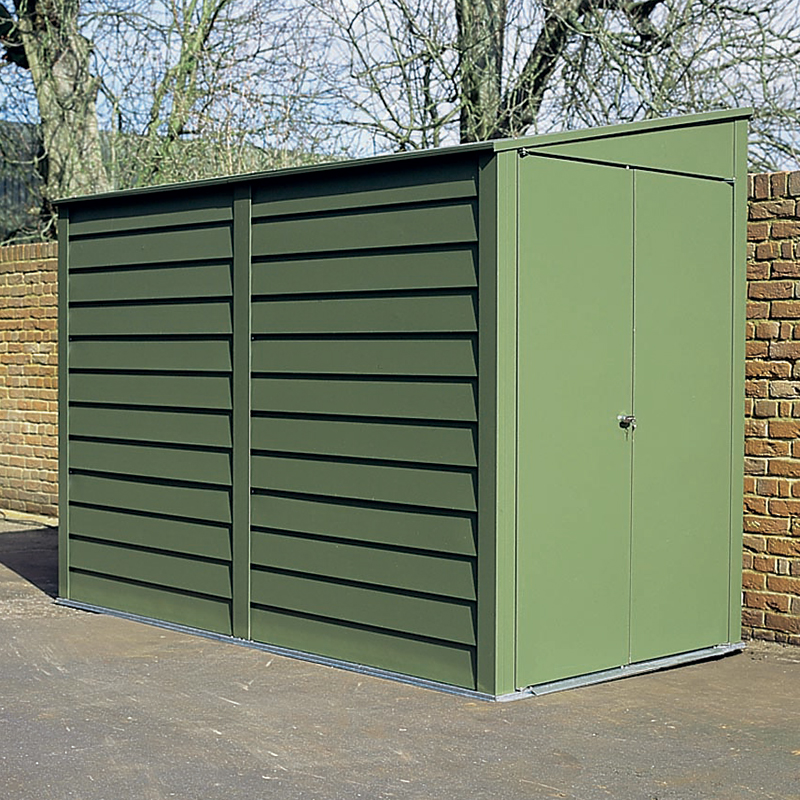
There are also differences in roof profile. A flat roof keeps the form low and tidy, which can help where height is restricted or the garage sits close to a boundary. A pitched roof changes the look immediately and can make the garage feel less boxy, although the usable interior shape will depend on the slope. For some buyers, the roofline is not just about looks; it affects how the garage sits beside a house, shed or boundary wall. That visual fit can matter quite a lot, especially in a small garden or driveway area.
Door Styles That Change Everything
The door is one of the biggest practical decisions in a 5 m² garage. A single up-and-over door gives a simple front opening and can be a tidy solution when access is straightforward. A side-hinged pair of doors gives a different feel altogether, with easier partial access if you are only going in and out quickly. For some buyers, that can be more useful than a single large opening, because it avoids opening the whole front for every visit.
There is also a clear difference between garages that feel built for vehicle storage and those that are better suited to general secure storage. In this size, a door that opens wide enough for practical movement is essential. If the entrance is too tight, the garage starts to feel awkward fast. If it opens more generously, the whole space becomes easier to use, even when the interior is modest. That is one of the quiet advantages of smaller garages done properly: they can be straightforward, without wasting an inch.
- Single opening doors suit simple access and a cleaner front line.
- Double side-hinged doors work well for partial access and easier loading.
- Wider front openings help with manoeuvring compact vehicles or bulky items.
- Lower door profiles can suit constrained spaces or tighter visual settings.
Storage Versus Parking: A Small but Important Split
People often search this category thinking of one use, then realise the space can be approached in a few different ways. A garage for parking will need a different internal logic from a garage used mainly as a locked store. For parking, the main concern is straight access, usable width, and enough clear front space for the door to operate comfortably. For storage, the interest shifts to internal arrangement, where shelves, bins, bikes, or longer tools can be placed without blocking movement.
This is where the under-5 m² range can be a bit misunderstood. It is not usually about fitting everything in at once. It is about picking a structure whose form matches the main job. A buyer who expects to park a vehicle and store outdoor equipment may need to think carefully about whether the layout is meant for one central item plus a little margin, or for layered storage around the edges. That difference is easy to miss and often the main reason a compact garage feels either useful or cramped.
In practice, the best choice depends on what has to happen most often:
- Vehicle-focused layouts favour a clear central run-in and simple access.
- Storage-focused layouts work better when the internal edges can be used efficiently.
- Mixed-use layouts need a careful compromise, so the space does not become fiddly.
- Seasonal-use garages can be more flexible, since the contents change through the year.
Materials That Shape the Feel
In this category, material choice has a real effect on appearance, presence, and how the garage sits in the garden or driveway. Wooden garages usually bring a warmer, more natural look and can blend nicely with planting, fencing, or timber outbuildings. Metal garages tend to feel more angular and direct, which can work for buyers who want a neat, defined structure. Composite styles, where available in the wider garage market, can sit between those two in appearance, though the exact construction will vary by product range.
The material also changes how the garage reads at a glance. A timber structure often looks less harsh in a smaller plot, especially where the garage is close to a house or patio. A metal version may suit a more straightforward utility setting, where the focus is on robust storage and a clear outline. Neither one is automatically better; it depends on whether the buyer wants the garage to blend in or stand out as a separate feature. That subtle difference matters, even in a tiny footprint.
- Timber gives a natural finish and can sit comfortably in garden settings.
- Metal offers a crisp, functional look with a compact visual profile.
- Composite-type builds may suit buyers looking for a balanced appearance.
- Mixed finishes can help the garage match nearby structures, if that is important.
Useful Differences Buyers Actually Notice
When comparing compact garages, buyers tend to notice a few things very quickly. One is the internal clear width, which affects how easy it feels to move around once inside. Another is the front opening, because a small difference in access can make a garage feel either easy or awkward to use. Then there is the matter of roof shape, which changes both the look and the usable volume above head level. These are not tiny details; they are the things that decide whether the garage feels like a proper piece of the plot or just a box on the side.
There are also practical differences between single-bay and multi-purpose use. In a 5 m² format, a single-bay arrangement often feels calmer and easier to organise. A multi-purpose setup can work, but it needs tighter planning and a bit more discipline with what goes where. That is not a flaw, just a reality of the size. Some customers prefer that neat constraint because it stops the space being overfilled. Others want every corner used, which is fair enough too.
Why This Size Can Make Sense
A 50 sq ft garage is often chosen because it solves a specific problem without asking for a huge amount of land. It can offer a locked, enclosed area for a compact vehicle or garden items, while keeping the footprint modest. That is helpful on narrower plots, smaller courtyards, or driveways where a larger structure would simply dominate the space. The appeal is not just size reduction; it is the ability to add a real utility space without upsetting the balance of the property.
There is also a visual advantage. Smaller garages can sit more quietly in a setting, especially when the form is kept simple. A buyer may not want a large outbuilding stealing attention from the house or garden layout. In that case, a compact garage offers a more restrained answer. It does the job, but it does not shout about it. For many people, that is exactly the point.
A few reasons buyers end up looking at this category:
- Limited available ground space on the plot.
- Need for a secure enclosure without a large build.
- Desire for a neat, low-impact addition beside a home or garden.
- Requirement for a specific storage function rather than a general large garage.
How Form Changes Use
The same floor area can behave quite differently depending on the form. A more compact square build may be easier to place visually, while a longer rectangular build can feel more practical if the contents are arranged in a line. A garage with a simple pitched roof may appear more traditional and sit well with a house that already has classic features. A flat-roof design may feel cleaner and more discreet, especially in a tighter urban setting. The right answer depends on the shape of the surrounding plot as much as on the garage itself.
One small but important point is how the garage relates to the approach path. If the route in is tight or angled, a compact garage with a more forgiving entrance can save a lot of frustration. If access is straight and open, a more basic front arrangement may be enough. That is why these garages are often better chosen by measuring the actual movement around them, not just the footprint on paper. Paper sizes can look similar. Real use, not so much.
Buying With the Right Priorities
To choose well in this category, it helps to think beyond the headline size. Start with the main use: parking, storage, or a split between the two. Then look at the door opening, the internal shape, and how the structure will sit on the site. If the garage is intended for a motorbike or compact vehicle, access will matter more than decorative detail. If it is mainly for tools or seasonal equipment, the internal edges and usable wall runs may matter more. It sounds obvious, but people often jump straight to the dimensions and miss the bit that actually affects day-to-day use.
It can also help to think about what should stay outside the garage. In a small unit, not everything can go in. Choosing a garage with a clear job makes the decision easier and the result more satisfying. That is one of the underrated advantages of this size: it encourages a precise purchase, not a vague one. You know what you are buying, and if the form fits, that clarity pays off.
The Finish That Fits the Setting
Looks matter, even for a compact garage. The finish should suit the property, but it should also suit the size of the unit itself. A very heavy visual style can make a small garage feel more dominant than intended, while a lighter, simpler finish can help it sit comfortably in the garden or driveway. Buyers often prefer a garage that feels like it belongs there, rather than one that seems pushed into the corner as an afterthought.
That is especially true in a 5 m² format, where the garage is small enough to be seen as part of the landscape rather than a separate building site. The best results usually come from a clear choice: either blend it in gently, or make it a tidy functional feature. Halfway styling sometimes looks uncertain. A stronger decision, even if modest, tends to feel better in use and appearance.
Compact Size, Thoughtful Payoff
A garage in this category is not about excess. It is about efficient space, clear access, and a shape that genuinely suits the job. Whether the priority is a small vehicle, secure storage, or a neat structure that does not overwhelm the plot, the right 50 sq ft / 5 m² garage can make a site feel more ordered and more usable. The differences between styles are not minor: roof form, door type, material and layout all change how the garage works in real life.
For buyers who want something compact but purposeful, this category offers a focused place to start. Choose the shape that matches the ground, the opening that matches the routine, and the material that fits the setting. Done well, a small garage can feel surprisingly settled. Not flashy, not overdone, just useful in a way that makes sense.
[Sassy_Social_Share]