
Garages 35 sq ft / 3 m² - Best Deals in UK!
Showing the single result

Garages 35 sq ft / 3 m² offer compact covered storage for bikes, garden tools, bins, and everyday outdoor kit, with space-saving shapes and materials to suit small plots.
Compact by design, not by usefulness
A 35 sq ft / 3 m² garage sits in that useful middle ground between a simple store and a full-size garage. It is small enough for tight gardens, side returns, courtyards, and narrow driveways, yet still gives you a proper enclosed space for items you would rather keep dry, tidy, and out of sight. For many buyers, the appeal is not about parking a car, but about making the most of a limited footprint without the place feeling crowded.
That is why this category suits people who want secure, covered storage in a format that does not take over the whole plot. You get a defined structure, a clear purpose, and a neat finish that can sit beside a house, fence, or boundary without looking oversized. In a small garden, that matters quite a lot.
What fits inside 3 m²?
Because the internal area is modest, these garages work best when the contents are chosen with care. The shape of the unit often matters more than raw size, because even a small change in width, door opening, or roof profile can make the space feel far easier to use.
Bestseller der Kategorie Garages 35 sq ft / 3 m²
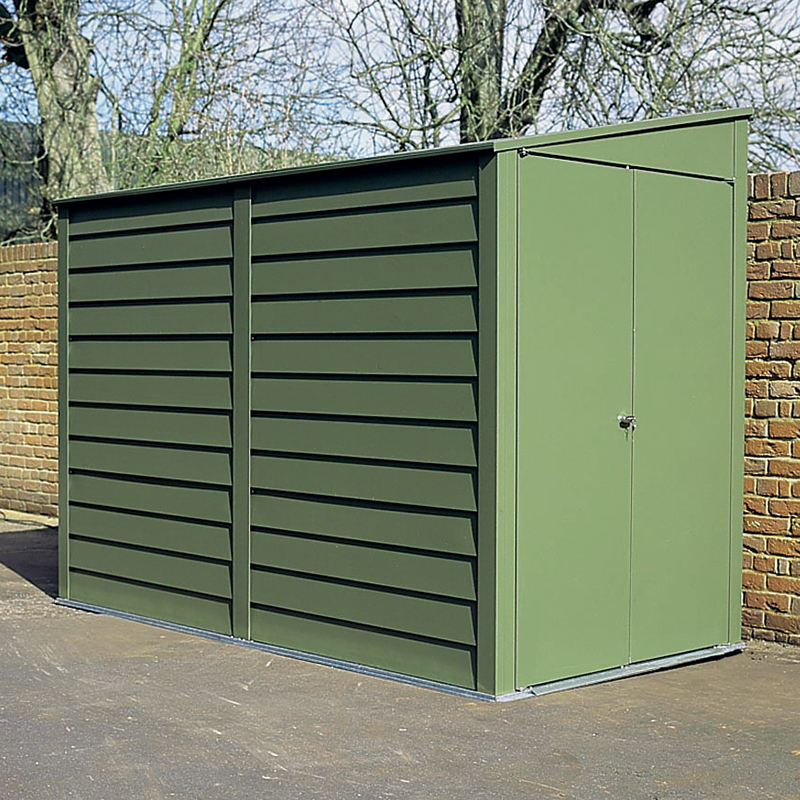
- Bicycles and folding bikes
- Hand tools, long-handled garden tools, and smaller power tools
- Garden furniture cushions and seasonal accessories
- Wheelie bins or recycling containers, depending on dimensions
- Children’s outdoor toys, scooters, and sports gear
- Logs or fuel stores, where local rules and structure allow
- Compact DIY equipment that benefits from being kept under cover
This size is less about bulk storage and more about organised access. If the space is planned well, it can hold more than people first expect. If it is not, a small garage can feel cluttered quickly. That is why the internal layout and entrance style are worth thinking about from the start.
Shapes that change how the space works
When browsing garages in this category, the shape often makes a bigger difference than the outside looks. Two units with the same floor area can feel very different once a bike, mower, or stack of boxes is moved inside. The layout of the walls and roof can decide whether the room feels practical or a bit awkward.
Rectangular garages are the simplest to use. They tend to make stacking and lining up items easier, and they suit boxes, shelving, and long tools. A rectangular plan is often the best choice when the aim is straightforward storage with minimal wasted corners.
Square garages can work well for general storage, especially if you want equal access from the front and enough depth for a mix of items. They are often easier to place in a small garden where available space is close to equal in both directions. The downside is that a square footprint can feel less generous for longer items unless the entrance and internal arrangement are carefully chosen.
L-shaped or corner-friendly layouts are less common in a category this size, but when available they can make better use of a tricky plot edge. The benefit is not extra floor area, but a better fit against a boundary or in a space with an awkward angle. That can be a real advantage if the garden layout is already doing half the planning for you.
Narrow, elongated forms are useful where width is tight but depth is available. These are handy for storing bikes, ladders, or narrow garden gear. The trade-off is that the contents may need to be arranged in a line, which is fine if access is planned sensibly, less so if you want to grab items quickly without moving others.
Roof profiles with a practical edge
The roof style does more than finish the look. It changes headroom, how the garage sits against nearby buildings, and how usable the interior feels at the edges. In a small structure, even a modest difference in roof shape can shift the whole experience.
- Flat roof forms keep the overall height lower and can suit discreet placement beside fences or walls. They often look tidy in modern settings and do not dominate smaller gardens.
- Mono-pitch roofs give a simple sloping profile and can feel more contemporary. They can also help the unit sit neatly where one side needs to be lower than the other.
- Apex roofs create a more traditional garage outline and may offer better central headroom. In compact sizes, that extra height can make storing taller items less fiddly.
- Pent roofs are useful where rain run-off direction matters or where a clean, understated shape is preferred. They can look especially neat alongside modern garden buildings.
There is no single best option, because each roof profile suits a different kind of site. If the garage is tucked under a tree, near a boundary, or close to another structure, the roofline should be chosen with the surrounding space in mind rather than just on appearance alone.
Door styles that decide the day-to-day feel
For a garage this size, the door is not a minor detail. It determines how easily you can get things in and out, how much opening space is needed in front, and how straightforward the interior remains once the unit is in use.
Single doors are common in compact garages and suit everyday access to smaller items. They keep the frontage neat and can be enough when the contents are light and manageable. However, a single door can feel restrictive if you regularly move wider items.
Double doors are helpful when the opening needs to feel less cramped. They make it easier to move bikes, bins, or larger tools in and out, and the opening can feel more flexible. In a small garage, this can be a big difference, even if the floor area stays the same.
Side-access doors are useful in certain layouts where the front opening is not the only route you want. They can make everyday use easier if the garage sits close to a path or fence. That said, the overall footprint needs to be checked carefully so the access point does not interrupt the storage flow.
Roll-up or lifting-style fronts can save space in front of the unit because the door does not swing outward in the same way as hinged doors. This is especially useful on short driveways or tight access routes, though the internal arrangement should still allow enough clear movement.
Why buyers choose this size
The appeal of a 3 m² garage usually comes down to a mix of footprint, tidiness, and having something properly enclosed rather than partly exposed. It is not just a box for bits and pieces; it is a way of reclaiming order without needing a large outbuilding.
- Space-saving footprint for smaller gardens and plots
- More secure than open storage for items you do not want left outside
- Cleaner visual finish than loose storage against a wall
- Flexible use for bikes, tools, bins, and seasonal items
- Clear zoning so outdoor equipment has a place of its own
- Better use of awkward corners where larger structures would be too much
Many buyers also like the way this category can support a tidy routine without demanding a big rework of the garden. It gives structure to the space, which sounds simple, but it often changes how the whole area feels.
Material choices that affect the character
While this category is mainly about size, the material still shapes the look, the feel, and the practical use. Different finishes suit different settings, and the same small footprint can read as quite different depending on the surface and frame.
Timber garages tend to suit gardens where a softer, more natural appearance is wanted. They blend nicely with planting, fencing, and traditional houses. The visual advantage is clear: they feel like part of the garden rather than an object placed into it.
Metal garages usually give a firmer, more utility-led appearance. They can suit compact spaces where a straightforward, functional look is preferred. They are often chosen when the priority is practical storage in a neat shell.
Plastic or composite-style structures can appeal where a lighter visual effect is wanted and where the unit needs to sit quietly in a corner. These can work especially well in modern gardens, though the exact style varies quite a bit from one product group to another.
The material affects not only the look but the sense of presence. A small garage with a heavy visual finish can feel more solid and anchored; a lighter finish can make the structure recede a bit, which is useful if the goal is to keep the garden feeling open.
Small size, different uses
Not every 35 sq ft / 3 m² garage is used in the same way. Some buyers want a bike store with a roof. Others want somewhere enclosed for bins and garden gear. Some need a compact place for hobby items that would otherwise drift between shed, porch, and hallway.
For cyclists, the key concern is width and access. A garage that looks fine on paper may still feel awkward if handlebars, pedals, and turning space have not been considered. A wider door opening can help a lot here.
For garden users, the main advantage is grouping tools and seasonal items together. Long-handled items, bags of compost, and smaller equipment can be easier to manage when they are not split across several places.
For household overflow, the compact garage is useful when you need somewhere for items that are used occasionally but should not be left in the open. It creates a cleaner divide between indoor life and outdoor storage.
How to compare products in this category
Because the size is fixed, the main differences come down to usability. That means small details matter more than people often expect. A few centimetres here or there may not sound much, but in a compact structure they can change how easy it is to live with the unit day to day.
- External dimensions versus internal usable space
- Door opening width and whether it suits your items
- Roof height if you need room for taller storage
- Footprint shape for corners, walls, or narrow access points
- Material finish for the visual match with the garden
- Positioning needs in relation to paths, gates, and fences
It helps to picture the actual item you want to store rather than just the category name. A garage can be listed under the same size band and still suit one layout far better than another. That is why buyers who think in terms of access, not just area, often end up happier with their choice.
Useful buying tips for tighter spaces
If your garden is short on room, the most sensible purchase is usually the one that fits both the site and the way you use it. Sounds obvious, but it is easy to get drawn into the overall look and forget the opening path, turning room, or where the unit will sit against neighbouring features.
Measure the item first, not the brochure page. A bike, bin, mower, or tool rack should shape the decision from the start.
Leave room for access in front of the door. A compact garage that is hard to reach quickly becomes annoying.
Check the roof profile if the unit sits under trees, near overhangs, or close to another building.
Think about the path in. If the structure has to pass through a narrow gate or side passage, the usable size is only part of the story.
Choose the door style with the contents in mind. Double doors can be worth it if the garage will hold wider items, even if a single door looks simpler.
A neat fit for gardens that need order
The strength of the Garages 35 sq ft / 3 m² category is that it gives a proper storage solution without asking for much land. It is a sensible choice when you want the garden to stay open, but you also want the clutter to disappear into one defined place. Different shapes, roof lines, and door arrangements let you match the unit to the site rather than forcing the site to adapt too much.
For buyers comparing compact garages, the important question is usually not whether the unit is large enough in theory, but whether it will be easy to use in the real space you have. That is where the shape, the opening, and the overall layout start to matter. Get those parts right, and even a small garage can feel properly useful.
[Sassy_Social_Share]