
Decking under £900 - Best Deals in UK!
Showing the single result

Decking under £900 offers a practical way to build a useful outdoor platform, with choices in softwood, composite and timber-look finishes, plus different board widths, shapes and frame styles for patios, gardens and small seating areas.
Budget-Friendly Decking That Still Feels Thought Through
Choosing decking under £900 is often about balancing size, material and the look you want without stretching the budget too far. This category suits buyers who want a defined outdoor space for a table, a couple of chairs, a hot tub surround, or a neat transition from house to garden. The key is not just finding the lowest price, but picking a deck that makes sense for the space you actually have.
At this price point, you will often see a mix of timber decking boards, composite decking options, and complete kits for smaller layouts. That makes it easier to compare what matters: the feel underfoot, the finish, the board profile, and how much area can be covered for the money. Some buyers want a natural grain and traditional look; others want a more regular finish with fewer visible knots or colour variation. Both can work well, but they give very different results.
Different Decking Types in the Under £900 Range
One of the clearest differences in this category is between softwood decking and composite decking. Softwood is usually the more affordable route and can cover a larger space for the same outlay. It has a warmer, more natural appearance, with the kind of character that suits cottage gardens, family patios and informal seating zones. Composite tends to sit higher in price per board, but it can offer a more uniform look and a more engineered finish.
Bestseller der Kategorie Decking under £900
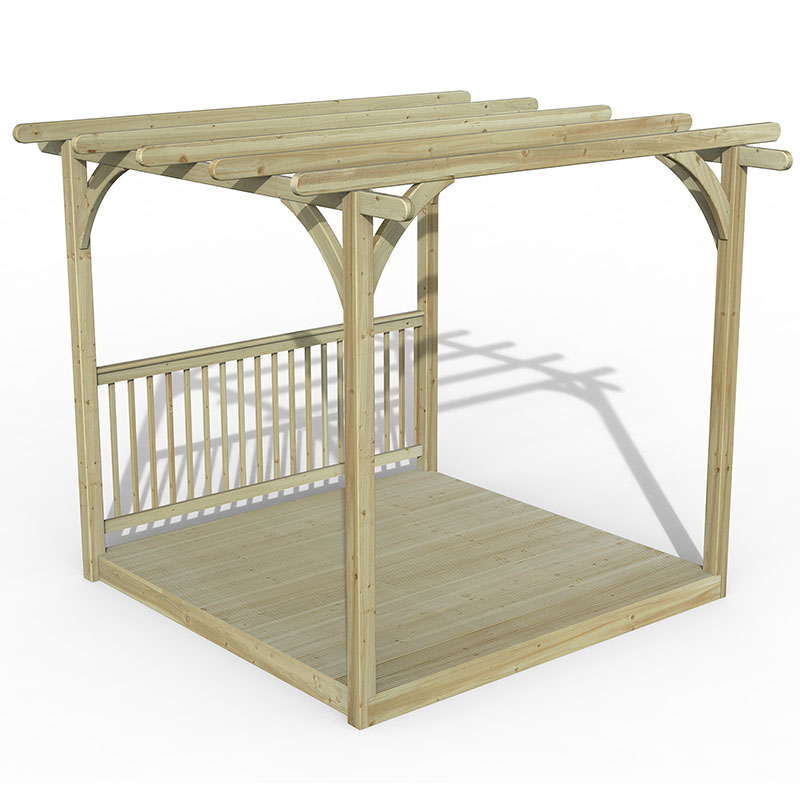
Within those main groups, you may also see:
- Grooved decking boards for a more defined surface pattern and a conventional deck style.
- Reversible boards with two faces, often giving a choice between grooved and flatter profiles.
- Smooth boards for a cleaner, more modern look that works well with sharp-edged planters and minimalist seating.
- Wide boards that can make a small area look less busy and reduce the number of joints.
- Narrow boards that give a more detailed, classic pattern and can suit tighter spaces.
- Deck tiles or modular sections, where a full board layout is not needed and a smaller area needs quick coverage.
The choice between these forms affects more than appearance. Wide boards can feel more open and less fussy, while narrower boards can create a stronger rhythm across the surface. Grooved boards give a familiar deck language, but smooth faces often feel more tailored. Neither is automatically better; it depends on the setting and the type of furniture you plan to place on top.
What You Usually Get for the Money
With decking under £900, the main question is how far the budget will stretch in square metre terms. Smaller gardens, courtyards and balcony-style spaces are where this category works best. A compact deck can still change how a garden is used, making a corner more defined, tidier and easier to furnish. Even a simple rectangular platform can make a patch of lawn feel more deliberate.
Price also relates to what is included. Some options focus on just the boards, while others are closer to a project starter set with matching elements for a straightforward layout. It is worth checking the board coverage, the number of pieces, and whether the price reflects a full surface or only part of the build. A cheaper-looking product can become less useful if the board lengths are awkward for your space, or if you end up with too much waste from cuts. That is one of those details people overlook, and then regret a bit later.
Shapes and Layouts That Work Well on a Smaller Budget
The shape of the deck can matter just as much as the material. Under £900, the most sensible layouts are often the ones that use standard board runs and avoid too many complicated joins. A straight rectangular deck is the easiest to plan and usually gives the best value in materials. It suits dining sets, benches and sun loungers without wasting space.
Other shapes can still fit this budget if the area is modest:
- Square platforms for a compact seating area or a central feature in a small garden.
- L-shaped layouts where a corner needs to become usable, such as beside a fence or patio edge.
- Raised sections for uneven ground, though these need a bit more planning and can eat into the budget quickly.
- Step-down zones that help connect different levels, especially where the garden naturally drops away.
- Boardwalk-style strips for narrow runs along the side of a house or beside planting beds.
Simple shapes are not boring. In fact, they often look more intentional because the lines are clean and the space is easier to furnish. More complex curves and cut-outs can look good, but they usually need more board waste and more time to get right, which is not ideal when the budget is fixed.
Softwood vs Composite: The Main Differences Buyers Notice
Softwood decking is usually the route for buyers wanting a natural timber appearance at a lower cost. The grain, colour variation and knot pattern all add to the feel, which can suit relaxed gardens and traditional outdoor spaces. It is also often easier to buy enough material for a wider area without crossing the £900 mark too fast.
Composite decking, by contrast, has a more controlled finish. The colour tends to be more consistent, the boards are often more regular, and the surface can feel more structured. For people who want a neater, more contemporary look, that can be a strong point. Composite may reduce the visual change between boards, which some buyers prefer. The trade-off is that it can reduce the amount of surface area you can cover for the same budget, so it suits smaller projects or spaces where appearance matters more than maximum coverage.
There are also practical differences in feel and style. Timber often looks warmer and more natural beside planting, gravel and older brickwork. Composite can sit well with rendered walls, metal planters and modern garden furniture. If the deck is going to be the main feature, the material choice will shape the whole mood of the area.
Profiles, Edges and Finishes That Change the Look
Board profile makes a bigger difference than many shoppers expect. A grooved edge gives a familiar deck texture and a visible line pattern that can help hide minor surface marks. A flat profile feels calmer and more contemporary, with fewer shadows across the surface. Some boards come with a rounded edge, while others have a sharper square cut that looks more architectural.
Finish is another detail worth paying attention to. A light-toned deck can make a small garden feel less enclosed, while darker shades can help seating areas feel grounded and a bit more defined. Natural timber tones work well with soft planting, but deeper browns and greys can suit spaces with black frames, slate paths or simple outdoor lighting. If the garden already has a lot going on, a quieter board finish can stop the area looking too busy.
Visible grain, brushed texture, and clean edging all create different impressions. A brushed finish can soften the look and help the deck feel less glossy. A smoother face gives a neater result but may show dust and marks in a different way. It is really about the kind of atmosphere you want outdoors: relaxed and timber-like, or tidy and structured.
Why Buyers Choose Decking Under £900
This price range tends to appeal because it opens up a proper decking project without asking for a large spend. For a smaller garden, that can be enough to create a clear entertaining area or a tidy place for everyday use. If the aim is to frame a seating corner, improve access from the house, or bring order to an awkward patch, a deck can do a lot with a modest budget.
Some of the main reasons people buy in this category include:
- Good value for smaller spaces where a full deck system is not needed.
- Clear visual impact without having to redesign the whole garden.
- Choice of styles from natural timber to more regular composite finishes.
- Flexible sizing for terraces, side returns, courtyards and patio edges.
- Better use of awkward corners that otherwise stay underused.
It is also a category where buyers can stay focused. Rather than being overwhelmed by too many high-end options, the decision comes down to usable surface area, board style and finish. That can actually make the choice easier.
Useful Tips Before You Pick a Set or Board Pack
Before buying, it helps to think in real measurements. A deck that sounds small in theory can eat more of the budget than expected once the shape, cuts and borders are taken into account. So measure the space properly, then picture what needs to sit on it. A two-seat bistro table takes less room than a corner sofa, obviously, but people still sometimes choose a deck that is just a touch too tight.
Also think about the visual line of the boards. Long runs can make a space feel stretched and open, while shorter runs may be more suitable for narrow areas. If the deck is going against a wall or fence, the direction of the boards can either widen the space visually or pull attention down the length of the garden. That detail sounds small, but it has a real effect once the deck is in place.
Another point is colour match. It does not have to be perfect, yet the deck should sit comfortably with nearby brick, paving, fencing and furniture. A tone that fights with the rest of the garden can feel a bit off, even if the product itself is good. It is one of those things that becomes obvious once it is down, which is not the best moment to notice.
When a Smaller Deck Makes More Sense Than a Bigger One
Not every garden needs a large deck. In fact, under £900, a smaller platform can often be the smarter use of money because it creates a defined area with less material and less visual clutter. A compact deck can work as a landing point from the back door, a dry spot for a chair, or a neat transition from patio to lawn. If the garden already has paths, planting and a shed, a modest deck can add a useful surface without taking over.
Small decks also let you concentrate on quality of layout. The edges can be cleaner, the proportions easier to handle, and the furniture choice more deliberate. Rather than trying to cover everything, the space becomes a zone with a purpose. That can make the garden feel more organised and more inviting at the same time.
A Short List of What to Compare Before Buying
- Material type: softwood, composite or another timber-based option.
- Board width: wider boards for a calmer look, narrower boards for a more patterned surface.
- Surface finish: grooved, smooth, brushed or reversible.
- Colour tone: natural, warm brown, grey or darker wood-inspired shades.
- Coverage area: enough metres for the space without leaving a lot of unused offcuts.
- Layout shape: rectangular, square, corner-based or a narrow strip.
- Overall feel: traditional, modern, relaxed or more structured.
The Right Choice Is Usually the One That Fits the Space Properly
When browsing decking under £900, the best option is often the one that suits the garden’s size, the way it is used and the look of the house itself. A natural softwood deck may give more coverage and a warmer finish. A composite option may suit a cleaner, more consistent surface. Wide boards can make a small area feel open, while grooved profiles bring a familiar deck pattern. Raised shapes can solve uneven ground, and simple flat layouts can make the budget go further.
What matters most is whether the deck feels like it belongs there. If the shape fits the garden, the finish works with the house, and the board style supports how you want to use the space, the result will feel considered rather than squeezed in. That is usually what buyers are after: a deck that looks right, works properly, and keeps the project within reach.
[Sassy_Social_Share]