
Decking under £700 - Best Deals in UK!
Showing the single result

Decking under £700 is a practical way to add a defined outdoor area without pushing the budget too far, with options in timber, composite and modular styles for small gardens, patios and awkward spaces.
Budget-friendly decking that still feels considered
Choosing decking under £700 often means focusing on the shape of the space, the finish you want and how the deck will be used day to day. In this price range, you can find compact kits and more modest timber sets that give a clear outdoor zone for seating, pots or a bistro table, as well as flatter, more architectural boards that suit a cleaner look. It is a useful bracket for buyers who want a noticeable garden upgrade without committing to a large build.
The best part is that budget does not have to mean plain. There are still different board profiles, widths, surface textures and framing styles to choose from, and those details make a big difference to the final feel. A narrow deck board can look neat and structured, while wider boards can give a more relaxed, open appearance. Ribbed surfaces, smooth finishes and colour-treated options all change the look too.
Timber, composite and the look you get from each
Within this category, the material choice is usually the first thing to narrow down. Softwood decking is often the most accessible option under £700, especially for smaller areas. It brings a natural, warm appearance and suits gardens where a more traditional feel is wanted. Pressure-treated timber is common in this price band, giving a practical route to an outdoor floor that feels solid and familiar.
Bestseller der Kategorie Decking under £700
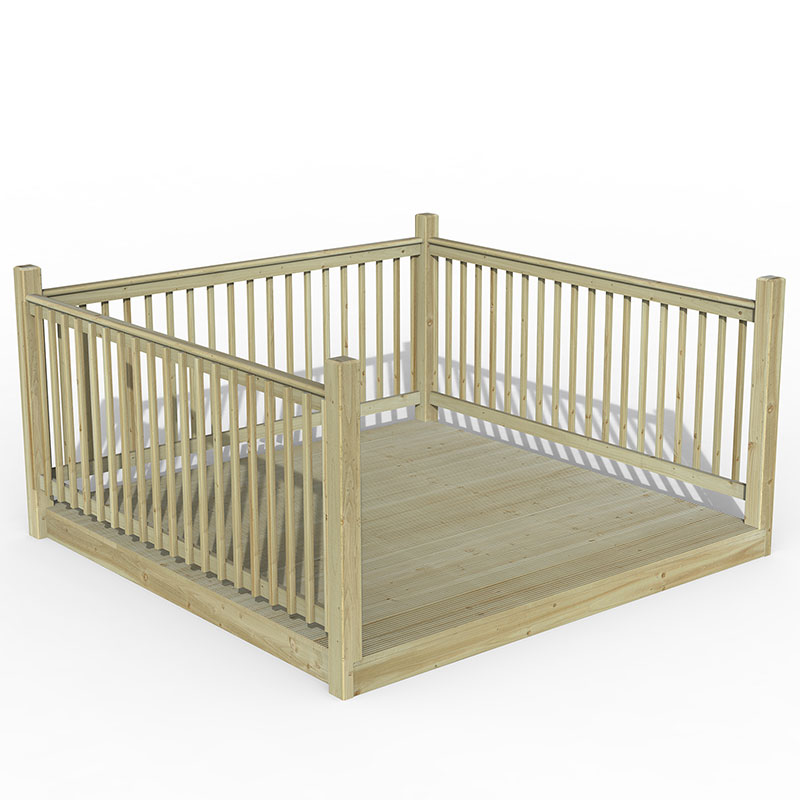
Composite decking can also appear in smaller packs or starter sets under this budget, though usually in more compact coverage. It has a more uniform finish and a slightly more contemporary feel. The difference is visual as much as practical: timber often shows more grain and variation, while composite tends to look more consistent board to board. If you want a deck that feels softer and more organic, timber is a strong fit. If you prefer a tidier, more even surface, composite may be the one to look at first.
Board styles: grooved, smooth and brushed looks
Board texture shapes the whole tone of a deck. Grooved boards are common because they create lines that catch the eye and bring a sense of structure. They suit modern spaces, but also work well in classic gardens where a bit of visual rhythm helps the area feel purposeful. Smooth boards give a cleaner, less busy finish and are often chosen when the surrounding planting is already full of texture.
Some boards have a brushed or lightly textured surface, which sits between the two. This style can soften the look without removing definition. It is a good middle ground if you want decking that feels presentable but not too sharp or formal. A brushed finish can also make a small deck seem less heavy, especially in darker shades.
Shapes that suit real gardens, not just perfect ones
One reason people search for decking under £700 is that the area they want to improve is not always a neat rectangle. Starter decking options can work well for awkward corners, narrow side returns and compact patios. Square and rectangular sets are easiest to place, but there are also ideas that lend themselves to more flexible layouts, especially where the space needs to be divided into zones.
A simple square deck works well when you want a table, chairs or a bench to sit confidently in one place. A long, narrow deck can draw the eye down the garden and make a small plot feel more deliberate. If the space is split by steps, a level change or a path, a compact deck can help bridge those gaps and give the whole area a calmer look. The right shape often matters more than the size alone.
What you can expect in this price bracket
Under £700, decking usually leans towards smaller footprints, starter kits or straightforward board packs. That can still be enough to transform a seating area, a hot tub surround in a reduced format, or a patio edge that needs a better finish. This budget is often about getting the essentials right: the board look, the overall size and how the deck sits within the garden.
In practical terms, buyers often compare:
- Board coverage for a compact lounging area
- Kit format for a more guided purchase
- Timber versus composite for appearance and feel
- Width and thickness for the visual weight of the boards
- Colour tone to match fencing, pots or paving
That comparison helps because two decks at similar prices may look and feel quite different once they are fitted. One may offer more board length and a broad, open look; another may give a tighter, neater finish with less visual spread.
Why a smaller deck can still change the whole garden
A deck does not need to cover a huge area to make sense. A modest garden decking area under £700 can create a clear pause point in the garden, which makes the space feel more usable. It gives furniture a proper base, helps define where people gather, and can turn a patch of uneven ground into somewhere that feels more intentional.
This is especially useful when the garden has mixed surfaces. A deck can sit beside grass, gravel or paving and create a stronger contrast between hard and soft landscaping. That contrast matters because it can make a small outdoor area feel layered rather than cramped. It also gives a cleaner boundary for seating, planters or a parasol stand, which helps the garden feel arranged rather than improvised.
Traditional timber feel or a more even modern finish?
The main difference between the common types in this category is often the surface character. Timber tends to bring warmth and natural grain, so even a small deck can feel welcoming and slightly rustic. It suits cottages, family gardens and spaces with lots of planting. Composite usually feels more controlled, with a tidier line and a more even tone across the boards.
Another difference is the way each material handles colour. Timber can vary more naturally from board to board, which gives it depth. Composite is usually more consistent, which some buyers prefer because it keeps the area visually calm. Neither is the “right” one for every garden. It depends whether you want the deck to blend in or stand out a bit more clearly.
Useful buying tips for a tighter budget
When shopping this category, it helps to look beyond the headline price and think about how the deck will sit in the space. A cheaper board pack may look tempting, but if the proportions do not suit the area, it can feel awkward once placed. A slightly smaller deck that fits properly can look better than a larger one that crowds the garden.
It is also worth checking the board width, because wider boards can make a compact deck look calmer, while narrower boards give a more detailed finish. If the garden already has strong lines from fencing, paving or edging, a simpler board pattern may work better. If the space feels flat or plain, a grooved board or a richer colour tone can add needed structure.
Styles that suit different outdoor uses
Different decking formats under £700 tend to suit different ways of using the garden. A raised compact deck can help if there is a slope or uneven ground, while a ground-level deck works well next to a patio or lawn and often feels more integrated. Some buyers want a spot for dining, others want a quiet place for a chair and side table, and some just want a neat transition from house to garden.
If you are choosing for a seating area, look for a deck that gives enough room for chair legs without making the space feel tight. If you are planning around planters, a flatter layout with clean edges usually looks more settled. For smaller plots, a rectangular deck can make the most of straight boundaries, while an L-shaped idea can help wrap around a corner and use space that would otherwise be wasted.
Little details that make a big visual difference
Even in this price bracket, small design details change how the deck reads from the house and garden. Board direction can lengthen a narrow area or widen a short one. Edge finish affects whether the deck feels complete or simply placed down. A neat border can frame the area and stop it looking too abrupt, while a softer edge may suit a relaxed planting style.
Colour also plays a part. Lighter tones can make a compact deck feel less heavy, especially in shaded gardens. Darker tones can give more contrast and help furniture stand out. If the surrounding space already has a lot going on, a muted board colour may help the whole area feel more settled. If the garden is plain, a warmer timber shade can add just enough character.
How to compare options without getting lost in the detail
It is easy to compare decking by price alone, but the better approach is to look at what the deck will do for the space. Ask whether the board style suits the rest of the garden, whether the size feels realistic, and whether the material matches the kind of look you want. A simple timber deck may offer the kind of natural feel that suits a planted border. A more uniform composite set may fit a sharper, contemporary layout.
For many buyers, the best value is not the biggest pack. It is the deck that fits the space properly, gives the garden a clearer shape and looks like it belongs there. Under £700, that balance is very achievable if the choice is made with the room, the layout and the finish in mind.
A category built for small makeovers with a clear payoff
Decking under £700 is a strong category for buyers who want a defined outdoor surface without stepping into a larger project. It suits modest gardens, neat seating spots and side areas that need a better finish. The range can include different board profiles, surface textures, shapes and materials, so there is still room to choose something that feels personal rather than plain.
Whether you prefer the natural grain of timber decking, the steadier look of composite boards, or a compact layout that simply makes better use of the space, this budget can still deliver a garden area that feels more organised and ready to use. The best options are the ones that look right from the house, fit the ground properly and give the garden a shape it did not have before.
[Sassy_Social_Share]