
Decking under £2000 - Best Deals in UK!
Showing 1–12 of 18 results
-
20% OFF: 8′ x 16′ Forest Pergola Deck Kit No. 12 (2.4m x 4.8m) £1,599.9920%

-
19% OFF: 8′ x 16′ Forest Pergola Deck Kit No. 10 (2.4m x 4.8m) £1,509.9919%

-
19% OFF: 8′ x 16′ Forest Pergola Deck Kit No. 13 (2.4m x 4.8m) £1,619.9919%

-
17% OFF: 8′ x 16′ Forest Pergola Deck Kit No. 11 (2.4m x 4.8m) £1,569.9917%

-
15% OFF: 8′ x 16′ Forest Pergola Deck Kit with Retractable Canopy No. 12 (2.4m x 4.8m) £1,979.9915%

-
15% OFF: 8′ x 16′ Forest Pergola Deck Kit with Retractable Canopy No. 13 (2.4m x 4.8m) £1,989.9915%

-
15% OFF: 8′ x 16′ Forest Pergola Deck Kit with Retractable Canopy No. 10 (2.4m x 4.8m) £1,879.9915%

-
14% OFF: 8′ x 16′ Forest Pergola Deck Kit with Retractable Canopy No. 11 (2.4m x 4.8m) £1,929.9914%

-
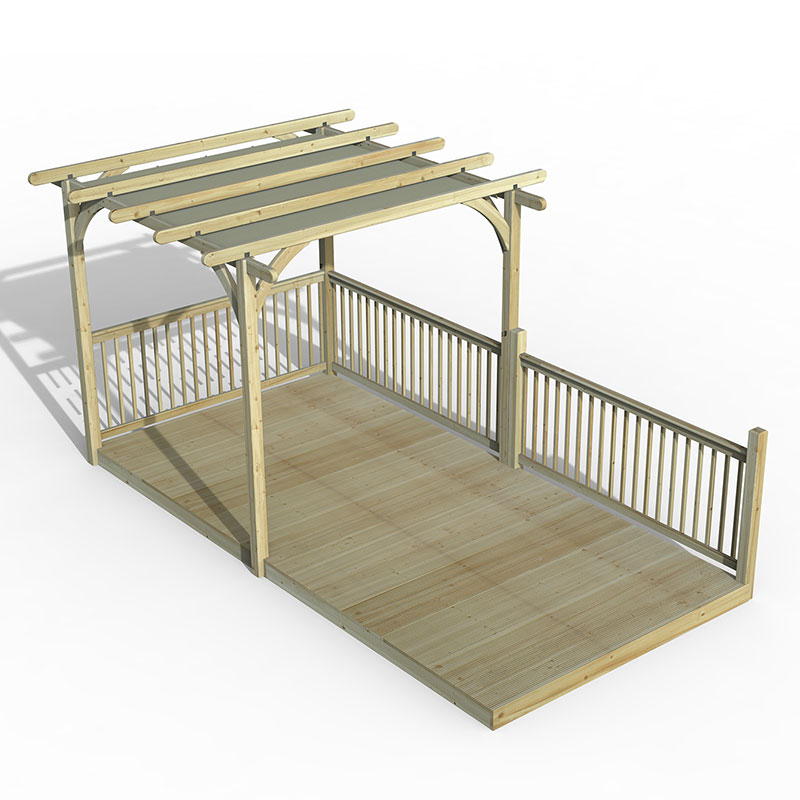
14% OFF: 8′ x 16′ Forest Pergola Deck Kit with Retractable Canopy No. 6 (2.4m x 4.8m) £1,819.9914%
-
14% OFF: 8′ x 16′ Forest Pergola Deck Kit with Retractable Canopy No. 7 (2.4m x 4.8m) £1,839.9914%

-
14% OFF: 8′ x 16′ Forest Pergola Deck Kit with Retractable Canopy No. 9 (2.4m x 4.8m) £1,779.9914%

-
13% OFF: 8′ x 16′ Forest Pergola Deck Kit with Retractable Canopy No. 8 (2.4m x 4.8m) £1,859.9913%

Decking under £2000 can open up a practical outdoor area with timber, composite, or modular options, helping you compare sizes, finishes, and layouts before you buy.
Why this budget works for real garden plans
When you are looking at decking under £2000, the main advantage is choice without drifting into a project that feels overcomplicated. This budget can suit a neat seating zone, a small dining spot, a path-like platform, or a compact corner deck that gives a garden a more structured feel. It is a range where material decisions really matter, because the difference between timber boards, composite boards, and pre-made kits can change both the look and the usable size quite a lot.
For many buyers, the appeal is not just the price. It is the way this budget lets you decide between a simple build with a larger footprint or a more refined finish with a smaller area. That trade-off is important. You might choose a natural timber deck to cover more ground, or a composite set-up if you want a cleaner, more even appearance. Either way, value, size, and finish become the things to compare rather than chasing extra features you may not need.
The decking types that usually fit this price
Within this price bracket, you will mainly see a few familiar types. Each one brings a different feel underfoot, a different look, and a different way of fitting into the garden. Knowing the difference helps you avoid buying something that sounds right but does not actually suit the space.
Bestseller der Kategorie Decking under £2000
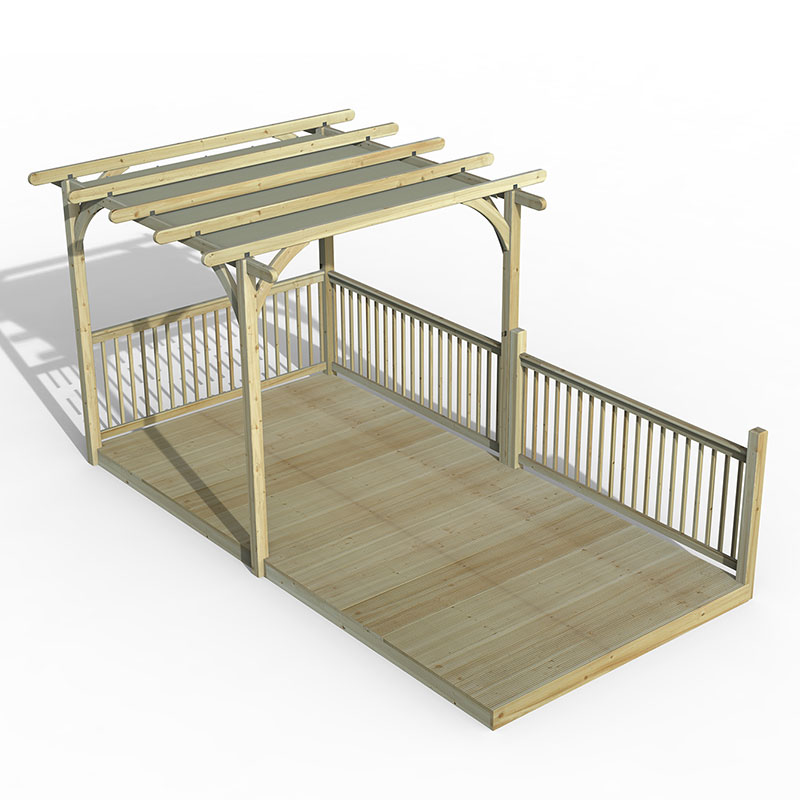
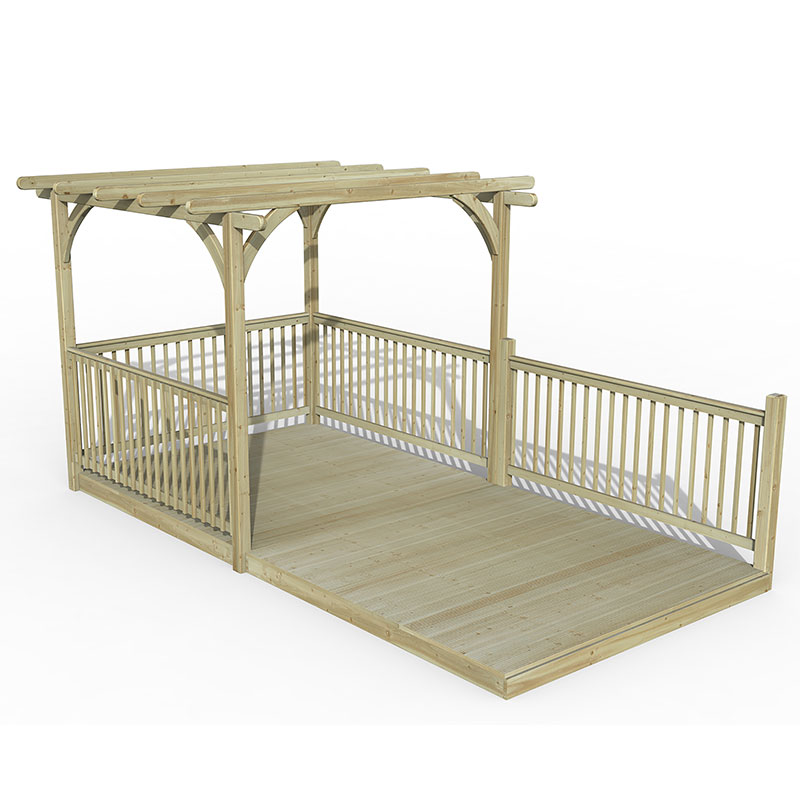
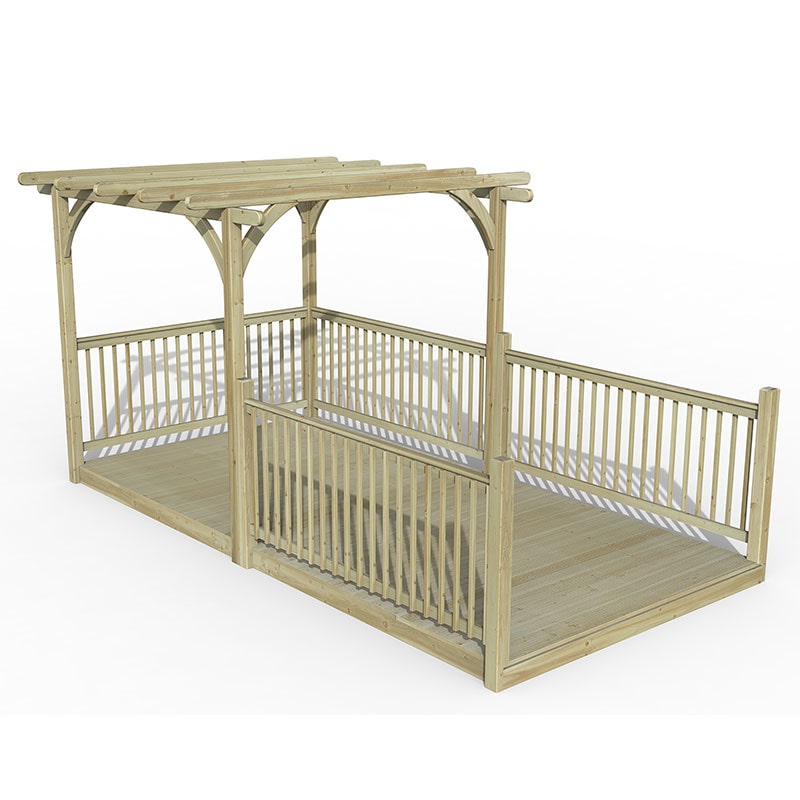
- Softwood decking – often the most cost-conscious choice, usually pressure treated, with a warm and traditional appearance.
- Hardwood decking – denser and more characterful, with a richer grain, though the budget may only cover a smaller area.
- Composite decking – a mix of wood fibres and polymers, giving a more uniform board surface and a neat, contemporary look.
- Modular decking kits – useful for quicker planning, often made for straightforward square or rectangular layouts.
- Raised deck sections – handy where the ground is uneven or where you want to create separate levels in a compact garden.
The main difference is not just the material itself, but what that material allows you to cover. Softwood usually gives the most board area for the money. Hardwood can feel more substantial, but the cost means the deck may need to stay smaller. Composite often sits in the middle when you weigh appearance against the practical value of a tidy, consistent finish.
Boards, tiles, and kits: the shape of the project
Another useful way to sort decking under £2000 is by format. Some buyers want full-length boards for that classic garden-deck look. Others prefer square tiles or panel systems because they are easier to place into smaller spaces. The format you choose can shape the final result just as much as the material does.
Decking boards are the standard option. They suit longer runs, steps, and edges that need a more tailored finish. They can make a narrow garden feel more deliberate, especially if laid in a clean direction. Decking tiles, on the other hand, are often better for balcony-sized areas, patio sections, or awkward corners where cutting full boards would create waste. They can be a tidy choice if you want a defined outdoor zone without a full build.
Kit-style decking appeals to buyers who want the pieces to line up more predictably. It can reduce guesswork when comparing quantities, and it often suits smaller projects where a simple shape makes sense. If you are trying to keep within budget, a kit can help prevent over-ordering. That said, it may also limit how custom the finished deck can be, so it is worth checking whether your garden asks for flexibility or just a straightforward platform.
Timber feel or composite calm
The biggest decision for many shoppers is whether to choose timber or composite. This is where the budget starts to show its character. Each option has strengths, and neither is automatically the right answer for everyone.
Timber decking brings a more natural grain and a slightly softer, warmer look. It often feels better suited to gardens with planting, gravel, or older brickwork because it blends in without looking too formal. Softwood can help keep the whole project inside budget, while hardwood gives a denser and more solid impression. The catch is that higher-grade timber can reduce the total area you can cover for £2000, so the layout may need to be more modest.
Composite decking is often chosen for its uniform board colour and cleaner visual line. It can suit modern patios, compact urban gardens, or spaces where you want the deck to look consistent from one board to the next. The boards often come in muted shades such as grey, brown, or charcoal tones, which makes it easier to match furniture and edging. In this budget, composite may mean a smaller deck or a simpler layout, but it can still feel considered and neat.
The difference is often about atmosphere as much as practicality. Timber can look a bit more relaxed. Composite can look more even and structured. If you prefer a garden that feels softer and less styled, timber may make more sense. If you want a sharper line between planting and seating, composite may suit better.
Sizes that make the money stretch further
With decking under £2000, the size you can achieve depends heavily on the type of board, the subframe, and how much cutting is needed. A simple rectangle tends to be easier to budget for than an irregular shape with lots of corners. If the space is compact, that can actually be a benefit, because small decks can feel intentionally placed rather than squeezed in.
Look at the area in terms of use, not just square metres. A deck that fits a bistro set, two lounge chairs, or a bench along one side may be more useful than a larger platform that leaves the furniture awkwardly spaced. For a lot of gardens, a small raised deck creates just enough separation to define the area without taking over the whole plot. If you have a long narrow space, a strip deck can also work well by guiding the eye toward the end of the garden.
Shape matters too. Square and rectangular decks are usually the easiest to price and easiest to fit. L-shaped decks can help frame a corner, but they can eat into the budget because of the extra cuts and framing. Curved edges look softer, though they are rarely the most economical route. In this budget, a clean shape often gives the best balance of style and cost.
What makes one deck feel more complete than another
Not every decking purchase is just about boards. The overall look changes depending on surface profile, board width, fixing style, and edging. These details can make a project look more finished, even when the budget is fixed.
- Grooved boards can add grip and a more recognisable deck pattern.
- Smooth boards give a flatter appearance and can suit a more minimal style.
- Narrow boards often make a small area feel more detailed.
- Wider boards can reduce the number of lines, creating a calmer visual effect.
- Hidden fixings give a cleaner top surface, though they may affect overall cost.
- Visible screws are more direct and practical, and sometimes a better fit for simple builds.
These differences are useful because a budget deck does not need to look basic. A plain rectangle with the right board width and a tidy edge can feel thoughtful. A grooved timber board and a smooth composite board behave differently visually even before you place furniture on them. It is one of those details that people notice without always being able to say why.
Matching the deck to the way the garden is used
Buying decking under £2000 becomes easier when you start with use. Ask what the deck will actually do. Will it hold a table for meals outside, act as a spot for morning coffee, or create a dry step-out area from the house? The answer changes the best type of decking a lot.
If the deck is for seating, a smooth, even surface may matter more than a large footprint. If it is for walking through the garden, then a longer, simpler run could make sense. For an area beside a shed or summerhouse, a smaller deck can feel like a neat threshold. For family spaces, you may want a wider platform with room to move chairs without bumping into edges.
Also think about how the deck will sit with the rest of the garden. Timber often fits into informal spaces with planting and mixed textures. Composite can suit gardens that already have sharper lines, pale paving, or darker garden furniture. Neither is fixed to one style, but some combinations just look more settled. That matters because a deck is not only a surface, it is part of the layout.
Useful buying checks before you spend
There are a few practical things worth checking before you decide. They are simple points, but they can change whether the purchase feels right once it arrives. It is easy to focus on board colour and forget the rest, which can lead to a deck that is good on paper but awkward in the garden.
- Measure the exact area and allow for the board direction.
- Check board lengths so you can reduce waste from offcuts.
- Compare surface finishes if you want a natural or more contemporary look.
- Think about the frame or base, because the visible deck surface is only part of the total spend.
- Look at colour variation, especially with timber, where boards may not match perfectly.
- Decide on a simple shape if the budget is tight and you want more area covered.
One useful tip is to avoid overcomplicating the design when the budget is fixed. A straightforward shape often gives you more usable decking and less frustration during planning. If you really want a more tailored finish, it can be better to use the budget on a smaller area with cleaner details than on a bigger deck that feels thrown together. That way the result looks intentional, not just squeezed in.
The kind of finish that makes the price feel sensible
There is a satisfying point in decking under £2000 where the garden starts to feel more organised without the purchase feeling stretched. That is usually when the material, shape, and size all work in the same direction. A softwood deck can make sense when coverage is the priority. A composite deck can make sense when visual consistency matters more. A small modular set-up can be right when the garden is awkward or when you want something easier to plan around.
It helps to think of the budget as a design boundary rather than a limitation. Within that boundary, you can still choose between a rustic timber board, a smart composite plank, a compact tile system, or a more classic full-board layout. The differences are clear once you compare them side by side: timber often gives more natural character, composite gives a neater uniform look, tiles suit smaller and simpler spaces, and longer boards create a more traditional deck feel.
If you are trying to decide, the best question is not “what is the most expensive option?” but “what gives the best fit for this garden?” That is usually where the sensible purchase is hiding. And with the right choice, decking under £2000 can still feel like a proper upgrade to the space, not just a quick fix.
[Sassy_Social_Share]