
Decking - discount offers - Best Deals in UK!
Showing 37–48 of 54 resultsSorted by price: low to high
-
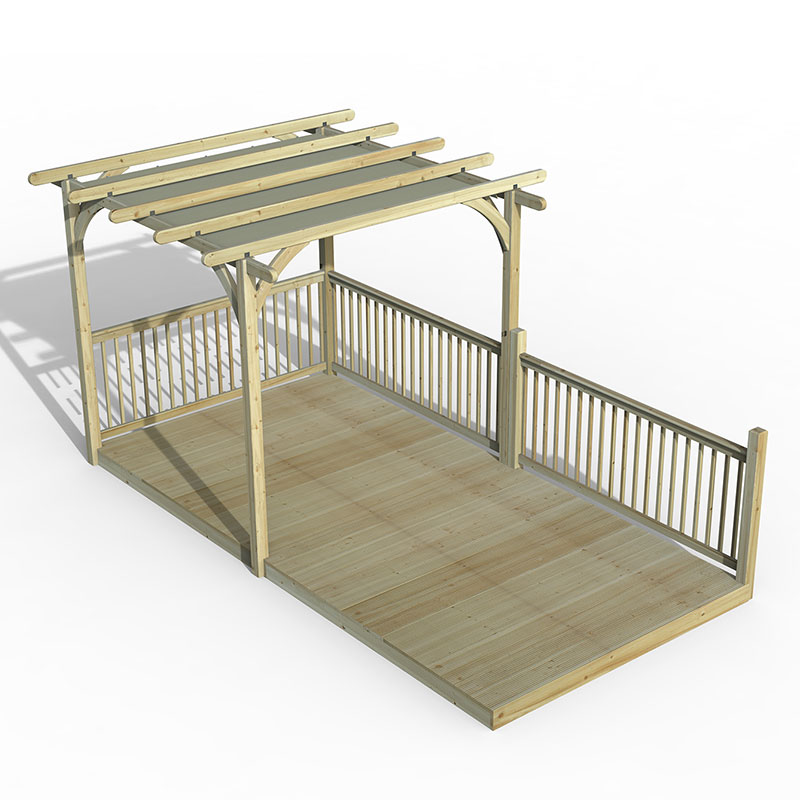
19% OFF: 8′ x 16′ Forest Pergola Deck Kit No. 10 (2.4m x 4.8m) £1,509.9919%

-
11% OFF: 8′ x 16′ Forest Pergola Deck Kit with Retractable Canopy No. 1 (2.4m x 4.8m) £1,519.9911%

-
17% OFF: 8′ x 16′ Forest Pergola Deck Kit No. 11 (2.4m x 4.8m) £1,569.9917%

-
20% OFF: 8′ x 16′ Forest Pergola Deck Kit No. 12 (2.4m x 4.8m) £1,599.9920%

-
11% OFF: 8′ x 16′ Forest Pergola Deck Kit with Retractable Canopy No. 5 (2.4m x 4.8m) £1,619.9911%

-
19% OFF: 8′ x 16′ Forest Pergola Deck Kit No. 13 (2.4m x 4.8m) £1,619.9919%

-
7% OFF: 8′ x 16′ Forest Pergola Deck Kit with Retractable Canopy No. 2 (2.4m x 4.8m) £1,729.997%

-
7% OFF: 8′ x 16′ Forest Pergola Deck Kit with Retractable Canopy No. 3 (2.4m x 4.8m) £1,759.997%

-
7% OFF: 8′ x 16′ Forest Pergola Deck Kit with Retractable Canopy No. 4 (2.4m x 4.8m) £1,769.997%

-
14% OFF: 8′ x 16′ Forest Pergola Deck Kit with Retractable Canopy No. 9 (2.4m x 4.8m) £1,779.9914%

-
11% OFF: 16′ x 8′ Forest Large Pergola Deck Kit with Retractable Canopy (4.88m x 2.44m) £1,779.9911%

-
14% OFF: 8′ x 16′ Forest Pergola Deck Kit with Retractable Canopy No. 6 (2.4m x 4.8m) £1,819.9914%
Decking discount offers for timber, composite and anti-slip boards, with savings on boards, trims and fixings. Compare finishes, profiles and pack sizes to suit your garden project.
Popular products in this range
Clear savings for the decking job you already had in mind
Decking discount offers can make a real difference when you are planning a new outdoor surface or replacing tired boards. The key is not just the price tag, but the type of decking on offer and how well it fits the space you are working with. Some offers are on timber decking for a natural look, others focus on composite decking for a more uniform finish, while certain ranges are priced to clear in specific lengths, colours or pack formats. That can work in your favour if your layout is simple or if you are happy to mix lengths a bit. It is a good way to keep the project moving without paying full price for features you may not need.
Discounted decking often appears in a few different forms. You might see end-of-line boards, bulk pack deals, reduced starter packs, or offers on matching decking accessories such as clips, screws and edge trims. The savings can be useful whether you are doing a small patio step area or a larger raised deck. The important bit is to check the board profile, the finish, and the amount covered per pack, because a cheap price per board does not always mean a cheap price per square metre. That catches people out more often than it should.
Timber, composite, hollow or solid: knowing the forms
When browsing discount decking, the material type is usually the first thing that shapes the result. Softwood decking is often the more affordable route and gives a classic timber appearance with visible grain and a warmer feel underfoot. Hardwood decking tends to sit in a different bracket, with a denser look and a tighter grain pattern, though discounted stock can sometimes bring it closer to budget. Then there is composite decking, made from a mix of wood fibres and polymer, usually with a more consistent colour and a neater, more modern edge.
- Grooved decking boards can suit hidden fixing systems and create a tidy line across the deck.
- Reversible boards give two surface looks in one product, which is handy if you want a bit of choice.
- Solid composite boards feel more substantial and are often preferred where a firmer underfoot feel matters.
- Hollow composite boards may be lighter and easier to handle, which can help on larger layouts.
- Square-edge boards are useful when you want a neat frame or a cleaner visible edge.
The form matters just as much as the finish. A grooved profile and a smooth profile can look very different in the same colour. Grooved surfaces can give a more technical look, while smoother boards often feel more relaxed and less busy. If your garden already has a lot going on visually, a simpler board profile can keep the space from feeling crowded. If you want the deck to stand out as a feature, a stronger groove pattern may do more for the appearance.
What discount offers often hide in plain sight
Discounts are not always about one board being cheaper than another. A lot of the value comes from the pack format, board length and matching pieces. For example, a reduced price may apply to boards in a slightly less common length, which can still work perfectly if you are planning the layout with care. Another offer may include a set number of boards, but you will need to check whether the coverage suits your exact measurements. That sounds obvious, though people still buy on price alone and end up with odd offcuts or not quite enough for the job.
Some offers focus on related parts rather than the boards themselves. That can include fixing clips for hidden-install systems, fascia boards for edging, or colour-matched screws that keep the finish looking deliberate. When these items are discounted together, the project can feel less piecemeal and a bit more joined-up. It also helps when the deck design uses visible edges or steps, because the trim pieces become part of the look, not just the practical side of things.
Why one board type can suit one space better than another
Timber decking and composite decking each bring their own advantages, and discount offers make it easier to choose based on the space rather than the budget alone. Timber often appeals where you want a more traditional garden feel, especially alongside planting, gravel, sleeper borders or a cottage-style layout. It has a natural variation that many buyers like because it feels less uniform and a bit more alive. Composite, by contrast, tends to suit cleaner layouts, sharp edging and modern terraces where a consistent tone matters.
There are also practical differences worth noting. Composite decking boards can come in embossed woodgrain, deep-reeded or lightly textured finishes, each giving a slightly different look under daylight. A deeper texture may hide small marks better, while a lighter grain can look calmer and more subtle. Timber boards vary too, from straighter-grained lengths to pieces with more knots and character. If you prefer a more even result, look for boards that are graded and matched as closely as possible. If you like natural variation, discount stock can be a handy way to get it without paying premium prices.
Shapes, edges and finish details that change the feel
Decking is not just a flat board. The edge profile, surface texture and board width all change how the finished area reads. Wider boards can give a more open, less cluttered effect and may suit bigger spaces, while narrower boards can add more lines and a slightly more detailed appearance. Some boards are designed with a rounded edge, which softens the look a touch, while others use a crisper square edge for a sharper line. Small things, yes, but they matter once the deck is in place.
- Wide boards can make a compact garden feel less busy.
- Narrow boards can give extra rhythm across a long run.
- Dark tones create a grounded, defined border around planting.
- Light tones can open up a shaded corner and make it feel less heavy.
- Two-tone boards can add depth without needing a separate decorative layer.
If your garden has a lot of straight lines already, a softer board finish can stop the space from feeling too rigid. If the area is simple and you want more structure, a stronger grain or darker shade may help define the layout. Discount offers are especially helpful when you are considering a finish you would not usually stretch to at full price, like a more textured board or a more distinctive colour.
Hidden fixings, visible screws and the look they leave behind
The fixing method changes both the appearance and the speed of installation. Hidden fixing systems create a cleaner top surface with fewer visible marks, which many people prefer on composite or grooved boards. Face-fixing screws, on the other hand, are straightforward and often practical for timber decking, especially on more traditional builds. Neither option is automatically better; it depends on the material, the board profile and the style you want to see every time you step outside.
There is also a visual difference in the final result. Hidden fixings can make the deck feel more continuous, which is useful if you want the boards to lead the eye across a terrace or around a seating area. Visible screws can add a more workshop-like honesty to timber, especially if the fixing pattern is neat and regular. Some buyers like that detail, some do not. The point is to match the method to the material instead of forcing one look onto another. It saves a bit of faff later on.
Discount buys that work well in real garden layouts
Not every deck has to be a big rectangular platform. Discount decking can be especially useful for awkward spaces, such as narrow side returns, split-level patios, small seating zones or an area around a hot tub base. When the boards are on offer, it becomes more realistic to use them for features like picture-frame edging, a small step detail, or a border run around paving. These touches lift the finished area without needing a full, expensive redesign.
For larger spaces, discounted stock can help you mix lengths sensibly. A deck with a main field of boards and a different edge treatment can often be built from the same discounted range, even if the stock is limited. That is where buyers can save while still getting a coherent look. It is also worth checking whether the offer includes enough matching pieces to finish the edges cleanly, because an unfinished border can make an otherwise smart deck feel a bit half done.
What to check before clicking add to basket
There are a few details worth checking on any decking discount offer, and they are not there just to be fussy. First, confirm the board dimensions and the area coverage, because boards are sold by length and pack count, not by the vague idea of a deck. Second, look at the profile type so you know whether the fixing method and finish suit the build. Third, make sure the colour batch is acceptable if you are buying enough for one visible surface, since small shade shifts can show up once installed.
- Check coverage per pack rather than only the unit price.
- Match board profile to your chosen fixing method.
- Look for compatible trims if the deck has visible edges.
- Confirm texture and colour so the final look is consistent.
- Allow for offcuts when planning around steps, corners or breaks in the layout.
If the offer is on a limited batch, it may be sensible to buy the full amount in one go. That is not about pushing panic buying, just about avoiding a situation where the next pack is from a different run and looks slightly off. A little planning goes a long way, and it often costs less than trying to patch together a near match later.
How to choose with value in mind, not just price
The best deal is rarely the lowest number on the label. A better approach is to weigh material, board profile, finish, fixing style and pack coverage together. A discounted timber board can be a very sensible buy if you want a natural surface and are happy with the character it brings. A reduced composite range may suit a more regular layout where a consistent finish matters more than grain variation. The right choice depends on what the garden needs to look like once the work is done.
Think too about how the decking will sit next to the rest of the outside space. A deep brown board can give a solid frame to pale paving, while a softer grey can blend with fencing, planters or stone. If the area already has strong materials elsewhere, a less dominant board may fit better. If the decking is the main feature, a more defined surface can help it feel intentional. Discount offers make these decisions a bit easier because they let you work with more than one option without stretching the budget too far.
The sort of deal that feels sensible when the job is done
A good decking discount offer should leave you with boards that suit the space, a finish you are happy to see from the kitchen window, and enough matching parts to make the whole project look thought through. That may mean a grooved timber board with a natural edge, a composite plank with a neat hidden-fix surface, or a mixed-format offer that gives you the right lengths for a tighter layout. None of it needs to be flashy. It just needs to work with the shape of the garden and the way you plan to use it.
When you compare the types, the forms and the included extras, you are more likely to spot the offer that genuinely fits. And that is usually the one worth choosing. Not because it shouts the loudest, but because it makes the deck easier to finish well, with less guesswork and fewer odd compromises. That is where the real value tends to sit.