
Carports under £6000 - Best Deals in UK!
Showing all 2 results
-
12′ x 42′ Palram Canopia Arcadia 12700 Grey Metal Carport (3.59m x 12.86m) £5,539.004%

-
12′ x 28′ Palram Canopia Arcadia Alpine 8500 Grey Metal Carport (3.59m x 8.58m) £5,049.00

Carports under £6000 give you a practical way to cover your vehicle, add structure to a driveway, and keep the budget in check. Compare sizes, roof styles, frames and materials.
Why a Carport Makes Sense at This Budget
A carport under £6000 can be a very sensible choice if you want shelter without moving into the cost of a full garage. For many homes, the appeal is simple: you get a defined parking space, some protection from rain, frost and falling leaves, and a cleaner look on the driveway, all without the heavier build cost that often comes with enclosed structures.
At this price point, the most useful thing is not chasing extra bells and whistles, but understanding what the budget can comfortably buy. That means looking at open-sided carports, single or double widths, different roof forms and the frame material. Small choices here affect the look, the usable space, and how well the structure fits beside your house or beside an existing wall.
Open, Semi-Enclosed or Wall-Mounted?
One of the main differences in carports under £6000 is the format. An open carport is the most straightforward option, with posts and a roof covering but no full walls. It suits easy access, side driveways and homes where you want a light visual feel rather than a boxed-in structure. It also tends to be the most flexible if you are working around narrow spaces or awkward driveway layouts.
Bestseller der Kategorie Carports under £6000
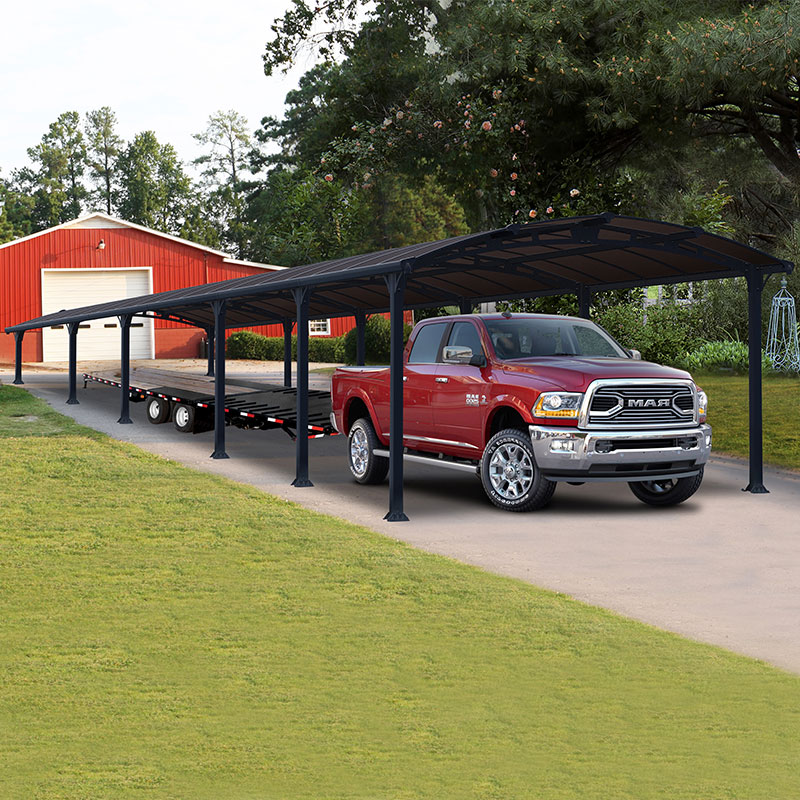
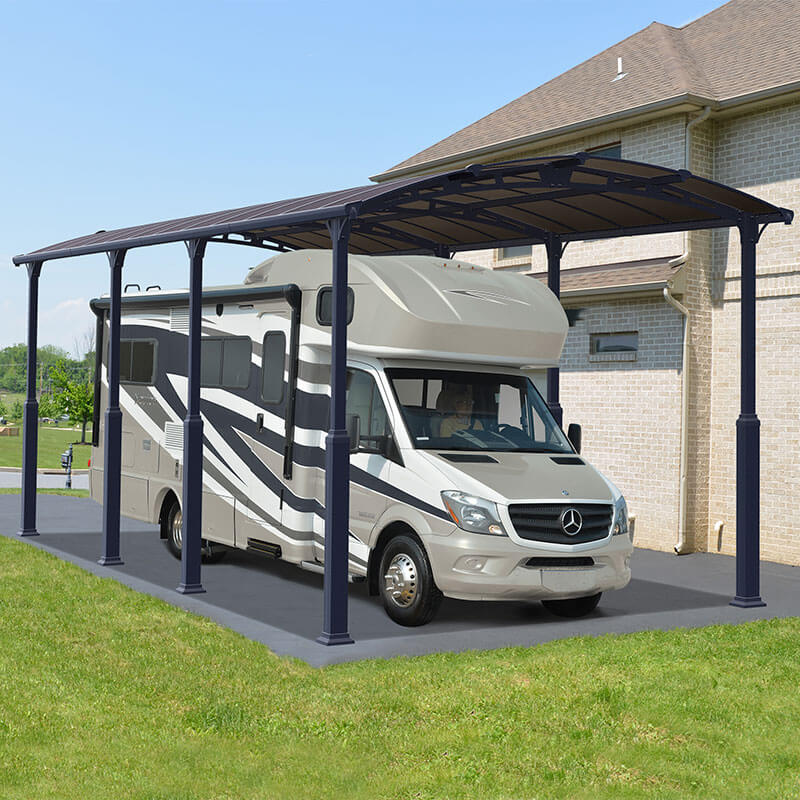
A semi-enclosed carport may include one or two side panels, which can help with wind exposure and can make the parking bay feel more defined. This sort of set-up is useful where the weather tends to sweep across the driveway, or where the carport is near a fence line and you want the structure to feel a bit more tucked in.
Wall-mounted carports are another practical route. These are fixed to an existing building, so they can work well when space is tight at the side of the house or when you want the roofline to sit neatly against the property. The difference here is that you are relying partly on the building for support, so the layout needs to suit the wall, the entrance door and the available clearance. Not every plot works for this, but where it does, the result can feel neat and compact.
Single Bay, Double Bay, and the Space You Really Need
The simplest place to start is with the number of vehicles. A single carport is usually the budget-friendly option and often the best fit for one standard car plus a little side space. It can also be used for a car and bike storage, or for a car with room to open doors comfortably. If you only need shelter for one vehicle, a single bay avoids overspending on width you won’t use.
A double carport gives far more flexibility. It suits two cars side by side, or one large vehicle with extra room for daily use items. Within a £6000 budget, a double bay may still be possible, but it will depend on frame type, roof style and whether you are choosing a freestanding or wall-fixed design. In other words, width is usually where the budget gets stretched first.
There is also the option of a longer single bay, which can be useful for vans, estates or a car plus storage along the back edge. That can be a smarter use of money than going wide, especially if the driveway is narrow but deep. The point is to measure the real vehicle, not just the “car” label. Wing mirrors, boot clearance, and the angle you use when parking all matter more than people often think.
Roof Shapes That Change the Look and the Feel
Roof style has a big effect on both appearance and practical use, and it is one of the main things shoppers compare when looking at carports under £6000. A flat roof carport gives a clean, simple line and often sits well beside modern homes or minimalist extensions. It can be easier to place where height is limited, though drainage design still matters.
Pitched roof carports bring a more traditional look, with a visible slope that can suit older homes, cottages or properties where you want the structure to echo the main roof. This style can also feel less heavy visually, even if it uses more height overall. A pitched design can sometimes make the carport feel more airy, though it depends on the frame proportions.
Mono-pitch roofs are a useful middle ground. They slope in one direction and can work particularly well when the carport sits against a wall or boundary and needs a practical runoff direction. They often look neat and can be a strong choice where you want something modern but not too boxy.
Then there is the more open, shelter-like feel of a lean-to carport, which is often selected when attaching to an existing building. It is a good example of how roof form and placement go hand in hand. Some buyers care most about the look from the road, while others care about the line of sight from the kitchen window. Both are valid, and both should be considered before deciding.
Frame Materials: What Changes Below the £6000 Line
The frame is where you begin to see real differences in price, appearance and strength. Timber carports often have a warmer, more domestic look and can suit gardens, period homes and driveways where you want the structure to feel less industrial. Timber can be a good choice when the carport is meant to blend in, rather than stand out.
Metal carports, especially those with steel or aluminium frames, tend to give a more crisp and functional feel. They can suit contemporary houses or spaces where the carport needs to look tidy against paving, cladding or rendered walls. Metal framing is often chosen for its slimmer lines and cleaner profile.
The difference between timber and metal is not only visual. Timber often looks softer and more natural, while metal can feel more precise and compact. If your driveway is already visually busy, a metal frame may reduce the sense of bulk. If your garden and house use a lot of wood, a timber frame may sit more comfortably. There is no single right answer here, just the right fit for the property.
What £6000 Can Usually Stretch To
With carports under £6000, the budget can often cover a well-sized, good-looking shelter in a straightforward format. You may be able to choose a stronger frame finish, a more refined roof shape, or a better balance of width and height without moving into a much higher spend. The exact result depends on size and materials, so the budget works best when used with a clear plan.
At this level, buyers often decide between:
- A simple single carport with an open design
- A wall-mounted shelter to save on footprint
- A wider bay if the driveway can handle it
- A timber look for softer visual impact
- A metal frame for a tighter, cleaner outline
It can be tempting to focus on “the biggest one possible”, but the better approach is to think about how you use the space every day. If the doors need to open fully, if children’s bikes sit next to the car, or if you need room to manoeuvre the boot on a sloping drive, those details matter more than an extra half-metre on paper.
Freestanding or Fixed to the House?
A freestanding carport gives you more freedom in placement. It can sit at the front, side, or even farther back on a plot if the layout allows. This is useful on driveways that are not in a straight line, or where you want the carport to function as a separate feature. It can also be easier to plan around existing paths, bins and access routes.
A fixed carport, by contrast, often feels more integrated. When attached to the house or another structure, it can look as though it belongs there rather than arriving as an extra. For some buyers, that is the main attraction: a sheltered parking spot that seems to slot into the property without too much visual fuss.
The difference is not only about looks. A fixed design may suit smaller plots where space is tight, while freestanding versions can be better when you want the parking cover offset from the main building. It is worth checking the route from the car to the front door too, because a carport that looks good but leaves you crossing open ground in the rain is a bit of a missed opportunity.
Useful Features That Matter More Than People Expect
When comparing carports under £6000, a few smaller features can make a real difference. The roof covering, for example, affects how open or enclosed the carport feels. Some coverings let more light through, while others create a more shaded parking space. That changes the character of the area as much as the size does.
Post placement is another detail that buyers sometimes overlook. Posts placed too close to a door opening or too near the car’s swing path can make the whole structure feel awkward. A good layout gives you room to park without threading the car through a tight gap every time.
Also think about the height clearance. A standard car may fit comfortably, but if you drive an SUV, estate or van, you may need more headroom than you first expect. Even if the footprint seems right, a low roof edge can make the carport feel cramped. That can be annoying, and not just on paper.
How the Different Styles Suit Different Homes
Style is not just about taste; it affects how naturally the carport sits with the house. A modern flat or mono-pitch carport can suit new-build properties, updated driveways and homes with simple lines. It creates a tidy edge and keeps the appearance understated.
A traditional pitched carport is often a better match for brick homes, older houses or properties with a more classic roofline. It can look like part of the original design rather than an add-on. That matters if the front of the house is visible from the street and you want the overall effect to feel considered.
Timber-framed carports can soften a lot of hard landscaping, especially where the driveway is mostly block paving, gravel or concrete. Metal-framed versions tend to sit well where the property already has contemporary windows, railings or a modern garage door. The best result is usually the one that echoes something already on the house, even in a small way.
Buying Tips That Keep the Choice Sensible
Before choosing a carport under £6000, measure the vehicle carefully and then allow for the space around it. If you only measure the car itself, the result can feel tight. Add space for doors, mirrors, walking around the vehicle and opening the boot. A carport is meant to reduce hassle, not create a daily squeeze.
Also check how the carport will sit on the driveway surface. If the ground slopes, or if there is a change in level near the house, the usable height can be affected. Even a carport that looks fine in a product image can feel different once it is matched against a real plot with walls, steps or fences nearby.
Another useful step is to decide whether the main aim is:
- weather cover for one vehicle
- a tidy parking bay that improves the frontage
- extra sheltered space for bikes or everyday items
- a structure that suits the house style
Once that is clear, the choice becomes much easier. You can then compare the form, the frame and the size without getting distracted by features you may not use.
The Small Details That Make a Budget Carport Feel Right
A good carport is not only about keeping the rain off. It is about how the structure changes the whole arrival to the home. A well-proportioned carport can make a driveway feel more organised, give the car a proper place to sit, and cut down on the cluttered look that sometimes comes with parking on open paving.
At the same time, carports under £6000 work best when the design is kept clear and purposeful. This budget often suits buyers who know what they need and prefer a straightforward solution over a lot of extras. That is not a drawback; in many cases, it is exactly why the product feels worth buying.
If you are comparing options, look for the balance between shape, size, frame material and roof form. When those four things line up well, the carport tends to feel right from day one. And that is usually what people want: a shelter that does the job, looks considered, and fits the space without forcing everything else around it.
Final Thought: Practical Shelter with a Clear Budget
Carports under £6000 cover a useful middle ground for homeowners who want more than an open parking space but do not need the expense of a full garage. The choice is broad enough to cover single and double bays, open or semi-enclosed designs, flat, mono-pitch or pitched roofs, and both timber and metal frames. That gives you room to match the structure to the house, the driveway and the vehicle, instead of settling for a one-size answer.
For many buyers, the right carport is the one that feels easy to live with. It gives the car a proper shelter, keeps the frontage looking ordered, and fits the budget without making the rest of the project feel stretched. A simple, well-chosen carport can do quite a lot, and often that is enough.
[Sassy_Social_Share]