
Carports 42x12 - Best Deals in UK!
Showing all 2 results
-
12′ x 42′ Palram Canopia Arcadia 12700 Grey Metal Carport (3.59m x 12.86m) £5,539.004%

-
12′ x 42′ Palram Canopia Alpine 12700 Grey Metal Carport (3.59m x 12.86m) £7,759.00

Carports 42×12 offer a long, practical covered space for two vehicles, trailers or a car plus storage, with choices in roof style, frame type and side panels.
Why the 42×12 size matters
A 42×12 carport gives you a very usable footprint when standard widths feel too tight. At this size, the structure is long enough for two parked vehicles end-to-end, or for one vehicle with extra room for bikes, bins, garden equipment or firewood. The 12 ft width keeps the overall span compact enough for many plots, while the 42 ft length creates the kind of sheltered run that works well beside a driveway, along a boundary, or as a link between a parking bay and a storage area. It is a format that suits buyers who want cover without going fully enclosed.
That longer shape also helps if you need a carport that does more than just shield a single car. A 42×12 carport can work as a covered parking strip, a vehicle shelter with a workshop-style area at one end, or a place for a caravan, small boat, or utility vehicle depending on the exact layout. It is not a tiny add-on, and that is the point: you get space that feels planned rather than squeezed in.
Open sides, partial sides, or enclosed edges?
One of the main differences in this category is how much the carport is enclosed. An open-sided carport gives the easiest access and a very light visual feel. It is handy where manoeuvring matters, because there are no side walls to narrow the entry. It also suits places where you want cover from above but still want the space to breathe visually.
Bestseller der Kategorie Carports 42x12
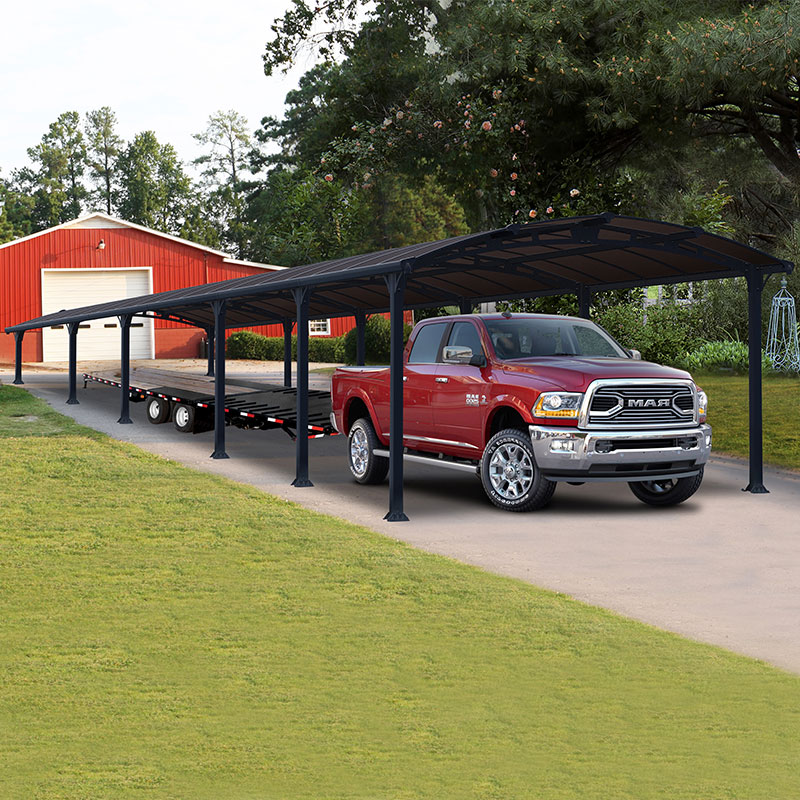
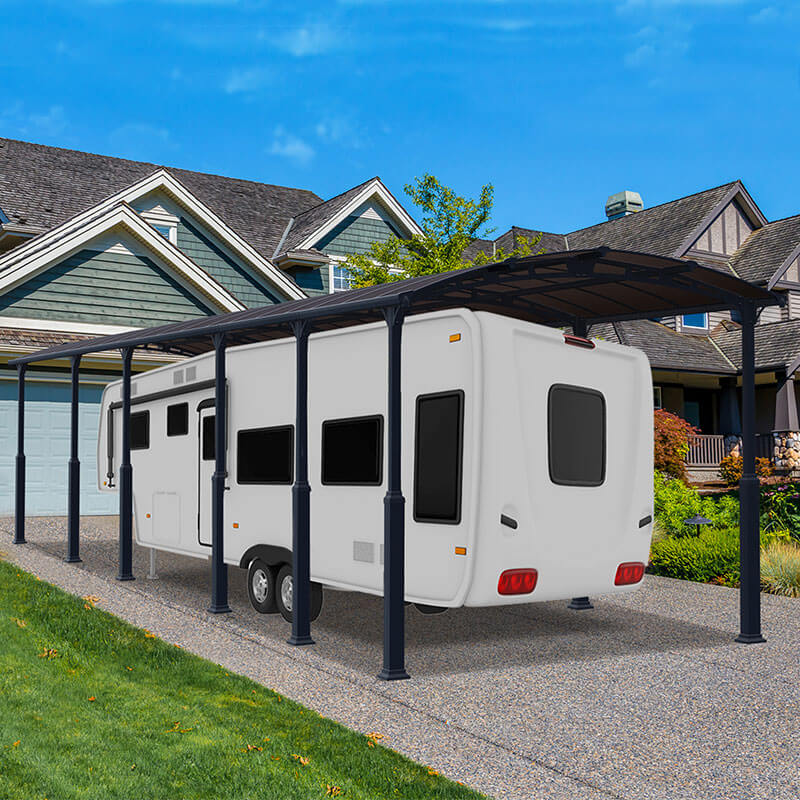
Partially sided carports are a middle ground. A rear panel, one side panel, or a combination of both can help define the structure and offer more shelter from angled weather. On a 42×12 layout, partial sides can make the space feel more organised without turning it into a fully closed building. Buyers often choose this route when the carport sits near a prevailing wind or when neighbouring sightlines matter a bit.
Fully enclosed-style carports are less open in appearance and often feel more like a hybrid between a carport and a storage building. They can be useful where the 42 ft length is intended to create separate zones, but the exact specification depends on the product range. The key difference is this: the more enclosure you add, the more the structure shifts from simple parking cover to something with a stronger storage function.
Roof shapes that change the look, and the use
The roof form makes a bigger difference than many buyers expect. A flat roof carport gives a neat, low profile and can suit more contemporary settings. It tends to look straightforward and tidy, especially along a long 42 ft run. If you want the carport to sit quietly beside the house or fence line, this shape is often a good fit.
A mono-pitch roof has a single slope and is often chosen for a cleaner water-run direction and a more architectural look. On a 42×12 carport, a mono-pitch format can also help the long profile feel less boxy. It can look very considered, though maybe that sounds a bit posh for a carport, but still, the shape does matter.
Gable roof carports bring a more traditional outline, with a peaked form that can suit classic homes and larger garden plots. They usually give a more familiar visual rhythm, especially if the property already uses pitched roofs elsewhere. In a long format like 42×12, a gable roof can make the structure feel balanced rather than stretched out.
There are also dual-pitch or other pitched variations in some ranges, and the main decision is not just style. It is about how the roof shape fits the surroundings, the available height, and the overall look you want. A carport should sit naturally in the plot, not look like it landed there by accident.
Steel, aluminium or timber-look: the frame choice
Steel carports are often chosen for their solid, practical feel and their ability to suit larger spans. In a 42×12 format, steel can make sense when the buyer wants a robust frame with a crisp, functional appearance. It is a material that usually suits modern plots, commercial-style parking areas, and anyone who wants the structure to look purposeful.
Aluminium carports are lighter in visual terms and often have a cleaner, more refined look. They can suit homes where the carport needs to sit comfortably against existing architecture without looking heavy. For longer formats, aluminium is often appreciated for the way it keeps the structure from feeling visually bulky.
Some designs have a timber-effect finish or a timber-style visual language, even when the core structure is not fully timber. This can be useful if you want the carport to blend with garden features, fencing or outbuildings. The difference here is mostly about appearance and how formal or natural the carport feels in the garden setting.
When comparing frames, buyers usually look at three things: the overall look, the span and support style, and how the carport sits with the rest of the property. A long 42×12 carport is not the place for a frame that feels weak or overly delicate; it should match the scale of the footprint.
Single, double, or long-line parking layouts
In a 42×12 carport, the layout matters almost as much as the dimensions. A single vehicle layout might sound simple, but the long length gives you extra side-by-side breathing room somewhere along the run, or space to place the vehicle centrally and still have covered access around it. That is useful if you dislike tight parking or if you need to open doors more easily.
A double-use layout can mean two cars parked in sequence, or one car paired with storage space. This is one of the more practical uses of 42 ft length. It can reduce the need for separate covered areas, which is helpful where the plot is narrow but long.
The long-line layout is also a good option for mixed use. For example, the front section might be used for daily parking, while the back section can hold a trailer, garden tools, a motorcycle, or seasonal items. The carport becomes a flexible strip rather than just a parking bay. That flexibility is one of the reasons buyers look at 42×12 rather than smaller formats.
What sets a 42×12 apart from smaller carports
The most obvious difference is space, but the practical difference is how that space works. A smaller carport may protect one car well enough, yet it can feel restrictive when doors need to open, when there is a tow bar attached, or when the vehicle is longer than average. A 42×12 carport gives more room to plan the parking angle, access route and extra utility use.
It can also be easier to create zones within the same covered structure. For instance, you may keep one end open for a car and another end as a covered strip for bins or equipment. That is harder to do in shorter carports where every metre has to justify itself. With 42 ft of length, the design feels more flexible and less forced.
Compared with very large enclosed outbuildings, a carport is still a lighter, less closed option. That means it often feels less visually dominant. So if you want coverage without building a heavy-looking structure, the 42×12 format sits in a good place between small and overbuilt.
Useful buyer checks before you choose
Before picking a 42×12 carport, it helps to think about the vehicle length, door clearance and how much turning room you actually have on site. A long carport only feels comfortable if the approach is realistic. If you regularly park larger vehicles, measure with mirrors, tow bars or roof carriers in mind, not just the basic body length.
Also look at the roof overhang and post placement. Two carports can both say 42×12 and still feel very different if the support points are set differently. Some buyers prefer more open corners for easier access, while others want the frame set so the sides feel more contained. There is no single correct option, just the one that fits the site better.
Height is another detail people sometimes miss. A 42×12 carport may suit standard cars easily, but if you are parking a van, 4×4, or anything with a higher roofline, check the clearance carefully. The shape can be long and generous yet still feel wrong if the height is off. Bit of an obvious point, but it gets overlooked.
Side panels and ends that change the feel
Side panels can be more than a weather feature; they shape how the whole carport feels. A single side panel can create a sheltered edge without closing the design too much. A dual side panel arrangement gives more boundary and can make a long 42 ft structure feel more organised, especially when set near an open garden or driveway edge.
Rear panels are useful where the carport ends against a fence, wall or planting area. They can make the parking area feel less exposed and help the structure read as one finished unit. In a long format, the rear treatment also matters because the eye follows the length, so a tidy end can make a big difference.
Some buyers prefer no side panels at all, because that keeps the carport airy and easier to access from both sides. Others want more definition. The difference is mostly practical, but the visual result matters too. A 42×12 carport with selective screening can look deliberate and neatly planned, not just assembled for the sake of it.
What makes this category attractive for practical plots
Carports in the 42×12 size suit plots where the available area is long rather than wide. That is a useful characteristic for side access spaces, driveway runs, and boundaries beside garages or garden walls. The shape can make better use of land that might otherwise be awkward for a square shed or a broad garage.
They also suit buyers who want a structure with a clear purpose but not too many fixed walls. A carport offers covered parking, a sense of order, and a neat line in the landscape. It can help the whole front or side of a property feel more composed, which is often part of the buying decision even if people do not say it out loud.
If you are comparing options, think about access, visual weight, roof style and frame material together, not separately. The right 42×12 carport is the one that suits the vehicle, the plot and the way you want the space to function day to day. That sounds straightforward because it is, but the details make all the difference.
A few things buyers tend to appreciate
- Long covered parking without taking up excessive width
- Flexible use for two vehicles, a vehicle plus storage, or mixed parking
- Choice of roof shape to suit modern or traditional settings
- Different enclosure levels from open-sided to partially screened
- Frame options that change the overall look and presence
- Better use of narrow plots where length is easier to work with than width
Choosing the right look for the setting
The best 42×12 carport is not only about shelter, but also about how it sits in the garden or driveway scene. A slim, open structure can suit a contemporary home, while a more pitched form may echo existing rooflines. If the property has strong horizontal lines, the long shape of 42×12 can feel very natural. If the setting is softer and more planted, a carport with screened sides or a timber-style finish may blend in better.
It is worth thinking about how visible the carport will be from the road, too. In some plots, the structure is a front feature; in others, it sits quietly to the side. That changes the buying decision more than people expect. A carport that looks fine in one setting might feel too plain or too heavy in another. So the best choice is often the one that matches the site, not just the product photo.
For buyers wanting a practical, long-format parking cover with room to adapt, the 42×12 category gives a strong mix of function and flexibility. It is a shape that can be simple or more tailored, open or partially enclosed, light in look or more defined. And that makes it a very useful size to compare when you want shelter that actually fits the way you use your space.
[Sassy_Social_Share]