
Carports 400 sq ft / 35 m² - Best Deals in UK!
Showing the single result

Carports 400 sq ft / 35 m² give you covered parking with room for a car, bikes, bins or a small trailer, in a size that suits many British driveways and side spaces.
A Practical Footprint with Room to Spare
A 400 sq ft / 35 m² carport sits in a very useful middle ground: it is large enough to feel generous, yet not so oversized that it dominates the plot. For many buyers, this size works well when a standard car needs shelter, but there is also a need for a little extra breathing space at the sides or rear. That extra area can make day-to-day use easier, because doors open more freely and you are less likely to be nudging mirrors or squeezing past awkward posts.
This category is often chosen by people who want more than a simple single-bay shelter. The added floor space can suit a family car, an estate car, a small van, or a vehicle with room for storage beside it. It can also help if you want to keep muddy wellies, a lawn mower, or stacked logs under cover without turning the whole structure into a closed garage. That open-sided feel is part of the appeal: you get protection without losing access or making the space feel boxed in.
Open, Part-Open, or Fully Sheltered?
One of the biggest differences in carport design is the amount of enclosure. A fully open carport is simple and airy, with easy drive-through access and clear visibility. It suits buyers who want quick parking and minimal visual bulk. A part-open design adds side screens or a rear panel, giving more shelter from sideways rain and a bit more privacy. Then there are more enclosed carports, which may feel closer to a garage-like structure while still keeping the open-front character that makes carports so handy.
Bestseller der Kategorie Carports 400 sq ft / 35 m²
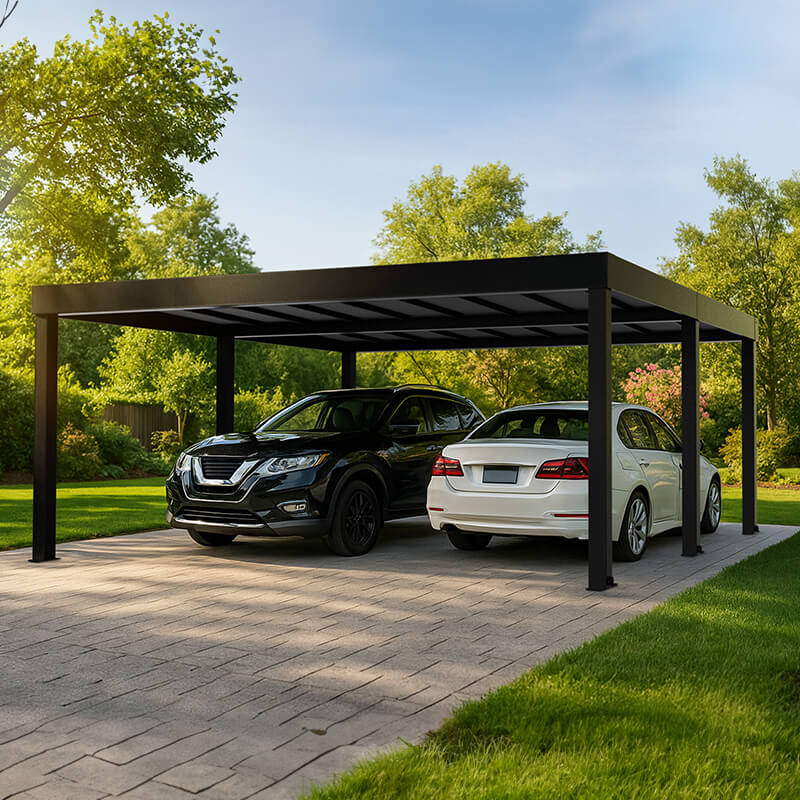
For a 35 m² area, the layout choice really matters. If the carport is going beside a house wall, a lean-to style can use space efficiently and make the structure feel integrated. If it is standing on its own, a freestanding carport may be better when access from all sides is important. Buyers often like the difference because one version feels neat and tucked in, while the other gives a more independent, architectural look. It’s not just about looks either — it changes how you park, unload, and move around the vehicle.
Shapes That Change the Feel of the Space
The shape of the roof alters both the look and the working space underneath. A flat-roof carport has a clean, low-profile appearance and can suit contemporary gardens or modern houses. It tends to blend in well where the aim is to keep the garden line calm and uncluttered. A mono-pitch roof offers a slight slope, which can give the structure a sharper profile and help it sit neatly against a wall. It is a popular choice when rain run-off needs to be directed away from the house side.
A gable roof carport brings a more traditional outline, with two sloping sides meeting at a ridge. This style can feel more substantial and is often chosen when the buyer wants the carport to look a bit more like a garden outbuilding than a plain shelter. There are also arched forms or curved profiles, which can soften the overall appearance and work nicely where the surrounding garden has more organic lines. The shape is not only visual; it affects headroom, water run-off, and how the structure sits beside fences, hedges, or paving.
Materials: Timber Warmth or Metal Clarity
In this size range, the main material choices usually come down to timber or metal, and each gives a different character. A timber carport feels natural and sits comfortably with planting, patios, and traditional homes. The wood grain softens the look, which can matter if the carport is visible from the house or garden. Timber can also make a larger structure feel less stark, especially at 35 m² where the footprint is noticeable.
A metal carport, by contrast, tends to look more precise and crisp. Steel or aluminium frames often suit buyers who want a tidy outline and a modern finish. They can feel lighter in visual terms, even when the structure is substantial. The difference is not just aesthetic: timber tends to bring a warmer, more domestic feel, while metal often looks more engineered and straight-edged. Some buyers prefer that contrast if the house already has brick, render, or glass elements that call for a cleaner line.
There are also mixed designs where a frame and roof structure are paired with different panel choices. This can create a useful balance between appearance and function. In a carport of this size, the material choice shapes the whole mood of the space, so it is worth thinking about how it will sit next to the house, driveway, and boundary fencing rather than seeing it as just a parking cover.
Single Bay, Double Bay, or Multi-Use Layout?
A 400 sq ft carport does not have to mean one fixed arrangement. It can work as a generous single-bay carport, where the main benefit is roomy access around one vehicle. This is useful if you want to park centrally and still have enough side space for doors, bins, or other items. It can also be set out as a double-bay style, depending on the exact proportions and entrance width, giving two smaller parking zones or one broad shared area.
Some buyers like to use this kind of footprint as a multi-use shelter. That might mean parking one car and using the remaining space for a small motorcycle, bike rack, outdoor gear, or storage crates. The point is that 35 m² offers flexibility without needing a full garage build. For households with mixed needs, that versatility is often the reason the category becomes appealing in the first place.
Why Buyers Look at This Size First
People searching for carports 400 sq ft / 35 m² are often after a solution that feels properly sized, rather than minimal. If the carport is too small, parking can be awkward and the sides feel tight. If it is too large, it may dominate the driveway or garden edge. This category gives a middle path where a vehicle is covered, but the area still feels usable and proportionate.
The extra room can make a real difference in everyday use. You may have space to step out without brushing a wall, to open the boot more fully, or to store items away from the weather without crowding the car. If you use a child seat, carry sports kit, or regularly load shopping, that little bit of extra width becomes noticeable very quickly. It’s one of those things you don’t always see on paper, but you feel it straight away when parking.
Useful Differences Between Lean-To and Freestanding Designs
A lean-to carport attaches to an existing wall, which can make it feel efficient and visually settled. It often works well when space is tight along one boundary or when the buyer wants the structure to feel like part of the house. This type can be a sensible fit for side returns, rear access areas, or driveways that run close to a wall. It can also help the carport look less like an added extra and more like a planned extension of the property.
A freestanding carport, on the other hand, gives greater freedom in positioning. It can be placed where access is easiest, or where the plot allows the best approach for turning in and reversing. Some buyers prefer this because it leaves the house wall untouched and can make the layout feel more open. The difference often comes down to how the drive is used day to day: if access routes are simple, a freestanding option may feel more comfortable; if the space needs to be used carefully, a lean-to can be more efficient.
Design Details That Make the Space Easier to Use
Details matter in a carport of this size. The clear opening width affects how relaxed parking feels, while post placement changes whether doors open easily or not. A layout with well-spaced supports can make a big difference to comfort. Likewise, the roof overhang can help give the carport a more generous feel and add visual cover beyond the main frame line. None of these are dramatic features on their own, but together they shape the way the shelter works.
Height is another point worth checking. A taller carport can suit vehicles with roof boxes, taller SUVs, or vans, whereas a lower profile may look neater beside a house with low eaves. The 35 m² footprint is large enough that vertical proportions start to matter more than people sometimes expect. If the roof is too low, the space can feel compressed. If it is too high, it may stand out more than intended. Finding the right balance is often what makes the difference between merely fitting and feeling right.
When the Look Needs to Match the Plot
Not every garden or driveway calls for the same finish. A timber carport can echo fences, decking, or shed cladding, especially in plots with softer planting and a more natural feel. A metal frame may suit paved areas, contemporary extensions, or homes with a more angular outline. That visual match matters because a carport of this size is visible enough to affect the whole front or side view of the property.
Some buyers want the carport to stand out a little, while others want it to sit quietly in the background. A simple roofline and restrained frame can help it blend in. Broader posts, deeper fascia lines, or a more defined roof shape can make it feel like a deliberate architectural feature. There isn’t one correct answer, only what suits the house and the way you use the plot.
Small Choices That Add Up Fast
When comparing options in this category, it helps to think in practical terms rather than just visual ones. Ask whether the carport gives enough door clearance, whether the parking angle feels natural, and whether the structure leaves room to walk around the car without edging sideways. In a 400 sq ft layout, those small differences can be the reason one design feels easy and another feels a bit clumsy.
Also consider how the area is divided. A carport with a broad open front can feel more relaxed, while one with side screening may feel more sheltered but slightly tighter. If you want to keep a bike, garden tools, or bins under cover, it is worth checking whether those items can sit without blocking access. A useful carport is one that does more than cover the vehicle; it makes the whole driveway flow better.
What Makes This Category Worth Browsing
Shoppers looking at Carports 400 sq ft / 35 m² are usually after a shelter that feels properly considered. This category offers enough room for practical parking, more flexible storage, and a better sense of space than compact single-bay solutions. At the same time, it avoids the heavy feel of a full enclosed garage. That balance is part of the attraction, especially for homes where access and openness matter just as much as cover.
If you are choosing between styles, it often helps to picture the everyday routine: pulling in after work, opening the boot in the rain, stepping around the vehicle with shopping bags, or leaving bikes and bins under cover without the whole area turning cluttered. The right shape, material, and layout can make those small moments much smoother. That is why this size category earns attention — it is not just about shelter, it is about making the drive feel more usable, less awkward, and a bit more sorted.
- Open-sided designs for quick access and a lighter visual feel
- Part-enclosed layouts for added shelter and a little more privacy
- Lean-to carports for wall-mounted, space-conscious positioning
- Freestanding carports for flexible placement on the drive or plot
- Flat-roof forms for a clean, understated finish
- Mono-pitch roofs for a sharper profile and directional run-off
- Gable roofs for a more traditional outline and extra visual presence
- Timber frames for a warmer, softer look
- Metal frames for a crisp, structured appearance
Final Thoughts for the Searcher Who Wants Space That Works
A 35 m² carport is a strong choice when you want parking cover with room to move, rather than a tight shelter that only just does the job. The best options in this category balance width, height, and roof shape so the carport feels useful from the first day. If the goal is to keep a vehicle protected while still leaving space for access, storage, and a bit of visual calm, this size gives you plenty to work with. It’s one of those purchases that can make the whole driveway feel better organised, and that is often what buyers are really after.
[Sassy_Social_Share]