
Carports 39x20 - Best Deals in UK!
Showing the single result

Carports 39×20 offer a generous covered parking space for larger vehicles, trailers or two smaller cars side by side, with choices in roof shape, frame style and layout to suit different sites.
Built for bigger parking needs without the bulk of a garage
A 39×20 carport gives you a broad, practical shelter that works well when a standard single bay feels too tight. The 39×20 footprint is often chosen for extra-wide parking, for vehicles with mirrors that sit far out, or for owners who want room to open doors without careful squeezing. It can also suit a setup where one bay is used for the car and the spare width gives space for loading, unloading or simply making daily use easier.
What makes this size stand out is the balance between coverage and access. You get the clear benefit of an overhead shelter, but without closing off the space the way a fully enclosed structure can. For many buyers, that mix is the reason a carport feels more flexible than a garage. It keeps the area visually lighter, lets the drive feel less cramped, and can sit more naturally beside a house, workshop, or storage building.
Which shape fits the site best?
When people look at carports 39×20, the roof form usually matters as much as the size. Different shapes change the look, the headroom, and the way the structure sits in a garden or driveway. The main forms you are likely to compare are:
Bestseller der Kategorie Carports 39x20
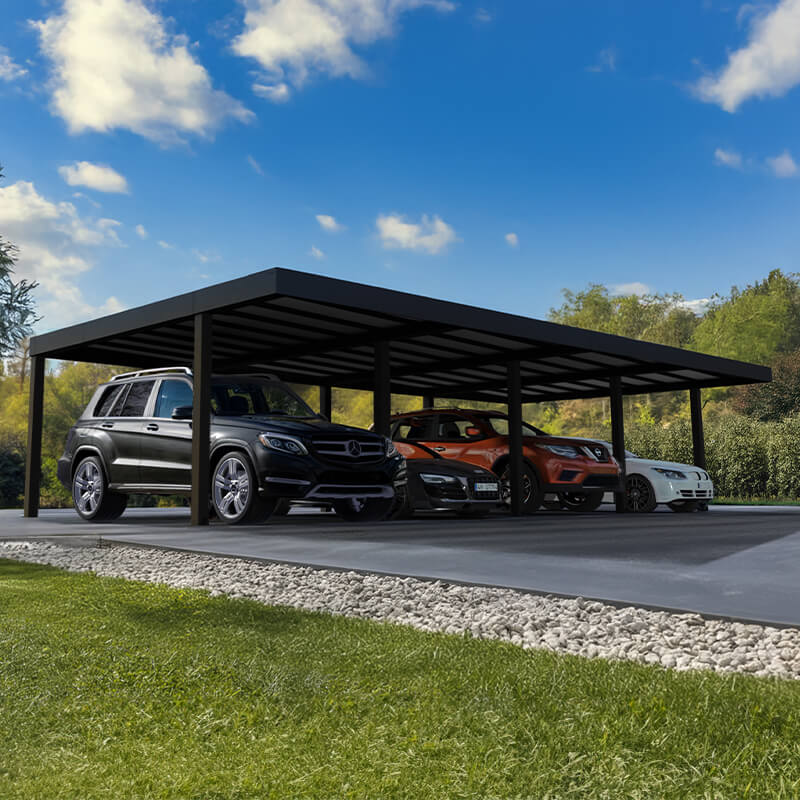
- Flat roof carports – neat, low-profile and often chosen where a simple modern line is preferred.
- Single-slope carports – the roof runs down in one direction, which can suit drainage and give a more dynamic profile.
- Dual-pitch carports – the roof rises to a central ridge, giving a more traditional appearance and a different internal feel.
- Arched or curved roof carports – used where the shape itself is part of the appeal, with a softer outline.
The right shape often depends on the rest of the property. A flat roof can look tidy next to contemporary buildings, while a dual-pitch design may sit more comfortably in a setting that already uses pitched roofs. A single-slope version can be a useful compromise if you want something practical but not too plain.
One wide space, many possible uses
A 39×20 carport is not only about shielding one vehicle. The extra width opens up different parking arrangements, and that is where the size starts to make sense in a very practical way. Some buyers want space for a large SUV, pickup or van. Others prefer a layout that allows a car plus a trailer, or two smaller vehicles parked with a more comfortable gap between them. The category also appeals to those who need enough width for side access, not just front-to-back parking.
That wider format can be especially useful if the driver-side doors need to open fully. It reduces the awkward shuffle that can happen with tight parking bays. For households with multiple drivers, the space can feel easier to use day after day, because no one has to be quite as careful when parking. That difference may sound small, but in real use it often decides whether a carport feels convenient or annoying.
Materials that change the look and the feel
In the carports 39×20 category, buyers often compare material choices as part of the overall design. The material affects appearance, structure, and how the carport sits alongside the rest of the property. Common approaches include:
- Metal carports – usually chosen for their clean lines and structured look.
- Timber carports – selected for a more natural feel and softer visual presence.
- Combination styles – where the overall frame and roof finish create a mixed appearance.
Each type gives a different impression. A metal frame often reads as crisp and defined, which suits straightforward layouts. A timber carport can feel more in keeping with garden spaces, especially if the surrounding buildings already use wood or warm-toned finishes. The best choice is not only about looks; it is also about how much visual weight you want the structure to have on the plot. A large carport can dominate a small space if the style is too heavy, so the finish matters more than buyers sometimes expect.
Open sides, partial sides or more shelter?
Another important difference in the 39×20 carport category is how open the design is. A fully open carport gives easy access from all sides, which is useful for parking and turning. A partly enclosed version can provide more shelter at the edges, which may help with side exposure. Some designs include one or more side panels, while others stay completely open to keep the structure airy and flexible.
This choice affects both convenience and appearance. Open-sided designs often feel lighter and are easier to drive into. Partially enclosed versions can give a more defined parking zone and may feel more fitted to a boundary line or side area. The trade-off is simple: more enclosure usually means more visual presence, while more openness gives easier movement. For many buyers, the sweet spot is somewhere in the middle.
Why this size feels easier to use day to day
The practical appeal of carports 39×20 is not only in the coverage itself, but in how it supports everyday routines. Wider parking space means fewer small hassles. It can make reversing simpler, reduce the chance of mirrors clipping a post, and leave more space for passengers getting in and out. If the area is also used for loading shopping, bikes, tools or boot storage, the added width is genuinely helpful.
There is also a comfort factor. A carport of this scale can create a sheltered zone that feels more organised than an exposed driveway. It gives the parking area a clear purpose, which can make the whole entrance or side of a property feel more put together. For buyers comparing against a plain hardstanding, that sense of structure is part of the appeal.
Subtypes worth comparing before you choose
Within the 39×20 size category, you may see a few different structural approaches. The exact range can vary, but the practical differences are worth noting:
- Single-bay wide carports – ideal when one large vehicle needs extra room around it.
- Double-format carports – suited to parking two vehicles under one roof area.
- Lean-to styles – designed to sit against an existing wall or building line.
- Freestanding styles – placed independently in a drive or open area.
The choice between lean-to and freestanding is especially important. A lean-to carport can feel more integrated with the property and may make efficient use of space near a wall. A freestanding carport gives more freedom in layout and can work well where access is needed from both sides. One is not simply better than the other; the right fit depends on how the parking space is shaped and how you actually use it.
Details that matter more than they look
When buyers compare carports 39×20, small design details often become the deciding factor. Post placement, roof overhang, and the openness of the sides all influence how easy the carport is to use. If the posts sit too close to the parking line, manoeuvring can feel tighter than expected. If the roof projection is too short, the shelter may not cover the vehicle as far as you want. These are the sorts of differences that do not always show up at first glance, but they matter once the space is in use.
Another point is the shape of the driving route into the carport. A wide unit still needs a sensible approach line. If the drive narrows sharply before the parking zone, the overall size becomes less useful. It is worth thinking about the turning movement as part of the purchase, not just the final parked position. That simple check can save a lot of frustration later.
What the size says about the overall presence
A 39×20 carport is not a small add-on. Visually, it makes a clear statement about the property’s function. That can be a good thing when the aim is to create a defined parking area that looks intentional rather than improvised. On larger plots, the size can sit neatly among other outdoor features. On tighter sites, it can still work, but the style needs a bit more thought so the structure does not feel heavy.
The visual feel changes with roofline and material. A lighter roof form and slimmer frame can make the structure appear less imposing. A more substantial frame or deep roof profile gives a stronger presence. Neither approach is right for every buyer. Some want the carport to blend in quietly, while others are happy for it to look like a proper feature of the drive. The category supports both, depending on the finish.
Helpful buying tips for a better fit
If you are choosing from carports 39×20, a few checks can make the decision easier:
- Measure the parking area carefully and allow for opening doors, turning and walking round the vehicle.
- Think about vehicle height and width, not just overall length.
- Check the roof style against the look of nearby buildings.
- Decide how open you want the sides to be before comparing designs.
- Match the layout to how you drive in, especially if the approach is narrow or angled.
It also helps to picture what the carport will do beyond simple parking. If the area is likely to be used for unloading items, standing with the boot open, or keeping a trailer close by, that extra room becomes more important. A lot of buyers focus on the shelter itself and only later realise that day-to-day movement is what shapes satisfaction. That is why a wider format like 39×20 is often chosen with a bit of future use in mind, not just current parking needs.
A practical choice with room to adapt
What makes carports 39×20 appealing is the way they combine shelter, width and flexibility. They suit buyers who want more than a tight parking bay, but do not need a fully enclosed building. They can be simple and understated or more visually present, depending on the roof form and frame style. They can sit beside a house, at the edge of a drive, or near an outbuilding, as long as the layout is planned with enough care.
For anyone comparing options, the main advantage of this category is straightforward: you get a covered parking structure with generous proportions and a choice of forms that affect both function and appearance. That makes it easier to find a version that feels useful in real life, not just on paper. If the goal is to keep vehicles sheltered, make parking less awkward, and add a clear structure to the outdoor space, a 39×20 carport is a size that deserves a close look.
[Sassy_Social_Share]