
Carports 190 sq ft / 18 m² - Best Deals in UK!
Showing the single result

Carports 190 sq ft / 18 m² offer a compact, practical covered parking solution for one vehicle, combining weather shelter, open access and tidy site use in a size that suits smaller drives and garden plots.
A size that works without taking over the plot
A 190 sq ft / 18 m² carport sits in that useful middle ground: large enough to shelter a car, yet compact enough to avoid swallowing the whole frontage. For buyers who want covered parking but do not want a full garage footprint, this format can make a lot of sense. The space is typically suited to a single car, though the exact fit depends on the vehicle’s length, width, door clearance and the amount of manoeuvring room you want left around it.
The main appeal is simple: a carport gives you roofed protection without enclosing the vehicle. That means easier parking, quicker pull-in access and less visual bulk than a closed structure. In an 18 m² size, those qualities matter even more, because every centimetre counts. Buyers often choose this format when they want something that feels orderly and useful, rather than heavy or overbuilt.
Open-sided shelter with a very different feel from a garage
Unlike a garage, a carport is usually open on the sides or only partly enclosed. That difference changes the whole experience. You can drive in with less fuss, the space feels lighter, and there’s no door to open before parking. For households that use the car daily, this can be a small but real advantage.
Bestseller der Kategorie Carports 190 sq ft / 18 m²
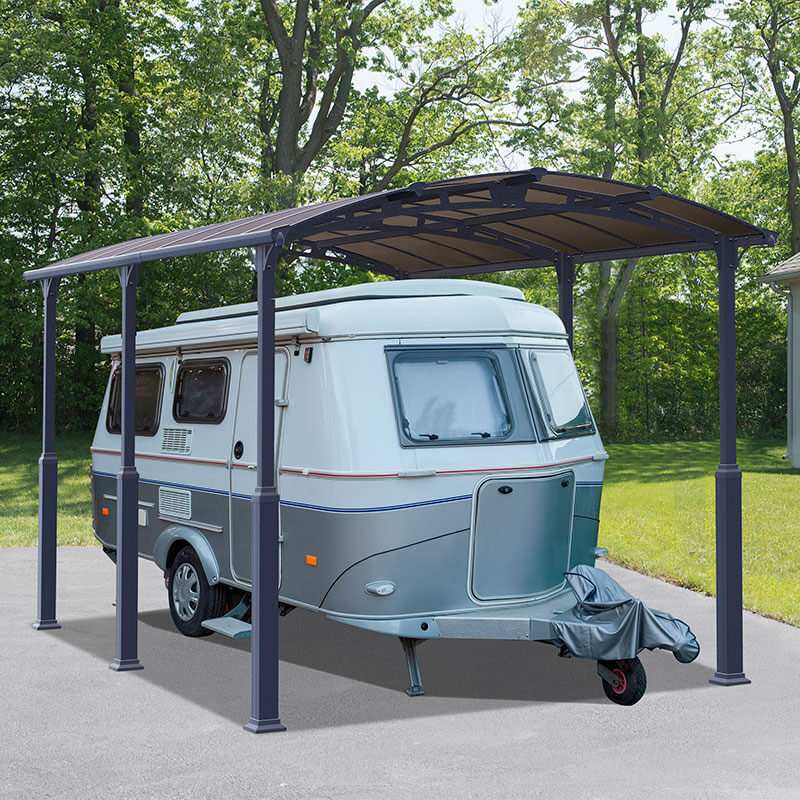
Another practical difference is the way the structure behaves on the site. A garage tends to read like a building; a carport reads more like a frame. It can therefore suit homes where the aim is to add functional cover without making the garden or driveway feel boxed in. In smaller properties, that visual openness is often one of the main reasons people look at this category in the first place.
Common forms: flat roof, pitched roof and angled roof profiles
In this size range, the roof shape makes a noticeable difference to both appearance and use. A flat roof carport has a neat, understated profile and often feels the most compact. It can suit modern façades and narrow side spaces, especially where height must stay controlled. The look is clean, but the visual impact is low-key rather than showy.
A pitched roof carport brings a more traditional outline. It tends to look less like a utility addition and more like a planned part of the property. Buyers often prefer this shape when the home already has sloping rooflines or a more classic style. In an 18 m² format, the pitched form can also create a more open sense of height inside the shelter, which may help if you do not want the parking bay to feel cramped.
An angled roof profile sits somewhere between the two. It can add a sharper, contemporary line and help the carport feel tailored to the house. The exact effect depends on the design, of course, but this kind of roof often gives the structure a more purposeful look. If you’re deciding between roof types, think not just about style, but about how the roof line will sit alongside windows, doors, fence lines and nearby planting.
Single-bay thinking: how 18 m² is usually used
The size 190 sq ft / 18 m² is mainly about single-vehicle parking. That makes it a good fit for compact cars, hatchbacks and many saloons, while larger SUVs and vans may need careful checking before purchase. It is not just the parked footprint that matters, but also the way you open doors, step out with bags, and move around the vehicle once it is in place.
Many buyers like this size because it reduces waste. There is less unused structure compared with a larger two-car bay, and the overall footprint can be easier to position near a house, boundary or existing path. If your goal is to create a dedicated parking point rather than a multi-use building, 18 m² often lands in the right place.
Material differences that change the whole look
Material choice can affect how the carport sits visually and how it feels in daily use. A metal carport usually has a crisp, practical presence. It can look light and precise, especially with slim supports and a simple roof line. This type often appeals when the buyer wants the structure to look tidy and relatively discreet.
A timber carport gives a softer, more domestic impression. Wood tends to blend naturally with gardens, boundary fencing and planting, so it can feel less technical than metal. For buyers who want the parking cover to sit in with the landscape rather than stand apart from it, timber is often attractive. The difference is not only visual; it also changes the tone of the whole entrance area.
Some buyers prefer a combination of materials, but whatever the construction, it helps to look at the posts, roof support and finish as one complete thing. In a small footprint, chunky supports can make the area feel tighter, while slimmer structural lines can help preserve a sense of room. That is a useful detail to check, because 18 m² is not a size where wasted space goes unnoticed.
Which roof shape suits which use?
The roof is not just a design feature. It affects how the carport relates to the property, where rainwater is directed and how much visual height the structure appears to have. A single-slope roof can be a smart choice where a neat, low profile matters. It often suits contemporary settings and can make the carport look more integrated with a side return or driveway edge.
A dual-pitch roof tends to give the carport a more conventional, house-like character. If you want the parking space to feel like part of a broader domestic setting, this form may be easier to place visually. It can also look balanced from the street, which matters if the front of the property is visible.
There are also freestanding and attached options. A freestanding carport can be placed where the access is best, while an attached version can sit close to the house and create a shorter route from car to door. The choice depends on the layout of the plot, the direction of approach and how you actually use the space day to day. Not a glamour decision, perhaps, but a useful one.
Freestanding or attached: the layout question that changes everything
A freestanding carport gives you placement flexibility. It can sit at the edge of a driveway, near a side access path or in a position that keeps the vehicle away from the main frontage. This can be helpful on plots where the driveway does not run flush to the house, or where you want to preserve the look of the main building.
An attached carport, on the other hand, can make arrival and departure feel smoother because the shelter sits directly beside the home. If you regularly carry shopping, sports gear or bags, that shorter transition can be a real plus. It also tends to give the property a more connected appearance, as though the parking space was planned as part of the house rather than added later.
In a small size like 18 m², the relationship to the house matters a lot. A carport that is too close to windows or doors may feel busy. One that is too far away may lose the convenience advantage. That is why plotting the position carefully is worth doing before choosing a format.
Why buyers keep choosing a covered but open solution
The strongest reason is that a carport offers weather cover without the closed-in feel of a garage. You get protection from overhead exposure, and the car stays under a defined structure, yet the space remains open and accessible. For many buyers, that balance is exactly what they were after.
There is also the matter of day-to-day ease. Parking under a roof can make the whole routine feel more orderly, especially in shared driveways or tighter front gardens. The car does not have to sit fully exposed, and the structure can help the property feel more organised. That may sound modest, but it’s often the practical details that prompt a purchase.
Another point is the way a carport can support a neater site layout. If your driveway already carries bins, bicycles or boundary movement, a defined parking bay can reduce the sense of clutter. A well-sized 18 m² carport can create a clear pause in the arrangement of the frontage, giving the car a proper place rather than leaving it floating on the paving.
Features to compare before buying
- Overall footprint – check the actual external dimensions, not only the nominal size.
- Headroom – useful for taller vehicles, roof bars and comfortable access.
- Post placement – important for door opening and turning into the bay.
- Roof style – flat, pitched or angled changes both looks and usable height.
- Open side layout – some designs feel more accessible than others.
- Material finish – affects how the structure sits against the house and garden.
- Freestanding or attached – a key choice for convenience and site planning.
When compact does not mean restrictive
A lot of people hear the words 18 m² and assume the space will feel tight. That is not always the case. In a carport, openness changes the sense of scale. Because you are not dealing with walls on all sides, the area can feel more usable than a similarly sized enclosed building. The vehicle gets shelter, but the structure does not crowd the eye in the same way.
This is especially relevant for smaller front gardens and modest driveways. A compact carport can look like it belongs there, rather than forcing the plot to adapt around it. That can be a very persuasive point for buyers who want the practical gain of covered parking but do not want to compromise the overall feel of the property.
Picking the right shape for the vehicle, not just the garden
It is tempting to choose a carport purely by style, but the vehicle should lead the decision. A hatchback and a long saloon do not need the same layout. Nor do a compact car and a higher SUV. The best fit is one that allows easy entry, clear door opening and sensible clearance on all sides.
If the vehicle is used every day, convenience matters more than a dramatic shape. A roof that feels slightly larger in one direction, or posts that sit just outside the doors, can make the whole experience calmer. Conversely, a carport that looks fine on paper but makes parking fiddly will not feel good in practice. This is one of those purchases where the detail is the difference.
How the structure can suit different property styles
A modern property often pairs well with a simple flat or angled roof and slimmer lines. The result can look tidy, almost architectural, without drawing too much attention. For a more traditional house, a pitched roof and a timber finish can feel more settled and familiar. The carport then reads as part of the home rather than an add-on.
That said, style matching does not have to be exact. Sometimes a deliberate contrast works well, especially if the carport is kept visually light. The important thing is that it feels intentional. In a small category like this, a mismatched structure can look clumsy quite quickly, while a well-chosen one can make even a modest driveway feel thought through.
Practical buying thoughts that save regret later
Before choosing a carport 190 sq ft / 18 m², it is worth checking how you actually use the parking space now. Do you need quick access from the house? Do you reverse in or drive through? Is the vehicle parked centrally or to one side? These little habits affect which shape and layout will feel right.
Also think about how much visual presence you want at the front of the property. Some buyers want the structure to be barely noticeable; others want it to act as a clear architectural feature. Neither approach is wrong. It just depends on whether the carport should fade into the background or become part of the property’s character.
And yes, dimensions matter more than many people expect. A carport in this category can be a neat solution, but only if the relationship between roof, supports and vehicle is right. Measure carefully, compare the different shapes, and picture the daily routine, not just the empty structure. That tends to lead to a better choice than judging by appearance alone.
A tidy solution for buyers who want cover without clutter
For many homes, Carports 190 sq ft / 18 m² hit a useful balance: they provide covered parking, keep the plot open, and avoid the larger footprint of a garage. Whether you prefer a flat roof, pitched roof, freestanding frame or an attached layout, the category offers enough variation to suit different sites and different cars. If you want a parking solution that feels practical, restrained and easy to live with, this size deserves a proper look.
[Sassy_Social_Share]