
Carports 190 sq ft / 17 m² - Best Deals in UK!
Showing the single result

190 sq ft / 17 m² carports give a practical amount of covered space for everyday parking, with room for different roof styles, side layouts and vehicle sizes in a compact footprint.
A neat footprint with real everyday use
A 190 sq ft / 17 m² carport sits in that sweet spot where a covered parking space feels useful without taking over the garden or driveway. It is usually chosen for one car, a small SUV, or a motorbike and storage mix, depending on the exact dimensions and post layout. The size is also handy if you want shelter from rain, frost, falling leaves and bird mess, but do not need a full garage.
What makes this category interesting is the balance between coverage and space efficiency. You get a roofed parking zone that can still leave breathing room around the edges, which matters if access is tight or if the carport has to sit beside a path, fence or outbuilding. For many buyers, this is the point where a carport starts to feel like a proper addition rather than just a covered corner.
Shapes that change how the space feels
Within this size, the roof shape makes a noticeable difference to the look and the usable height. A flat roof carport keeps the profile low and tidy, which can suit modern houses and tighter planning situations. It tends to blend in well where you want the structure to stay visually quiet.
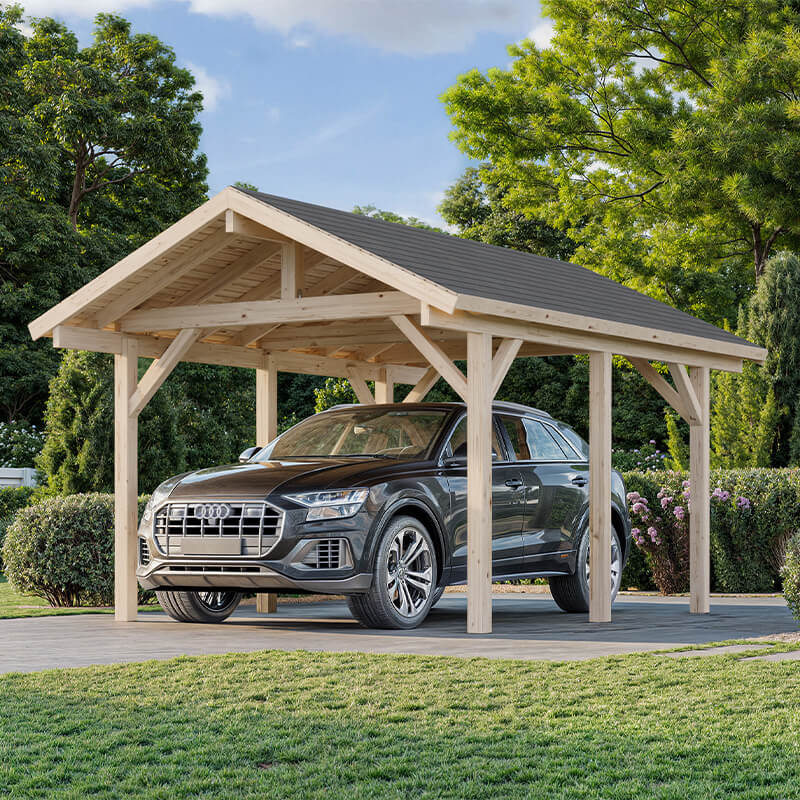
Bestseller der Kategorie Carports 190 sq ft / 17 m²
A pent roof carport has a single sloping side and usually gives a cleaner runoff for rainwater. It can feel more open at the higher side, and that extra headroom may help if you drive a taller vehicle or want a less boxed-in feel.
A gable roof carport brings a more traditional outline. The pitched form adds a familiar house-like shape, and in a 17 m² footprint it can create a more generous central height. That can be useful if the carport also needs to sit near a garden building or a home with classic lines.
There are also arched or softly curved forms in some carport ranges. These are less about matching a traditional house and more about a lighter visual impression. The curve can make a smaller footprint seem less rigid, which some buyers really like, even if they are not saying it out loud.
Open-sided, part-enclosed or more sheltered
The biggest difference between carport subtypes is not just the roof, but how much side protection they offer. An open-sided carport keeps access easy from all angles and feels airy, which works well for quick parking and frequent use. It is often the simplest choice when the main goal is just overhead cover.
A part-enclosed carport may include one or two side panels, a rear wall or a screen. In a 190 sq ft layout, that can make a lot of sense because it helps block wind-driven rain without needing the full enclosure of a garage. It also creates a more defined parking zone, so the car sits visually “in place”.
If you are comparing these options, think about the direction of weather and access. Open designs are easier to pull into from several sides. Part-enclosed versions can feel more private and can offer a bit more protection for doors, wheels or stored items at the edge of the space. The difference is not only practical; it changes the whole look of the drive area.
One bay, two bay, and the odd in-between
In this size category, most buyers are looking at a single-bay carport. That is usually the most natural fit for 17 m², especially if the vehicle is compact to mid-sized. It keeps the structure balanced and avoids using precious garden or driveway width where it is not needed.
A double-bay style is usually outside this footprint, but the idea still matters because some 190 sq ft layouts are chosen as a second sheltered spot rather than the main parking solution. For example, you might use the space for a car plus bicycles, or a car plus a narrow storage zone at the back. That kind of mixed use is one reason people search this size specifically.
The in-between option is a carport that feels generous for one vehicle but compact for two. These are useful when your main car is not oversized and you want a little margin around the doors. A tighter fit can still work well, but it helps to measure carefully, especially if mirrors, boot access or turning space matter to you.
Materials that shape the whole character
Timber carports have a warm, natural look and often suit garden settings or homes with softer exterior finishes. In a 17 m² format, timber can make the structure feel integrated rather than added on. It tends to look less stark against planting, fencing and paved drives.
Metal carports, usually steel or aluminium framed, bring a more straightforward, utilitarian feel. They often suit modern drives where clean lines matter, and they can look lighter if the posts are slim. In a smaller footprint, metal can help the carport seem less bulky.
There are also polycarbonate roof panels in some designs, which let in light while still covering the vehicle. That can be a big plus if the space sits near a side passage or if you do not want the parking area to feel dark. Solid roofing, by contrast, gives a more closed and shaded feel, which some buyers prefer for reducing heat and glare.
The difference between these materials is not just appearance. It changes how the carport reads from the house, how much light reaches the ground below, and how heavy the structure feels in the garden. A 17 m² carport is small enough that material choice really shows.
Why this size makes sense for daily life
A 190 sq ft carport gives you a covered arrival zone that is quicker to use than a garage. There is no door to lift, and no need to back into a narrow enclosed space. For people who use their car every day, that ease can matter more than extra walls.
It also helps reduce the wear caused by being left out in the open. While it is not a sealed building, the roof still shields the vehicle from direct rain, frost settling on glass, and a fair bit of debris. That means fewer mornings scraping and brushing, which is a small thing until you do it every week.
Another benefit is that a carport can make a driveway feel more organised. Even a small footprint can define where the vehicle belongs and make the outside space read more deliberately. Buyers often underestimate that visual effect. It is practical, yes, but it also tidies the overall picture of the property a bit.
What to compare before choosing one
When looking at carports in this size, check the overall external dimensions, not just the advertised floor area. Post positions, roof overhangs and access openings affect how easy the space is to use. A 17 m² label can hide quite different shapes, so the layout matters more than the headline number alone.
- Clear width for opening doors without clipping posts
- Clear height for vans, roof boxes or higher vehicles
- Roof slope direction for rainwater run-off
- Post spacing so manoeuvring feels comfortable
- Side openness if you want easy access in and out
- Roof covering if light, shade or privacy matters
It is also worth thinking about the vehicle you own now and the one you might own next. A carport that works neatly for a hatchback may feel tighter with a wider SUV. That does not mean you need to oversize everything, only that the usable space should match your real parking habits, not an idealised version of them.
Small footprint, different jobs
Although the main role is parking, a 190 sq ft carport can do several jobs depending on its layout. A fully open version may suit a quick park-and-go routine, while a part-enclosed design can double as a spot for bins, a bike rack or a slim stack of outdoor bits along one edge. The key is that the roofed area stays usable without turning cluttered.
Some buyers use this size as a secondary shelter rather than the main vehicle bay. That can work well beside a house where the driveway already feels busy. In that case, the carport becomes a sensible buffer between the weather and whatever needs covering, not just the car itself.
The difference between a carport and a garage becomes clear here. A garage is about full enclosure and more storage potential. A carport is about easier access, quicker parking and less visual weight. In a 17 m² format, that lighter approach often feels right, especially if the plot is modest or the garden should stay the main focus.
Styles that sit well beside a home
Because the footprint is compact, the visual style of the carport matters quite a lot. A minimal frame can look neat beside a contemporary house, while a timber structure with a pitched roof may sit more naturally in a greener, softer setting. The same 17 m² space can feel different depending on the finish and roofline.
Colour also changes how noticeable the carport is. Darker frames can make it recede into the background, while lighter finishes often feel fresher and more open. If the driveway is already busy with paving, fencing and planting, a restrained design can stop the area from looking crowded. That is not a flashy benefit, but it is a real one.
For many buyers, the best-looking carport is the one that seems to belong there. If the proportions are right and the roof shape echoes the house or nearby outbuildings, the whole space feels more settled. And when a structure fits naturally, it tends to be easier to live with.
Practical buying tips that actually help
If you are comparing 190 sq ft / 17 m² carports, measure the turning space as well as the parking bay. A carport can have the right floor area and still feel awkward if the approach is too tight. The route in matters almost as much as the roof itself.
Think about what needs to fit under the roof beyond the vehicle. Roof boxes, wide mirrors, rear boots and side steps all change the real-world use of the space. If you expect regular loading and unloading, a little extra clearance at one side is worth more than it sounds.
Also, consider how the structure will look from the house and from the road. A carport is a visible part of the property, so the shape and material should work with the rest of the outside space. Choosing well here avoids that slightly awkward look where something is useful but never quite seems settled.
Why this category keeps making sense
In the end, a 190 sq ft / 17 m² carport is popular because it is sized for real use without demanding a huge amount of land. It gives you covered parking, a cleaner driveway and a structure that can be simple, enclosed in parts, or visually softer depending on the shape you choose.
That flexibility is the main appeal. Some buyers want a plain roofed bay for a daily driver. Others want a more sheltered side layout. Others are after a form that sits neatly beside the home without looking heavy. This category covers those differences well, and that is why it is worth taking a proper look rather than treating all carports as the same.
With the right proportions, material and roofline, a carport of this size can feel like it was always meant to be there. Not flashy, not overdone, just useful in a way that makes everyday parking a bit easier.
[Sassy_Social_Share]