
Carports 14x12 - Best Deals in UK!
Showing the single result

14×12 carports offer a practical covered space for cars, SUVs and smaller vans, with room for parking, side access and tidy shelter in a compact garden layout.
A Useful Footprint for Everyday Parking
A 14×12 carport gives you a footprint that feels generous without taking over the whole plot. In metric terms, it sits in that handy middle ground where a single vehicle can be parked with decent breathing room, yet the structure still works well on smaller driveways, side returns, or alongside a house. For many buyers, that balance is the main appeal: enough width for a car door to open sensibly, enough depth to keep the vehicle covered, and enough presence to make the outdoor space feel organised rather than cramped.
What makes this size interesting is the way it suits real-life use. It is not just about sheltering the car itself. A 14×12 carport can help define a parking zone, keep bikes or bins a little more out of sight, and create a clear transition between the home and the garden. In a yard where every metre matters, the shape and proportions of the carport are often just as important as the cover it provides.
Shapes That Change How the Space Works
Even within the same 14×12 size, the shape of a carport can change how it feels and how it functions. The most common option is the flat roof carport, which gives a neat, modern profile and tends to sit quietly against a house or garage. A flat roof is often chosen where a low visual line is preferred, or where planning the structure into an existing driveway layout needs a simple, clean outline.
Bestseller der Kategorie Carports 14x12
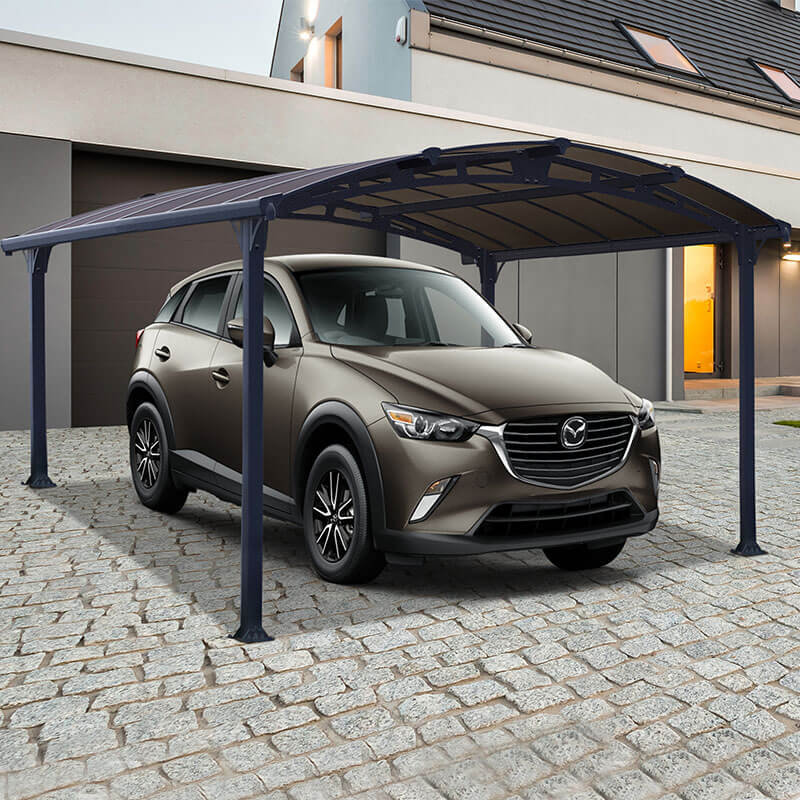
A pent roof carport has a gentle single slope, which can help visually soften the build and gives rainwater a clear direction of flow. This shape often looks more purposeful than a strict flat design, while still staying compact. It can be a good fit where the carport needs to sit close to a wall or boundary and the pitch has to be controlled.
A gable roof carport introduces a more pitched, classic look. The triangular profile can make the carport feel more architectural, and it tends to suit homes where the garden structures are being matched to more traditional lines. In a 14×12 format, a gable roof may feel slightly more prominent, but for some plots that extra shape is exactly what makes the structure look settled rather than bolted on.
There are also differences between open-sided carports and versions with partial enclosure. Open-sided designs keep the structure airy and easy to access from all directions. Partially enclosed versions can offer a more defined parking bay, with one or two sides helping to frame the space. The right choice often comes down to the direction of wind, the position of the driveway, and how much visual screening you want.
Materials That Set the Tone
Material choice has a big effect on the look and feel of a 14×12 carport. Wooden carports bring a natural character that sits well in gardens with planting, fencing or timber outbuildings. They can feel warmer and less industrial, which many buyers like when the carport is close to the house or visible from the main seating area.
Metal carports, often in steel or aluminium, lean towards a sharper, more streamlined look. They are often chosen where the user wants a clean frame and a lighter visual profile. Depending on the design, metal can feel quite minimal, which works nicely for contemporary homes or for spaces where the carport needs to stay visually calm.
There are also differences in the roof covering itself. A carport with a solid roof panel gives a more sheltered feel and a more defined architectural presence. A lighter roof build can look less bulky, which may suit tight plots better. Buyers often compare these options not only for looks, but for how much daylight they allow around the parking area. That detail matters more than many people expect, because a carport that darkens the whole driveway can feel larger than it is.
Why 14×12 Feels So Practical
The appeal of 14×12 carports is partly about proportion. A smaller carport can feel restrictive, especially if the doors, mirrors or boot space are a bit awkward. A larger one may offer flexibility, but it can also start to dominate the garden or push hard against planning and layout limits. The 14×12 footprint sits in a very usable middle area.
This size can work well for:
- Single-car parking with comfortable side clearance
- Family vehicles that need a bit more width than a very compact bay
- Driveways with awkward edges, where the structure has to fit around paths, gates or planting beds
- Side-of-house installations, where a narrow but useful covered bay is needed
- Garden layouts that need a parking area without losing the whole open feel
For buyers comparing sizes, the key difference is often not the number alone, but how that number feels once the car is actually inside. A 14×12 carport gives more room for movement than a tight shelter, and that can make day-to-day use much less fiddly.
Open, Partial or More Defined: The Structural Differences
One of the most useful decisions is whether you want a fully open frame or a more enclosed arrangement. A fully open carport is easiest to approach from almost any angle. It works well if the driveway is shared, if reversing space is limited, or if you want quick access for loading shopping, tools or sports kit. The open structure also tends to keep the garden view lighter.
A partially enclosed carport can feel more purposeful. One side may help protect against crosswinds, or provide a bit of visual screening from neighbours or the road. In a 14×12 size, this can make the parking space feel more settled and less exposed, though it also changes the sense of openness. That is not a bad thing; it just depends on whether you want a breezy parking zone or a more defined shelter.
Some buyers also look at the difference between a carport that stands alone and one that sits close to a house or garage. A freestanding carport gives more freedom over placement. A wall-adjacent design can make clever use of the available width and may fit neatly into a corner or beside existing buildings. In tight garden plans, those placement choices are often as important as the carport itself.
More Than Just a Parking Spot
People often buy a 14×12 carport for the car, but then realise the space is useful in a few other ways. The covered area can act as a sheltered loading zone when the weather turns. It can keep the inside of the vehicle cleaner between trips. It can also give a more defined place for temporary storage, as long as that does not interfere with access or safety.
Another benefit is visual order. A drive with a clearly marked carport can look less cluttered than an open stretch of hardstanding. Even when the design is simple, the structure gives the garden a sense of direction. For homes where the driveway is visible from the street, that can make the frontage feel tidier and more thought through.
There is also a comfort factor. A covered parking area can reduce the annoyance of getting in and out of the car in rain or sharp sun. It is not about making the carport look flashy; it is about making daily use less of a bother. That practical feeling is a big reason why buyers keep coming back to this type of structure.
Details Buyers Tend to Compare
When looking at 14×12 carports, most shoppers compare a few specific details rather than just the headline dimensions. The first is the clearance height, because the usable space underneath matters just as much as the floor plan. A taller opening can help with SUVs and vans, while a lower profile may suit a smaller car and a more compact garden setting.
The next thing is the post layout. Corner posts, side posts and support spacing all affect how easy it is to drive in and out. A carport with a sensible post arrangement can make parking feel natural, while a layout with awkward positions may be slightly annoying every time you use it. That sounds minor, but in daily life those small things add up.
Buyers also often check the roof overhang and edge finish. A neat overhang can help the structure look more complete and may create a more sheltered edge around the parked vehicle. The exact look depends on the design, but in general, cleaner edges make the carport feel less like a temporary fix and more like part of the property.
Another point is the visual weight of the frame. A chunkier build can feel more substantial, while a slimmer frame can keep the garden open. Neither is automatically better. It depends on whether you want the carport to blend in or act as a stronger feature.
What Makes One 14×12 Carport Different from Another
Although the size stays the same, two 14×12 carports can look and behave quite differently. A flat-roof timber carport will usually feel softer and more domestic. A metal pent-roof carport may look cleaner and more stripped back. A gable-roof design can give more shape and a bit of height, which changes the way it stands in the garden.
Another difference is whether the carport is intended to sit as a standalone feature or be matched with other outdoor structures. If the garden already has a shed, patio cover or garage, a carport with matching tones and lines can look more intentional. If not, a simpler structure may be easier to slot into the space without making the driveway feel overcrowded.
It is also worth noticing how the carport interacts with light. A very solid roof can cast more shade, which some people like because it keeps the vehicle cooler and the parking area more comfortable. A lighter visual design can preserve an open feel. In a garden setting, that difference can change the mood of the whole area. Bit of a small thing, really, but it does matter.
Useful Tips Before Choosing
If you are comparing 14×12 carports, it helps to measure the actual vehicle you plan to park, including mirrors, any rear racks, and space for opening doors. The nominal size can sound generous, but the real test is whether the car fits in a way that still feels easy to use. A bit of extra room can make all the difference when reversing or loading the boot.
Think about where the carport will sit in relation to access points. If the driveway bends or narrows, the best shape may not be the one that looks nicest in isolation, but the one that lets you drive in without a three-point shuffle every day. The same goes for walkways and gate positions. A carport that looks neat on paper can feel awkward if it blocks a path or squeezes the turning circle.
It is also sensible to think about the overall garden picture. A 14×12 carport should feel like part of the plot, not something squeezed in as an afterthought. Matching the structure’s lines to the shape of the driveway, the house facade, or other outdoor features can help it settle visually. For many buyers, that is the difference between a carport that simply works and one that looks properly placed.
A Category Built for Real Life Use
The best thing about 14×12 carports is how directly they answer a real need. They do not demand a huge amount of land, yet they still provide a sensible covered area for parking and loading. They suit buyers who want structure without bulk, and usefulness without a heavy footprint. That makes them a strong option for homes where outdoor space has to do several jobs at once.
With the right shape, material and layout, this category can suit modern homes, more traditional gardens, and driveways that need a tidy, practical solution. Whether you prefer an open-sided timber design, a metal frame with a flat roof, or a more defined gable-style shelter, the 14×12 format gives you room to choose without overreaching the space you have.
For buyers, the main advantage is simple: a covered parking solution that feels manageable, looks considered, and makes everyday access a little easier. That is often what people are really after, even if they start out looking at dimensions and materials first.
- Open-sided designs for easy access and a lighter look
- Partially enclosed options for more definition and visual screening
- Flat roofs for a neat, low-profile finish
- Pent roofs for a gentle slope and a tidy rainwater direction
- Gable roofs for more height and a more traditional outline
- Timber frames for a warmer, garden-friendly appearance
- Metal frames for a cleaner, more contemporary feel
- Wall-adjacent placement where the layout needs a compact fit
- Freestanding placement where flexibility matters more
When you choose a 14×12 carport, you are really choosing how the parking area should behave in daily life. Some buyers want quick in-and-out convenience. Others want a structure that looks calm and fits the house better. Some need the side clearance, some need the height, and some are mainly trying to make the driveway feel less cluttered. This is why the category works so well: it offers a clear size, but still leaves room for different shapes, materials and layouts.
[Sassy_Social_Share]