
Bike Stores under £1500 - Best Deals in UK!
Showing all 3 results
-
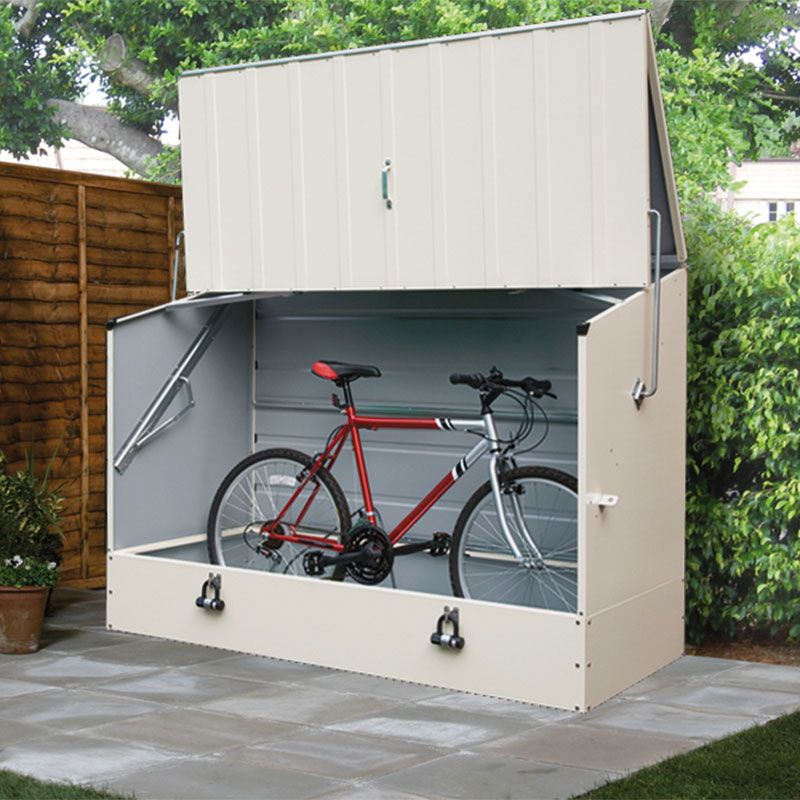
18% OFF: 6’4 x 2’9 Trimetals Protect.a.Cycle Metal Bike Shed with Ramp – Cream (1.95m x 0.88m) £1,019.0018%

-
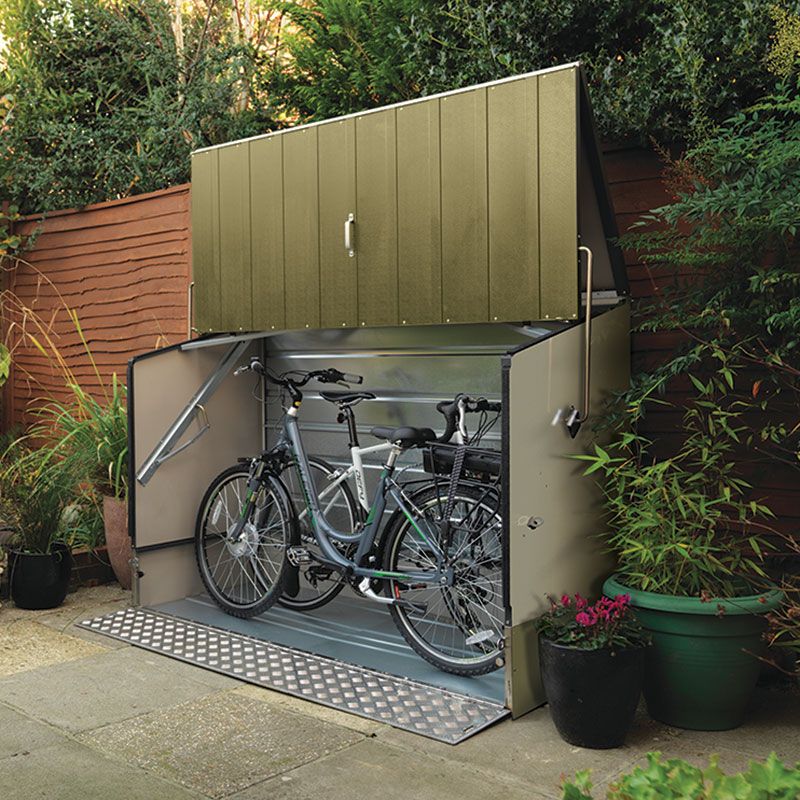
18% OFF: 6’4 x 2’9 Trimetals Protect.a.Cycle Metal Bike Shed with Ramp – Green (1.95m x 0.88m) £1,019.0018%

-
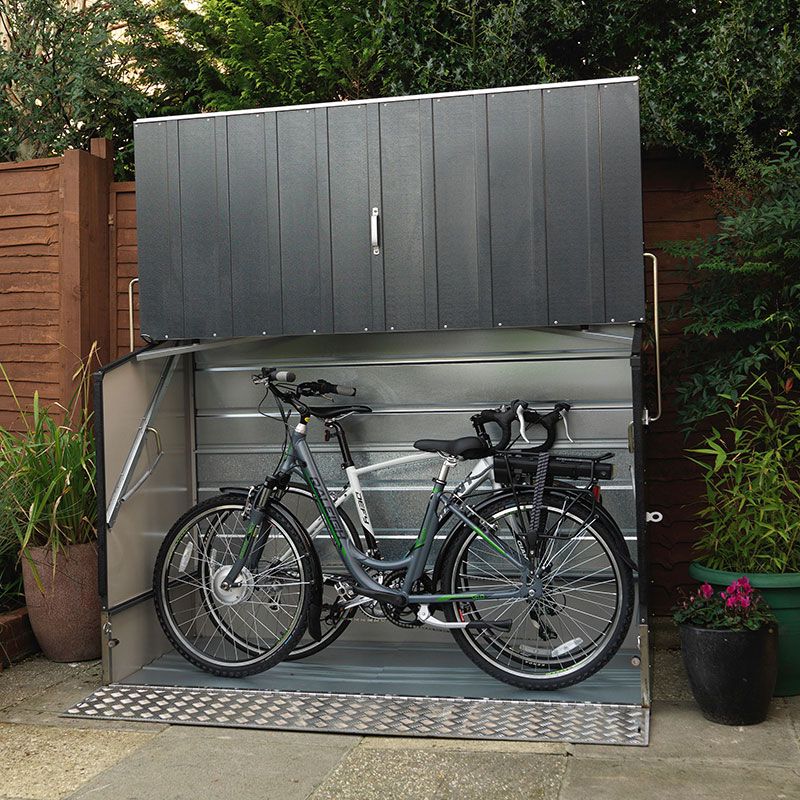
18% OFF: 6’4 x 2’9 Trimetals Protect.a.Cycle Metal Bike Shed with Ramp – Anthracite (1.95m x 0.88m) £1,019.0018%

Bike stores under £1500 for gardens, patios and side returns: compare compact, family-sized and tool-free styles, with timber, metal and plastic options to suit the space.
Why this price band makes sense for everyday storage
In the under £1500 range, a bike store often gives you a proper middle ground: more structure than a basic cover, but without stepping into the cost of a large custom build. That matters if you want secure, tidy bike storage that fits a real garden rather than a showroom idea of one. This category usually suits households that need to keep one, two, or several bikes out of the weather, while still leaving room for helmets, lights, locks, or a child seat. The main appeal is choice: smaller footprints for tight spaces, wider units for shared family use, and different door styles that suit different access points.
There is also a practical difference between a bike store and simply leaving bikes under a tarp. A proper store helps define a set place for the bikes, keeps them visually out of the way, and can make the garden feel less cluttered. For buyers comparing options in this budget, the key is not just price. It is the balance between size, material, door opening, and internal layout. A store that looks neat but is awkward to wheel a bike into can be frustrating very quickly. On the other hand, a slightly more modest-looking unit with a sensible entrance and enough width can be the one that gets used every day without fuss.
Shapes and formats that change how you use the space
Bike stores come in a few clear forms, and the shape can matter just as much as the finish. A tall upright store usually uses height well and suits narrow plots, especially where you want to keep the footprint small. These are often chosen for two bikes or for a mix of bikes and smaller items. A longer horizontal store gives a more relaxed feel inside and can be easier when you want to roll bikes in side by side. Then there are corner-fitting designs, useful for awkward garden layouts where a straight run of fence is already spoken for.
Bestseller der Kategorie Bike Stores under £1500
Some bike stores are more like a compact shed with wide double doors, while others look closer to a slim cabinet with a single front opening. The difference is not just visual. A wide door opening can make it easier to handle handlebars, baskets and child seats without twisting the bike at an odd angle. A narrower opening may be fine for a single adult bike, but it can become fiddly if the space is shared. When looking at the shape, think about how you actually park the bike: front wheel first, rear wheel first, or side-on. That one detail can make a unit feel either sensible or slightly annoying.
There are also stores with a more boxy, squared profile and others with a low, sloping roofline. Boxy designs tend to maximise internal standing room and make stacking accessories more straightforward. Sloping roofs can look softer in a garden and may help the unit sit quietly against a boundary. Neither style is “right” in itself; the better choice depends on whether you want a discreet store that blends into planting, or something that reads more like a compact garden building.
Timber, metal or plastic: the feel is different
Timber bike stores are often chosen because they sit naturally in a garden setting. They can feel less industrial than metal, and the finish often works nicely beside fences, decking or planting. In this budget, timber options may vary a lot in appearance, from plain and simple to more decorative. The main thing to notice is how the timber looks in relation to the rest of the garden. A tidy wooden store can look like part of the landscape rather than an add-on. Buyers often like this when the bike store will be seen from the house, not hidden away behind a wall.
Metal bike stores usually lean into a cleaner, more contained look. They can feel neat and deliberate, which is useful where you want the storage to look purposeful in a narrow side passage or against a brick boundary. The difference from timber is partly visual and partly practical in use: metal tends to present a sharper, more structured feel. That can be appealing if the garden is already quite organised and modern. Some people also prefer the straightforward look of a metal unit when the main priority is simply to keep the bikes together and out of sight.
Plastic or resin bike stores often sit at the more lightweight end of the category. They can work well where assembly simplicity and low visual fuss are important. In the £1500 range, the design may be quite polished and compact, with a smooth finish and a clean outline. These stores often suit buyers who want the least “busy” look possible. The key difference here is the overall impression: timber feels more garden-like, metal feels more crisp, and plastic can feel unobtrusive and tidy. None of these is better in every case; it depends on the garden and the way you use it.
Single-bike, two-bike and family-sized: the real difference is access
When people shop in this category, the number of bikes is only the first question. A single-bike store can be a smart use of space if the home has one commuter bike or one e-bike that needs a defined place. These smaller units are often easier to position in a courtyard, along a fence or at the side of a house. They can also suit homes where bikes are used daily and the aim is quick access rather than storing lots of extras.
Two-bike stores are a common sweet spot. They usually give enough room for two adult bikes, or for a mix of adult and child bikes, without taking over the garden. The important point is not just the count, but whether the bikes can be moved in and out without a lot of shuffling. A two-bike store that looks generous on paper can still feel tight if the bars overlap or the opening is too narrow. So it helps to think beyond the label and picture the bikes themselves.
Family-sized stores bring different benefits. They can reduce the “bike pile” effect that happens when everyone leans their cycle somewhere slightly different. If the household has mixed bike types — road bikes, mountain bikes, smaller children’s bikes — a larger store can keep the lot grouped in one place. This type of storage is also useful if you want to keep helmets, pumps or a child trailer nearby. The main difference is not simply volume. It is whether the store lets each bike be lifted or wheeled out without negotiating a maze of frames.
Door styles and openings that make life easier
Single doors can work well for compact stores, especially when the bikes are narrow or the opening is on a long side. They keep the design simple and can suit a smaller budget within the category. The trade-off is that the entry width is more limited, so the bike may need to be angled slightly on the way in. For a straightforward commuter bike, that may be fine. For a bike with a basket, mudguards or wider handlebars, the extra effort can be noticeable.
Double doors are a useful feature when the store is meant to be used often. They create a broader entrance and can make it easier to move bikes in without bumping pedals or grips. This is especially helpful if two adults will use the store, or if one of the bikes is larger than average. Double-door access can also help when you want to carry in a lock, backpack or child seat at the same time, though that depends on the internal layout.
Some stores use a more panel-like front opening or a lifting style that gives a clear access route without needing a very wide footprint. These designs can be handy in tight spaces, though they are worth checking carefully if you use bulky bikes. The useful question is simple: will the opening suit the bike you actually own, not the bike you imagine owning later? That small check avoids a lot of buyer regret. It sounds obvious, but people still miss it.
Security, discretion and the feel of a safer garden
For many buyers, the main reason to spend on a bike store is not only weather protection but the sense of more orderly, more private storage. A proper store can hide the bikes from view, which is helpful if the front or side of the house is visible from the street. In a garden setting, that can reduce the visual clutter of frames, wheels and locks leaning against walls. It is a quieter kind of benefit, but a real one: the garden looks more intentional.
Within this budget, different stores can offer different levels of discretion. A low-profile unit may sit behind planting and disappear a little into the background. A taller store may be more visible, but it can still feel contained and well arranged. Buyers often care about this when the garden doubles as a social space. Nobody wants the seating area dominated by a stack of bikes. A dedicated store gives the bikes their own place, which makes the rest of the garden easier to use.
There is also the simple day-to-day benefit of knowing where things are. A store can act as a clear boundary for cycling kit, so helmets, pumps and accessories stop migrating into the hallway or utility room. That sounds like a small thing, but it often improves how the whole household feels. If a bike has one obvious home, it tends to get put back there. That makes morning departures less chaotic, and it keeps the outside area looking less like a stopgap.
Useful buying checks that save bother later
Measure the actual bike, not just the store space. Handlebars, pedals and baskets can take up more room than expected. If a bike has a child seat, front rack or wider tyres, the fit changes again. It is worth checking the widest point, not only the length.
Think about the route in and out. A narrow side alley, a step, or a tight turn by the back gate can make a store feel smaller than its stated dimensions. If you need to pivot the bike to enter, you may want a wider opening than you first thought.
Match the store to the bikes you own now. It is easy to buy for a future setup that may never happen. If the main use is two everyday bikes, a neat two-bike store may be more practical than a larger unit that ends up half empty.
Check how the store sits in the garden. A store beside fencing may want a rectangular shape. A free-standing unit near a lawn edge may look better with softer lines or a lower roof. The visual fit matters more than people expect, especially if the store will be seen from the kitchen window.
Look at what needs to be stored alongside the bikes. If the answer is “almost nothing”, a compact store may be enough. If the answer includes helmets, lights, a lock, or a child trailer section, a little extra internal room can be worth it. Not glamorous, but useful.
What these stores offer that a basic cover does not
A bike store in this budget offers more than just a place to hide a frame. The value comes from the way it organises the outside space. A cover can be fine for temporary use, but a store creates a more permanent arrangement. That matters for homes where bikes are used often and need to be grabbed quickly without pulling a cover on and off every time. It also makes the outside area look more settled.
Compared with leaving bikes under an open shelter, a dedicated store gives a stronger sense of belonging. The bikes are not simply parked near the house; they have a defined place. This is especially handy in mixed-use gardens, where storage, play area and seating all need to share the same footprint. A well-chosen bike store can keep that balance under control and stop the garden feeling like a transit zone.
In the under-£1500 category, buyers can often find a fairly good spread of styles without moving into a costly custom project. That means the decision can be made around real needs: more compact or more roomy, more traditional or more modern, more discreet or more prominent. That is the practical advantage of this price bracket. It gives room to choose for the way you live, not just for the brochure image.
Picking the right one without overthinking it
If you are choosing a bike store in this category, the clearest approach is to start with the bikes, then work backwards. Count what needs to go in. Measure the widest bike. Decide how much access room you want. Then think about the garden itself: where the store will sit, how visible it will be, and whether a single door or double door makes more sense. That sequence usually gets you closer to a store that feels natural from day one.
It can also help to decide what kind of “job” the store has to do. Some are mainly for everyday use, where fast access matters most. Others are there to keep the garden calm and tidy, so appearance carries more weight. Some need to fit into a narrow passage, while others can sit at the edge of a lawn. Different jobs call for different forms. That is why this category is useful: it gives you enough variation to match a real household, not a generic one.
And if the choice comes down to two similar options, a good final check is to imagine a normal wet Tuesday morning. Which store will make the bike easiest to take out without a small battle? Which one will be easiest to shut again with muddy hands and a bag over one shoulder? The more the answer feels obvious, the more likely the store is to fit the routine rather than interrupt it. That usually matters more than any neat-looking feature on the page.
- Compact bike stores suit narrow gardens and one or two everyday bikes.
- Family-sized stores help keep several bikes together without scattering them around the garden.
- Timber finishes blend well with planting and fencing.
- Metal designs feel crisp and structured in tighter spaces.
- Plastic or resin options can look clean and understated.
- Single-door access keeps things simple, while double doors make handling easier.
- Low-profile styles are useful where visibility matters.
- Boxier forms often give a more usable internal layout.
For buyers comparing bike stores under £1500, the best result usually comes from choosing the one that fits the bikes, the route to the garden, and the way the household actually moves. A good store does not just hold cycles; it clears space, cuts clutter, and gives the garden a more settled feel. That is the kind of purchase that keeps proving useful long after the first week.
[Sassy_Social_Share]