
Bike Stores 8x3 - Best Deals in UK!
Showing all 2 results
-
6% OFF: 7’7 x 3’4 Asgard Access Premium Electric Bike Shed (2.3m x 1.05m) £819.996%

-
6% OFF: 7’5 x 3’4 Asgard Access Plus Metal Bike Shed – 4 Bikes (2.3m x 1m) £804.996%

Bike Stores 8×3 offer a tidy way to keep bicycles, e-bikes and kit secure in a compact footprint. Explore sizes, styles, access options and practical buying points for narrow outdoor spaces.
Why an 8×3 bike store makes sense in a tight garden
An 8×3 bike store suits places where space is limited but the need for proper bike storage is not. The long, slim format works well along a fence, beside a garage, or in that awkward side passage that never quite fits anything else. For households with a few bikes, school rides, folding bikes or a mix of commuter and leisure cycles, the shape can feel more useful than a wider shed that eats into the garden.
The main appeal is simple: you get a defined storage zone without losing much usable garden area. In many layouts, an 8×3 unit sits neatly against a boundary line and leaves the rest of the plot open for planting, seating or access. It also helps keep bikes in one place rather than leaning against walls, gates or patio furniture, which is rarely ideal.
The slim shape that changes how storage works
The 8×3 format is quite distinct from larger garden stores. Rather than offering deep floor space, it favours length. That makes it easier to line up bicycles front to back or side by side depending on handlebar width, turning circle and the type of rack inside. The proportions matter because they influence how the store feels to use every day.
Bestseller der Kategorie Bike Stores 8x3
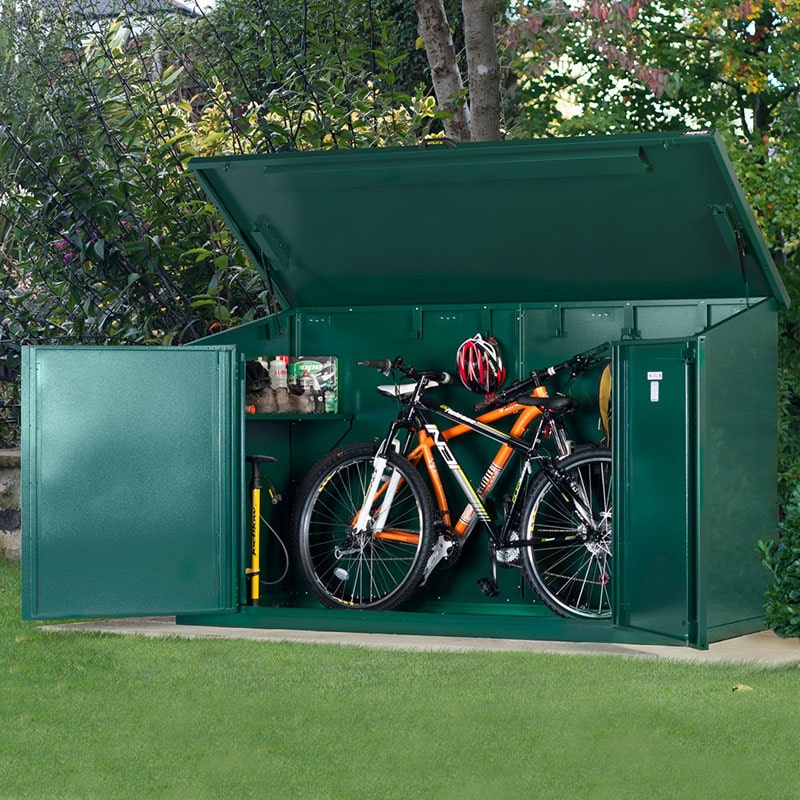
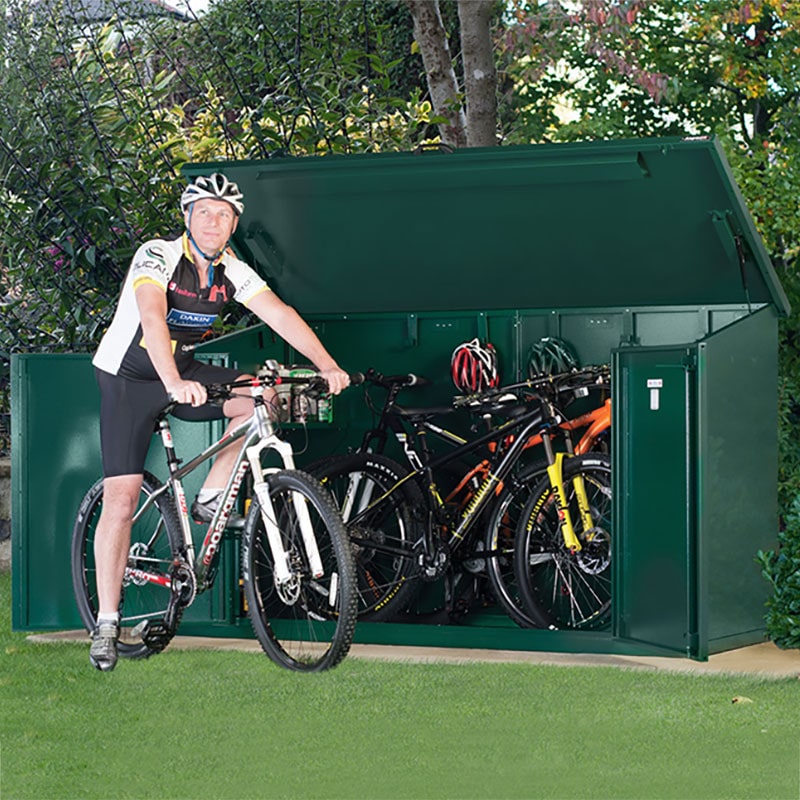
Compared with a square bike store, an 8×3 version often gives a clearer route in and out. You can open the door, walk in, move one bike and still have space to sort helmets, locks and panniers. Compared with a broader garden shed, it is usually less dominant visually, which helps if you want storage that blends into a narrower outdoor area rather than taking over the plot.
Styles and forms that suit different gardens
Bike stores in this size come in a few practical forms, and the shape you choose can change how easy it is to live with. Some are designed as single-door stores, which are straightforward and often better for one or two bikes. Others use double doors or wider openings, making it easier to roll bikes in without lots of angling. For narrow gardens, door position is worth thinking about early on, since it affects the clearance you need in front of the store.
A low, horizontal profile can suit a modern garden, especially where clean lines matter. A more traditional store may sit better near timber fencing, planting beds or older brickwork. The look is not only about style; it also affects how obvious the store feels from the house or neighbour’s side. If you want the storage to be visible but not dominant, the 8×3 size gives a good middle ground.
Another practical difference is between stores that feel more like a compact bike shed and those that are closer to a slim garden store with bike-friendly access. The first type usually focuses on bikes first, while the second may feel more flexible for a bit of extra outdoor kit. If your main aim is cycling storage, choosing a layout that keeps the bikes central is often the better move.
What fits inside an 8×3 without it becoming a squeeze
The exact capacity depends on the internal arrangement, but this size is commonly chosen for two to four bikes, with room varying by frame size and handlebar width. Children’s bikes are easier to line up, while adult mountain bikes, hybrids and e-bikes usually need more care with spacing. If one of the bikes is chunky, the store can still work well, but the layout becomes more important than the headline dimensions.
Besides bikes, many buyers use the remaining room for helmets, pumps, lights, gloves, chain locks and baskets. Some prefer to keep those items separate on shelving or hooks so the floor stays clear. In a slim store, vertical organisation often helps more than trying to fit everything at ground level. That is one of the quiet strengths of the 8×3 size: it encourages a cleaner layout without much wasted space.
If you are storing a mix of bike types, think about the tallest and widest one first. A child’s bike can usually tuck in easily, but a long wheelbase or wide bars can change the whole arrangement. E-bikes also deserve a second look because they can be heavier to move and may need a clearer path in and out. The dimensions are useful, but the way the bikes interact matters more than the number itself.
Common subtypes and how they differ in use
- Single-bike focused stores – best when one main ride needs secure, tidy parking and the rest of the gear is minimal.
- Multi-bike family stores – better for shared use, especially where several everyday bikes need a set place.
- Bike and kit stores – useful if you want a bit of extra space for helmets, mudguards, bags or a small amount of garden gear.
- Front-access designs – simpler for straight entry and often easier when the store sits on a narrow run beside a house.
- Side-opening layouts – can suit plots where the long edge is easier to reach than the end face.
These subtypes may sound similar at first, but the difference is in daily use. A store that looks fine on paper can feel awkward if the opening clashes with a wall, path or gate. That is why an 8×3 store should be checked against the exact route you will use every day, not just the spot where it will stand.
Access matters more than people expect
With bike storage, getting the bike in and out is often the real test. A narrow store can still work very well if the opening is generous and the internal run is clear. But if the door is too tight, or opens in a way that blocks the path, the store soon becomes annoying. That is the sort of detail people notice after the purchase, so it is worth paying attention before the order is placed.
In an 8×3 layout, door width and placement can make a big difference. A wider opening may suit bigger bikes, while a more modest door may still be fine for children’s bikes or shorter frames. If you regularly use the store in a hurry before work or school, a layout that reduces turning and lifting is usually more satisfying than one that only looks neat from the outside.
The practical advantages of choosing this size
The 8×3 bike store format offers several clear benefits. It uses garden space efficiently, keeps bikes together, and can reduce visual clutter around the home. For people who are fed up with bikes leaning against walls or being dragged through side entrances, that change alone can be worth it. It also helps to separate cycling kit from indoor rooms, which means less mess entering the house after a wet ride.
Another plus is that the long, slim shape can sometimes fit into spaces that would not suit a deeper store. That includes narrow runs along brick walls, fences or the side of a terrace. If your garden has an unusual layout, this size can feel more tailored than a generic shed shape. It is not about having extra room for the sake of it; it is about making the space you already have work harder.
For families, it can also create a better habit. When bikes have a clear parking place, they are more likely to be put away properly. That is useful for keeping pathways open and lowering the daily clutter that comes with regular cycling. It may sound like a small thing, but the difference between an organised store and a pile of bikes is usually felt every day.
Materials and finish: choosing the right feel for the garden
Bike stores in this category are often chosen for how they sit within the wider garden setting. A timber finish can feel softer and more natural next to planting, fencing and sheds. A more modern finish may suit cleaner landscaping or a contemporary patio area. The right choice depends on how visible the store will be from the house and how much you want it to stand out.
The finish also affects how the store reads as part of the garden rather than just a utility box. In a narrow space, a well-proportioned store can look intentional, not improvised. That matters if the bike area sits close to seating or planting, where visual balance can make a difference. People often focus on whether the bikes fit, but the way the store sits in the view is part of the purchase too.
Small details that make buying easier
When comparing Bike Stores 8×3, it helps to think beyond the outside dimensions. Check the internal layout, the opening width, the turning space needed for your bikes and whether there is enough room to reach the items you use often. If you keep panniers, child seats or a pump with the bikes, make sure there is still a sensible path around them.
It is also worth thinking about how the bikes are stored inside. Some people prefer to stand them upright, others to line them up in a row, and some want enough room for a simple rack. None of these choices is wrong, but they do need different spacing. If you expect your bike collection to change over time, a layout with a bit of flexibility may be the safer choice.
A further point is how the store will sit against the rest of the garden. If it goes beside a path, leave enough clearance for the door and for carrying bikes through without brushing the wall. If it sits by planting, remember that branches and leaves can reduce access more than expected. These are the kinds of details that make a store feel easy to use rather than merely stored away.
What buyers usually compare before they decide
- Number of bikes the store needs to hold now, not just later.
- Handlebar width and frame size, especially for adult bikes and e-bikes.
- Door opening and whether it suits the route from path to store.
- Internal layout for bikes, helmets and smaller cycling items.
- Garden position so the store does not block seating, planting or access.
- Visual fit with fencing, patio lines and the rest of the outdoor space.
Who this category tends to suit
This category often appeals to households that want order without overcommitting space. If you have one or two regular bikes and a couple of extras, an 8×3 store may feel just right. It also suits people with a narrow side return or long thin garden where a broad structure would look out of place. For cyclists who dislike leaving bikes out in the open, having a dedicated place to store them can make everyday life feel less cluttered.
It is also a sensible match for buyers who want the storage to do one job properly. Rather than mixing too many uses into one unit, this size lets the bikes stay central. That focus can be useful when you are after something practical, tidy and not too intrusive. In other words, it is a store that earns its spot.
Making the most of the space without overfilling it
The best 8×3 bike stores tend to work because they are not overcrowded. Leave enough room for easy movement, and the store becomes simpler to live with. If you add too much into a narrow layout, access gets awkward fast. A small amount of planning at the start can prevent that. The aim is not to cram in every possible item, but to create a storage space that still feels comfortable to use on a dark morning or after a long ride home.
For many buyers, that balance is the point. You get a purpose-built bike store with a footprint that respects the garden, plus enough room to keep everyday cycling gear together. The shape is practical, the use is clear, and the result can be a lot more satisfying than leaving bikes scattered around the outdoor space. If the garden needs storage but not bulk, this category is easy to see the appeal of.
[Sassy_Social_Share]