
Bike Stores 25 sq ft / 2 m² - Best Deals in UK!
Showing all 2 results
-
6% OFF: 7’5 x 3’4 Asgard Access Plus Metal Bike Shed – 4 Bikes (2.3m x 1m) £804.996%

-
6% OFF: 7’7 x 3’4 Asgard Access Premium Electric Bike Shed (2.3m x 1.05m) £819.996%

Bike stores 25 sq ft / 2 m² are compact outdoor storage solutions for keeping bicycles sheltered, tidier and easier to access in smaller gardens, side passages and courtyards.
Small footprint, proper bike storage
A 25 sq ft / 2 m² bike store is made for spaces where a full shed would feel too bulky, yet leaving bikes out in the open is not really a good plan. The category suits households that need a neat place for one or two adult bikes, a child’s bike, a helmet or a few riding bits without taking over the whole garden. The appeal is simple: a compact footprint, a more controlled storage area and less clutter by the back door. It is the sort of purchase that makes everyday life easier, especially if your bikes are used often and need to be reached quickly.
Because the area is limited, every detail matters. Shape, door opening, internal layout and wall style can change how practical the store feels. Some people want a low-profile unit that blends into the garden. Others need a taller design that gives a bit more room for lifting bikes in and out without wrestling handlebars at the entrance. In this size range, small differences can make a noticeable change to useability.
What fits inside, and what does not
With around 2 m² of floor space, these bike stores are best suited to compact, sensible storage rather than mixed-use garden hoarding. A single adult bicycle usually fits with room to spare. Two bikes can work if the layout is straightforward and the door opening is generous. If the bikes are different sizes, or if one has a child seat, basket or wider bars, the internal space starts to matter more.
Bestseller der Kategorie Bike Stores 25 sq ft / 2 m²
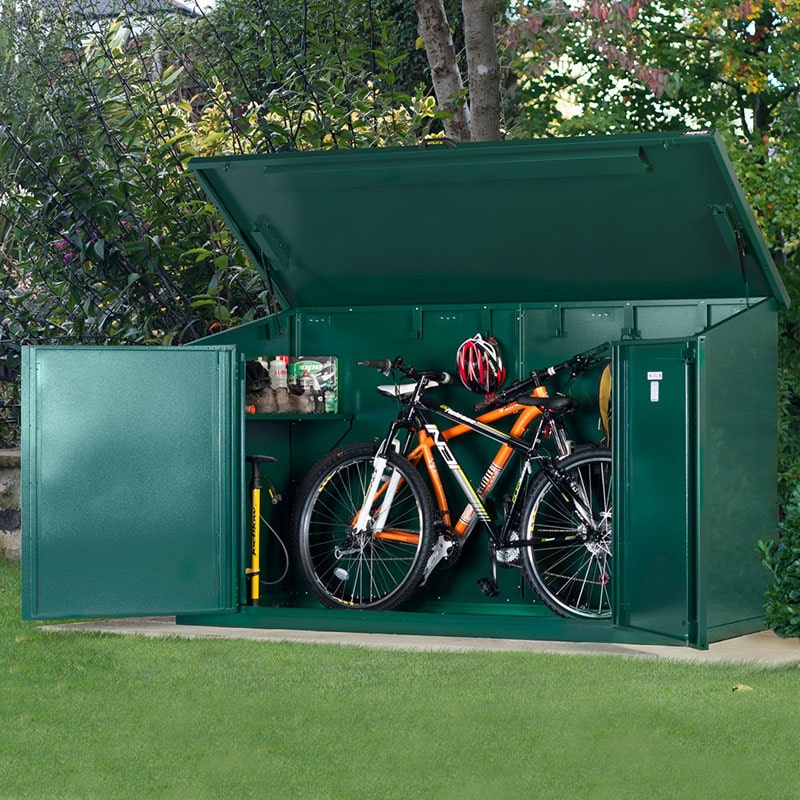
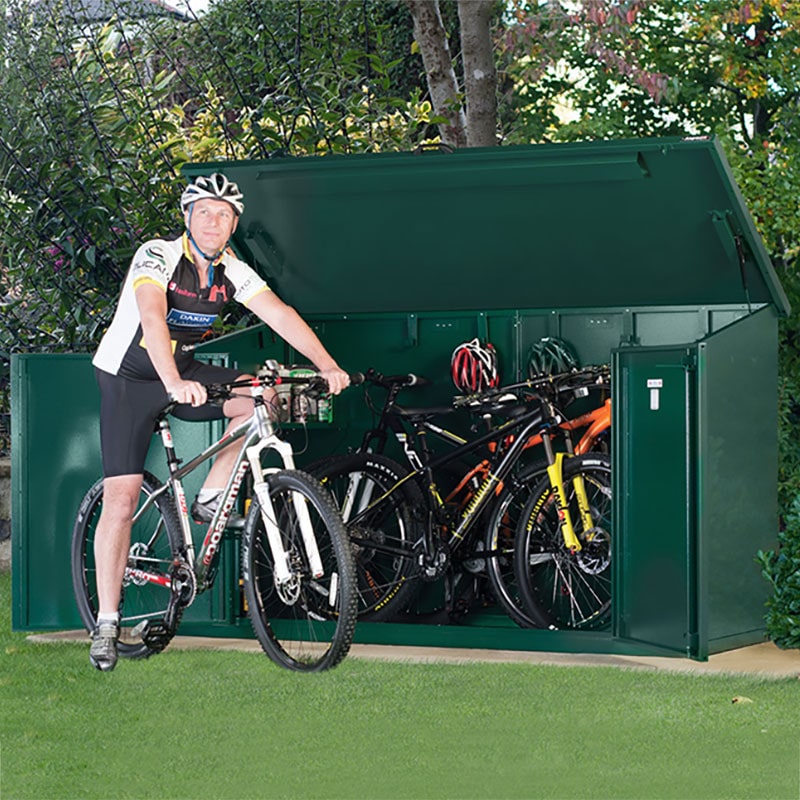
- One adult bike plus a child’s bike, often a comfortable arrangement
- Two standard bikes if the store is designed with a useful door width
- Helmets, pumps and small accessories stored beside the bikes
- Long or awkward items only if the depth and door swing allow it
What tends not to work so well is expecting this size to behave like a general garden store. If you want bikes, lawn tools, outdoor toys and bags of compost in one place, the floor area can feel crowded very quickly. That is why this category is best for buyers who know the main job is bike storage first, not a bit of everything.
Shape makes the difference
The available footprint is modest, so the form of the bike store becomes a major buying point. A rectangular store usually gives the cleanest use of space, especially for lining bikes up in a sensible direction. A square layout can work well if access is from the front and the internal turning space is decent. Some designs are more like a narrow cabinet or mini-store, which suits tight side access but may ask for more careful bike positioning.
There are also visual differences that matter in a garden setting. A low, horizontal form tends to sit quietly against a fence or wall. A taller version gives more head clearance and can feel less cramped when rolling bikes in. The choice is partly practical and partly about how the store sits with your outdoor space. If the garden is narrow, a slim shape may be easier to live with. If the spot is more open, a slightly broader front can make access less fiddly.
- Rectangular stores for straightforward bike placement
- Square stores for compact all-round use
- Narrow vertical styles for tight passages and limited width
- Low-profile designs that keep the view line clear
Materials and build styles buyers notice
Within this category, material choice influences the feel of the store as much as its appearance. Wooden bike stores usually suit gardens where a softer, more natural finish is wanted. They can look less “boxy” and often sit well beside fencing, planting and timber boundaries. Metal bike stores have a different character: neater lines, a more compact appearance and a practical feel that some buyers prefer for modern plots or side access areas. Plastic or resin styles tend to focus on ease of handling and a tidy finish, though the exact look depends on the design.
The build style matters too. Panelled construction can give a more shed-like appearance, while slimmer cladding or sheet-style panels can make the unit feel more contained. Some stores are designed with a pitched roof, others with a flatter top. That changes both the look and how the unit fits under fences, windows or boundary lines. In a category this small, the roof shape is not just decoration; it can affect where the store can be placed.
- Wood for a more garden-friendly look
- Metal for a neat, structured feel
- Plastic/resin for a clean, practical finish
- Pitched roofs for a more traditional shed profile
- Flat or low roofs for tighter spaces and lower visual impact
Single bike, double bike, or mixed use?
Not every 25 sq ft / 2 m² store is used in the same way. Some buyers want a single-bike store with enough room to move around the bike without scraping pedals on the sides. Others choose a two-bike arrangement because the household has more than one rider and needs daily access without shifting one bike out of the way first. The main difference is not only capacity, but how easy the bikes are to retrieve on a rushed morning.
For single-bike use, the layout can be generous and simple. There is often a more comfortable gap around the bike, which helps if you use wider handlebars or a larger frame. Two-bike use is more sensitive to spacing, and it is worth thinking about whether bikes will be stood side by side, staggered or angled. If the store is used by adults and children together, the different frame sizes may actually help because a smaller bike can tuck into a space that would otherwise be awkward.
A mixed-use approach can work, but only in a restrained way. A helmet hook, a slim shelf or a small zone for gloves and lights may be enough. Once too many extras enter the picture, the bike store starts to feel like a cupboard on wheels. Keeping the main role clear is usually the smarter option.
Door openings and access that feel sensible
For a store this size, the door design is not a minor detail. If the opening is tight, even a perfectly sized interior can feel frustrating to use. Wide double doors can make it easier to wheel a bike straight in, while a single broad door can work well if the entrance is clear and the approach path is easy. Some compact bike stores use front access only, while others may have side access depending on the shape. The best choice depends on where the store is being placed and how often the bikes come and go.
Think about the route to the store as much as the store itself. A narrow gate, a step up, a corner or a small turn can all affect day-to-day convenience. In smaller gardens, the easiest store on paper is not always the easiest one in real life. A slightly more generous opening can save a lot of shuffling, especially when the bikes are muddy or when one hand is already holding something else. That practical bit is often what buyers remember after a few weeks.
- Wide front doors for easier roll-in access
- Double doors for a broader entrance feel
- Single doors when the side space is limited
- Low thresholds that make wheeling a bike less awkward
Why this size appeals to real homes
The main advantage of a 25 sq ft / 2 m² bike store is balance. It is large enough to be useful, but not so large that it dominates the garden. For terraces, small patios, narrow side returns and modest back gardens, that balance is often what buyers are looking for. It gives bikes a defined place, which helps reduce clutter and can make the rest of the outdoor space feel more organised.
Another advantage is speed. Bikes stored close to the house are more likely to get used. If they are easy to reach, people tend to take them out more often, whether for commuting, school runs or weekend rides. That is a practical benefit rather than a glossy promise: less dragging bikes through the hallway, fewer scuffed walls indoors and less excuse for leaving a bike against the fence for weeks at a time.
Smaller stores can also suit households that do not want a full-size structure taking over the garden. There is a clear visual advantage in keeping the storage area proportionate to the space. The unit can sit discreetly and still do its job. For many buyers, that is enough reason on its own.
Differences that are easy to overlook
At first glance, two compact bike stores may seem very similar, but the differences show up once you compare them properly. One may offer more headroom, which helps if you are tall or want to lift the bike upright inside the store. Another may have a better roof pitch for rain run-off, which changes where it can be positioned near a wall or boundary. Door width, internal depth and wall thickness also influence how solid and convenient the store feels.
There is also a difference between stores that are built for storage only and those that are more flexible in shape. A design that stays simple often works best for bikes, since odd corners and decorative features can get in the way. Buyers sometimes focus on the outside measurements and forget to check how the inside is arranged. With bicycles, internal geometry matters more than you might think. A few centimetres here or there can decide whether the handlebars turn cleanly or catch on the frame.
- Headroom affects ease of lifting and standing the bike
- Internal depth affects how the bike sits inside
- Door width affects everyday convenience
- Roof style affects placement and appearance
Buying tips that save hassle later
When choosing from this category, it helps to measure the real space rather than the “ideal” space. Check the width of the path leading to the store, the door opening, the turning point and the spot where the store will sit. A bike store can be exactly the right size on paper and still be awkward if the route to it is too tight. That bit is often missed when people are excited about the footprint alone.
It is also worth thinking about how the bikes will actually go in. Will you roll them straight in, lift them, or stand them at a slight angle? The more direct the access, the more usable the store will feel. If you have bikes with baskets, child seats or wider bars, allow for the extra shape. It sounds obvious, but these extras are often what make a compact store feel a bit snug.
For buyers comparing options, a useful habit is to picture the busiest day rather than the easiest one. If the bike store still feels workable when you are in a hurry, that is a good sign. If it only works when you have time to spare and nothing in your hands, it may be too tight for daily use.
A neat answer for gardens that need order
Bike stores 25 sq ft / 2 m² suit people who want proper bike storage without giving up too much garden space. They come in different forms, materials and access layouts, but the shared aim is clear: keep bikes protected, nearby and out of the way. The best choice is usually the one that fits the bikes you already own, the space you really have and the way you use them day to day.
If you are comparing compact storage options, this category is worth a close look because it sits in that useful middle ground. Not too large, not too fussy, and often just the right scale for homes that need something practical rather than bulky. For the right garden, it is a neat fix that feels considered, not crammed in. And that makes a diference every time you grab the bike and head out.
[Sassy_Social_Share]