
BBQ Shelters under £900 - Best Deals in UK!
Showing all 2 results
-
8′ x 6′ Trimetals Sojag Maui Wood Effect BBQ Garden Gazebo (2.49m x 1.78m) £859.994%

-
10′ x 6′ Trimetals Sojag Messina Anthracite BBQ Garden Gazebo (2.92m x 1.79m) £859.994%

BBQ shelters under £900 bring together cover, comfort and a proper outdoor cooking setup, with options in timber, steel and lean-to styles for gardens, patios and compact outdoor spaces.
Why a BBQ shelter changes the way you cook outside
A BBQ shelter is not just a roof over the grill. It gives your cooking area a clear focal point, keeps the barbecue more usable in mixed weather, and helps define a space that feels set up rather than improvised. For many buyers, the appeal is simple: you want to keep the food side of outdoor living going even when the sky does not fully co-operate. Under £900, the category usually opens the door to practical designs that balance looks, shelter and space without tipping into full outdoor kitchen territory.
That price point is a useful sweet spot. It often means you can look at solid timber shelters, powder-coated metal frames, and wall-mounted canopies with enough structure to feel permanent, but without committing to a large build. You also get a wider choice of forms, from compact covers that sit neatly over a standard barbecue to larger gathering shelters that create a cook-and-chat zone. For a lot of gardens, that balance is what makes the category so appealing.
Shapes that fit the space you’ve actually got
One of the first differences in this category is the shape. Some BBQ shelters are built around a simple pitched roof, which helps water run off and gives the structure a classic garden look. Others use a flat or low-profile canopy, better for tighter spaces or more modern styling. You’ll also see lean-to designs, where the shelter sits against a wall or fence, and standalone gazebo-style frames that can be placed as a feature in the garden. Each shape changes how the shelter feels and how it works around the barbecue.
Bestseller der Kategorie BBQ Shelters under £900
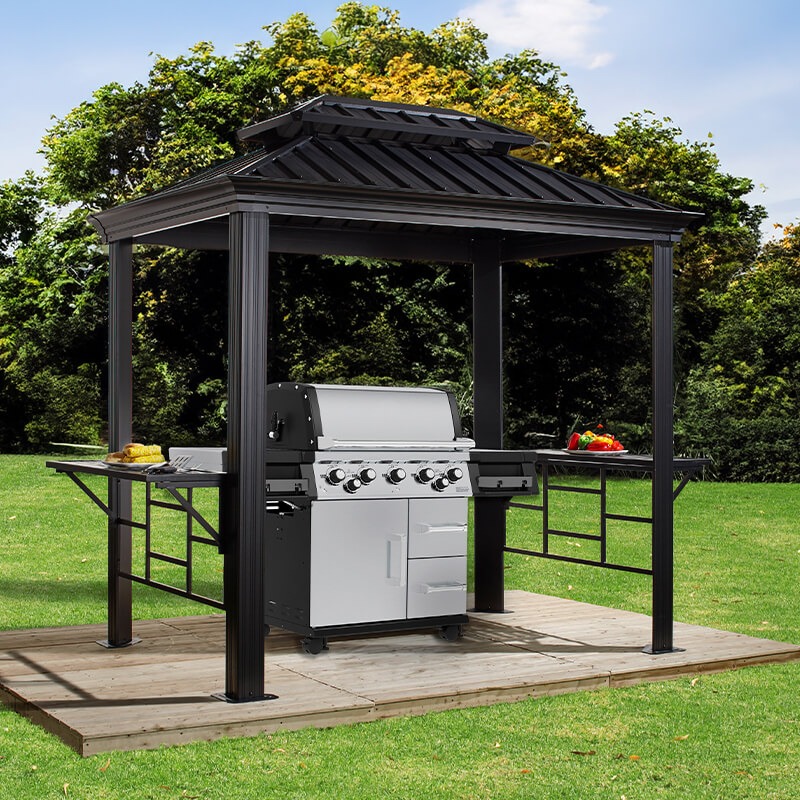
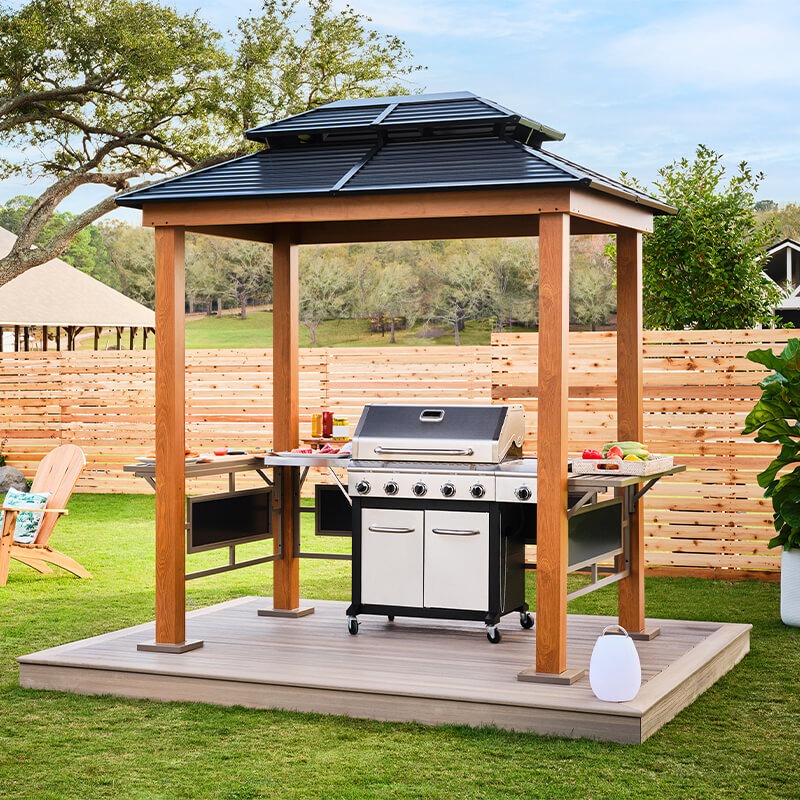
A lean-to BBQ shelter can be a smart choice if you want to save space and use an existing wall for support. It tends to suit patios, side return areas and smaller courtyards. A standalone shelter, by contrast, gives you more freedom to place the BBQ where it works best for airflow, seating and movement. Then there are square and rectangular forms, which are often easier to align with outdoor tables and prep surfaces, and hexagonal or pavilion-style forms, which bring a more decorative, sociable feel. The shape matters more than people sometimes expect, because it affects where smoke drifts, how people gather, and how naturally the whole cooking area fits the garden.
Timber warmth or metal edge? The material difference
Under £900, the material choices usually fall into a few clear camps, and each one has its own character. Wooden BBQ shelters often bring the most natural look, blending well with decking, fencing and planting. They can feel more like part of the garden rather than a separate add-on. Many buyers like the softer appearance of timber when the shelter sits close to seating, because it keeps the area relaxed and familiar rather than looking too industrial.
Metal BBQ shelters, especially those with steel or aluminium frames, tend to look crisper and more contemporary. They are often chosen for a cleaner outline and a more defined, architectural feel. The frame can make the shelter seem lighter visually, even when it is sturdy. Some designs combine metal uprights with a timber roof detail, which gives a mixed-material look that can work well in a lot of gardens. If your outdoor furniture already leans modern, a metal shelter can tie the whole space together without looking overdone.
There are also shelters that use polycarbonate panels or similar roofing materials. These can let light in while still giving cover, so the barbecue zone does not feel dim. That can be useful if you cook in the evening or want the shelter to feel less enclosed. Material choice is not just about appearance; it also changes the mood of the space. Wood feels softer and warmer, metal feels sharper and more structured, and mixed builds sit somewhere in between.
What you get at this price, without overcomplicating it
The under-£900 bracket is interesting because it usually gives you enough budget for a well-sized shelter with meaningful design detail, but not so much that the search becomes overly technical. Many options at this level focus on the parts that matter most: roof coverage, stable supports, usable headroom and a finish that looks at home in a real garden. You are often paying for a stronger structure and a more considered shape, rather than extras that sound nice on paper but do not change the cooking experience much.
That makes the category very practical. You can look for open-sided designs that keep airflow moving around the barbecue, or more enclosed styles that create a clearer outdoor room. Open-sided shelters can feel easier to use in the summer because they are less boxed in, while partially enclosed versions can make the cooking area feel more defined. A shelter with a little extra width can also make a real difference, because it gives you space to stand, turn food, and set down trays without feeling squeezed. It’s one of those details that seems small until the first busy cookout.
Open, side-covered or fully framed: different levels of shelter
Not every BBQ shelter protects in the same way. Some are simple overhead covers, designed mainly to take the edge off rain and sun. Others have side elements or partial panels that help break up wind and make the cooking area feel less exposed. Then there are fully framed shelter structures that create a more fixed zone around the barbecue. Each type suits a different way of using the garden.
A basic overhead shelter is ideal if you want the barbecue area to stay open and social, with easy access from all sides. A version with side panels can be useful if your garden gets gusty, because it gives a bit more protection without shutting everything in. A more enclosed frame can suit buyers who want a clearer outdoor destination, especially if the BBQ sits near a dining set or bench seating. The difference is not just about weather. It is about how the shelter helps people move, gather and linger around the cooking area. If you often have a few people hovering near the grill, an open design can feel better. If you prefer the zone to feel separate and tidy, a more framed shelter has its own appeal.
Lean-to, pergola-style or gazebo-style: picking the right format
Lean-to BBQ shelters are popular where space is limited or where the garden already has a wall, fence or outbuilding to work with. They can make the barbecue feel integrated into the layout, almost like a built-in feature. They are handy for tight patios because they use one side for support and leave the rest open for movement. In smaller gardens, that can be a neat way to create a proper cooking area without taking over the whole space.
Pergola-style shelters give a more airy, architectural feel. They often have open sides and a clear frame, which is useful if you want the area to stay light and not too enclosed. A pergola look works well if you want to define the barbecue spot while keeping the visual line of the garden open. Gazebo-style shelters, meanwhile, usually feel more complete and central. They can suit larger patios or gardens where the BBQ becomes part of a bigger entertaining zone. The difference between these forms is mostly about how they frame the experience. Pergola-style feels open and measured, gazebo-style feels more gathered, and lean-to feels efficient and space-savvy.
Why shoppers keep coming back to BBQ shelters under £900
One reason this category works so well is that it gives you a clear outdoor cooking zone without asking for a huge spend. That matters if you want to improve the garden in a visible way. A BBQ shelter can make the whole area feel more intentional, almost like you’ve added a proper room outdoors, even if the footprint is modest. It also helps the barbecue feel like a feature, not something you keep moving around depending on the weather.
There is also a comfort factor. When the barbecue has its own cover, you are less likely to delay the cooking just because the conditions are a bit unsteady. That can change the way you use the garden through spring and into autumn. The shelter can also help guests know where to gather, which gives the whole setup a better flow. Instead of people drifting around with nowhere to stand, they naturally land near the cooking zone. It sounds simple, but it makes a difference to how the space works.
For buyers comparing products, the category under £900 often gives a decent middle ground between lightweight covers and bigger outdoor structures. You are not locked into a flimsy solution, but you also do not have to treat the purchase like a major building project. That in-between space is where a lot of practical garden purchases happen.
Details that separate a good shelter from a merely decent one
When you are browsing BBQ shelters, a few details are worth a close look. Roof overhang matters because it affects how much cover you actually get at the edges. A roof that looks generous in pictures may feel smaller in use if the overhang is tight. Headroom matters too, especially if you’re taller or if several people will be under the shelter at once. Nobody wants to feel they are ducking every time they turn to check the grill.
Frame thickness is another clue. A more substantial frame can make the shelter feel grounded and stable, while a slimmer profile may suit a lighter visual style. If the shelter includes shelving or side ledges, that can help with plates, tongs and small prep jobs, but only if the surfaces are sensibly placed. The best layouts keep the barbecue as the centre point while leaving enough room for movement. It is easy to underestimate how much space you need until you try to turn with a tray in one hand and a spatula in the other.
Also think about how the shelter looks from the rest of the garden. A BBQ shelter is partly a cooking aid, but it is also a visible structure. If it sits near a lawn, dining set or planted border, the line of the roof and the colour of the frame can either settle into the background or become a feature. Both can work. The point is to choose a form that belongs in your space rather than one that feels dropped in.
Useful buying tips for getting the fit right
If you are comparing BBQ shelters under £900, start with the BBQ itself. Measure the grill, but also measure the space around it, because a shelter that only covers the footprint of the barbecue can feel too tight in everyday use. Leave room for the person cooking, a side table if needed, and at least a little gap for moving around safely. It’s a small thing, but it often decides whether the shelter feels practical or awkward.
Think about how the garden is used. If the BBQ is a quick summer feature, a lighter open shelter may be enough. If it is part of regular weekend cooking, a more defined frame can make the area feel more usable and less temporary. If the shelter sits near seating, a design with a gentler profile may be easier on the eye. If it is tucked to one side, you may prefer something more functional and compact. Matching the form to the way you actually cook is usually better than chasing a style that looks nice but does not suit the layout.
It is also worth checking whether you want the shelter to feel more like a destination or more like a cover. That sounds like a small distinction, but it changes the whole decision. A destination shelter invites people to gather, stand and chat. A cover-led design is mainly there to protect the cooking area and keep it ready. Neither is better in every case. They just serve different habits, and the right one depends on the sort of outdoor life you really want.
How the category suits different garden styles
Traditional gardens often suit timber shelters with pitched roofs and softer lines. They feel like they belong next to fences, lawns and classic garden furniture. Modern patios often work better with black or grey metal frames, sharper geometry and a cleaner outline. If your outdoor space is small, a compact lean-to or wall-mounted shelter can make the area feel organised without crowding it. If you have more room, a larger gazebo-style setup can create a proper barbecue point that is separate from the rest of the garden.
The useful thing about this category is that it includes different visual languages. Some BBQ shelters are meant to disappear into the garden. Others are meant to be noticed. A shelter with a broad roofline can make the barbecue feel substantial and settled. A slimmer frame can keep the space feeling open. A timber finish can soften a paved area, while a metal finish can sharpen a planting-heavy garden. Those differences help buyers choose something that feels intentional, not just functional.
Small touches that make the setup feel finished
Even within the under-£900 range, little design touches can make a shelter feel more complete. Integrated hooks, if included, can keep tools near the cooking zone. A side shelf can help with prep or holding serving dishes. A shelter with a slightly deeper roof can make the area feel more generous. Even the spacing of the posts matters, because it affects how open or enclosed the space feels. These are the sorts of details that shape the experience every time you use the BBQ.
Buyers often notice finish before they notice anything else. A neat join, a straight roofline, a well-balanced frame — these things give confidence. And in a category like this, confidence matters. You want the shelter to feel like a good part of the garden, not a compromise. Under £900, that is exactly the kind of outcome people are often aiming for: something that looks considered, works in mixed weather and makes the barbecue area feel more like a place.
For anyone who wants the BBQ area to feel worth using
A BBQ shelter is a straightforward idea, but the right one can change the feel of outdoor cooking in a proper way. It gives the grill a home, creates a better zone for hosting, and helps the garden feel more planned without turning it into a project. In this category, the value comes from the mix of shape, material and shelter level. A lean-to might suit a compact patio. A gazebo-style frame might suit bigger gatherings. A timber shelter might soften the whole space. A metal one might suit a sharper finish. The best choice is the one that fits the way you cook and the way your garden already works.
For shoppers comparing BBQ shelters under £900, the range is broad enough to be useful but focused enough to stay manageable. That makes it easier to choose a structure that feels right for the space, the barbecue and the sort of get-togethers you actually have. If you want the garden to feel more ready for cooking, more shaped around people, and less dependent on perfect weather, this is a category that does a lot with a fairly sensible budget.
- Lean-to BBQ shelters for narrow patios and wall-supported layouts
- Gazebo-style shelters for a more central, gathering-friendly setup
- Pergola-style frames for an open look with clear structure
- Timber designs for a softer, more garden-led finish
- Metal-framed shelters for a sharper, more contemporary feel
- Open-sided options for airflow and easy access around the barbecue
- Partially enclosed designs for a bit more wind break and definition
- Compact shelters for smaller outdoor spaces where every cm counts