
BBQ Shelters 60 sq ft / 6 m² - Best Deals in UK!
Showing the single result

BBQ shelters 60 sq ft / 6 m² give your outdoor cooking area proper cover, a neat footprint and a more usable space for grilling in British weather, with options in timber, metal and open-sided designs.
A Proper Cooking Corner, Not Just a Roof
A 60 sq ft / 6 m² BBQ shelter sits in that useful middle ground: compact enough for a smaller garden, yet big enough to create a defined outdoor cooking zone with room for the grill, a small prep surface and a couple of chairs or stools. It is the sort of size that can make a patio feel finished rather than cluttered.
What buyers often like about this format is the balance. You are not committing to a large garden structure, but you are still getting enough shelter to make grilling feel a bit more settled. A roof over the barbecue helps with sudden drizzle, gives some shade on bright afternoons, and helps create a more comfortable place to stand while the food is on.
This category works well for anyone who wants a dedicated BBQ area without losing too much garden space. It suits a compact terrace, a courtyard, a corner of lawn, or the edge of a paved entertaining area. The key is that 6 m² is large enough to feel intentional, but small enough to sit neatly in many layouts.
Bestseller der Kategorie BBQ Shelters 60 sq ft / 6 m²
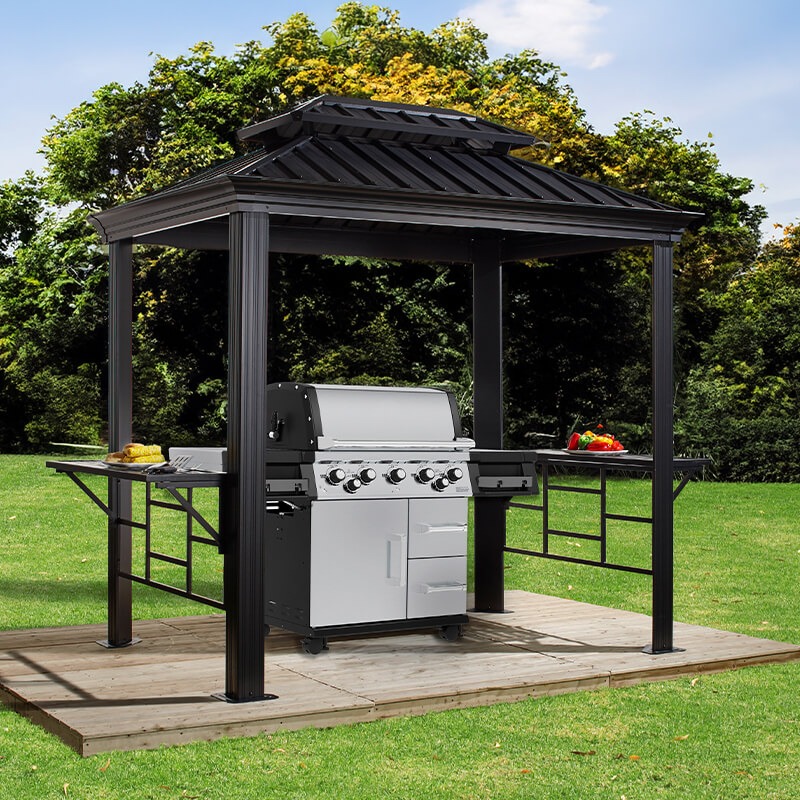
Shapes That Change the Feel of the Space
BBQ shelters in this size range come in a few clear forms, and the shape changes both the look and the way you use it. The shelter itself may be simple, but the form can make a surprising difference to how the area functions.
- Rectangular shelters are the easiest to place against a fence, wall or patio edge. They work well when you want a straightforward cooking bay with a linear setup.
- Square shelters tend to feel more central and balanced. They suit a standalone feature in the garden, especially if you want to stand and move around the grill from more than one side.
- Open-front shelters are common for grilling because they keep the front free for smoke movement and easy access to the barbecue.
- Gazebo-style BBQ shelters give a more social feel, with a defined roof and open sides that make it easy for guests to gather round without feeling boxed in.
- Lean-to styles can be a good fit where space is tight, particularly if the shelter needs to sit alongside an existing structure.
The shape is not only a visual choice. It also affects how easily you can place a barbecue, where smoke drifts, and how much room you have for movement. A rectangular design can be practical for a long grill run, while a square one can make more sense if you want the centre to stay open and flexible.
Timber, Metal or Mixed Materials?
Material choice changes the character of the shelter quite a lot. Within the BBQ shelters 60 sq ft / 6 m² category, the most common approaches usually fall into three groups: timber, metal, and mixed-material builds. Each one has its own look and its own strengths.
Timber BBQ shelters usually feel warmer and more traditional. They sit naturally in a planted garden, and they pair well with decked areas, sleeper edging and natural stone. Timber can make the BBQ area feel like part of the garden rather than a separate hard feature. It often suits buyers who want a softer, more homely finish.
Metal BBQ shelters bring a cleaner, sharper outline. They can work nicely in more modern gardens, especially where you already have steel-framed furniture, aluminium planters or contemporary paving. Metal structures often look more architectural and less rustic, which some people prefer for a tidy, minimal setup.
Mixed-material shelters can offer a practical middle path. For example, a timber frame with a metal roof, or a metal frame with timber side details, can create a shelter that feels sturdy but not too harsh. This type can be useful when you want the structure to look considered without dominating the garden.
There are also small but important differences in the way materials feel in use. Timber can soften the space visually, while metal can make the shelter appear slimmer and more compact. A mixed build may help the shelter blend into different garden elements at once, which is handy if your outdoor area already has a few materials going on.
Why 6 m² Works So Well for BBQ Use
In practice, 6 m² is a very usable footprint for a BBQ shelter. It is large enough to create a sheltered cooking spot, but not so large that it swallows the garden. That matters if you are trying to keep space for planting, circulation or family use.
A shelter of this size can usually cope with a sensible grilling layout: one barbecue unit, some standing room, and perhaps a side table or two. If the design is open-sided, the space can still feel airy while giving you overhead cover. If the roof is compact and well proportioned, it tends to look tidy rather than heavy.
It also helps create a natural focal point. Instead of scattering the barbecue, table and tools across a patio, everything sits under one defined cover. That can make the whole area feel more organised, and frankly less of a faff when you are carrying food, plates and trays outside.
Open Sides, Partial Screens and More Private Setups
Not every BBQ shelter needs to look the same. The side treatment changes both shelter and atmosphere. Some buyers want something open and breezy; others prefer a bit more enclosure.
- Fully open-sided shelters give the easiest access and the least visual bulk. They suit social cooking and frequent movement around the barbecue.
- Partial side panels can help break up wind from one or two directions without making the shelter feel enclosed.
- Back-panel designs often make sense if you are placing the shelter against a boundary or want a more defined backdrop for the grill.
- Lattice or slatted sides can add structure without closing the space off completely, which is useful if you want a bit more shelter but still want airflow.
The difference is practical as much as visual. Open-sided designs are easy to move around, but they leave more of the cooking area exposed to the weather. Partial screens can make the shelter feel more grounded, especially on breezier sites, but they can also reduce the sense of openness. The right choice depends on how exposed your garden is and how you like to cook.
The Small Details Buyers Often Notice Later
When people compare BBQ shelters, the small design details often end up mattering just as much as the overall size. In a 60 sq ft / 6 m² shelter, those details can decide whether the space feels comfortable or a bit awkward.
Look at the roof pitch. A steeper pitch can help the shelter look lighter and may give a more airy feel underneath. A flatter roof can suit a more modern layout, but it may appear more compact. The pitch also affects how the shelter sits in relation to trees, fences and nearby structures.
Post thickness matters too. Slimmer posts can keep the shelter visually light, which is handy in smaller gardens. Thicker posts tend to make the structure feel more solid and grounded, which some buyers prefer if the shelter is going to be a long-term feature.
Clearance height is another point worth checking. You want enough overhead room to stand comfortably while cooking, but not so much height that the shelter feels oversized for its footprint. A good proportion makes the whole thing feel calm and useable.
And then there is the roof edge. A neat fascia or simple overhang can change the appearance quite a bit. A deeper overhang may offer slightly more edge shelter, while a tighter roof line can keep the structure compact and tidy. None of this is flashy, but it does shape the final result.
Which Garden Layouts Suit This Size Best?
A BBQ shelter 60 sq ft / 6 m² can work in several kinds of garden, but it shines in places where space needs to be managed carefully. That includes smaller family gardens, patios with limited spare room, and outdoor areas where the cooking zone needs to stay distinct from seating or planting.
It is a good fit where you want the shelter to sit beside the house without overwhelming the patio. It can also work well a little further down the garden, as a dedicated destination space. In that setting, the shelter helps create the sense of an outdoor room, even if the rest of the garden is more open.
If your garden already has decking, paved seating, or a built-in boundary wall, the shelter can anchor that setup and make it feel more complete. The 6 m² size is enough to define the area without requiring a huge base or a major rearrangement of everything else.
Benefits That Matter When You Are Actually Cooking
Some of the best reasons to choose this category only show up once you start using it regularly. The main advantage is that it creates a sheltered space for outdoor cooking without turning the garden into a closed structure.
- More reliable grilling conditions when the weather is changeable.
- A defined cooking area that keeps the BBQ separate from the rest of the patio.
- A clearer layout for tools, food and serving trays.
- Some shade and overhead cover on bright days.
- A better setting for entertaining because guests can gather nearby without crowding the grill itself.
There is also a quieter benefit: a shelter can make the barbecue feel like part of the garden design rather than a thing that gets wheeled in and out. That matters if you care about how the space looks day to day, not just when you are cooking.
How Different Designs Affect Smoke and Movement
Because this is a BBQ-specific shelter, the way air moves through it matters more than in a standard garden canopy. An open-front, open-sided structure gives smoke the easiest route out, which is generally why these forms are so popular for grilling. They keep the shelter useful without making it feel stuffy.
If the shelter has more enclosed sides, you need to think a bit more about where the barbecue sits in relation to the opening. The idea is to keep smoke from lingering under the roof, while still getting enough protection from wind and rain. That is one reason why the shape and side layout should be matched to your cooking style.
For charcoal grilling in particular, a more open structure often feels better because it gives the fire more room and makes the whole setup feel less boxed in. Gas barbecues can suit a wider range of shelter styles, but they still benefit from good overhead space and an easy working area.
Useful Buying Tips for the Right Fit
When choosing a BBQ shelter 60 sq ft / 6 m², it helps to think beyond the size alone. A shelter can look fine on paper but feel cramped if the proportions are off or if the footprint does not suit your patio.
- Measure the actual barbecue area, not just the barbecue itself. Leave room for standing space and access.
- Check the shape against your garden lines. Straight edges usually sit more naturally against paving, fencing and walls.
- Match the roof style to the garden. A lighter roof can suit small spaces, while a more solid roof may suit a stronger focal point.
- Think about the sides. Open, partial, or panelled layouts all feel different in use.
- Look at how the shelter will sit with existing seating. A BBQ shelter works best when people can gather nearby without standing in the cooking path.
It also helps to imagine the whole scene: barbecue, prep area, serving, and where people will move once food is ready. That is often the difference between a shelter that looks nice and one that actually gets used all the time.
A Category Built for Real Garden Life
The appeal of BBQ shelters 60 sq ft / 6 m² is that they feel practical without being purely functional. They give you enough room to create a proper cooking spot, while still leaving the rest of the garden open for living, planting and relaxing.
Whether you lean towards a timber gazebo, a metal-framed shelter, a rectangular lean-to or a more open, social design, the main thing is that the space should feel easy to use. A good BBQ shelter should make the job simpler, the layout clearer and the whole outdoor area a bit more appealing to spend time in.
For buyers who want a garden feature that does more than sit there, this size is a strong place to start. It is compact, but not tiny; sheltered, but not shut in; and specific enough to give your BBQ area its own proper identity.
[Sassy_Social_Share]