
BBQ Shelters 50 sq ft / 4 m² - Best Deals in UK!
Showing the single result

BBQ Shelters 50 sq ft / 4 m² give a compact, covered cooking zone for garden grills, helping to shield the barbecue from light rain, gusts and harsh sun while keeping the layout neat and usable.
A compact footprint made for proper grilling space
A 50 sq ft / 4 m² BBQ shelter is sized for gardens where every metre matters, yet you still want a defined place for cooking outdoors. This footprint suits a single grill setup, a slim preparation shelf, and a bit of standing room without turning the patio into a permanent outdoor room. The appeal is not only the cover overhead, but the way the shelter creates a clear cooking zone that feels organised and intentional.
In practice, this size often works well where a full gazebo would feel too large. It can sit beside a terrace, on a paved corner, or at the end of a deck, giving you a practical cooking point without overwhelming the rest of the garden. For buyers comparing options, the main advantage is balance: enough shelter for the barbecue and the cook, but still compact enough to fit into tighter spaces.
Shapes that change the whole feel
BBQ shelters in this size range come in different shapes, and the shape changes both the look and the way you use the space. A pitched roof design gives a more classic garden-building appearance and helps rain run off easily. A flat roof style feels more contemporary and can be easier to place against a wall or fence line. An angled roof gives a slightly softer profile and often creates a bit more headroom at the front or rear, which can be useful when reaching over the grill.
Bestseller der Kategorie BBQ Shelters 50 sq ft / 4 m²
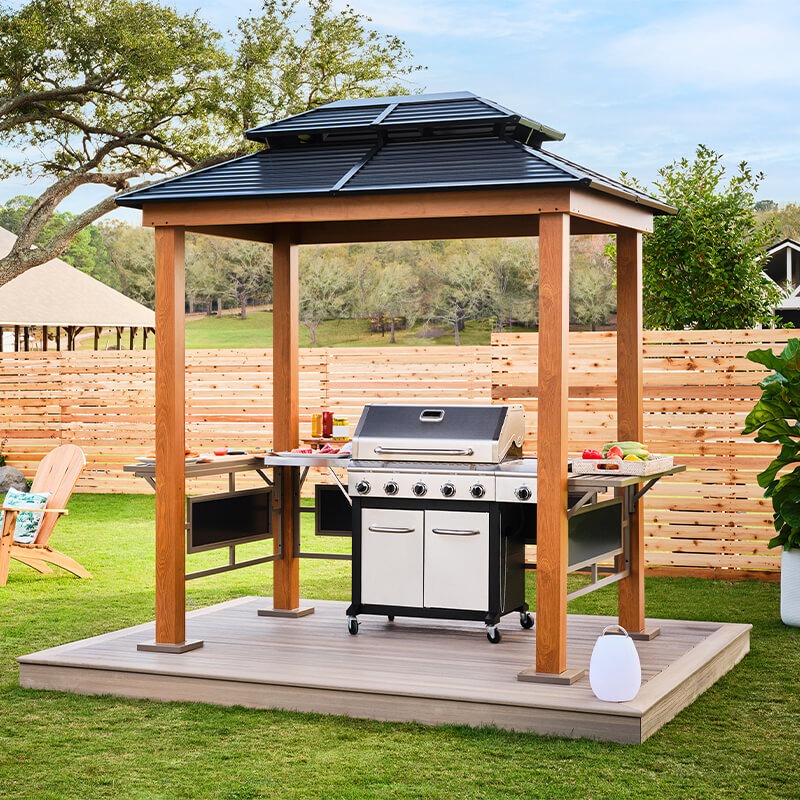
There are also differences in the overall plan view. A rectangular shelter tends to suit longer barbecues and side tables, while a square footprint can feel more centred and compact. A corner-style arrangement may work if the BBQ shelter is meant to tuck into an unused corner of the garden, though it is worth checking that the cooking area still has enough space for movement around the grill.
When choosing between shapes, think about the barbecue itself, not just the shelter. A wide kettle grill, for example, needs a different layout from a built-in-style gas barbecue with side shelves. The right shape makes the area easier to use, and honestly, it just feels less fiddly on the day you actually want to cook.
Open, half-open, or fully roofed: the main shelter types
Within BBQ shelters, there are a few common types, each offering a different level of cover and openness. Some are very open-sided, with just a roof and perhaps a few posts, which keeps air moving freely around the cooking zone. Others are half-open, with partial side panels or a back panel to give some wind protection without making the space feel boxed in. Then there are more enclosed versions, still within a compact footprint, that provide a stronger sense of shelter and definition.
The choice between these types matters more than many people expect. An open-sided structure keeps smoke dispersal easy and works well for grillers who like a light, airy setup. A half-open shelter is often a sensible middle ground, especially if your garden catches crosswinds. A more enclosed form can help create a recognisable outdoor kitchen corner, though it may need more careful positioning so smoke does not build up around the cook.
- Open-sided shelters – airy, simple, and good where ventilation matters most.
- Half-open shelters – a useful compromise for gardens with light wind exposure.
- More enclosed BBQ shelters – better defined cooking zones, with a stronger sense of shelter.
- Post-and-roof designs – straightforward and often visually light in smaller gardens.
Material choices that shape the character
The material used in a 4 m² BBQ shelter affects both the appearance and the overall feel of the space. Timber frames tend to bring a warmer, more natural look that sits well in planted gardens and alongside wooden decking. Metal-framed shelters usually feel cleaner and more architectural, with slimmer lines that can suit contemporary patios. Mixed-material designs can combine a sturdier frame with a roof covering that creates a more sheltered, finished look.
The roof itself is a major detail too. Some shelters use a solid roof, giving more dependable cover from drizzle and sun. Others have a lighter roof profile that is visually less heavy, which can help in small gardens where you do not want the structure to dominate. If you are looking at differences, this is where many buyers narrow things down: timber often feels more traditional, metal often feels sharper, and the roof type decides how much coverage the BBQ area really gets.
A useful tip is to match the shelter’s visual weight to the rest of the garden. A chunky frame in a very small patio can make the area feel tight, while a slimmer frame can leave more breathing room. It is a simple thing, but it changes how the whole corner reads.
Why this size works so well for barbecue setups
The 50 sq ft / 4 m² footprint is small enough to slot into many outdoor spaces, yet large enough to do a proper job for casual grilling and weekend cooking. It gives you room for a barbecue unit, a little circulation space, and maybe one side shelf or serving area, depending on the layout. That makes it a strong choice for households that want a dedicated BBQ spot without building an oversized structure.
Another benefit is how tidy it makes the garden feel. Instead of the barbecue sitting in the middle of a patio, the shelter gives it a home. That can make the outdoor area look more thought through, which is a nice bonus when the garden is also used for sitting, planting, or family time. It also helps define the cooking zone, so guests know where the heat, food and tools are meant to be.
- Defined cooking area – the BBQ is not just “parked” somewhere random.
- Good use of space – compact without feeling cramped for a single grilling station.
- Better shelter – helps with light rain, sun glare and breezy days.
- More organised layout – useful if you want a cleaner patio or deck arrangement.
Ventilation and cover: the balance that matters
One of the key differences between BBQ shelters is the balance between cover and airflow. A barbecue needs shelter, yes, but it also needs space for smoke to move. That is why many good designs in this category avoid sealing the cooking area too much. Open sides, raised roof lines, or partial side panels can all help keep the air moving while still giving a sense of protection.
This matters especially for gas barbecues, charcoal grills and hybrid setups. Gas units often benefit from a more open arrangement so the cook has room to work and the heat does not feel trapped. Charcoal cooking can create more smoke, so a shelter with open sides and sensible roof height is useful. If the structure is too closed in, the space can feel stuffy and the cooking experience gets awkward, fast.
For buyers comparing styles, a simple rule is worth keeping in mind: more shelter does not always mean better grilling. The best BBQ shelter usually gives enough cover for comfort, but still keeps the cooking zone open enough to feel safe and usable.
Forms that suit different garden layouts
There is no single layout that fits every garden, and that is where the different forms of BBQ shelters become useful. A free-standing shelter can be placed where it makes the most sense for access and movement. A wall-adjacent design can help if you want the structure to sit close to the house or next to an existing hard standing. A more centred island style can turn the barbecue into a focal point in the garden, though it needs a bit more surrounding room to work well.
The form should also reflect how often you entertain. If the BBQ shelter is mainly for family cooking, a simple layout may be enough. If you often have people standing around the grill, a slightly more generous arrangement with open access on more than one side can make the space feel less congested. The point is not to make it elaborate; it is to make sure the actual use matches the shape.
- Free-standing form – flexible placement and a clear visual feature.
- Wall-adjacent form – practical where the garden already has a defined edge.
- Island-style layout – creates a stronger cooking focal point.
- Corner-fitting design – useful for making use of awkward or spare space.
Small details that make the shelter easier to use
In a compact BBQ shelter, little details have a big effect. The height of the roof opening changes how comfortable it feels when standing at the grill. The depth of the roof affects how much of the cooking zone is covered, especially when rain is blowing in at an angle. The position of posts matters too, because awkwardly placed supports can get in the way of the barbecue lid, side shelves or the person cooking.
If you are comparing versions, look at how the structure would work with your grill rather than just at the shelter itself. A BBQ with a front-opening lid needs different clearance from a simple charcoal kettle. A model with side shelves may need extra width, while a trolley-style barbecue may need a straighter approach path. These are the sort of details that save you from buying something that looks fine on paper but feels clumsy in real use.
One practical tip: imagine yourself turning, lifting, and placing trays while standing under the shelter. If you can picture that movement clearly, you are more likely to choose a layout that actually works.
What to look for when comparing 50 sq ft BBQ shelters
When shopping this category, it helps to compare the shelter on a few specific points rather than just going by appearance. Start with the footprint, because 50 sq ft / 4 m² can be arranged in slightly different ways, and the usable space may feel larger or smaller depending on the proportions. Then look at the roof style, the side openness, and the overall shape. Those three things usually decide whether the shelter suits your garden and your barbecue.
Also think about how the BBQ shelter will sit with the rest of the outdoor area. If the garden has a modern patio and straight lines, a simple geometric shelter may feel more natural. If the space is softer and more planted, a timber-based or pitched-roof design can blend in more easily. Differences like these are not just visual; they change how comfortable the area feels when you use it week after week.
- Footprint proportions – not just the area, but how the space is arranged.
- Roof form – affects cover, look, and the way rain moves off the shelter.
- Side openness – influences airflow and how enclosed the cooking area feels.
- Frame style – timber, metal or mixed materials give different visual results.
- Clearance around the BBQ – important for lids, shelves and easy movement.
Why buyers keep coming back to this category
There is a reason BBQ Shelters 50 sq ft / 4 m² stay attractive to garden buyers: they solve a very specific problem without asking for a huge amount of space. You get a covered cooking point, a more settled outdoor setup, and a shelter that feels proportionate to smaller and medium-sized gardens. For people who grill often, that can make the outside area feel much more usable, even when the weather is a bit unsettled.
The real value is in the way these shelters support everyday outdoor cooking. They do not need to dominate the garden, and they do not need to be overly elaborate. Instead, they give the barbecue a proper place and create a small but definite outdoor station. That is useful for buyers who want a tidy, practical solution that still has some character. A well-chosen BBQ shelter can make grilling feel easier to start and nicer to return to, which is half the appeal really.
If you are narrowing down the options, focus on the kind of shelter that matches your barbecue size, your available space, and the level of cover you actually want. The right 50 sq ft / 4 m² shelter should feel like it belongs in the garden from day one.
[Sassy_Social_Share]