
Arches with Barrel Roof - Best Deals in UK!
Showing all 9 results
-
23% OFF: Panacea Quatrefoil Metal Garden Arch 7’5 x 3’6 £113.9923%

-
23% OFF: Panacea Curve Metal Garden Arch 7’5 x 3’2 £113.9923%

-
23% OFF: Panacea Scrolls Metal Garden Arch with Gate 7’5 x 3’2 £129.9923%

-
23% OFF: Panacea Rosette Round Metal Garden Arch with Gate 7’4 x 4’1 £167.9923%

-
23% OFF: Panacea Camberwell Metal Garden Arch 7’8 x 3’2 £121.9923%

-
23% OFF: Panacea Camberwell Wave Top Metal Garden Arch 7’4 x 4′ £121.9923%

-
23% OFF: Panacea Scrolls Metal Garden Arch 7’5 x 3’2 £113.9923%

-
23% OFF: Panacea Sunset Metal Garden Arch with Gate – Black 7’5 x 4’1 £205.9923%

-
23% OFF: Panacea Lattice Metal Garden Arch Tunnel – White 8’3 x 5’9 £221.9923%

Barrel roof arches for the garden add a curved, shelter-like frame for climbing plants, paths and entrances. Compare shapes, sizes, materials and details to find the right arch.
A curved frame that changes the feel of a garden path
Arches with a barrel roof are easy to spot once you know what to look for: instead of a flat top or a sharp peak, they carry a rounded roof line that follows a soft, tunnel-like curve. That shape gives the arch a calmer look than a pointed pergola style and more presence than a simple single-span arch. For many gardens, that makes it a good fit where the frame should feel a bit more enclosed, but not heavy.
The barrel roof form works especially well when the arch is used over a path, between planted beds, or as a transition from one garden area to another. The curve draws the eye forward and gives the planting something to climb along in a neat, controlled way. If you are after a structure that feels decorative but still practical, barrel roof arches sit in that middle ground rather well.
What “barrel roof” actually means in garden arch terms
The term barrel roof describes the roof line: a continuous rounded arc that can look like a shallow tunnel, a half-cylinder, or a gently domed cover depending on the design. In garden structures, this is often used for arches that are wider or more substantial than a plain gateway arch. The roof can be more open and airy, or more enclosed with closely spaced ribs, which changes the overall feel quite a lot.
Bestseller der Kategorie Arches with Barrel Roof
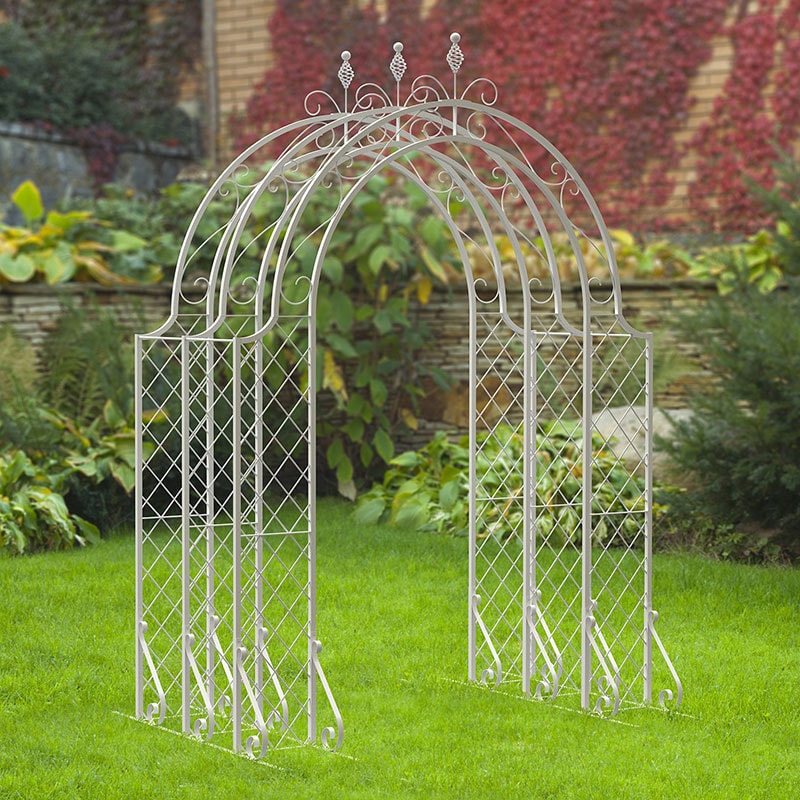
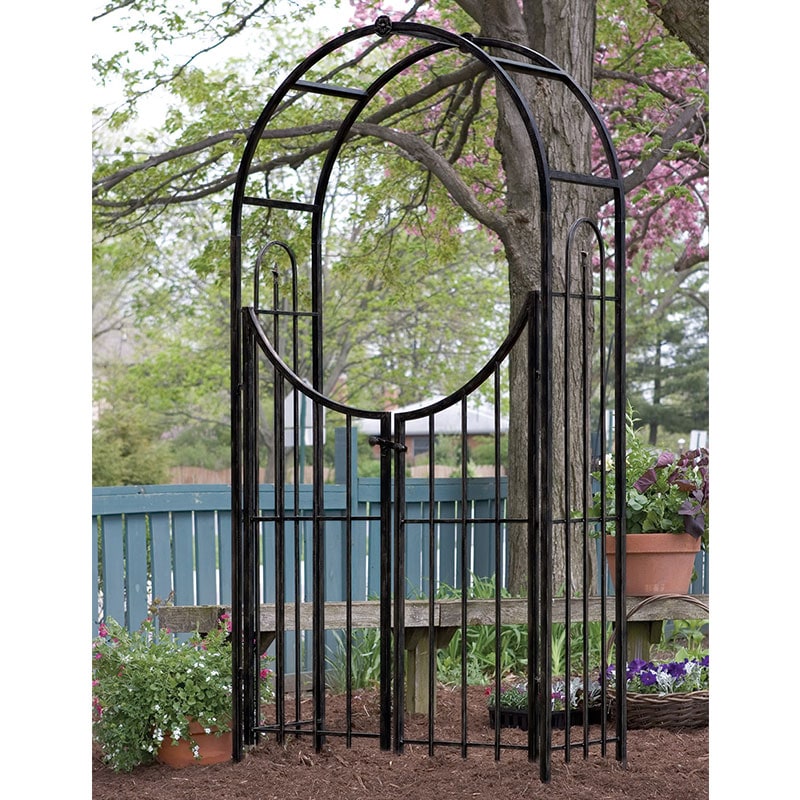
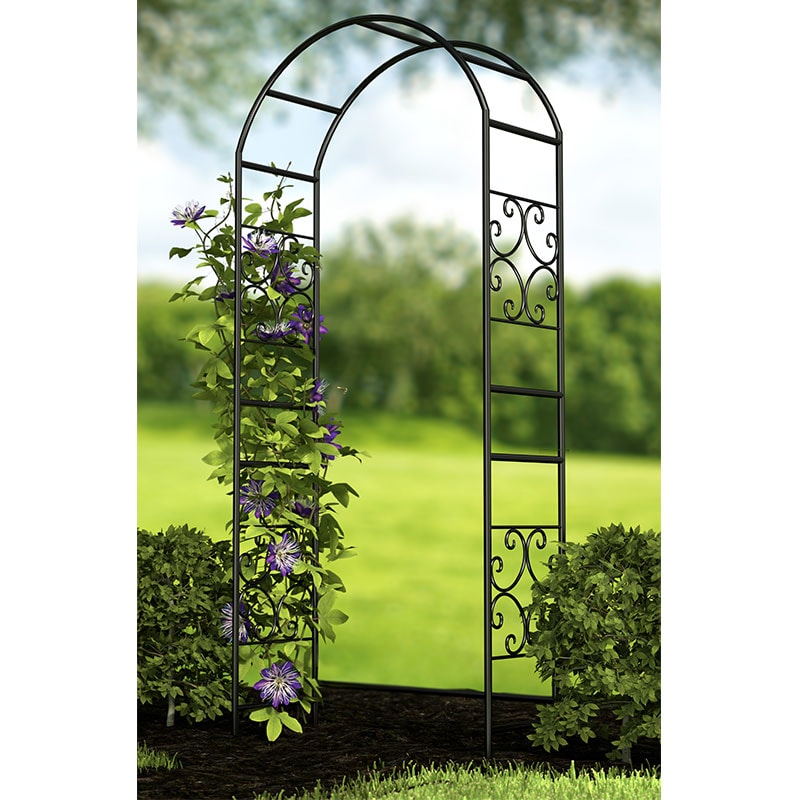
Unlike a peaked arch, where the top meets in an angle, the barrel roof flows smoothly across the span. That makes the structure appear softer, and for climbing plants it creates a more even run of support. For buyers comparing styles, the roof shape is often the key difference, not just the height or width.
Different forms you may come across
There are several ways a barrel roof arch can be shaped, and each one suits a slightly different use. The look can be simple or more architectural, depending on how the curve is framed.
- Shallow barrel roof – a low, gentle curve that keeps the arch open and light in appearance.
- Deep barrel roof – a more rounded profile that gives a stronger tunnel effect and a clearer sense of enclosure.
- Wide-span barrel arch – designed to cover a broader path or entrance, often with a longer roof line.
- Narrow barrel arch – a smaller version for compact spaces, side passages or single focal points.
- Open-rib barrel arch – with visible framework and more gaps, so plants can weave through and the structure does not feel too solid.
- More enclosed barrel frame – where the roof is built from closer supports, giving a fuller canopy effect once plants grow in.
The difference between these forms is not only visual. A shallow curve can feel crisp and tidy, while a deeper roof makes a stronger garden feature. If the aim is to create a walkway with a bit of drama but not a closed-in tunnel, a medium curve is often the more balanced choice.
How barrel roof arches differ from pointed and flat-top arches
When people compare arch styles, they often narrow it down to three looks: barrel roof, pointed, or flat-topped. Each one changes the mood of the garden in a different way.
A pointed arch has a sharper line and tends to look more formal or traditional in a distinct way. A flat-top arch feels more architectural and can suit a structured garden layout, but it may not have the same sense of flow. The barrel roof sits between the two. It gives you a rounded outline without the abrupt peak, and that is useful if you want the structure to feel integrated with planting rather than standing apart from it.
There is also a practical difference. On a barrel roof form, climbing plants can spread across the top with a more even rhythm. That matters if you want the arch to become a living frame over time. The rounded profile can make the planting look fuller sooner, because the support line naturally guides growth across the span.
Why this shape suits climbing plants so well
The rounded roof line offers a clear route for stems and tendrils to follow. Roses, clematis, jasmine and other climbers can be trained across the curve so the arch becomes part structure, part planting feature. The shape encourages a more continuous canopy than a narrow or sharply angled top, which is one reason buyers often choose it when they want the arch to soften into the garden rather than sit there as a hard frame.
The form also helps create a more balanced visual weight. On a straight path, a barrel roof arch can make the entrance feel defined without looking clipped or boxy. That is handy for gardeners who want a feature that works with planting, not against it. The curve gives the eye a route to follow, and that small detail can make the space feel more intentional.
Materials and build styles that change the final look
Even within the same barrel roof shape, the material and finish make a clear difference. A simple metal frame can look neat and understated, while a heavier build gives more presence. Timber versions tend to feel softer and more natural, though the exact appearance depends on the thickness of the frame and the way the curve is constructed.
What buyers often notice is how the material changes the balance between structure and planting. A finer frame keeps the arch visually light, which suits gardens where you want the plants to take the lead. A chunkier frame reads more strongly from a distance and can suit larger spaces or more defined entrances. There is no single right answer, but it is worth thinking about how visible you want the arch to be before the climbers have filled in.
Good places to use a barrel roof arch
Barrel roof arches work well anywhere you want a transition point with a bit of shape. They can mark the start of a path, lead from lawn to border, frame a view, or act as a linking feature between two planting areas. In a narrow garden, the curve can help the space feel ordered without turning it into a rigid corridor. In a larger garden, it can create a quieter pause between stronger features.
They are also a useful choice where the garden has mixed planting heights. The rounded top helps bridge low borders and taller climbers, so the structure does not look oddly abrupt. That is a small thing, but it matters when the aim is to make the planting and framework feel like they belong together.
Details buyers tend to compare before choosing
When looking at arches with barrel roof, the main points usually come down to shape, width, clearance and how much of the frame is meant to show. A few small differences can change how the arch will sit in the garden.
- Span width – wider spans suit paths and entrance points, while narrower ones work better in compact spaces.
- Height – important if the arch needs to feel open enough for people to pass through comfortably.
- Curve depth – a gentle curve looks lighter; a deeper curve creates more of a tunnel effect.
- Framework density – more open ribs feel airy, closer ribs give stronger support and a fuller outline.
- Visual weight – some arches are designed to blend in, others to act as a more obvious garden marker.
If you are torn between two styles, it often helps to think about how the arch will look when empty as well as once planted. A frame that seems delicate in a photo may disappear quickly under vigorous climbers, while a sturdier outline can hold its shape more clearly through the seasons.
Tips for picking the right barrel roof profile
Choose the curve to match the space, not just the plant list. A shallow barrel roof can be a better fit where the arch should stay open and not dominate. A deeper roof suits a more defined passage and can make a plain route feel more considered. If the arch is going in front of a view you want to frame, the rounded top can work especially well because it softens the edge of the scene rather than cutting it off.
It is also worth checking whether the arch needs to feel decorative from both sides. Some barrel roof arches look equally good in approach and exit views, while others have a more one-sided front. That difference can matter if the arch sits in the middle of a path or at a threshold between spaces.
What gives this style its appeal in a garden shop category
A barrel roof arch has a quiet sort of appeal. It is not trying too hard, but it still changes the space in a noticeable way. The rounded top makes it suitable for gardeners who want something more shaped than a plain frame, yet less formal than a tightly symmetrical gateway. It gives room for planting, creates a passage point, and adds a sense of structure without making the garden feel boxed in.
For shoppers comparing options, that combination is often the reason to choose this category. You get a clear visual feature, a practical support for climbers, and a shape that works across different garden styles. It can sit neatly in a cottage-style border, a more structured layout, or a mixed planting scheme where the arch should bridge the gap between parts of the garden.
Small differences that matter once the arch is in place
Two barrel roof arches may look similar at first glance, but small changes in curvature, width and frame spacing can alter the result quite a bit. A rounder roof gives a softer profile and more of a canopy feel. A flatter curve is tidier and less enclosed. A longer span can make a path feel more deliberate, while a shorter arch works better as a compact accent.
That is why it helps to think in terms of effect rather than just product type. Do you want the eye to pass through quickly, or pause under the arch? Do you want the planting to sit lightly on top, or to build into a fuller green tunnel? The answer usually points to the right barrel roof form.
A shape that rewards a careful choice
Arches with barrel roof are a good fit when you want a garden feature with a rounded outline, clear purpose and room for climbers to do their thing. The shape is different enough to stand out, but not so unusual that it clashes with the rest of the garden. That balance makes it an appealing category for anyone choosing a structure that should feel useful, decorative and a bit more considered than a standard arch.
Before buying, it helps to compare the curve, the span and the overall feel of the frame. A better match is often the one that suits the path, the planting and the way you want people to move through the space. Once that is right, the barrel roof arch can become one of those features that quietly ties a garden together.
[Sassy_Social_Share]