
Arches under £200 - Best Deals in UK!
Showing all 9 results
-
48% OFF: Forest Contemporary Slatted Garden Arch 3’8 x 2’5 £139.9948%

-
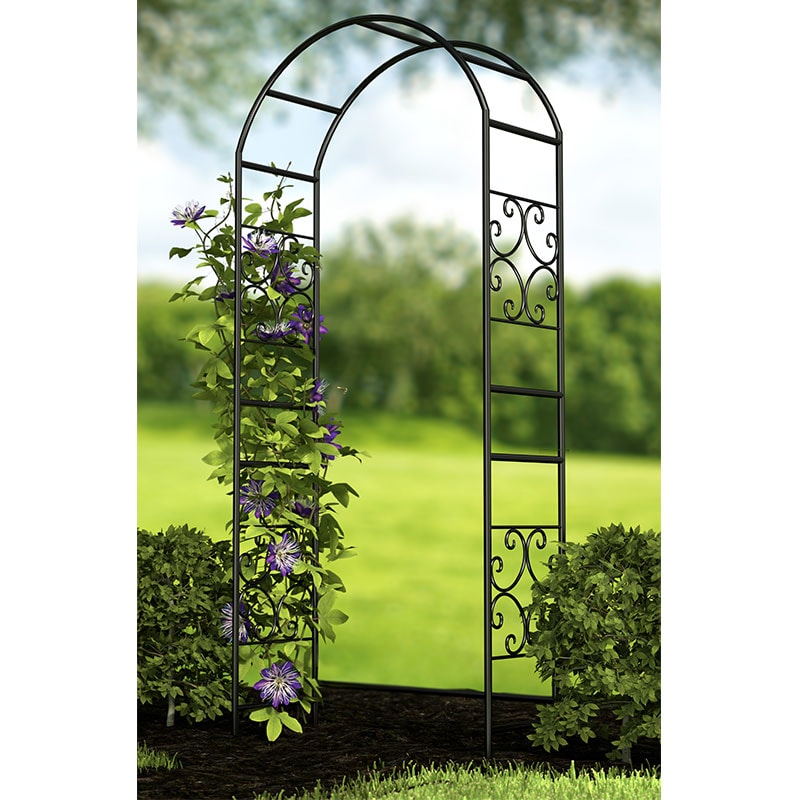
23% OFF: Panacea Ogee Metal Garden Arch 8’6 x 3’9 £113.9923%

-
23% OFF: Panacea Scrolls Metal Garden Arch with Gate 7’5 x 3’2 £129.9923%

-
23% OFF: Panacea Rosette Round Metal Garden Arch with Gate 7’4 x 4’1 £167.9923%

-
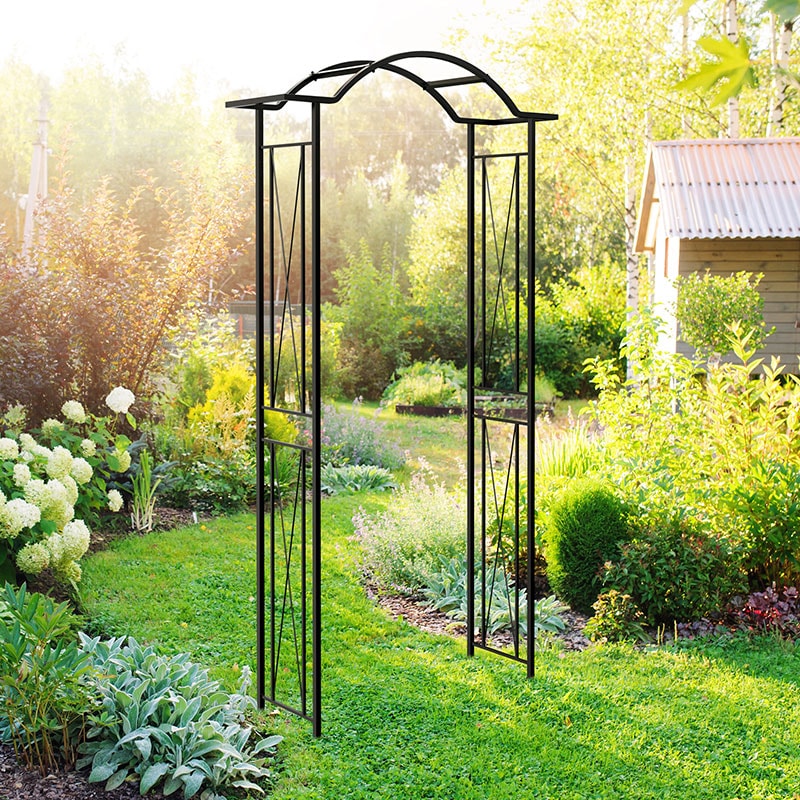
23% OFF: Panacea Camberwell Metal Garden Arch 7’8 x 3’2 £121.9923%

-
23% OFF: Panacea Camberwell Wave Top Metal Garden Arch 7’4 x 4′ £121.9923%

-
23% OFF: Panacea Scrolls Metal Garden Arch 7’5 x 3’2 £113.9923%

-
23% OFF: Panacea Quatrefoil Metal Garden Arch 7’5 x 3’6 £113.9923%

-
23% OFF: Panacea Curve Metal Garden Arch 7’5 x 3’2 £113.9923%

Garden arches under £200 bring structure, style and a clear focal point to borders, paths and entrances, with options in metal, timber and rustic finishes for compact and larger gardens alike.
Why an arch changes the whole feel of a garden
An arch is one of those pieces that can quietly change how a garden is read. It gives the eye a place to pause, frames a view, and makes even a simple path feel a bit more considered. In the under £200 range, there is enough variety to suit small courtyards, long lawns, allotment entrances and side passages, without drifting into the prices usually tied to bespoke ironwork.
What people often want from this category is not just decoration. They want a shape that feels intentional: something to mark the start of a border, soften a fence line, or create a point where climbing plants can do the rest. A good arch can suggest an entrance without needing a gate. It can also break up a flat run of planting, which is useful if a garden feels a bit boxy or too open.
Classic hoop, gothic point or squared frame?
One of the main differences in arches under £200 is the shape of the top. A rounded hoop arch has a softer look and tends to blend well with informal planting. It suits roses, clematis and trailing climbers because the curve echoes the flow of the growth. A pointed or gothic-style arch gives a sharper outline and feels a bit more architectural, which can work well in more structured gardens or alongside clipped hedges.
Bestseller der Kategorie Arches under £200
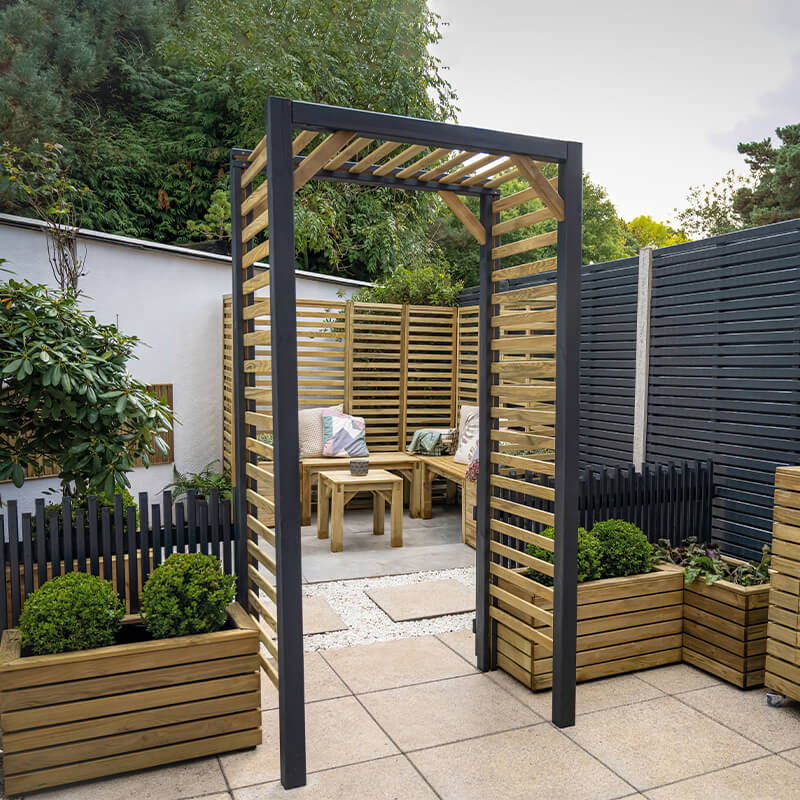
Then there are square-top or pergola-style arches, which often feel more modern and sturdy. These usually have a stronger frame and a more defined opening. They can be a better fit where the garden already uses straight lines, such as raised beds, rectilinear paving or timber edging. The difference is mostly visual, but it matters: a curved arch can soften, while a squared form can organise.
Some arches also come with side trellis panels, which add a wider surface for planting and create more of a portal effect. These are useful when the aim is not just to make a doorway, but to build a full screen or mini feature wall between spaces.
Metal, timber and the look they give
Material changes everything, even within the same budget. Metal arches are often chosen for their slimmer profile and lighter visual weight. In black, bronze or muted green finishes, they can sit quietly in planting or stand out as a stronger line against foliage. Metal is a good option when you want the arch to feel a little refined rather than bulky.
Timber arches usually feel warmer and more natural. They work nicely in cottage-style gardens, wildlife-friendly spaces or places where the planting is informal and layered. Timber can be a better match for softer landscaping, though the style can vary quite a lot depending on the cut of the wood and whether the arch has neat, squared posts or more rustic edges.
Rattan-effect or decorative composite styles are less about heavy structure and more about adding a decorative point. These are useful when the arch is doing a visual job rather than supporting very dense planting. In this price range, the finish often tells you a lot about how the arch will sit in the garden: sleek metal suggests crisp lines, while wood or rustic detailing leans into a gentler, more lived-in look.
For climbing roses, clematis and other wanderers
Not every arch handles planting in the same way. If the arch is meant to carry a mature climbing rose, look for a shape with enough width and a frame that gives the stems a bit of room to spread. Roses can look awkward on a narrow arch if the top is too tight or the sides feel cramped. A broader span often creates a more balanced finish.
Clematis usually works well on lighter arches, especially those with thinner uprights or trellis side sections. Because clematis climbs by twining, it likes something it can wrap around without too much bulk. A pointed top can help draw the plant upward and make the display feel taller.
Honeysuckle, jasmine and similar climbers tend to look good on arches with a slightly more relaxed form, where the stems can spread and weave. If you want a fuller, softer silhouette, arches with lattice or side mesh are helpful. They let the planting fill out the frame instead of sitting only at the top.
There is also a difference between arches chosen mainly for flowers and those used as a support for more architectural climbers, such as some trained shrubs or even productive planting in a kitchen garden setting. In those cases, sturdier side supports and a decent opening width matter more than decorative flourishes.
Narrow path, wide border, or something in between
Size matters more than people sometimes expect. A slim arch can be ideal for a narrow path or a side entrance where space is tight and anything too broad would feel clumsy. These are useful in smaller gardens, where an arch should suggest a transition rather than dominate it.
A wider arch creates a more generous passage and can work well at the start of a lawn, between two planting areas, or over a central route through the garden. Wider forms often look better where the space around them is open enough to let the shape breathe. Otherwise, the arch can appear squeezed in, which sort of defeats the point.
Height also changes the effect. A taller arch can make a route feel more ceremonial, while a lower one feels domestic and snug. If the arch is going near a gate or path, the height should feel comfortable to pass under, but not so tall that it loses its framing effect. In many gardens, the sweet spot is a shape that is present without turning into a giant structure.
Decorative detailing that does more than look pretty
Within this budget, details can be practical as well as decorative. Scrollwork, looped tops, side curls and finials can help an arch feel finished, but they also influence how planting sits against the frame. A design with extra curl or cross-bracing gives more little points for stems to hook onto. That can be useful for climbers that need a bit of help getting started.
Some arches use a simple lattice panel at the sides, while others keep things open and spare. The open version tends to look lighter and suits gardens where the planting is meant to do most of the work. The panelled version is better if you want the arch to look fuller from day one, or if the surrounding area needs a stronger boundary.
There is a difference too between decorative arches that are purely ornamental and those that are trying to be a support structure with style. If you want the arch to age visually into the planting, choose a design that does not rely too heavily on ornament. If you want the arch to stand out even before the climbers settle in, a more detailed frame can be a better fit.
Where an arch earns its place
Arches under £200 are often bought for a very specific spot, and that is usually the right way to think about them. At the end of a path, they can lead the eye forward and give the garden a sense of direction. Across a threshold, they can suggest movement from one area to another, which is useful in gardens divided into zones.
They also work nicely as a backdrop for seating areas. A climbing arch behind a bench can make the space feel less exposed and more deliberate. In border planting, an arch can create height where the rest of the planting sits lower, which helps with layering. If the garden has a flat layout, one vertical shape can make a noticeable difference without needing a full redesign.
For entrance areas, an arch can soften the boundary between public and private space. That is part of the appeal: it feels inviting, but it also clearly marks a place. In a front garden, this can be more effective than a large ornament or extra paving. The arch gives structure and still leaves room for planting to take the lead.
Choosing by style: cottage, modern, rustic or formal
Cottage-style arches often have a curved or gently pointed top and a softer, more decorative frame. They fit well with rambling roses, foxgloves and mixed borders. These arches are often chosen for gardens that feel relaxed and layered, where nothing is meant to look overly rigid.
Modern arches usually lean into clean lines, square edges and slimmer profiles. They can suit contemporary paving, gravel gardens and simple planting schemes. The look is calmer and more restrained, which works well if the rest of the garden already has strong shapes.
Rustic arches tend to use timber or a rougher finish that feels more natural. They can be a good match for wildlife gardens, allotment entrances or informal plots where the charm comes from texture rather than polish. The small imperfections are part of the appeal, really.
Formal arches are usually more symmetrical and structured. These are the ones that can help create a strong axis in the garden, especially when paired with clipped hedging or repeat planting. They suit anyone who wants the garden to feel organised and composed, without looking stiff.
What £200 can get you, and where the trade-offs sit
At this price level, the balance is often between finish, size and structure. You can find arches with pleasing decorative details, but the budget usually means you are choosing between a heavier frame and a more intricate design, not both in full measure. That is not really a drawback if you know what the arch needs to do.
If the main aim is visual impact, a decorative arch with lighter construction may be enough, especially in a small garden or where the climber will quickly fill the shape. If the main aim is support, then a sturdier frame with fewer extras may make more sense. The difference is worth thinking through before buying, because an arch that looks lovely on its own can feel a bit underpowered once it has to carry a dense plant.
Sometimes the best value in this category is not the most ornate piece, but the one whose proportions make sense for the garden. An arch that is too narrow, too low or too busy in design can look less convincing than a simpler frame that fits the space properly. It is one of those purchases where the shape matters almost as much as the finish.
Little checks that help you pick the right one
- Check the opening width if the arch sits on a path or between planted areas.
- Think about the climber: roses like room, clematis likes something easier to wrap around.
- Match the shape to the garden: curved for softness, squared for a sharper layout.
- Look at side support if you want the arch to take on a fuller planted look.
- Choose the frame style based on whether the arch should blend in or stand out.
- Consider height so the arch feels balanced with fences, paths and nearby planting.
Why buyers keep coming back to arches in this range
There is a practical appeal to arches under £200 that is easy to understand. They are visually useful, they can suit several garden styles, and they do not require a huge layout change to make an impact. A single arch can make a plain path feel like a route, turn a gap in the border into a feature, or give climbing plants a proper stage.
They also offer a good middle ground between simple plant supports and larger garden structures. A teepee or obelisk is more compact. A pergola is more committed. An arch sits between those, giving enough presence to shape the space, but not so much that it takes over. That balance is part of why it works in so many gardens.
For anyone weighing up different types, the question usually comes down to this: do you want soft and romantic, sharp and architectural, or rustic and natural? Once that is clear, the choice becomes easier. Then it is mostly about proportions, the climber you plan to use, and whether the arch should sit quietly in the background or mark the moment you step from one part of the garden to another.
A final thought before you choose
It is easy to treat an arch as just another garden accessory, but it often does more than that. It shapes movement, adds height, and gives climbing plants a reason to be noticed. In the under £200 category, the best choices are usually the ones that suit the garden’s existing lines and leave enough room for the planting to do its work. A well-chosen arch does not need to shout. It just needs to fit properly, and when it does, the whole space feels a bit more finished.
[Sassy_Social_Share]