
Arches under £100 - Best Deals in UK!
Showing all 3 results
-
23% OFF: 4×2 Pergola Arch – Forest Hanbury Dome Top Wooden Garden Pergola Arch £75.9923%

-
23% OFF: Forest Classic Flat Top Wooden Garden Pergola Arch 6’11 x 2’4 £91.9923%

-
19% OFF: Forest Hanbury Flat Top Wooden Garden Pergola Arch 6’10 x 1’8 £71.9919%

Arches under £100 bring structure, height and instant garden impact without pushing the budget, with styles from slim metal frames to trellis arches, rose arches and more for paths, entrances and planting.
Why a garden arch earns its place
An arch does more than mark a route through the garden. It gives a plain border a clear focal point, adds vertical shape where everything else sits low, and helps turn a simple gap in a hedge or fence into something that feels planned. In the under £100 range, the choice is broad enough to suit small courtyards, long paths, allotments, front gardens and larger planting schemes, yet the price stays sensible for a feature that changes the whole look of an area.
What makes this category useful is the mix of form and function. Some arches are built mainly for support, ready to carry climbing roses, clematis or jasmine. Others are more decorative, with scrolls, pointed tops or lattice sides that give interest even before planting starts. If you are comparing options, it helps to think about what matters most: a light frame, a defined shape, extra climbing space, or a stronger entrance effect.
Shapes that set the mood
The shape of an arch changes how it feels in the garden. A rounded arch gives a softer, classic look and suits informal planting, especially where you want the structure to blend in. A gothic or pointed arch feels more architectural, with sharper lines that stand out along a straight path or between beds. A flat-top arch has a more modern, boxy profile and can suit structured gardens or spaces with repeated straight edges.
Bestseller der Kategorie Arches under £100
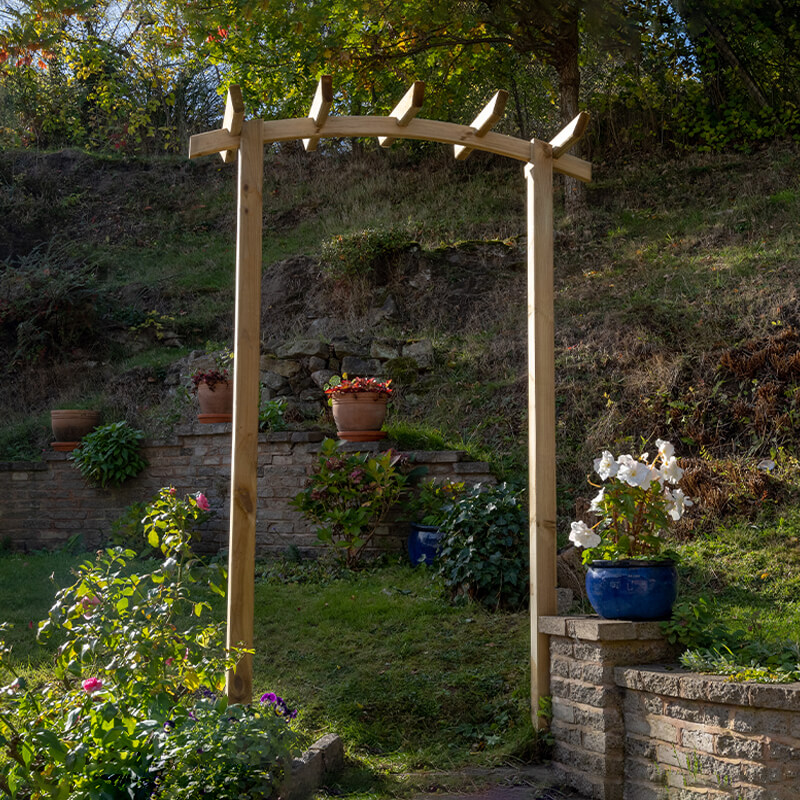
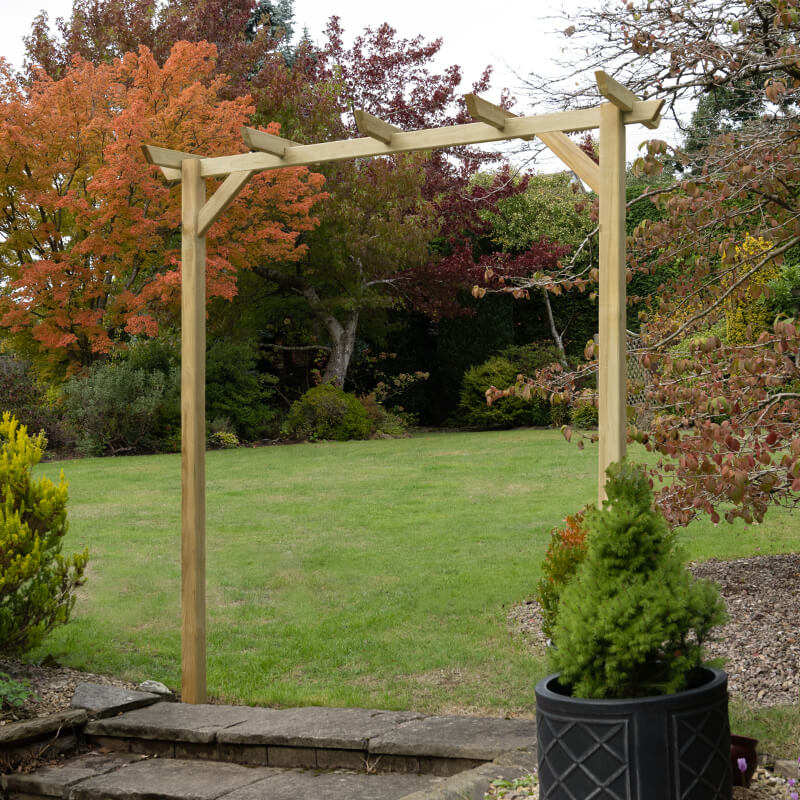
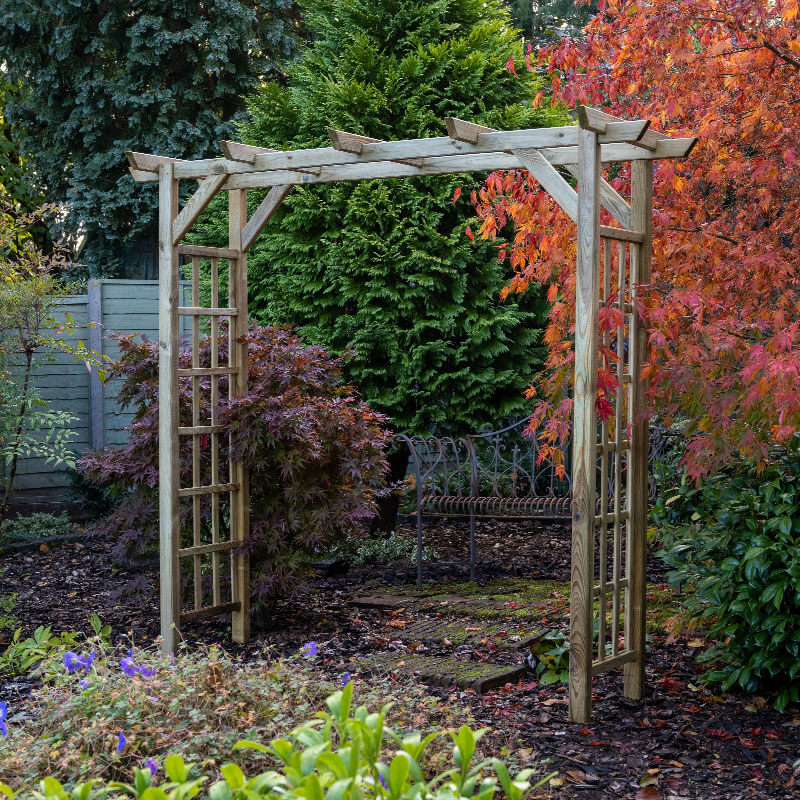
There are also tunnel-style arches and wider walk-through designs, which create a fuller passage and feel more enclosed. These are useful where the goal is to build a sense of movement through the garden rather than just a single entrance. By contrast, a narrow arch can be used as a simple frame, especially in smaller gardens where too much bulk would make the space feel crowded.
Some arches come with trellis sides or side panels, which give climbing plants extra points of contact and add privacy as the planting fills out. Others keep the sides open, leaving more air and light around the frame. That difference matters if you want the arch to read as a piece of garden structure first, or as a support that disappears a bit once plants take over.
Materials that change the look and feel
Within this price range, powder-coated metal is common because it gives a neat finish and a crisp outline. Black metal arches tend to disappear behind leaves and flowers once plants are established, which can be useful if you want the planting to do most of the talking. Green finishes are often chosen for a softer blend with borders and lawns, while darker tones can make the shape feel more defined.
Steel arches usually feel sturdier and more solid, with a weight that helps the arch sit more confidently in the ground. Wire and lighter-gauge frames can be easier to place in a smaller plot and often look less bulky, though they may suit lighter climbers better than heavy, woody plants. If the arch is intended for roses or vigorous climbers, the strength of the frame matters because the plant will add drag and weight over time.
Wood-effect arches are less common in the under £100 bracket, but when they do appear they appeal to people who want a softer, more natural style without going fully rustic. The key difference is visual: metal usually feels sharper and more exact, while a wood-style finish looks warmer and more relaxed. The right choice depends on whether the arch should blend in or stand out.
Rose arch, trellis arch, pergola-style arch: what’s the difference?
A rose arch is usually narrower and made to support a climbing plant over a doorway, path or short opening. It often has side supports or bars that help stems climb upward and across the top. This style works well when you want a defined moment of passage, and it suits traditional planting such as roses, clematis or honeysuckle.
A trellis arch gives more climbing surface. The sides are often patterned or latticed, so the plant has more to attach to and the structure looks fuller sooner. This can be a good choice if privacy matters, or if you want the arch to look decorative even when the climber is still young.
A pergola-style arch tends to feel broader and more open, sometimes with a top that gives a slightly longer canopy effect. It can look more substantial and works well where the garden needs a stronger frame over a path or sitting area. In under £100 options, this style is often simpler than a full pergola, but it still creates that sense of overhead structure.
Sizes that suit different spaces
Size makes a big difference, and not just in height. A tall arch can draw the eye upward and make a small garden feel less flat, but if the sides are too wide it may dominate the view. A slimmer arch works better in tight spots, especially at the end of a narrow path or between raised beds. In an open border, a wider model can help anchor the space and give the planting a stronger centre.
Think also about the walk-through width. Some arches are meant mainly as a visual frame, while others are comfortable enough to pass under without brushing shoulders against the sides. If the arch is going over a path, width matters more than many buyers first expect. A very narrow model can look charming, but it can also feel awkward if the route is used often.
Height matters in another way too. A taller arch gives room for vigorous climbers and makes the feature visible from further back in the garden. Lower arches can feel more intimate and suit spaces where a gentle threshold is enough. The right proportion depends on whether you want a subtle divide or a stronger garden statement.
Practical wins buyers notice straight away
One of the main reasons people choose arches under £100 is that the feature changes the layout without major work. It can frame an entrance, create a transition between areas, or guide the eye to a path that previously disappeared into the planting. Even a simple arch can make a border feel finished, which is handy when a garden needs structure but not a full redesign.
Climbing plants also benefit from having a dedicated support. Instead of spreading across the ground or leaning into nearby shrubs, they can be trained upward, which creates more visible flowers and a tidier shape. That vertical growing habit is useful in smaller gardens, where floor space is limited but height is still available.
There is also the visual difference between an arch used alone and one planted up. A bare frame gives a clean graphic outline; once planted, it softens and becomes part of the garden scene. That change over time is part of the appeal, and it means the arch can work hard even before the plants have fully settled in.
What to look for in the frame itself
When comparing arches, the details of the frame matter as much as the overall shape. Look for steady side legs, sensible proportions and crossbars or lattice that match the kind of climbing plant you plan to grow. Some climbers need more grip than others, so a smooth curve alone may be fine for one plant but less useful for another.
It is also worth checking how the arch finishes into the ground. Some designs have pointed legs that push into soil more easily, while others use flatter feet for placement on harder surfaces. For a garden path, that difference can help you decide whether the arch is better suited to soil, gravel or paving.
The thickness of the tubing or bars changes the look too. Slim frames feel airy and understated, while thicker frames look more grounded and are often chosen when the arch should hold its own visually. Neither is automatically better; it depends on whether you want the planting or the structure to lead.
Climbers that suit different arch styles
Different arches suit different plants, and that affects the buying choice. Roses often work well on classic rounded or rose arches because the stems can be trained through the structure and the flowers sit neatly along the line. Clematis is a good match for many trellis arches because it uses the support lightly and brings colour without too much bulk.
Honeysuckle and jasmine can soften a frame with scent as well as shape, especially on a narrower arch where their growth can be guided easily. More vigorous climbers may need a stronger arch with a firmer frame, while lighter flowering plants can suit more delicate designs. The point is not just whether the arch looks good on day one, but whether the plant and frame make sense together after a season or two.
If you want the arch to fill quickly, a design with side trellis or extra bars gives the plant more places to climb. If you prefer a cleaner outline, a simpler arch can be better, because it leaves the shape visible for longer. That is a small difference, but it changes the whole feel of the feature.
Colour choices that blend or stand out
Colour is easy to overlook, yet it changes how the arch reads in the garden. Black arches often work like a line drawing, sharp against green leaves and bright flowers. They can make the planting look more vivid by contrast. Green arches are gentler and often suit borders where you want the structure to sit back into the background.
Some buyers choose neutral or muted finishes because they give the garden room to change through the seasons. A strong colour can look deliberate, but a quieter finish tends to sit well with different plants, different blooms and even a changing border scheme. If the arch is going in a mixed planting area, a less obvious colour may keep the whole thing from feeling too busy.
The finish also affects how the arch feels from a distance. Dark frames can read as bolder lines across the garden, while paler or green finishes can look softer and less intrusive. If the arch is near a seating area, that difference may matter more than expected.
Buying tips that help you choose with confidence
Measure the opening where the arch will go before buying, especially if it needs to sit across a path or between beds. A sketch on paper can help too, because arches are easier to judge at scale than in a product photo. It is also sensible to think about the plant you want to use, not just the arch itself, because some plants will need more room than they first seem to.
Match the arch to the job. If it is mainly decorative, a lighter frame may be enough. If it needs to support a mature climber, choose a sturdier design with enough height and side support. If you want privacy, look for trellis sides or a style that can carry more foliage. If you want a clean pathway marker, a simpler outline may work better.
Think about the sightline. An arch at the end of a path creates a destination. An arch halfway along a border can split the view and make the garden feel more layered. Put it where it will be seen from indoors as well, if possible, because arches often look their best when they frame a view rather than sit in isolation.
Styles that suit different garden personalities
There is quite a range here, and that is part of the appeal. A classic rose arch suits a more traditional garden with borders, clipped edges and flowering climbers. A simple metal hoop fits a minimalist space or a compact plot where you want just a touch of shape. A decorative trellis arch feels useful in family gardens or shared spaces, where a little extra screening is handy and the planting can soften the edges.
For a more relaxed look, an arch with gentle curves and light detailing can work with informal planting and cottage-style beds. For a sharper, more ordered layout, a flat-top or pointed arch gives a clearer line and makes the route through the garden feel deliberate. These differences are small on paper, but once they are standing in the border, they change how the whole space is read.
Why under £100 makes sense for many gardens
The under £100 bracket sits in a useful middle ground. It is enough to get a proper feature with decent visual presence, but not so much that the decision becomes difficult or overcommitted. That makes it easier to choose an arch for a first garden, a rented space, a side passage or a border that needs one strong shape without a large spend.
It also means you can make decisions based on style and fit rather than trying to justify a very high-ticket item. If the arch needs to work with an existing fence, shed line, path width or planting bed, budget-friendly options let you focus on proportions and appearance. That is often where the best results come from: not the most expensive piece, but the one that fits the space properly.
The small detail that makes the difference
Sometimes the attraction of an arch comes down to a small detail: a curved top that softens a straight path, a lattice side that gives the plant something to hold, a darker finish that makes flowers pop, or a wider opening that makes the garden feel more inviting to move through. These are not dramatic changes individually, but together they shape the whole experience of the space.
If you are choosing from arches under £100, the best pick is often the one that balances look, size and planting support in a way that feels natural to your garden. A good arch doesn’t need to shout. It just needs to be the right line in the right place, with enough presence to make the border feel sorted, and enough character to make it worth seeing every day.
- Rounded arches soften straight paths and suit informal planting.
- Gothic arches add a more defined architectural shape.
- Flat-top arches work well in structured, modern layouts.
- Trellis arches give extra climbing surface and can add a bit of privacy.
- Rose arches are ideal for classic climbers and entrance points.
- Tunnel-style arches create a fuller passage and a stronger sense of route.
- Black finishes give a crisp outline; green finishes blend more quietly.
- Wider arches suit paths and larger borders; slimmer arches fit tighter spaces.
Choose the shape that matches the space, the finish that suits the planting, and the frame that can do the job you need. Then the arch becomes more than a support; it becomes the bit of the garden that gives the rest of it somewhere to go.
[Sassy_Social_Share]