
Arches - discount offers - Best Deals in UK!
Showing 13–17 of 17 results
-
23% OFF: Panacea Ogee Metal Garden Arch 8’6 x 3’9 £113.9923%

-
23% OFF: 4×2 Pergola Arch – Forest Hanbury Dome Top Wooden Garden Pergola Arch £75.9923%

-
23% OFF: Panacea Rosette Round Metal Garden Arch with Gate 7’4 x 4’1 £167.9923%

-
19% OFF: Forest Hanbury Flat Top Wooden Garden Pergola Arch 6’10 x 1’8 £71.9919%

-
11% OFF: Forest Sleeper Garden Arch Set 5’3 x 0’4 (3PK) £209.9911%

Garden arches on discount offers bring structure, height and instant character to outdoor spaces, with classic, modern and decorative styles for climbing plants, entrances and seating areas.
Why an arch changes the whole garden look
An arch does more than fill a gap between two points. It creates a frame, a sense of direction and a proper focal point, even in a small garden. In this category, the appeal is often the mix of shape and price: you can choose from discounted arches that make a practical route into the garden, or a more decorative feature that turns a simple border into something with a bit of theatre.
At first glance, arches may seem similar, but the differences are in the details. Some are slim and understated, built to guide a path without taking over the view. Others are broader and more open, giving climbing plants plenty of room to spread. There are also arches with side panels, lattice sides, square posts, rounded tops or pointed peaks. These changes might look small, but they affect how the arch sits in the garden and how it feels when you walk beneath it.
Shapes that shape the space
The main thing to compare is the top profile. A curved arch gives a softer, more traditional line and often suits cottage gardens, mixed borders and romantic planting schemes. A pointed arch creates a slightly more formal look and can work well when you want a feature that feels architectural. A flat-topped or pergola-style arch gives a broader, more structured presence, which is handy if you want the garden to feel divided into clear sections.
Bestseller der Kategorie Arches - discount offers
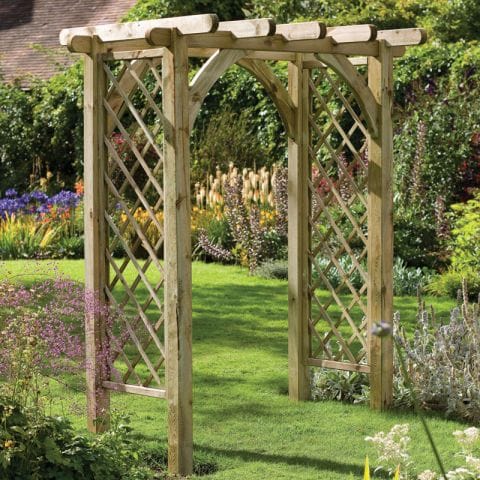
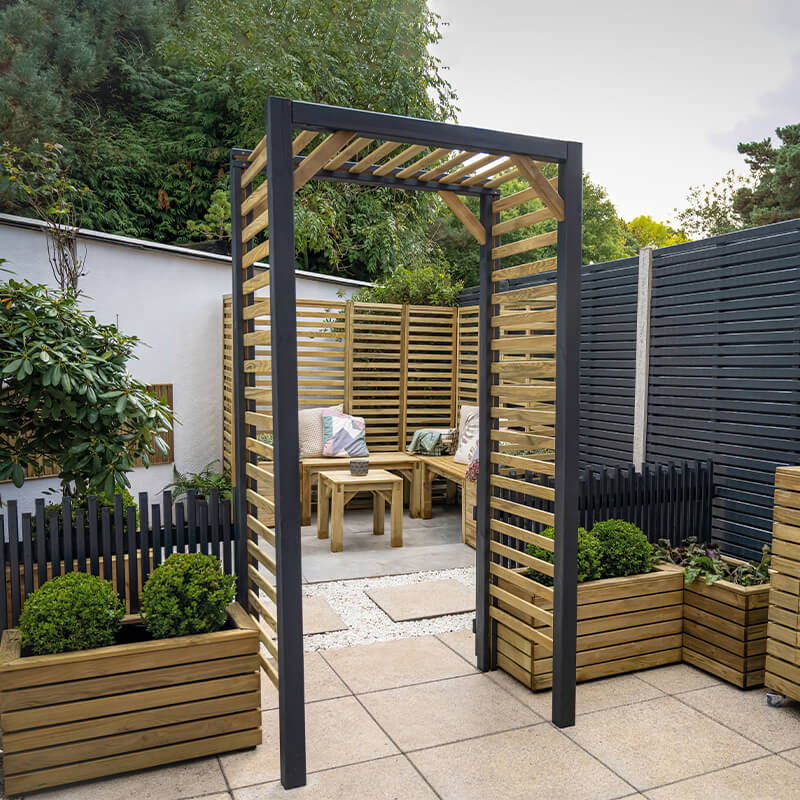
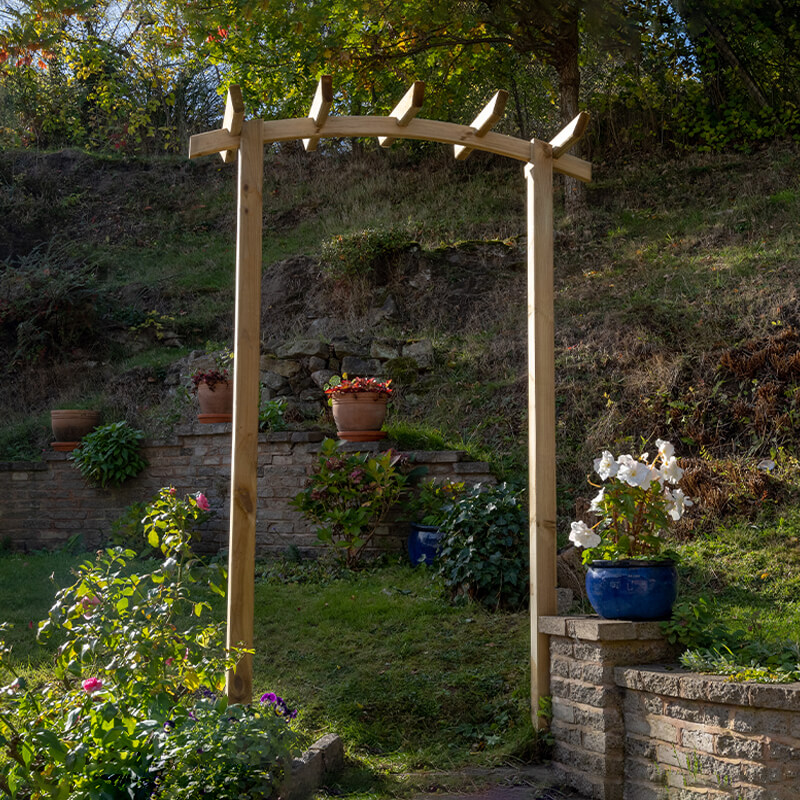
There are also differences in the width of the span. Narrow arches are often chosen for paths or gateways where space is limited. Wider arches are more open and can suit larger entrances, seating zones or the start of a garden walk. The visual effect changes too: a narrow arch makes a passage feel intimate, while a wider one feels more open and balanced.
Some discounted arches include lattice sides or trellis panels. These are useful if you want extra climbing surface without buying a separate support. They also give the arch more presence during the early months, before the plants have fully covered it. If your planting plans are a little slower, this extra framework can make the arch look intentional from day one.
Different arch styles and what they suit
The category usually covers a few recognisable types, each with its own use:
- Classic curved arches for soft, balanced lines and traditional planting schemes.
- Pointed arches for a more defined entrance and a slightly formal feel.
- Wide-span arches for paths, gateways or spots where a more open crossing is needed.
- Arch and trellis combinations for extra climbing support and a fuller look.
- Simple metal arches for a lighter appearance and easy visual flow.
- Decorative arches with scrolls, loops or patterned details for a more ornamental finish.
The differences are not only about looks. A simpler arch often blends in more easily and suits a garden where planting is the main event. A more decorative design can act as a feature on its own, even before anything climbs over it. If the rest of the garden is neat and restrained, a detailed arch can add a bit of contrast. If the planting is already busy, a plain arch may be the better choice because it won’t compete for attention.
Where an arch earns its keep
One reason arches are popular in discounted ranges is that they solve several design problems at once. They can mark the start of a path, define the entrance to a lawn, separate an outer area from a private corner, or lead the eye towards a bench or hidden seat. In a smaller garden, an arch can also make a route feel more deliberate rather than accidental, which is a useful trick when space is tight.
If you want a stronger sense of journey through the garden, an arch works well at the point where one area ends and another begins. Put one between paving and planting, or at the transition from a front area into the main garden, and the space immediately feels more considered. It’s a simple addition, but it does change the way people move through the plot.
What makes discount offers worth a closer look
Discount offers are useful when you want a defined feature without paying full price for a decorative upgrade. In this category, the savings can make it easier to choose a design that feels a little more substantial than a basic support. That can matter if you’re trying to cover a larger opening or if you want the arch to make an impact right away.
There’s also a practical side to buying on offer: it gives you more room to match the arch to the space rather than only to the budget. You may find that a wider frame, a more detailed outline or a style with extra side support is suddenly within reach. And yes, sometimes the difference between “I suppose it’ll do” and “that actually looks right” is not huge in cost once the discount is taken into account.
It’s worth comparing the size, style and structure rather than just looking at the price tag. A lower price is useful, of course, but the best value comes from an arch that suits the scale of the garden and the kind of plants you want to train. Otherwise, you save a bit now and then spend ages wishing you had picked the other one. Happens a lot.
Materials and the feel they give
The material changes the mood. Metal arches often have slimmer lines and a cleaner silhouette, so they can sit quietly in the garden until the plants take over. Wooden arches usually feel warmer and more natural, and they fit especially well with informal planting and traditional layouts. In discount ranges, metal is common because it can be shaped into curves, peaks and decorative details without becoming bulky.
Metal also allows for finer patterns, which is handy when you want the arch to look elegant without being heavy. Wood tends to have a softer, more earthy presence and can blend into hedging or timber fencing more easily. The choice between them often comes down to whether you want the arch to stand out a bit or settle into the background.
Some arches are deliberately simple in their finish, which gives you more freedom with the planting. Others come with more visible structure, where the frame itself becomes part of the design. Neither is better in every case; it depends on whether the arch should be a feature or a supporting frame.
Plant pairings that make an arch work harder
Arches are especially effective with climbers, and the best choice depends on how dense, light or seasonal you want the display to be. Fast-growing climbers can quickly soften the structure, while slower climbers show more of the arch itself for longer. If you want the shape to remain visible, avoid planting too many vigorous climbers on a compact frame, because they can hide the details before you’ve really had a chance to enjoy them.
Different climbers create different effects. Some give a light, airy cover that still lets the arch read as a shape. Others create a fuller tunnel-like look. When the arch has trellis sides, the planting often starts to look more complete sooner, because the support area is already there. That can be particularly useful with discounted arches where you want a strong visual result without waiting around for ages.
- Light cover keeps the arch visible and suits delicate designs.
- Full cover creates a more enclosed passage and a deeper sense of arrival.
- Mixed planting around the base helps the arch feel tied into the border.
- One-sided planting can make a narrow garden feel less crowded.
How the difference shows in small and larger gardens
In a small garden, the right arch can give structure without eating into usable space. Narrow arches are often better here because they create a vertical feature without demanding much width. A light design is useful too, since a heavy frame can make the area feel tight. The goal is to draw the eye upwards and through, not to block the view.
In a larger garden, the scale can be bolder. Wider arches, paired arches or designs with side panels can hold their own against broader lawns and deeper borders. They can also work as markers along a longer route, especially if you want the garden to feel like it has stages rather than one open stretch. A larger garden often benefits from a more decisive shape, otherwise the feature can disappear into the distance a bit.
Useful buying points that are easy to miss
When browsing garden arches on offer, it helps to look closely at the proportions. The opening height matters if you want comfortable passage beneath it, while the width affects whether the arch feels slim, generous or somewhere in between. The depth is easy to overlook too, but it changes how stable the design appears and how much room the plants have to climb.
Also check whether the arch includes side panels, fixing points or a more open frame. These details influence both the look and the use. A clean, open arch can be better where you want a minimal outline. A more enclosed design can suit a garden entrance or a growing display that needs clear support from the start.
- Height affects the sense of passage and openness.
- Width should match the path, gate or seating area.
- Frame density changes how visible the structure remains.
- Decorative details can either lift the design or make it busier.
- Side support matters if the plants are expected to cover a lot of area.
Design differences that help with the final choice
Some buyers prefer an arch that blends into the planting and disappears a little. Others want one that reads clearly from across the garden. That difference is often down to line and detailing. Thin rods, gentle curves and open spaces create a lighter impression. Thicker frames, strong uprights and more pattern give the arch greater visual weight.
The finish can also make a difference. A dark finish often recedes among greenery, letting flowers and leaves take the attention. A paler or more reflective finish may stand out sooner, which can be useful if you want the arch to act as a marker. This is one of those choices that sounds small until the arch is in place and suddenly the whole route through the garden feels different.
There’s a nice balance to be struck between detail and restraint. Too much decoration can feel busy; too little can look unfinished. The best pick usually sits somewhere in the middle, with enough shape to feel intentional and enough openness to let planting do its part.
A few practical pointers before you add to basket
If the arch is going over a path, think about how people will use the space. A narrow route needs a narrow or medium span, while a wider crossing can handle a broader frame. If the arch sits at an entrance, the surrounding fencing, hedging or wall should be taken into account too, because the arch has to make sense in relation to what is already there.
If you’re buying mainly for planting, compare the support area rather than only the overall outline. Some arches look similar from a distance but offer quite different amounts of climbing surface. That matters if you want coverage without improvising extra supports later on. And if you’re shopping from discount offers, checking the dimensions properly is probably the best way to avoid a mild annoyance later.
Arches are one of those garden features that do a lot with not very much. They add height, shape and a sense of place, and they can do it at a price that feels easier to justify when there’s a good offer on the table. Whether you’re after a simple frame, a decorative entrance or a climbing support with a bit more presence, this category gives you plenty of ways to make a garden look more thought-through without overcomplicating it.
[Sassy_Social_Share]