
Arches 10 sq ft / 1 m² - Best Deals in UK!
Showing the single result

Arches 10 sq ft / 1 m² are compact garden structures for framing paths, marking entrances and lifting planting vertically; choose from round, pointed, flat and decorative forms.
Small footprint, clear impact
Arches in the 10 sq ft / 1 m² range are made for spots where space matters. They fit neatly over narrow paths, between beds, beside gates, or at the end of a short walkway, without taking over the planting area around them. That makes them a very practical pick for courtyards, compact terraces, petite front gardens and allotment-style layouts where every metre has a job to do.
The appeal is not only about saving room. A garden arch also creates a visible pause in the layout. It gives the eye a place to stop, then move on. Even a simple opening can make a small plot feel more ordered and more deliberate, and that is often what buyers are looking for when a garden needs a bit more shape.
Forms that change the feel
Within this size category, the shape of the arch matters quite a lot. A rounded arch gives a softer, classical line and suits rambling planting. A pointed arch has a firmer outline and can look more structured, almost gateway-like. A square-top or flatter arch feels modern and works well where the garden already has crisp edges, such as rendered walls, paving or straight-edged beds.
Bestseller der Kategorie Arches 10 sq ft / 1 m²
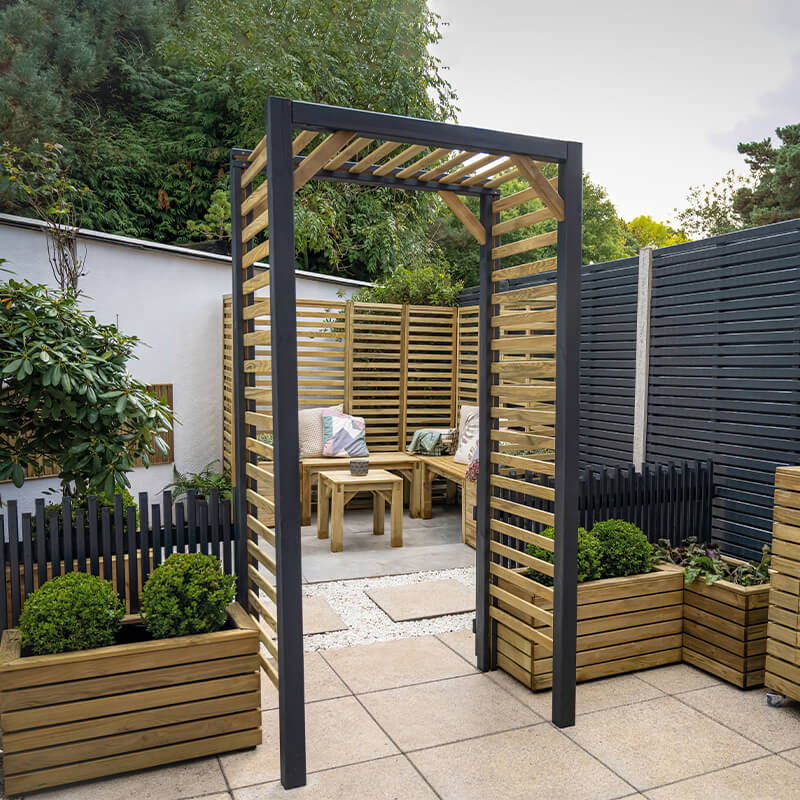
Some arches use a slim tunnel profile, which is handy when the walkway is tight. Others open wider at the base and rise more openly, giving a less enclosed feel. A deeper arch can draw the path inward and make a short run feel longer. A shallower one is better when you want the structure to be noticed without turning the route into a passage.
There are also decorative variations that alter the mood without changing the footprint. Scroll ends, lattice side panels, joined side hoops and gentle curves can all change how much of the structure is visible once planted. If you prefer the plants to carry the look, choose a simpler outline. If you want the arch itself to stay visible even before the greenery fills in, a more detailed frame helps.
Materials and what they suggest
Metal arches are often chosen for slim profiles and cleaner lines. They tend to suit compact spaces because the frame can be lighter in appearance, which matters in a small garden where bulky shapes can dominate. Black or dark-coated metal is common because it recedes visually and lets the planting stand out.
Wooden arches bring a warmer look. They can sit comfortably in cottage-style or informal borders, especially where timber edging, trellis or fencing is already present. The visual weight of wood is usually a little stronger, so in a very small plot the proportions need checking carefully. That said, a timber arch can feel more natural beside mixed planting and climbing roses.
There are also trellis-based arches, where the sides offer more support surface for climbing plants. These are useful when you want a fuller planted effect but still need the structure to stay within a small footprint. A more open frame may suit one strong climber; a trellis side suits a pair of lighter climbers or a denser display.
Why this size works well in smaller gardens
The main advantage of a 1 m² arch is that it can bring height without demanding much ground area. In a compact garden, height is one of the few ways to add interest without crowding the floor space. A small arch can also help split one area from another, even if the divide is only visual rather than physical. That can be enough to separate a seating nook from a path, or a veg patch from a flower border.
Another benefit is proportion. Big arches can overpower short paths and tight entrances, while a smaller arch often feels more believable in the setting. It can make a narrow route look intentional instead of squeezed in. This is especially useful where the garden already has a lot going on — paving, containers, sheds, washing lines, storage — and the arch needs to fit in without arguing with the rest of the space.
These arches are also handy when you want a planting point with height but do not want a full pergola or large arbour. They can give climbing plants a frame to work with, but they stay visually lighter. For buyers comparing options, this is often the difference between a feature that helps the garden breathe and one that makes it feel crowded.
Different styles of planting support
The structure of the arch tells you a lot about how it may be used. A single-span arch creates one clear opening and is often the neatest choice for paths and entrances. A side-latticed arch gives more climbing surface, which can be useful if you want the planting to travel up both sides rather than just over the top. A decorative-top arch has more visual detail above head height, so it can act as a focal point even when the base is still bare.
Some buyers prefer an arch with a more open top because it keeps the walk-through feeling light. Others want a stronger canopy effect, where the planting is encouraged to meet overhead. That difference changes not just the look, but also how the route feels underneath. A lightly planted arch says “frame”; a denser one says “threshold”. Both are useful, but they do different jobs.
If the arch will stand near a wall or fence, a narrower profile is often easier to place. If it sits free-standing in the garden, the balance of the side panels becomes more important. In that situation, a design with visual symmetry from front to back usually feels steadier, even if the planting is not yet fully grown in.
What to compare before choosing
When shopping for arches in this size, it helps to look at a few details side by side:
- Width of the opening — narrow enough for a tight path, or a little more generous for a visible entrance.
- Height — enough to feel open, but not so tall that it looks out of scale.
- Depth — a deeper frame can feel more tunnel-like; a shallow one reads more lightly.
- Side support — plain uprights, trellis sides, or extra bars for climbing plants.
- Visual style — round, pointed, arched, flat-topped, rustic or more refined.
- Surface finish — dark, pale, natural timber or coated metal, depending on how visible you want it to be.
Those points sound simple, but they decide whether the arch works with the rest of the space. A design that looks good in a wide display area can feel too solid in a narrow border, while a delicate arch may seem lost in a bigger planting scheme. In small gardens, proportion does a lot of heavy lifting.
Practical tips that make the difference
Measure the space in more than one direction. A path width might look fine on paper, but the arch base and any side planting can reduce the usable gap. Also check how the opening lines up with steps, paving joints, gates or gateposts. When the arch is placed on a natural line in the garden, it tends to look more settled, even before any plants are added.
Think about the view through the arch as well as the arch itself. If it frames a bench, shed door, border or focal plant, it gives the whole layout a purpose. If it faces a blank wall, the effect can be weaker unless the planting is doing a lot of work. In a small garden, one good sightline is often better than a busy arrangement.
For climbing plants, the arch style should match the kind of growth you expect. A lighter climber benefits from a more open framework, while a stronger climber is often happier with firmer side support. The point is not to force the plant into the structure, but to choose an arch that can hold the look you want when growth starts to settle in.
Where these arches tend to shine
Garden entrances are an obvious use, but this size also works well deeper in the plot. A short run between beds can become a passage rather than just a gap. A path leading to a seating area can feel more intentional with an arch marking the shift. Even the space between a lawn and a border can gain a bit of rhythm from a small frame overhead.
In kitchen gardens, an arch can make a route feel less utilitarian. It breaks up straight lines and gives a compact growing space more character without taking away much room for crops. In ornamental gardens, the same structure can soften transitions between sections, particularly where hard landscaping needs a gentler touch.
That versatility is a big reason this category is popular. It is not tied to one style of garden. A small iron arch, a timber trellis arch or a pared-back metal hoop can all do the job in different ways. The choice comes down to whether you want the frame to disappear behind planting or remain a visible part of the design.
Choosing the right look for the right reason
A useful way to choose is to decide what should lead: the structure or the planting. If the planting is meant to take the main role, then a lighter, simpler arch is often the better pick. If the garden needs a visible feature from day one, a more defined shape with a strong outline may be worth choosing.
Also think about whether the arch should feel formal or relaxed. A neat, straight-sided form suits ordered planting and clipped edges. A curved or gently ornamented arch looks softer and can sit well in looser borders. There is no single correct answer here, only the version that fits your garden better.
For many buyers, the charm of this category is that it gives a noticeable design moment without demanding much space. It is a small structure, yes, but it can change the way a path reads, the way a border feels, and the way a garden is experienced as you move through it. That is why Arches 10 sq ft / 1 m² often end up being more useful than they first appear.
[Sassy_Social_Share]