
Arbours under £400 - Best Deals in UK!
Showing all 3 resultsSorted by price: low to high
-
11% OFF: Shire Forget-Me-Not Garden Arbour Seat 5′ x 3′ £370.9911%

-
12% OFF: Shire Balsam Garden Arbour Seat 4′ x 2′ £382.9912%

-
12% OFF: Shire Rose Garden Arbour Seat 5′ x 3′ £396.9912%
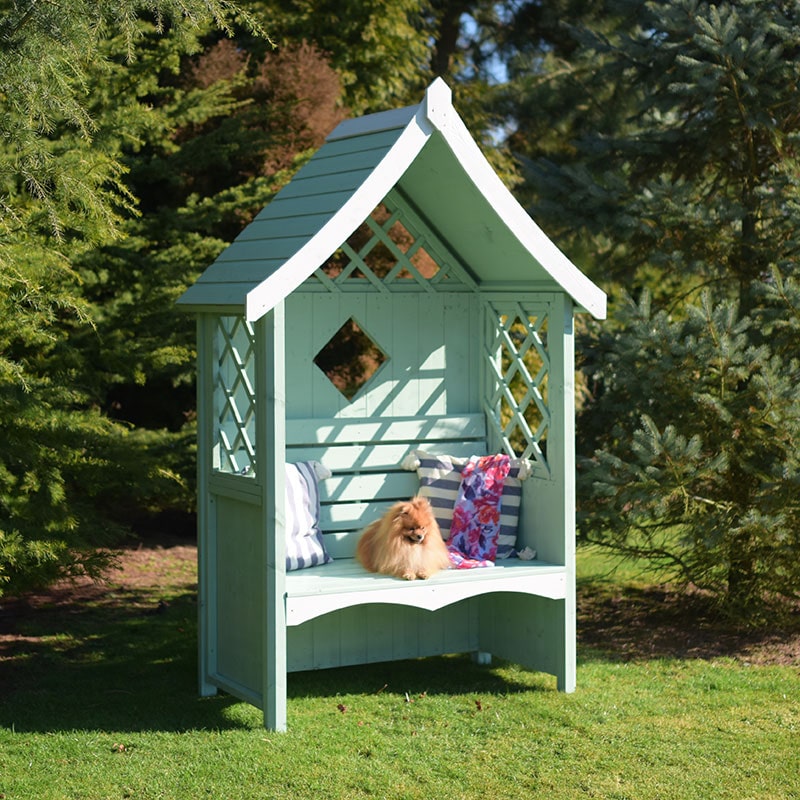
Arbours under £400 offer a smart way to add structure, shelter and a clear focal point to a garden, with options in wood, metal and mixed materials, plus classic, curved and square designs.
Popular products in this range
Why an arbour changes the feel of a garden straight away
An arbour is one of those garden features that does quite a lot without taking over the space. It marks a route, frames a view, gives a seating spot a sense of purpose and can make even a plain corner feel more considered. In the under £400 range, you can look for designs that balance appearance and practicality, whether you want a tidy entrance feature, a place to pause with a drink, or a structure that adds height and shape to a border.
What makes this category useful is the variety. Some arbours are designed to be purely decorative, with open sides and elegant roof lines. Others are made with a bench built in, so they work as a small retreat. There are also styles that lean more traditional, with curved tops and trellis detailing, alongside cleaner, more geometric versions that fit a modern garden. The price point opens up real choice, without needing to move into the sort of spend usually linked with larger bespoke structures.
Shapes that set the tone
The shape of an arbour affects more than looks. It changes how the piece sits in the garden, how much space it seems to take, and whether it feels formal or relaxed. A rectangular or square arbour tends to look neat and structured, making it a good fit for patios, paved paths and straight borders. A rounded or arched arbour softens the view and usually feels a bit more romantic, especially when placed against planting.
There are also gabled designs, where the roof line resembles a simple pitched roof. These can suit traditional gardens and give a slightly more architectural look. Open pergola-style arbours are less enclosed, allowing more light through and often feeling lighter in a smaller space. If you want a feature that stands out without feeling bulky, that open framing can make a real difference.
- Arched arbours for a softer, classic outline
- Square or rectangular arbours for a sharper, more formal feel
- Gabled arbours for a roof-like profile with a traditional character
- Pergola-inspired arbours for a lighter, more open look
With bench, without bench, and why that matters
One of the biggest differences in this category is whether the arbour includes seating. A bench arbour creates a ready-made pause point, which is useful if you want a spot to sit and look out across the garden or tuck a seat into a quieter area. These can feel more complete because the frame and the seat are designed as one piece.
An arbour without a bench is more flexible in where it can go and how it is used. It might work as a gateway over a path, a framing piece for climbing plants or a simple architectural accent. If the garden already has seating, or if you want to keep the space open underneath, this style can be the better fit. The choice really comes down to whether you want the arbour to be a place to sit or more of a visual feature.
Bench arbours can also feel more enclosed, especially when they have side panels or trellis sections. That can be nice if you are after a sheltered nook. By contrast, open arbours leave more room around the base, which helps if the space needs to feel less crowded.
Wood, metal and mixed finishes: the look changes a lot
Material makes a huge difference to the feel of an arbour, and it is one of the clearest ways to narrow the choice. In this price band, you will usually see a strong mix of wooden arbours, metal arbours and designs that combine elements of both. Each brings its own mood.
Wooden arbours tend to feel warm, familiar and quite natural. They sit well in cottage-style gardens, planted borders and spaces with softer landscaping. The grain and finish can make them feel less formal, though the actual shape still plays a part. A painted timber arbour can look neat and defined, while a stained or natural-looking finish tends to blend in more quietly.
Metal arbours usually look slimmer and more delicate, even when they are sturdy. Their lines can be fine and decorative, which suits rose walks, ornamental planting and gardens where you want the structure to be present but not heavy. Black or dark finishes often make the outline stand out, while lighter finishes can feel softer. Some metal designs lean towards scrollwork or lattice-style sides, which gives them a more decorative character.
Mixed-material designs may use timber for the main frame and metal for fixing points or detailing, or the other way round. The point is not just appearance; it is also about the balance between visual weight and the type of shape you want in the garden. A chunkier frame reads differently from a slimmer one, even before any planting is added.
Classic, contemporary and somewhere in between
Style is where arbours under £400 become surprisingly varied. A classic arbour usually has familiar curves, simple verticals and a shape that feels rooted in traditional garden design. This is often the style that works best with rambling roses, clipped hedges and gravel paths. It does not shout for attention; it just fits.
A contemporary arbour tends to be cleaner in line, with straighter forms and less ornament. It can be a good match for patios, decking and gardens that use repeated shapes or restrained planting. These designs often feel tidy and intentional, which is useful if the space already has a modern edge.
Then there are the in-between pieces: arbours that use a classic arched roof but simpler sides, or a traditional frame with slightly modern proportions. These are worth a look if the garden mixes old and new elements. They can stop the whole space from feeling too themed, which is often a real advantage.
Where an arbour works hardest in the garden
An arbour can do more than just sit at the end of a path. In the right place, it helps guide movement and make the garden feel organised. A common use is at a pathway entrance, where it creates a small sense of arrival. That works especially well if the path leads from one part of the garden to another and you want the transition to feel deliberate.
Placed against a wall, fence or boundary, an arbour can break up a flat run and make the edge of the garden feel less plain. If it has trellis or open side sections, it may also help soften hard landscaping when planted carefully. In a lawned area, it can act as a stand-alone feature that gives the centre or side of the space a focal point, without needing a large structure.
For smaller gardens, the trick is to choose a form that gives height without bulk. A more open frame often works better than something visually dense. In larger spaces, a broader or more substantial arbour can hold its own and look properly anchored rather than floating a little awkwardly on its own.
The detail that makes one arbour feel different from another
It is easy to look at two arbours and think they are basically the same, but the details can change the effect a lot. Side panels may be plain slats, lattice, curved metalwork or a simple open framework. Lattice gives climbing plants something to catch onto and creates a more enclosed feel, while open sides keep the structure lighter and less visualy heavy.
Roof design also matters. Some arbours have a fully arched top, while others use a flat or gently pitched shape. A more open roof can make the feature feel airy, whereas a deeper top section gives more visual definition. The width of the roof overhang changes the silhouette too, and that can alter how the arbour sits against planting or paving.
Back panels and seat depth are worth noting on bench arbours. A deeper seat can feel more settled, but it also changes the footprint. A shallower design may be better when space is limited. Likewise, the backrest angle and side support shape can affect how enclosed or open the seat feels. Tiny differences, but they do add up.
Climbing plants and the arbour shape they prefer
Many buyers choose an arbour because they want a frame for plants as much as for structure. The type of arbour can help guide that decision. A trellis-backed or slatted design gives climbers more points to grip, while a smoother frame may suit ties or lighter planting. For roses, clematis and other climbing favourites, a design with enough surface and vertical support can make the planting look better established.
If the arbour has a curved top, planting can trail over it naturally and soften the outline. On a square or gabled frame, growth tends to read more neatly and can emphasise the architectural shape. That difference matters when you want the planting to either hide the structure a little or highlight it.
The best-looking results often come from matching the arbour’s lines with the plant habit. A formal arbour can look excellent with disciplined planting that follows the structure. A more relaxed arbour can handle looser, draping growth. It sounds simple, but it really changes the final effect.
How to compare options without getting bogged down
When looking at arbours under £400, it helps to compare a few practical points rather than just the photo. Ask yourself whether the arbour should be open or enclosed, whether it needs to include a seat, and whether the shape suits the rest of the garden. A good arbour does not need to be the biggest thing out there; it just needs to feel in the right place.
- Footprint: check how much ground space the arbour actually takes up
- Style: decide if you want classic curves, straight lines or a mix of both
- Material: choose between the warmer feel of timber or the slimmer look of metal
- Use: seating, framing a path, or standing as a feature on its own
- Level of openness: more open for light and space, more enclosed for a nook-like feel
One useful tip is to think about the view from inside the house as well as from the garden. An arbour can look completely different depending on whether you see it head-on, from the side or through planting. A well-chosen shape will still look settled from more than one angle, which is what helps it feel like part of the garden rather than just something added later.
What £400 can do here, and why the category is worth a look
Under £400 is a useful bracket because it opens the door to varied shapes, materials and functions without forcing a one-size-fits-all choice. You are not just looking at basic frames. You will usually find options that feel decorative enough to shape a space and practical enough to use, whether that means a bench, a defined walkway or a simple focal point. The point is choice, and a fair amount of it.
This category works well for people who want a garden feature that changes the layout visually without needing a full redesign. A carefully chosen arbour can make an entrance feel more deliberate, soften a boundary, create a pause in a path or give planting a proper frame. It can also help smaller gardens feel more layered, which is often what makes them feel finished.
If you are comparing arbours under £400, look closely at the shape, the material, the level of enclosure and whether seating is included. Those four things usually tell you far more than a quick glance. The right choice is the one that suits the garden’s scale and the mood you want, not just the one that looks nice in isolation. That sounds obvious, but it’s easy to forget when there are so many decent options in front of you.
For buyers who want structure, a little shelter and a feature that feels purposeful, an arbour is a strong option. The range under £400 gives enough room to choose something that fits, rather than settling for the nearest shape. And once it is in place, it tends to do its job quietly but very effectively.