
Arbours - discount offers - Best Deals in UK!
Showing all 12 results
-
46% OFF: Forest Firenze Corner Garden Arbour Seat for 4 People 5’11 x 5’11 (1.8m x 1.8m) £455.9946%

-
42% OFF: Forest Cadiz Garden Arbour Seat 6′ x 2′ £259.9942%

-
38% OFF: Forest Lyon Garden Arbour Seat 6′ x 2′ £233.9938%

-
29% OFF: Shire Blossom Garden Arbour Seat 5′ x 2′ £224.9929%

-
28% OFF: Forest Parisienne Garden Arbour Seat 5′ x 2′ £229.9928%

-
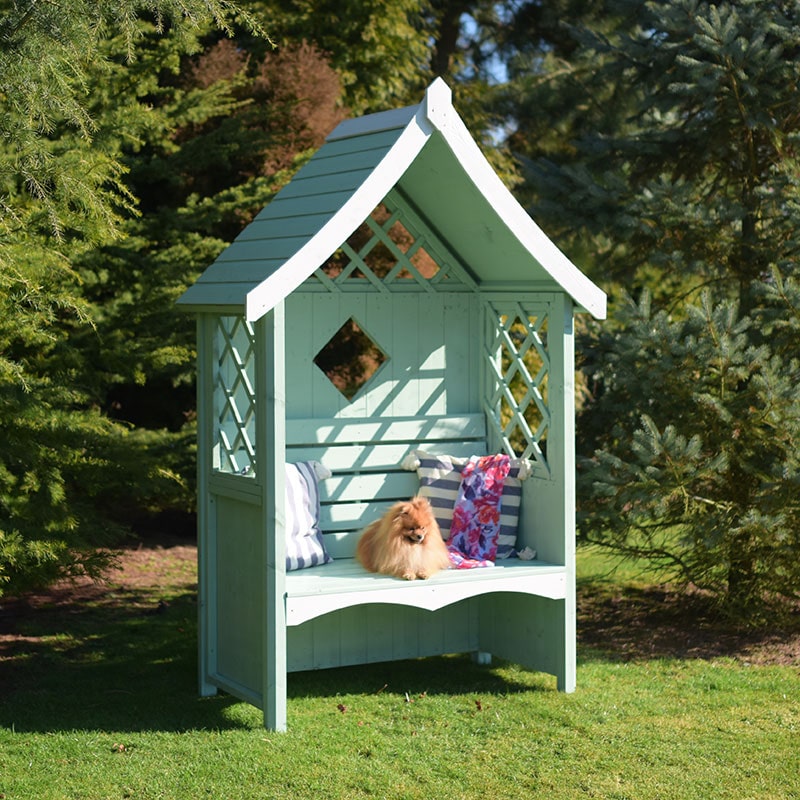
23% OFF: Shire Rose Garden Arbour Seat 5′ x 3′ £344.9923%
-
21% OFF: Shire Forget-Me-Not Garden Arbour Seat 5′ x 3′ £329.9921%

-
21% OFF: Shire Balsam Garden Arbour Seat 4′ x 2′ £344.9921%

-
12% OFF: Shire Rose Garden Arbour Seat 5′ x 3′ £396.9912%
-
12% OFF: Shire Balsam Garden Arbour Seat 4′ x 2′ £382.9912%
-
12% OFF: Shire Blossom Garden Arbour Seat 5′ x 2′ £281.9912%
-
11% OFF: Shire Forget-Me-Not Garden Arbour Seat 5′ x 3′ £370.9911%
Discount arbours for gardens in wood, metal and pressure-treated timber are a practical way to add structure, shade and a clear focal point without overspending.
What a Discount Arbour Adds to a Garden
An arbour is more than a decorative frame. It can mark a path, shape an entrance, support climbing plants and create a small sheltered spot that feels defined without taking up a lot of ground. In a discount offers category, the appeal is simple: you can choose from different materials, sizes and styles while keeping the budget under control.
These products often suit places where a full pergola would feel too large. An arbour gives the garden a clear feature with a lighter footprint, and that makes it useful for small patios, side paths, cottage-style borders and transitional areas between lawn and planting. It also works well as a framing point for a bench, a gate-like entrance or a walk-through space that links one part of the garden to another.
Shapes That Change the Look Straight Away
Arbours come in different shapes, and that affects both the feel and the practical use. A straight, rectangular arbour tends to look neat and architectural. It fits gardens with crisp lines, paving and clipped hedges. A rounded or arched arbour feels softer and suits planting-heavy spaces where curves appear elsewhere in the design.
Bestseller der Kategorie Arbours - discount offers
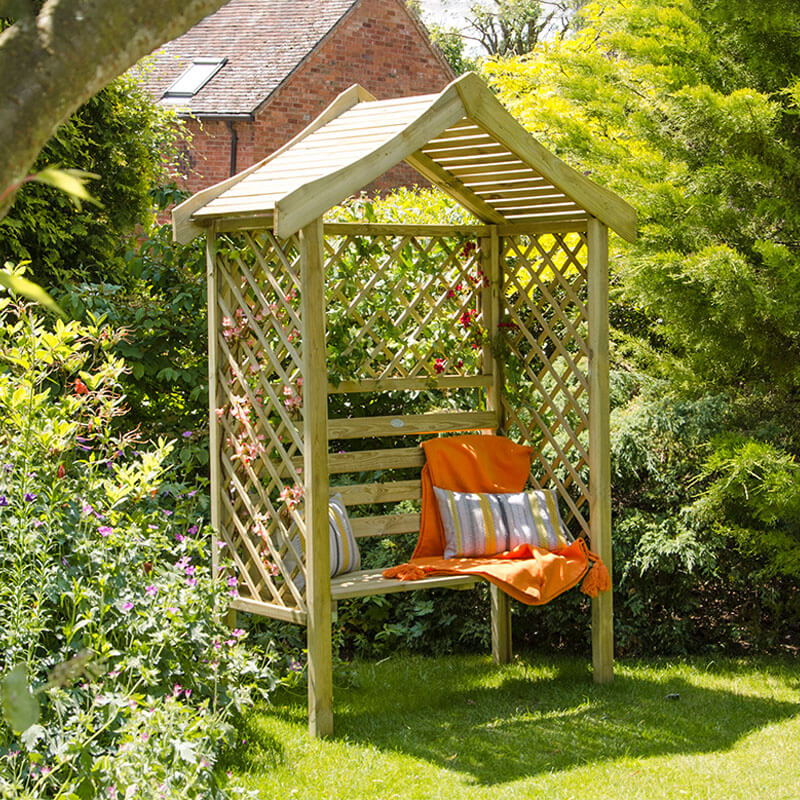
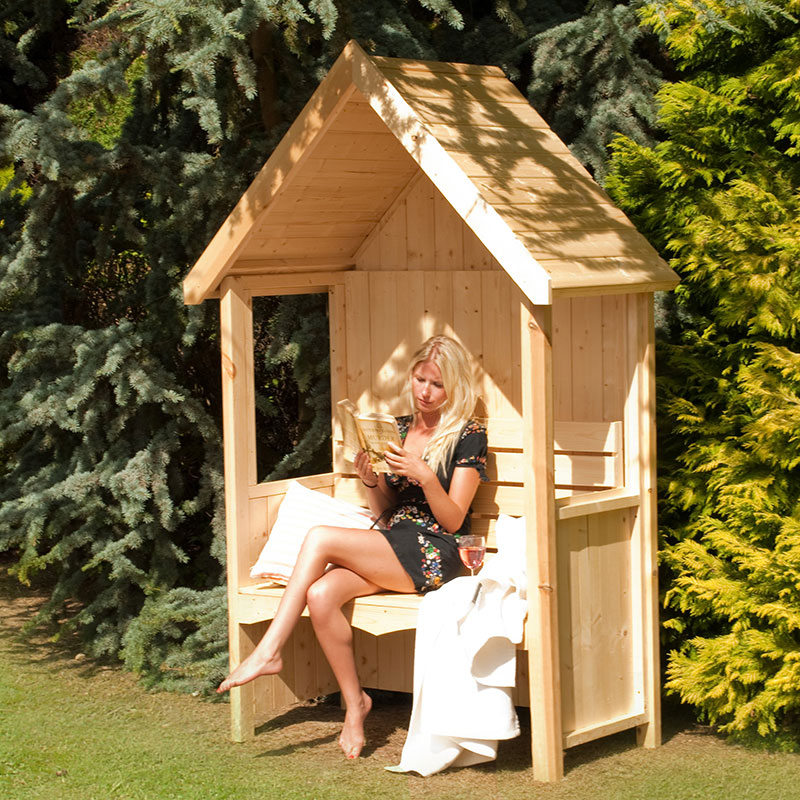
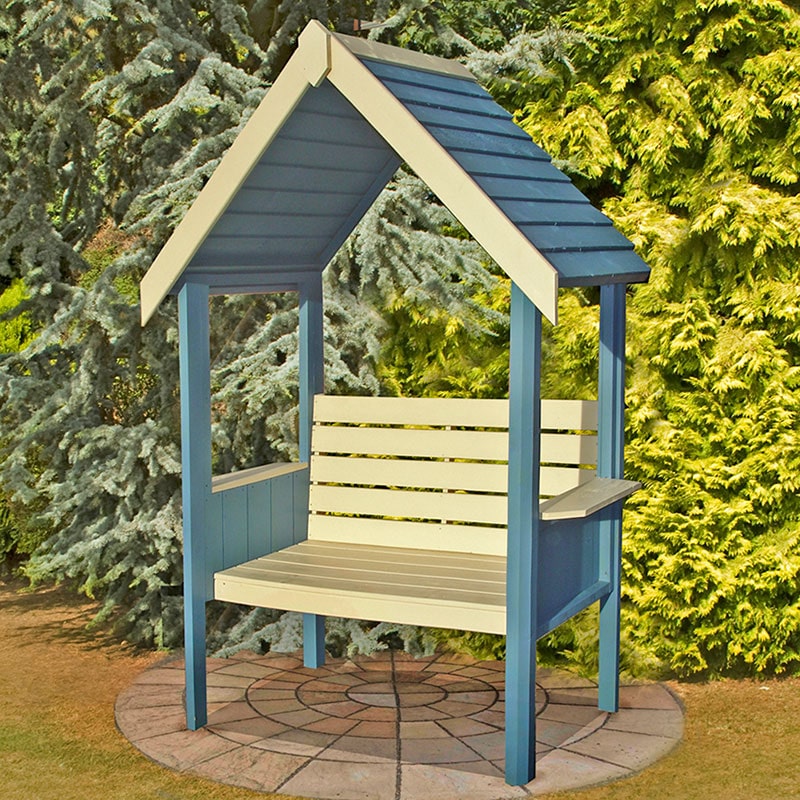
Some have a narrow, upright profile with side panels for training climbers, while others are wider and more tunnel-like. A taller arbour can feel open and airy, whereas a lower one gives a cosier impression and can make a garden route feel more intimate. The right shape depends on the space, but also on whether you want the arbour to act as a passage, a frame or a resting point.
Materials: Wood, Metal and the Differences That Matter
When browsing discount arbours, material choice often has the biggest effect on style and price. Timber arbours usually bring a natural look that sits neatly beside planting, paths and fences. They often suit traditional gardens, especially where the aim is to soften hard landscaping. Pressure-treated timber is a common choice where you want a practical finish with a more natural appearance.
Metal arbours often feel lighter visually, even when the frame is sturdy. They can look elegant in black or dark finishes, and they tend to work well in formal spaces, courtyard gardens and places where you want the structure to recede slightly behind the planting. Many metal designs are chosen for their slim lines and the way they show off climbing roses, clematis or honeysuckle without dominating them.
There are also mixed-material designs, though the main shopping choice is usually between wood and metal. Wood gives warmth and a more crafted feel; metal gives a sharper outline and can suit modern layouts. The difference is not only visual. The frame thickness, joinery and overall weight influence how substantial the arbour feels in the garden.
Styles You’ll Commonly See on Offer
Discount ranges often include several familiar styles, and each one suits a different kind of space:
- Classic garden arbours with arches and side trellis for climbers.
- Walk-through arbours designed to sit over a path or entry point.
- Arbour seats that include a bench or seating nook within the frame.
- Trellis-backed arbours for plants that need extra support on the sides and rear.
- Open-frame arbours with a lighter, more minimal outline.
Each type changes how the garden feels. A walk-through design helps direct movement and can make a narrow space seem intentional instead of cramped. An arbour seat creates a place to pause and look back across the garden, which is useful if you want a feature with a social side as well as a decorative one. A trellis-backed version works well when you want more planting density, since the climbing plants have more surface to attach to.
Why Discount Offers Can Be Worth a Closer Look
There is a practical advantage to shopping discounted arbours: you can often move up in size or choose a more refined design without stretching the budget. That can matter if you’re comparing a simple arch with a fuller structure that includes side panels or seating. The lower price point may also let you match the arbour to the rest of the garden more closely, rather than settling for a plain shape that only partly fits the space.
Another benefit is flexibility. A discounted arbour can be a good way to test whether a certain style works in your garden before committing to larger features. If your planting is already established, an arbour can be placed to frame a view, mark a transition or add height where the border looks flat. It gives the layout more rhythm, which is useful in gardens that need structure without too much hard landscaping.
Small Space, Clear Impact
One of the main reasons people choose an arbour is that it brings definition without demanding a large footprint. In a compact garden, a big shelter or pergola might feel too heavy. A well-placed compact arbour can divide the space gently and make it seem more considered. It can also create the sense of a destination, even if the garden itself is fairly modest in size.
For smaller spaces, slim metal frames or simple timber arches are often easier to work with. They give vertical interest and allow the eye to move upwards, which can make a low or narrow area feel less boxed in. If the space leads to a gate, shed or lawn, an arbour can turn a practical route into a feature rather than leaving it as a plain gap.
Where Each Type Works Best
The right arbour depends on placement as much as style. A wooden arbour often feels at home against planting beds, where its natural tone blends with bark, leaves and stone. It suits informal gardens, wildlife-friendly borders and spaces with soft curves. A metal arbour may be a stronger fit beside paving, gravel or a structured hedge line, where the cleaner outline connects with the rest of the setting.
At an entrance, a walk-through arbour can soften the shift from one zone to another. Along a path, it can make movement feel more deliberate. In a seating area, it helps define a resting point without needing walls or screening. The same design can feel different depending on whether it stands alone, sits among planting, or carries climbers across its top.
Climbing Plants and the Role of the Frame
An arbour is often bought with planting in mind, even if the plants are added later. The frame helps climbing plants gain shape and height, and the choice of arbour affects how they sit. A structure with side trellis gives more surface for growth and can create a fuller look. A more open frame makes the plant the main event, which can be useful if you want the greenery or flowers to remain visible from both sides.
Some climbers look better on finer frames, while others need something with a bit more presence. Roses often benefit from an arched structure that echoes their rounded form. Clematis can weave through lighter metalwork nicely. Ivy, jasmine and honeysuckle can fill a frame in different ways, but the arbour itself should not feel lost once the planting takes hold. The structure and the plant need to balance each other.
Buying Points That Make a Difference
When comparing discount arbours, it helps to look beyond the headline price. A lower-cost arbour can still be a smart purchase if the main details line up with your space. Useful things to check include:
- Width and height so the arbour fits the route or corner you have in mind.
- Frame thickness because slender and chunky frames give very different visual results.
- Support panels if you want climbers to cover a larger area.
- Seat presence where the design includes sitting space.
- Style of arch since a steep arch and a gentle curve change the overall feel.
- Material finish as this affects how the arbour sits with fencing, decking and planting.
It also makes sense to think about how the arbour will be seen from different angles. A structure that looks tidy from the front may appear very different from the side. If the back of the arbour is visible, or if it stands in the middle of a view, the finish needs to work all round, not just from one approach.
How Discount Arbours Compare with More Open Structures
People sometimes compare arbours with pergolas, arches or simple trellises, and the difference is useful when choosing. A trellis is usually flatter and more about plant support than creating a feature. A garden arch often concentrates on the overhead curve and passageway. A pergola is bigger and can define a stronger overhead zone. An arbour sits in the middle of these ideas, offering shape, partial enclosure and decorative value in one piece.
That balance is what makes arbours appealing in budget-conscious garden planning. They can mark space without taking over. They can support climbers without looking purely functional. And they often bring just enough presence to make a border, path or entrance feel more finished. For many buyers, that blend of form and use is exactly what the garden needs.
Choosing a Look That Fits the Rest of the Garden
A good arbour should feel as if it belongs, even if it is the newest item in the garden. In a relaxed planting scheme, a timber finish may sit more naturally than a sharp metal line. In a more ordered garden, a slim dark frame can help keep things looking neat. If the setting includes brick, gravel or formal edging, a clean structure often works well. If there are loose borders and mixed shrubs, a softer shape can feel more settled.
Colour matters too. Natural wood tones blend in quickly, while darker finishes can create contrast. Pale or painted finishes, when available, can make the arbour stand out more clearly and may suit lighter planting schemes. The decision is less about fashion and more about whether the structure should lead the eye or quietly support what is already there.
Practical Tips Before You Place the Order
A few simple checks can save trouble later and help the arbour suit the space first time:
- Measure the clear route width if the arbour will sit over a path.
- Check the available head height so the shape doesn’t feel cramped.
- Think about ground proportions; a large frame can overpower a tight corner.
- Consider whether you want seating, climbing support or just a visual marker.
- Look at how the arbour will meet nearby items such as fencing, gates, borders or paving.
If the arbour is intended as a central feature, it helps to visualise it with planting around it rather than as a stand-alone object. Even a modest structure can change the way a garden is read, especially when it lines up with a path or anchors a view. That makes the purchase feel more considered, not just convenient.
Why It Is a Good Category to Browse Slowly
Discount arbours are worth taking time over because small differences in shape, material and opening size can change how they work in the garden. One model might suit a narrow entrance, while another is better as a seating nook. A timber design may sit quietly among borders, while a metal version can add a more defined edge. The useful thing is that the category usually offers enough variety to match different layouts without leaving the budget behind.
For buyers who want a garden feature with structure, climbing support and a clear visual role, an arbour is a tidy choice. It can frame a route, soften a boundary, and give planting a stronger vertical shape. In a discount range, that combination of design, use and value makes the category worth browsing with a careful eye.
[Sassy_Social_Share]