
40mm Log Cabins - Best Deals in UK!
Showing all 2 results
-
26% OFF: Palmako Britta 5.1m x 4.5m Log Cabin Garden Building (40mm) £4,999.0026%

-
26% OFF: Palmako Britta 4.5m x 4.5m Log Cabin Garden Building (40mm) £4,699.0026%

40mm log cabins offer a balanced timber wall thickness for garden rooms, hobby spaces, home offices and storage, bringing a sturdier feel than lighter panels while keeping the build manageable for many plots.
Why 40mm matters in a log cabin
40mm log cabins sit in a very practical middle ground. The wall thickness gives the cabin a more substantial timber presence than thinner garden buildings, so the structure feels more grounded and less flimsy, yet it does not move into the heavier, more demanding category of thicker log walls. For buyers comparing options, this thickness is often the point where the cabin starts to feel like a proper outdoor room rather than just a shed with windows.
The difference is not only visual. A 40mm wall section changes how the cabin reads in terms of solidity, joinery and insulation potential. It also influences the proportions of the cabin, because the wall profile, corner joints and roof style all work together to make the building feel either compact, open, traditional or more contemporary. That is why this category is popular with people who want a timber building that looks and behaves like a real garden structure, not just a box in the garden.
Flat pack timber with a proper cabin feel
Most 40mm log cabins are supplied as interlocking timber profiles, which means the wall boards slot together to form a tight cornered structure. This style gives the building its classic log cabin look, with visible horizontal lines and a natural timber texture that suits both rural and modern gardens. The appearance is a big part of the appeal, because it feels warmer and more established than many panel-built alternatives.
Bestseller der Kategorie 40mm Log Cabins
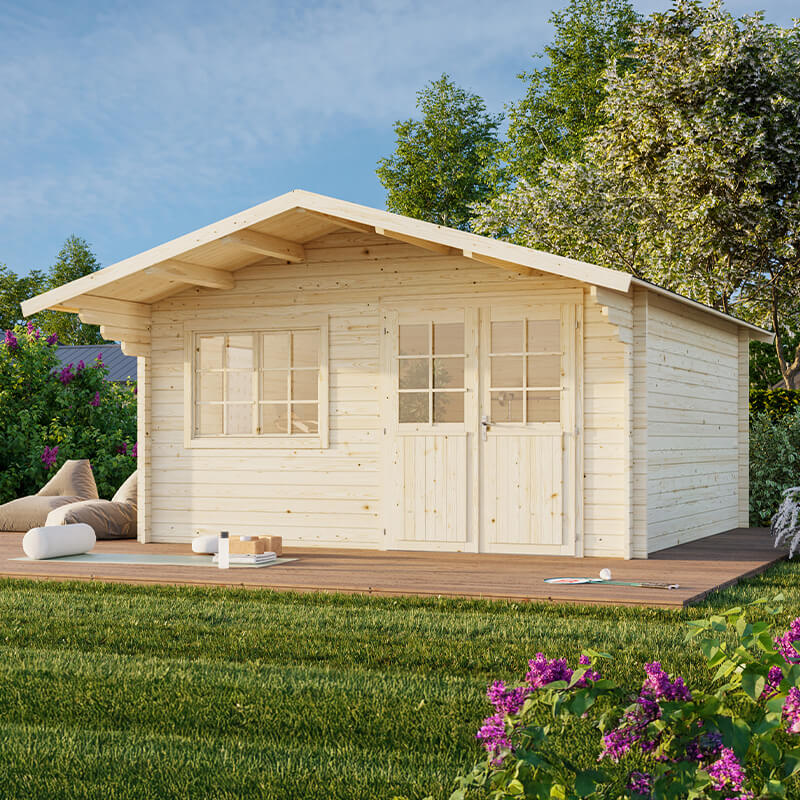
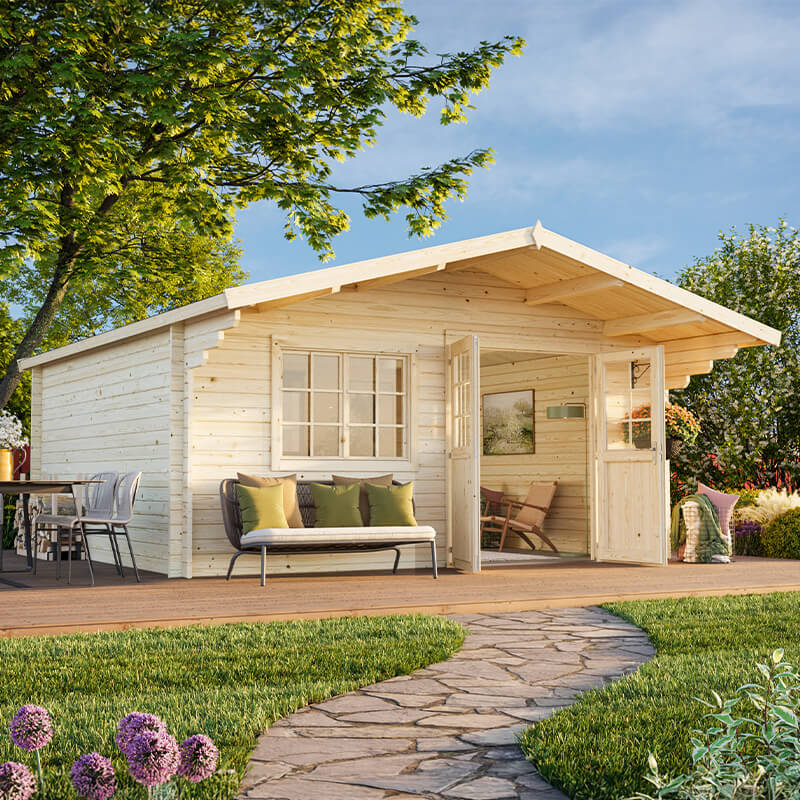
Within this category, you will often see a few different build styles. Some cabins are designed with a more traditional log profile, where the boards have a rounded or slightly chunky appearance. Others use a straighter, cleaner profile for a tidier finish. The choice changes the mood of the building quite a bit, even when the wall thickness is the same. A rounded profile can look more rustic, while a sharper line can suit a more modern outdoor space.
Shapes that change how the space works
One of the more interesting things about 40mm log cabins is how many shapes are available within the same thickness. The form of the cabin has a big effect on how you use it, especially if you are trying to fit a building into a corner, along a boundary, or into a broader garden layout.
- Rectangular cabins are the easiest to place and usually give the most efficient internal layout for desks, sofas or storage.
- Square cabins work well for symmetrical rooms, garden studios and compact social spaces where balance matters.
- Corner cabins make clever use of awkward plots and can open up the garden by tucking into a side area.
- Reverse apex designs can suit a more modern look, with the roofline placing emphasis on the front elevation.
- Pent roof cabins have a lower front or back profile and are often chosen when a tidy, streamlined shape is preferred.
The shape you choose should not just match your taste. It also affects light, internal feel and where furniture will naturally sit. A wider frontage can suit large windows and a more open room plan, while a deeper footprint may be better if you want a working area set apart from seating or display shelves. These small differences make a big impact once the cabin is in place.
Different roof styles, different character
The roof is another place where 40mm log cabins separate into useful subtypes. The same wall thickness can be paired with various roof forms, and each one changes the mood and practical layout of the building.
Apex roof cabins are a familiar choice, with the ridge running through the centre and the familiar triangular end profile. This style often gives a classic log cabin appearance and can help the building feel a bit more spacious inside, especially near the centre line. It is a form many buyers instinctively recognise, which makes it easy to picture in the garden.
Pent roof cabins, by contrast, lean towards a simpler, more modern expression. Their single slope creates a low, clean profile that can be useful where height needs to stay modest or where a sharper, contemporary outline is desired. The difference is not merely visual. A pent roof can shift the whole character of the cabin from traditional retreat to tidy garden room.
There are also reverse apex versions, where the front face carries the gable line in a way that can improve the sense of presentation. These are often chosen when the front elevation needs to look neat from the main garden viewpoint. The roof form can influence how the cabin fits against fences, planting and neighbouring structures too, so it is worth looking closely at the overall silhouette and not only the floor size.
Windows and doors that define the layout
With 40mm log cabins, the placement and style of doors and windows make a major difference to how the building feels day to day. This is where buyers often start comparing details, because the wall thickness may be similar, but the openings can make one cabin feel airy and another feel more enclosed.
Single door cabins are often compact and practical, especially if the building is intended for storage, a small studio or a contained workspace. Double door cabins create a broader opening and are useful when you want easier access for larger furniture or simply a more open front aspect. The visual effect of a wider opening is also important, since it helps the cabin look more inviting and less closed off.
Window layouts vary too. Some cabins have front-facing windows for maximum garden outlook, while others place windows on the side to suit a boundary position or to avoid overlooking. You will also find combinations that balance light from several angles, which is handy if the cabin is being used as a room rather than just a store. The position of windows affects wall use inside, so it is worth thinking about where a desk, chair, shelving or display area will go before choosing the layout.
What makes 40mm different from thinner or thicker walls
Comparing 40mm log cabins with other wall thicknesses is useful when you want to understand where this category sits. Thinner wall sections can be lighter and sometimes suit simple storage, but they may not have the same sense of substance. Thicker sections, on the other hand, can feel more robust and more substantial, yet they may bring extra weight, cost and a stronger requirement for the right base and assembly planning.
40mm timber walls tend to appeal to people who want a good middle point. The cabin feels more like a genuine garden room and less like a basic outbuilding, but it still remains within a category that many buyers can realistically manage. This is one reason the thickness shows up so often in home office cabins, hobby cabins and general-purpose garden rooms. It is not trying to do everything, but it does a fair bit very well.
Popular uses that suit this wall thickness
Because of the balance between presence and practicality, 40mm log cabins are used for quite a range of purposes. The category often attracts people who want a building that can change with their needs over time.
- Home offices where a more enclosed timber room helps separate work from the house.
- Garden studios for drawing, sewing, music practice or quiet creative work.
- Family rooms used for reading, games, hobbies or extra seating in warmer months.
- Storage-plus-use cabins where one space needs to cover tools, bikes or boxes as well as daily activity.
- Guest-style garden rooms where the aim is a more finished feel, without moving into a full annex project.
What links these uses is the need for a building that feels a bit more settled and defined. A 40mm structure can help with that feeling, because the wall thickness gives the cabin visible presence. It looks like it belongs in the garden, not like it was added at random. That matters when the building is meant to be seen, not hidden away.
Timber look, but with different finishes in the same category
The finish of a 40mm log cabin can vary quite a lot, even when the thickness stays the same. Some have a more natural timber face with prominent wood grain, knots and a warm cabin-like character. Others appear a bit cleaner and more uniform, which can suit buyers who prefer a neater visual line. The timber itself may still be pine or another common softwood used in this type of construction, but the profile and cut alter the whole impression.
You will also notice differences in corner treatment. Traditional interlocking corners give a recognisable log cabin appearance, where the boards overlap and meet in a way that emphasises the timber structure. More contemporary cabins may aim for a neater corner line, reducing the rustic feel and giving the building a cleaner edge. Neither is better in every case; it depends whether you want the cabin to feel like a classic timber retreat or a more understated garden room.
Buying details that are easy to overlook
When choosing 40mm log cabins, it helps to look beyond floor size alone. Two cabins with the same footprint may feel very different once you compare the openings, roof overhang, wall profile and internal proportions. A slightly narrower cabin with better window placement might actually work better than a larger one with awkward wall breaks. These are the sort of details that decide whether the space feels comfortable or a bit compromised.
It is also worth checking the corner design, because this can alter how the building uses its footprint and how tidy it looks from the outside. Similarly, the door position can change furniture placement inside far more than people expect. A side door may suit a working room, while a front door can create a more balanced look. Small layout decisions often have a bigger impact than buyers think at first.
Another thing to compare is the overall roof proportion. A cabin with a generous ridge can feel more open, while a lower profile may suit a garden where you want the building to sit quietly within the planting. The right choice often depends on whether you want the cabin to stand out or blend in.
How to match a cabin to the garden around it
A 40mm log cabin is not only about the building itself; it also has to sit well within the garden setting. A compact square cabin can make sense in a smaller plot where every metre counts. A longer rectangular model may work better in a narrow side space or against a run of fencing. Corner cabins, meanwhile, are useful when you want the structure to feel slightly tucked away while still opening out into the garden.
The finish and profile should also match the surroundings. A more rustic log look can sit comfortably near planting, timber fencing and natural textures. A cleaner-profile cabin may feel better beside contemporary paving, straight-edged decking or a minimalist layout. This is one of those areas where the design pays off twice: once in the cabin itself, and again in how it settles into the garden as a whole.
Useful tips before choosing your size and form
If you are comparing 40mm log cabins, it is helpful to think in terms of use first, then shape, then layout. Start with what the cabin needs to do most often. That will tell you whether a rectangular room, a square room or a corner shape is the better fit. Then look at window and door positions, because they decide how open the interior will feel and where practical items can go.
Try to imagine the cabin with furniture in place, not empty. A small room with a broad opening can sometimes feel more usable than a bigger room with awkward wall sections. A pent roof might suit a lower boundary, while an apex roof can suit a more central garden position. These are simple judgements, but they matter a lot when the cabin is actually standing in the garden and doing a job, not just looking nice on screen.
Why buyers keep coming back to this category
The appeal of 40mm log cabins is that they offer a recognisable timber cabin character without drifting into a heavy or overcomplicated project. The thickness gives a reassuring sense of structure, the profiles offer a pleasing visual rhythm, and the variety of shapes means there is usually a version that suits the garden rather well. For many buyers, that balance is the point.
Whether you are after a space for work, hobbies, family use or flexible storage, this category gives enough substance to feel like a real addition to the garden. It has room for different roof styles, different door choices and different footprints, which makes it easier to match the building to the way you live. And that is often what turns a timber cabin from an idea into a proper part of the outdoor space.
A final look at the main differences
When comparing 40mm log cabins, the key differences usually come down to shape, roof style, door and window layout, and the overall cabin profile. A traditional apex model feels familiar and cabin-like. A pent roof option leans more modern. A corner cabin saves awkward ground. A rectangular cabin gives straightforward room planning. A square cabin creates a neat, balanced footprint. Each choice changes the way the building fits both your garden and your plans for using it.
That is why this category is worth taking a bit of time over. The wall thickness gives you a solid starting point, but the real decision sits in the details. Once the right shape and layout are matched to the space, 40mm log cabins can feel like a very natural part of the garden rather than an afterthought. And that makes choosing one feel less like a compromise and more like getting the right fit first time.
[Sassy_Social_Share]