
19mm Decking - Best Deals in UK!
Showing all 5 results
-
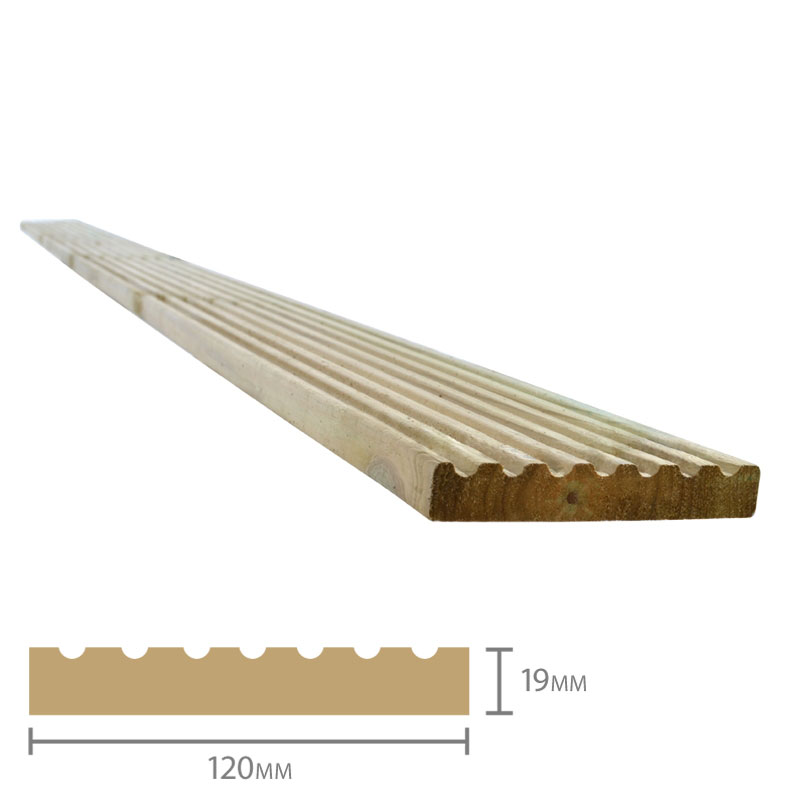
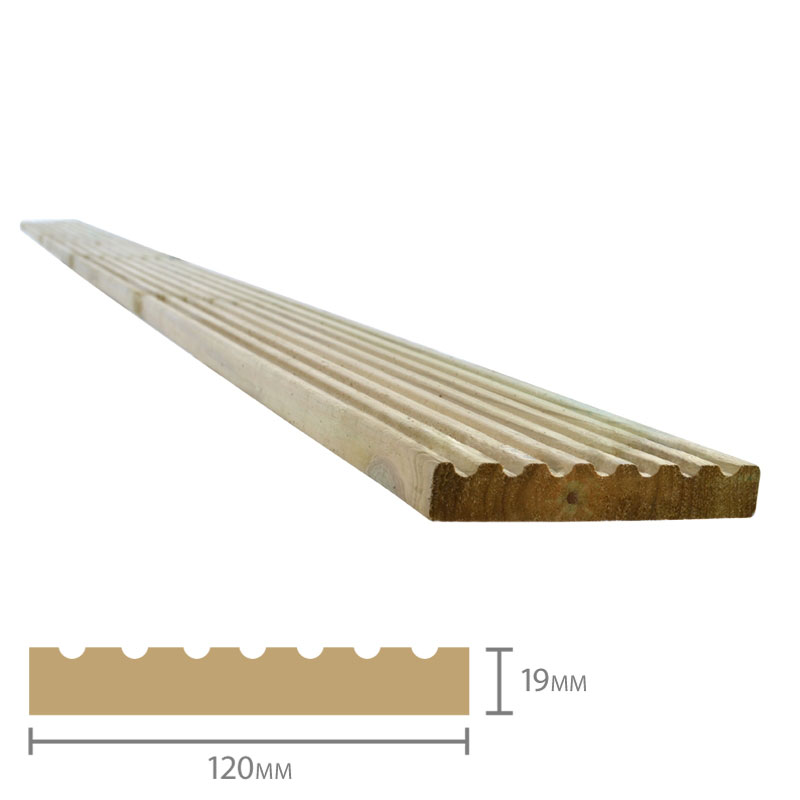
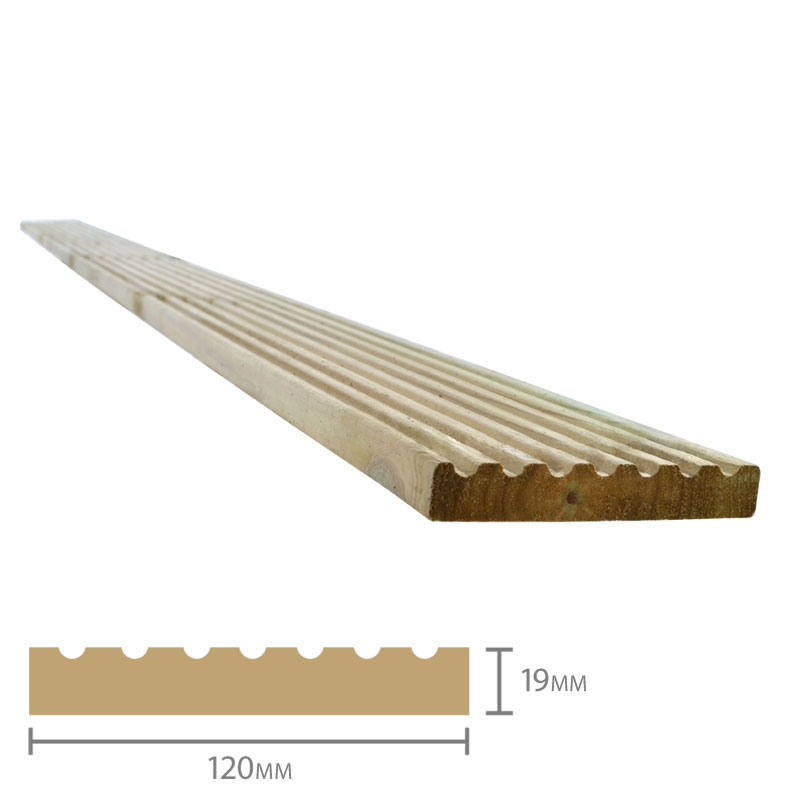
37% OFF: Forest Treated Softwood Value Deck Board 19mm x 120mm x 2.4m Pack of 10 £74.9937%

-
29% OFF: Forest Treated Softwood Value Deck Board 19mm x 120mm x 2.4m Pack of 10 £84.9929%
-
16% OFF: Forest Treated Softwood Value Deck Board 19mm x 120mm x 2.4m Pack of 20 £199.9916%

-
15% OFF: Forest Treated Softwood Value Deck Board 19mm x 120mm x 2.4m Pack of 50 £509.9915%

-
13% OFF: Forest Treated Softwood Value Deck Board 19mm x 120mm x 2.4m Pack of 5 £59.9913%

19mm decking boards for garden projects, raised terraces and neat outdoor transitions – choose from timber and composite styles, with profiles, widths and finishes that shape the look, grip and feel of your deck.
Why 19mm makes sense on a deck surface
19mm decking sits in a practical middle ground: slim enough to keep the build looking refined, yet substantial enough for a solid underfoot feel when paired with the right joist spacing. For many buyers, this thickness is about balance. It gives a cleaner profile than chunky boards, but still offers enough presence to suit patios, garden rooms, steps and everyday seating areas.
The appeal is partly visual. A 19mm board tends to read as neat and streamlined, so the finished surface can feel lighter and less bulky. That matters if you are building a compact terrace, a narrow side return, or a deck that needs to sit close to an existing threshold. It can also help the deck blend better with modern landscaping where sharp lines and tidy proportions are part of the design.
Timber or composite: the main split
When people search for 19mm decking, they are often choosing between softwood timber, hardwood decking, and composite decking boards. Each one has a different look, feel and handling quality, so the choice is not only about price.
Bestseller der Kategorie 19mm Decking
Softwood boards are usually the more natural, familiar option. They suit classic garden designs and can be easier to cut and shape on site. The grain is often more visible, which gives the deck a warmer, more traditional feel.
Hardwood decking has a denser, tighter character and often a more refined edge detail. It is chosen for its rich appearance and the way it can sit neatly in more structured outdoor spaces. The tone and grain may vary a lot, which is part of the charm.
Composite 19mm decking mixes wood fibres and polymer materials, creating boards with a more uniform appearance. Buyers often look at this when they want consistent colour and profile across the surface. Composite can also be supplied in different textures, from smooth to woodgrain-style finishes, which changes both the look and the grip.
Profiles that change the feel underfoot
The profile of a 19mm decking board affects more than appearance. It changes how the deck drains, how it grips, and how it looks from the edge. That is why buyers often compare more than just width and colour.
- Grooved boards have channels on one or both faces, helping create a textured, directional finish.
- Smooth boards give a cleaner, more understated surface and can suit contemporary garden layouts.
- Reversible boards offer two different face styles, so the same board can work in different design schemes.
- Square-edge boards make a crisp, defined line at the perimeter and can look very tidy on steps or picture-frame borders.
The difference between grooved and smooth is not only visual. Grooved decking has a more defined surface pattern, which many people like for the sense of texture. Smooth boards can feel more open and even, though the exact finish depends on the material, of course.
Width and board shape: small changes, big effect
Within a 19mm decking range, width and edge shape help set the character of the project. Narrower boards can make the deck feel more detailed, with more lines running across the surface. Wider boards create a calmer, more open appearance because there are fewer joins.
Some boards have a slightly rounded edge, while others are squared off. A rounded edge softens the visual rhythm between planks. A square edge can make the deck look sharper and more architectural. Neither is better in all cases – it depends on whether you want the deck to feel relaxed or more formal.
If your garden has strong horizontal features, such as fencing, long planters or retaining walls, a board shape with clear lines can tie the whole layout together. If the space already feels quite rigid, a softer edge may sit better.
What 19mm does differently from thicker decking
Compared with thicker decking boards, 19mm boards often deliver a more restrained finish. That difference is useful in projects where height build-up matters, such as balcony-style spaces, small patios or garden levels that need to stay close to doors and thresholds.
Thicker boards can give more visual weight, but they can also raise the deck structure more than needed. With 19mm decking, the overall build can stay slimmer, which may simplify transitions into lawns, gravel zones or adjacent paving. It is also easier to keep proportions neat when the deck is only one part of a mixed-material garden.
That said, thickness alone does not decide performance. The board material, joist layout and fixing method all matter. A well-specified 19mm board can be an excellent fit for many domestic garden uses, while a poorly planned thicker board may still look awkward.
Natural grain, colour variation and the look buyers notice first
For many customers, the first thing they notice is not the technical detail, but the surface character. Timber decking often has grain, knots and natural variation that give the deck a lived-in, outdoor feel. The tone may run from pale honey shades to deeper browns, depending on species and finish.
Composite decking usually appears more even. Some people prefer that because it keeps the deck visually calm and predictable. Others want the irregularity of real wood, where no two boards look identical. That difference is a key reason why one customer may love a board while another passes it by.
If the deck is meant to be a main feature, a more expressive grain may work well. If it is meant to sit quietly beside planting, a uniform board could be the better call. There is no right answer here, just different effects.
Grip, texture and how the surface reads in use
Textured 19mm decking boards are often chosen because they give the surface a bit more character. The texture might be created through grooves, embossed detailing or the natural fibre structure of the material. In practical terms, it affects how the deck feels when walked on and how the surface appears in daylight.
A textured board can also help the deck look less flat from a distance. Light catches the surface differently across grooves and grain, which gives more depth. A smoother board, on the other hand, reflects light in a more even way and can appear cleaner in a minimalist setting.
If the garden gets strong sun, surface texture may help break up glare a little. In shadier spaces, a smoother face can stop the deck from looking too busy. The right finish depends a lot on the surroundings, not just the board itself.
Different edge details for different kinds of finish
Edge detail is one of those things people only notice once the deck is nearly finished, but it changes the whole feel. 19mm decking boards may be used with visible board edges, concealed side trims or perimeter borders that frame the surface. A neat edge can make a straightforward deck look carefully planned rather than simply assembled.
Some boards suit picture-frame layouts, where the perimeter is outlined with a border board. Others look better when the main planks run cleanly to the edge. This choice affects not only the appearance but the tone of the whole project. Picture framing feels more formal and deliberate; straight run boards feel simpler and a bit more relaxed.
Useful ways to compare 19mm decking before buying
To compare options properly, it helps to think beyond price per board. A good buying choice depends on the full picture, including look, fit and how the board behaves in a garden layout.
- Material type – timber for a natural look, composite for a more consistent finish.
- Profile – grooved, smooth, reversible or square-edge.
- Board width – narrow for detail, wide for a calmer surface.
- Colour tone – light, mid or dark shades that suit the surrounding landscaping.
- Visible grain – bold grain for a natural feel, subtle grain for a cleaner look.
- Height build-up – especially important where the deck meets doors, steps or paving.
These points may sound basic, but they make a real difference once the boards are laid side by side. A board that looks good in isolation may not work as well in a full garden scheme.
Where 19mm decking works particularly well
19mm decking can suit a wide range of outdoor layouts, especially where a neat, low-profile finish is wanted. It is often a good fit for terraces, modest seating areas, side returns, small raised platforms and transition zones between hard landscaping materials.
It can also work well on garden structures where the deck is only part of the design, not the entire space. For example, a deck surrounding a pergola base, a barbecue area or a compact outdoor dining spot can benefit from boards that keep the look tidy rather than overbuilt.
Because 19mm boards do not dominate the space visually, they can sit comfortably alongside planting, stone, brick or fencing without stealing the scene. That makes them handy in mixed-material gardens where balance matters.
Fitting style and why the board format matters
Board format influences how the finished surface reads. Long boards create a more continuous line, while shorter lengths can introduce more joints and a slightly busier look. For 19mm decking, that choice can shape whether the project feels calm or segmented.
Some buyers like a layout with boards running the length of the deck because it draws the eye through the space. Others prefer a change in direction, especially if the deck needs to define separate zones. The 19mm thickness itself does not decide this, but it supports whichever layout is chosen by keeping the profile neat.
It is also worth thinking about how the board ends land at the perimeter. Clean alignment and thoughtful spacing make the result feel more complete. It sounds obvious, but tidy board lines are often what make a deck look like it belongs there.
What to ask yourself before choosing a board
Before ordering 19mm decking boards, it helps to ask a few simple questions about the project. Do you want the surface to look natural or more uniform? Should the deck sit quietly in the background, or act as a clear feature? Is height a concern near doors, fences or retaining walls?
It also helps to think about how much visual texture you want. Some gardens benefit from strong grain and shadow. Others look better when the decking fades into the scheme and lets planting do the talking. Neither route is wrong, but the choice is easier when the rest of the garden is in mind.
Small practical details that make buying easier
There are a few details people sometimes forget when choosing 19mm decking. Board colour can shift slightly between batches in timber-based materials, so if a consistent visual run matters, it is worth planning the order carefully. With composite boards, the finish may be more uniform, which helps when the deck is expected to look even across a larger area.
It is also worth checking how the board will look once cut. Some profiles show their character most strongly on the full length, while cut ends can look simpler. If you are building steps, borders or edging pieces, that small thing can affect the final appearance more than expected.
And yes, it sounds a bit dull, but thinking about board direction early can save a lot of second-guessing later.
The final reason people choose 19mm decking
At its best, 19mm decking gives a garden a clean, grounded surface without making the structure feel heavy. It can look traditional or modern, textured or restrained, natural or uniform, depending on the material and profile you choose.
That flexibility is the real strength here. For some buyers, the attraction is the straightforward shape. For others, it is the way the boards can be used to fine-tune the feel of a terrace, from the line of the edges to the tone of the surface. If you want a deck that feels considered but not overdone, this category is a very practical place to start.
[Sassy_Social_Share]