Foundation Types for Garden Sheds – Overview and Comparison
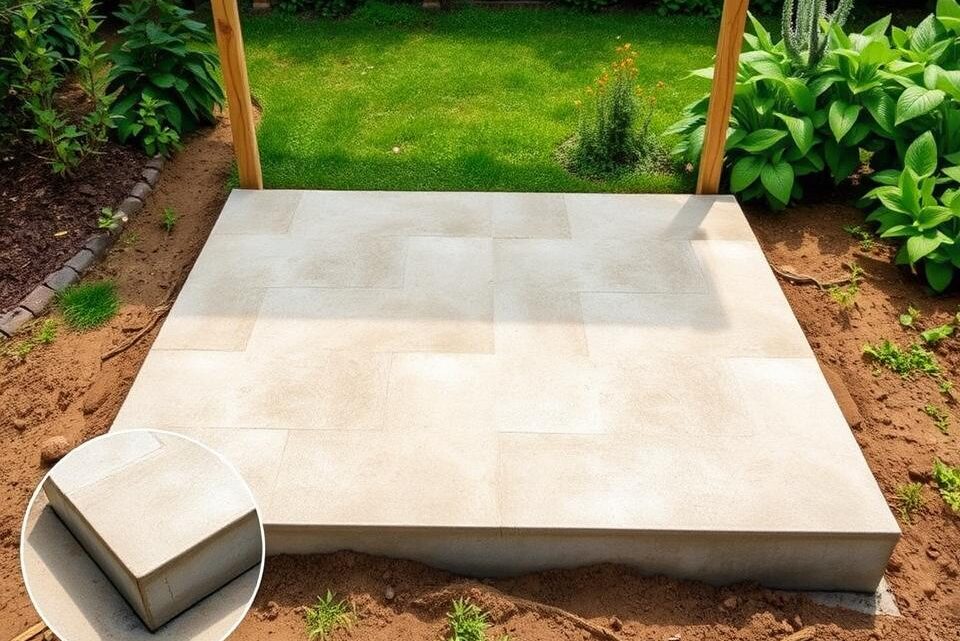
Creating the perfect garden shed begins with selecting the right foundation. Garden shed foundations play a crucial role in ensuring your outdoor storage space remains stable, durable, and protected from ground moisture. Whether you’re a DIY enthusiast or a homeowner looking to maximise your garden’s potential, understanding shed base options is key to a successful installation.
Comparing shed foundations reveals multiple approaches that cater to different garden environments, soil types, and budgetary constraints. Each foundation type offers unique benefits, from traditional concrete bases to innovative plastic grid systems. The right choice can significantly impact your shed’s longevity, structural integrity, and overall performance.
This comprehensive guide will explore various foundation methods, helping you make an informed decision that suits your specific garden requirements. We’ll dive deep into the world of garden shed foundations, examining installation techniques, cost considerations, and practical advantages of each approach.
Inhaltsverzeichnis
Key Takeaways
- Foundation selection critically impacts shed durability
- Multiple foundation options exist for different garden environments
- Proper base preparation prevents structural damage
- Cost and drainage are essential considerations
- Local building regulations may influence foundation choices
- Soil type determines optimal foundation strategy
Understanding the Importance of Proper Shed Foundations
Creating a robust foundation for your garden shed is far more than a simple construction step. It represents a critical investment in the long-term performance and durability of your outdoor storage space. A well-designed shed foundation ensures structural integrity, prevents potential damage, and protects your valuable belongings.
Selecting the right shed foundation involves careful consideration of multiple factors that directly impact shed stability and longevity. Let’s explore the key aspects that make foundation selection crucial for garden shed owners.
Impact on Shed Longevity
The foundation serves as the fundamental support structure for your shed. A poorly constructed base can lead to significant problems, including:
- Moisture penetration
- Structural warping
- Uneven settling
- Accelerated material degradation
Proper foundations protect against these issues, extending the shed’s lifespan by several years and reducing maintenance costs.
Safety and Stability Considerations
Shed stability depends entirely on its foundation. Uneven or weak foundations can create potential safety hazards, especially in areas with challenging terrain or extreme weather conditions.
| Foundation Type | Stability Rating | Recommended Use |
|---|---|---|
| Concrete Slab | High | Flat, permanent locations |
| Gravel Base | Medium | Slightly uneven terrain |
| Timber Bearers | Low-Medium | Temporary or movable structures |
Local Building Regulations
Understanding building regulations for sheds is crucial. Different local councils have specific requirements regarding foundation construction, size limitations, and placement. Always consult your local planning department before beginning your shed project to ensure full compliance and avoid potential legal complications.
By prioritising shed foundation importance, you’ll create a stable, long-lasting structure that withstands environmental challenges and provides reliable storage for years to come.
Concrete Base Foundations: The Traditional Choice
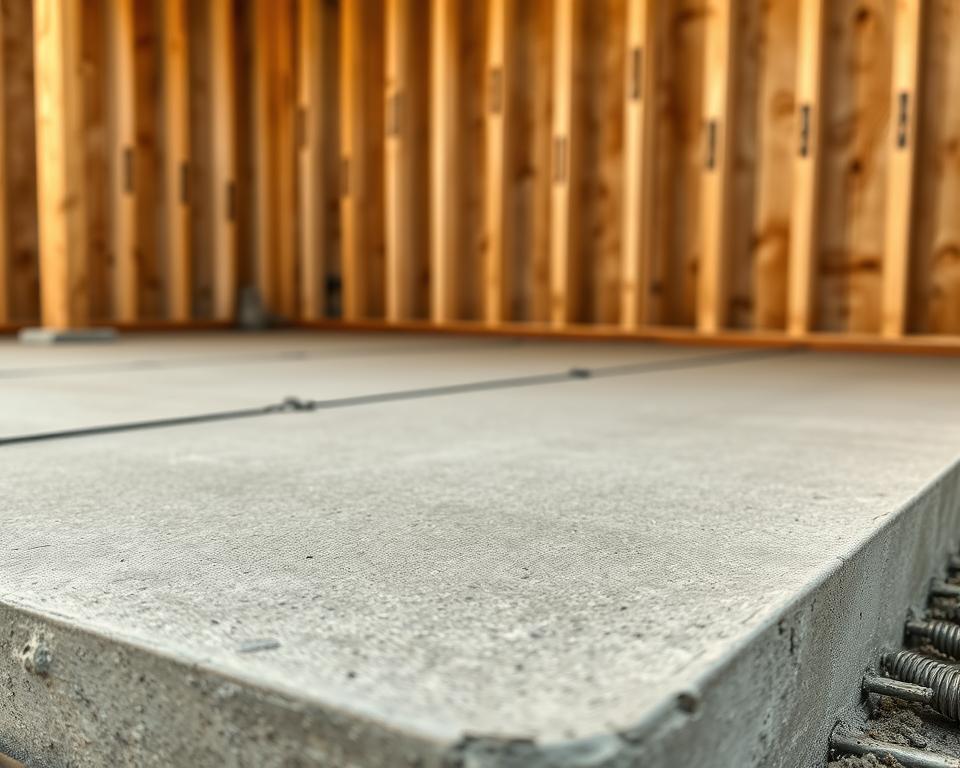
A concrete shed base represents the most reliable and robust traditional shed foundation for garden structures. Gardeners and homeowners across the United Kingdom have long relied on this solid shed foundation method for its exceptional durability and stability.
Creating a concrete shed base involves several critical steps that ensure a long-lasting and secure foundation:
- Excavate the ground to create a level surface
- Install sturdy formwork to contain the concrete
- Add a hardcore sub-base for improved drainage
- Pour reinforced concrete to create a smooth, even surface
The benefits of a concrete shed base are substantial. Permanent installations benefit most from this foundation type, as it provides:
- Maximum structural support
- Protection against ground moisture
- Resistance to ground movement
- Enhanced shed longevity
While concrete foundations require more initial investment and labour, they offer unparalleled stability. Professional installers recommend a minimum thickness of 100mm for residential garden sheds, ensuring optimal performance and weight distribution.
A well-constructed concrete base can support your shed for decades with minimal maintenance.
Cost considerations vary depending on shed size, with prices ranging from £150 to £500 for an average garden shed. Despite the higher upfront expense, a traditional shed foundation of concrete provides exceptional value through its durability and protection.
Paving Slab Foundations: A Versatile Solution
A paving slab shed base offers homeowners a flexible and cost-effective foundation option for garden sheds. Unlike traditional concrete foundations, paving slabs provide a lightweight, adaptable solution that can suit various garden landscapes and shed requirements.
Paving slab foundations represent an intelligent approach to creating a stable and level surface for garden structures. These shed foundation slabs can be an excellent alternative to more permanent base options.
Types of Suitable Paving Slabs
Selecting the right paving slabs is crucial for a successful shed foundation. Different materials offer unique advantages:
- Concrete paving slabs: Durable and widely available
- Natural stone slabs: Aesthetically pleasing and long-lasting
- Pressed concrete slabs: Lightweight and uniform
- Recycled composite slabs: Eco-friendly option
Installation Methods
Creating a cost-effective shed base with paving slabs requires careful preparation:
- Clear and level the ground
- Add a compacted hardcore base
- Create a sand bed
- Lay slabs with precise alignment
- Ensure proper drainage
Cost Considerations
| Slab Type | Cost per m² | Durability Rating |
|---|---|---|
| Concrete Slabs | £20-£30 | High |
| Natural Stone | £40-£60 | Very High |
| Recycled Composite | £25-£35 | Medium |
Professional tip: Always factor in long-term durability when selecting your paving slab shed base to ensure the best value for your investment.
Gravel and Crushed Stone Foundations
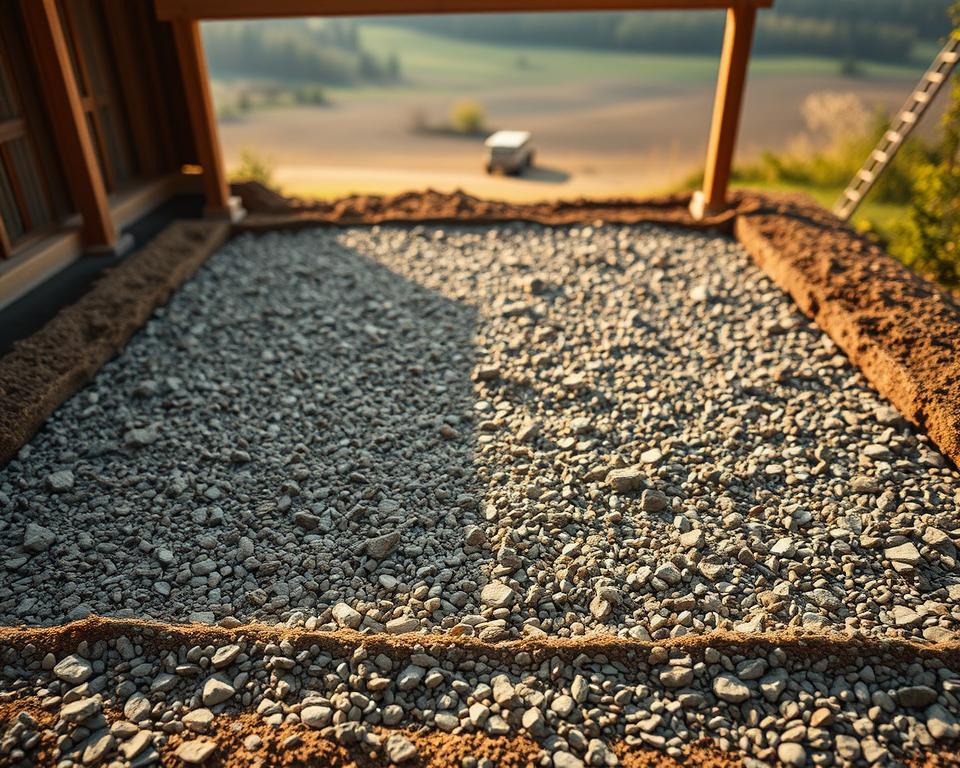
Creating a robust gravel shed base offers homeowners an affordable and practical foundation solution for garden structures. A crushed stone foundation provides excellent drainage and stability, making it a popular choice for DIY shed foundation projects.
Gravel foundations stand out for their versatility and ease of installation. Gardeners and DIY enthusiasts can quickly create a solid base using readily available materials. The key advantages include:
- Superior water drainage capabilities
- Cost-effective compared to concrete options
- Simple to level and adjust
- Adaptable to various ground conditions
When preparing a DIY shed foundation with gravel, careful preparation is crucial. Start by clearing the area and creating a level surface. Compact the ground thoroughly before adding layers of crushed stone. Experts recommend using angular gravel with different stone sizes to ensure maximum stability.
“A well-constructed gravel shed base can extend your shed’s lifespan by preventing moisture-related damage and providing essential ground support.” – Garden Construction Magazine
Drainage remains a critical consideration for any crushed stone foundation. The porous nature of gravel allows water to flow freely, preventing water accumulation that could compromise your shed’s structural integrity.
Typically, a 10-15 cm deep gravel layer works best for most garden shed foundations. Select clean, crushed stone with angular edges for optimal interlocking and stability.
Plastic Grid Foundation Systems: Modern Innovation
Garden shed foundations have evolved dramatically with the introduction of plastic grid foundation systems. These modern shed base systems represent a significant leap forward in eco-friendly shed foundation technology, offering gardeners an intelligent alternative to traditional groundwork solutions.
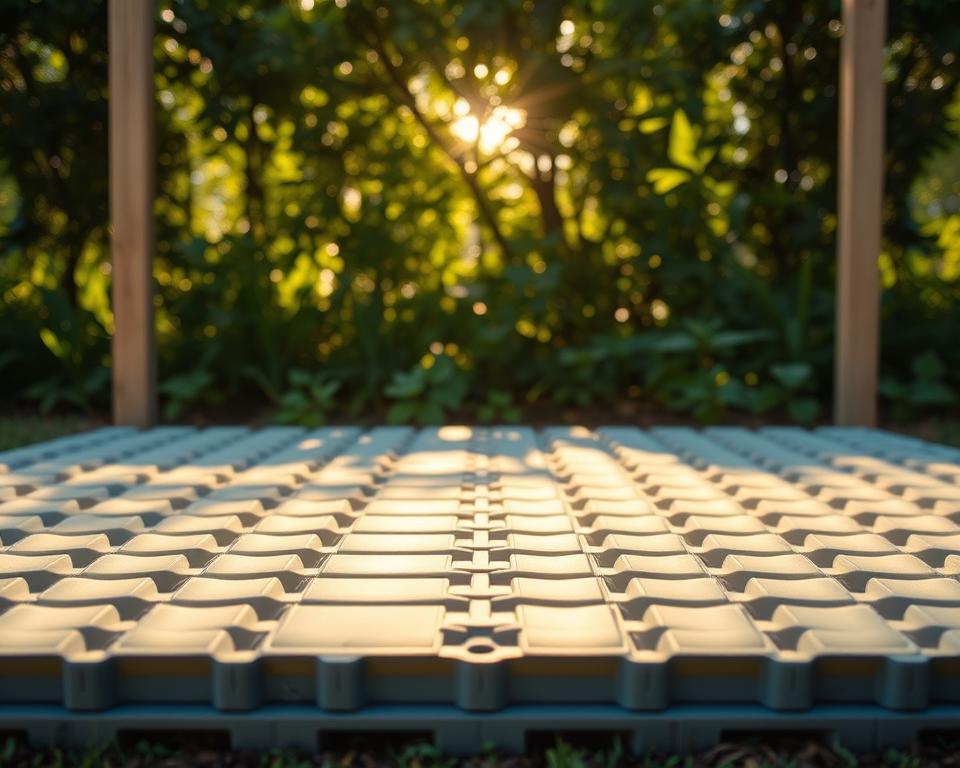
The plastic shed base provides a revolutionary approach to creating stable, sustainable foundations for garden structures. Unlike conventional methods, these innovative systems deliver multiple benefits that address both practical and environmental concerns.
Benefits of Eco-friendly Options
Plastic grid foundation systems bring remarkable advantages to shed construction:
- Exceptional drainage capabilities
- Lightweight and easy to transport
- Resistant to rot and degradation
- Environmentally sustainable materials
- Cost-effective long-term solution
Installation Process
Installing a plastic shed base is straightforward and requires minimal specialist skills. Gardeners can typically complete the process within a few hours, making it an attractive option for DIY enthusiasts.
- Clear and level the ground area
- Lay a permeable landscaping membrane
- Interlock plastic grid panels
- Fill grid spaces with gravel or stones
- Ensure level surface for shed placement
Drainage Properties
One of the most significant advantages of plastic grid foundation systems is their superior drainage performance. The interconnected grid design allows water to flow freely, preventing moisture accumulation and potential structural damage to your garden shed.
Investing in a modern plastic shed base ensures your outdoor structure remains stable, dry, and protected for years to come.
Timber Bearer Foundations: Elevated Solutions
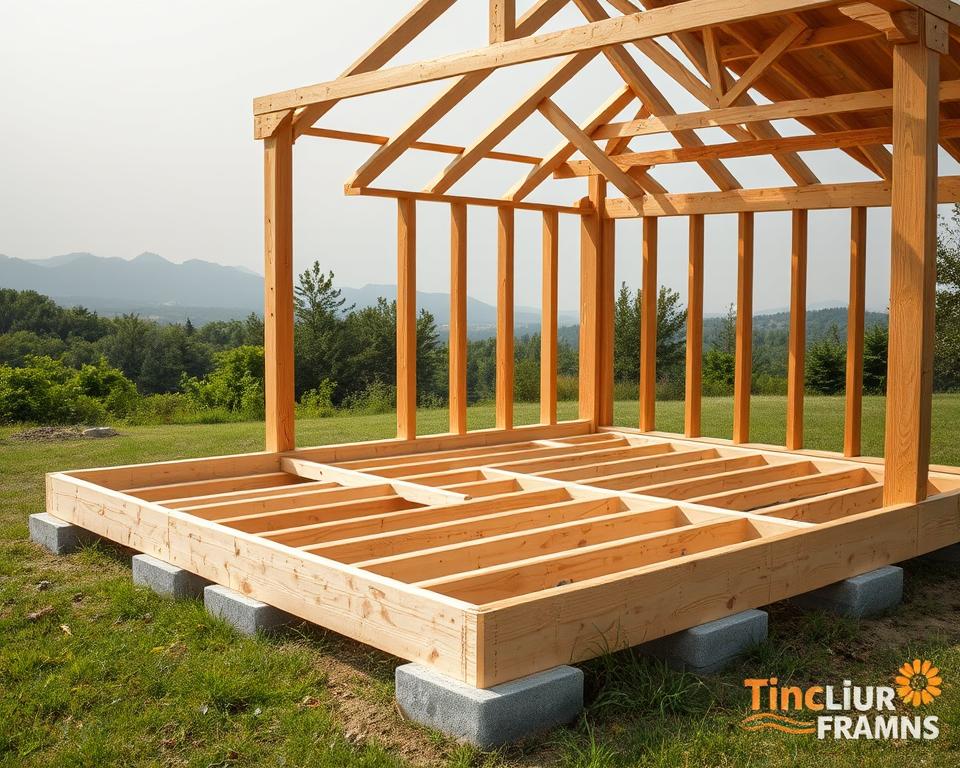
A timber shed base offers an intelligent solution for gardeners facing challenging terrain. An elevated shed foundation provides exceptional benefits for uneven or damp ground conditions. Wooden shed base construction allows flexibility and protection against ground moisture.
Timber bearer foundations create a raised platform that lifts your shed above potential water accumulation and ground irregularities. This approach prevents direct contact between the shed structure and potentially damp surfaces.
- Suitable for sloped or waterlogged landscapes
- Provides excellent drainage capabilities
- Reduces risk of timber rot and structural damage
- Allows air circulation underneath the shed
When implementing a timber shed base, selecting pressure-treated lumber becomes crucial. Treated wood resists moisture and prevents decay, extending the foundation’s lifespan.
| Timber Foundation Type | Ground Suitability | Estimated Lifespan |
|---|---|---|
| Pressure-Treated Bearers | Uneven/Damp Ground | 15-20 Years |
| Untreated Timber | Dry, Level Ground | 5-10 Years |
Professional installation ensures your elevated shed foundation remains stable and level. Proper spacing between bearers and adequate ground preparation are essential for long-term performance.
Comparing Foundation Types for Garden Sheds
Selecting the right shed foundation can make a significant difference in your garden’s functionality and your shed’s longevity. A comprehensive shed foundation comparison reveals crucial insights for homeowners seeking the best shed base options.

When evaluating shed foundation costs and performance, several key factors emerge that can guide your decision-making process.
Cost Analysis
The financial investment for different shed foundations varies considerably. Here’s a breakdown of typical shed foundation costs:
- Concrete base: £100-£300 for materials
- Paving slab foundation: £50-£200
- Gravel foundation: £30-£150
- Plastic grid system: £80-£250
- Timber bearer: £60-£180
Durability Ratings
Durability is paramount when selecting a shed foundation. Our research indicates performance levels across different foundation types:
- Concrete base: Highest durability (20-30 years)
- Paving slab: Moderate durability (10-15 years)
- Gravel foundation: Lower durability (5-10 years)
- Plastic grid system: Good durability with proper maintenance
Installation Complexity
The best shed base depends not just on cost but also on installation difficulty. Some foundations require more skill and time than others:
- Concrete base: Most complex, requires professional skills
- Paving slab: Moderate complexity
- Gravel foundation: Relatively simple
- Plastic grid system: Easy to install
- Timber bearer: Moderate difficulty
Careful consideration of these factors will help you choose the most suitable shed foundation for your specific needs and budget.
Choosing the Right Foundation for Your Site
Selecting the perfect shed foundation requires careful consideration of multiple site-specific shed base factors. Your garden’s unique characteristics play a crucial role in determining the most suitable foundation for your outdoor storage solution.
When selecting shed foundation options, you’ll need to evaluate several key aspects:
- Soil type and drainage characteristics
- Local climate conditions
- Shed size and weight
- Intended usage and placement
Different ground conditions demand specific foundation approaches. Clay-heavy soils might require more robust solutions compared to well-draining sandy terrains. The shed foundation factors extend beyond simple ground preparation.
| Soil Type | Recommended Foundation | Drainage Consideration |
|---|---|---|
| Clay | Concrete Slab | Poor |
| Sandy | Gravel Base | Excellent |
| Mixed Terrain | Plastic Grid System | Moderate |
Professional landscapers recommend assessing your specific environment before making a final decision. Measure ground levels, check water runoff patterns, and consider future maintenance requirements when choosing your ideal shed foundation.
Conclusion
Selecting the perfect shed foundation is crucial for creating a durable and stable outdoor storage solution. Our comprehensive garden shed base guide has explored multiple foundation types, each with unique advantages for different landscape conditions and budgets.
The shed foundation summary reveals that factors like site terrain, climate, budget, and intended shed usage play significant roles in determining the most suitable base. Whether you opt for concrete, gravel, plastic grid systems, or timber bearers, understanding your specific requirements will guide your decision-making process.
Key shed foundation tips include assessing ground conditions, checking local building regulations, and prioritising drainage and levelness. Professional preparation ensures your garden shed remains stable, protects against moisture damage, and extends the structure’s lifespan. Invest time in foundation selection to create a robust and long-lasting outdoor storage space.
By applying the insights from this guide, you’ll be well-equipped to make an informed choice that transforms your garden shed project from a simple construction task to a professional-quality installation. Your careful foundation selection will provide years of reliable service and aesthetic appeal.
FAQ
What is the most important factor when choosing a foundation for my garden shed?
The most crucial factor is ground stability and drainage. Your foundation must provide a level, stable surface that prevents moisture buildup and supports the shed’s entire weight evenly. Consider your local soil type, terrain, and climate when selecting the most appropriate foundation method.
How much does a typical garden shed foundation cost?
Foundation costs vary widely depending on the method. Gravel foundations can start from £50-£100, while concrete bases might range from £200-£500. Paving slab foundations typically fall between £100-£300. The total cost depends on your shed’s size, site conditions, and the materials you choose.
Can I install a garden shed foundation myself?
Yes, many foundation types are DIY-friendly. Gravel and crushed stone foundations are particularly accessible for home installation. However, if you’re not confident in your skills or the ground is challenging, it’s worth consulting a professional to ensure proper installation and long-term stability.
How do I prepare the ground before laying a foundation?
Begin by clearing the area of vegetation, rocks, and debris. Level the ground using a spirit level and remove any high spots or fill in low areas. Ensure proper drainage by creating a slight slope away from the foundation area. Compact the ground thoroughly before installing your chosen foundation type.
Which foundation is best for uneven or sloping ground?
Timber bearer foundations are ideal for uneven or sloping terrain. They allow you to create a level platform by adjusting the height of individual bearers. This method provides excellent elevation and can help protect your shed from ground moisture and drainage issues.
How long will a garden shed foundation last?
The lifespan varies by material. A well-constructed concrete base can last 20-30 years, while gravel foundations might require maintenance every 5-10 years. Proper installation and regular maintenance are key to extending the life of your foundation.
Do I need planning permission for a garden shed foundation?
This depends on your local building regulations and the size of your shed. In many cases, small garden sheds (under 2.5 metres in height) may not require planning permission. However, always check with your local council to confirm specific requirements for your area.
What’s the most eco-friendly foundation option?
Plastic grid foundation systems are currently the most environmentally friendly option. These systems are made from recycled materials, provide excellent drainage, and have minimal impact on the surrounding ground. They’re lightweight, easy to install, and can be removed with little environmental disturbance.
How do I prevent moisture issues with my shed foundation?
Ensure proper drainage by creating a slight slope away from the foundation, using materials that allow water to pass through, and leaving a small gap between the foundation and shed base. Gravel and plastic grid systems are particularly good for moisture management.
Can I move my shed if I use a removable foundation?
Plastic grid and gravel foundations are relatively easy to dismantle and relocate. Concrete and paving slab foundations are much more permanent and challenging to move. If you anticipate needing to relocate your shed, choose a more flexible foundation type.