How to Install Power Supply to a Garden Shed
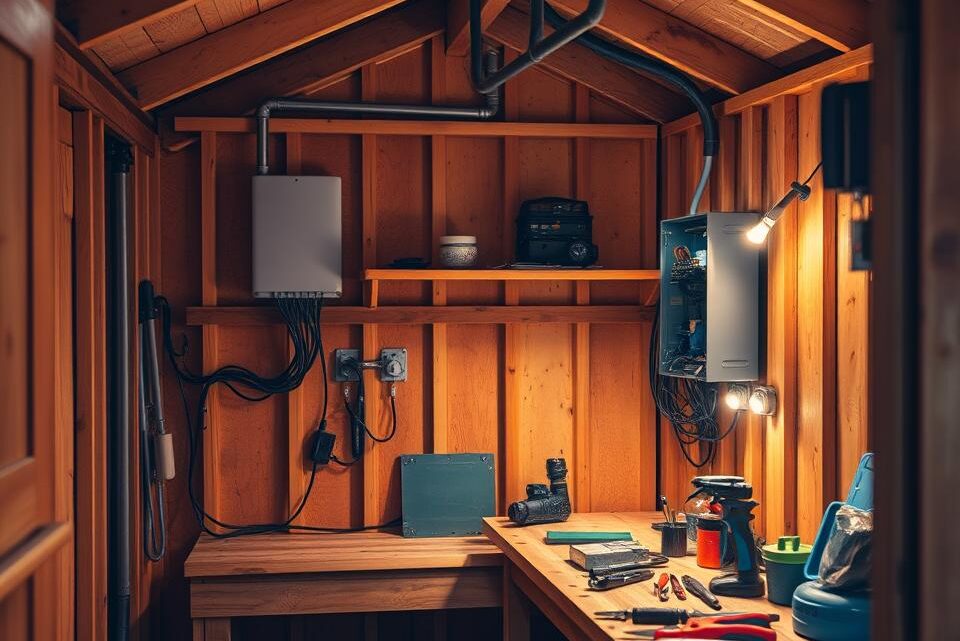
Installing an outdoor power supply for your garden shed can transform a simple storage space into a functional workspace or recreational area. Whether you’re planning to use power tools, create a home office, or set up lighting, garden shed electrics offer tremendous versatility for homeowners.
Shed electricity installation requires careful planning and understanding of electrical regulations. UK homeowners must follow strict safety guidelines when setting up an outdoor power supply to ensure compliance and protect against potential electrical hazards.
Professional preparation is crucial. While some DIY enthusiasts might feel confident tackling this project, consulting a qualified electrician can help navigate the technical complexities and ensure a safe, reliable electrical setup for your garden shed.
Inhaltsverzeichnis
Key Takeaways
- Proper planning is essential for garden shed electrics
- Safety regulations must be strictly followed
- Professional guidance can prevent potential electrical risks
- Power supply enhances shed functionality
- Understanding electrical requirements is crucial
Understanding the Basics of Shed Electrical Installation
Electrical installations in garden sheds require careful planning and strict adherence to UK electrical regulations. Homeowners must understand the critical safety considerations and legal requirements before attempting any DIY electrical work in their outdoor structures.
https://www.youtube.com/watch?v=Pm5Qit6Wi-4
Before beginning your shed wiring project, it’s essential to familiarise yourself with the key aspects of electrical safety and regulatory compliance.
Legal Requirements and Building Regulations
In the United Kingdom, electrical installations in garden sheds must meet specific standards set by regulatory bodies. Homeowners should be aware of the following key legal considerations:
- Compliance with BS 7671 (IET Wiring Regulations)
- Obtaining necessary permits from local building authorities
- Ensuring work meets Part P of the Building Regulations
Essential Safety Considerations
Shed wiring safety demands meticulous attention to detail. Critical safety measures include:
- Proper earthing and circuit protection
- Using weatherproof electrical components
- Installing residual current devices (RCDs)
Required DIY Electrical Tools
| Tool Category | Recommended Items | Purpose |
|---|---|---|
| Measuring Tools | Voltage tester, multimeter | Electrical circuit checking |
| Cutting Tools | Wire strippers, cable cutters | Cable preparation |
| Safety Equipment | Insulated gloves, safety glasses | Personal protection |
Professional tip: Always prioritise safety and consult a qualified electrician if you’re uncertain about any aspect of the installation process.
Planning Your Shed’s Power Requirements
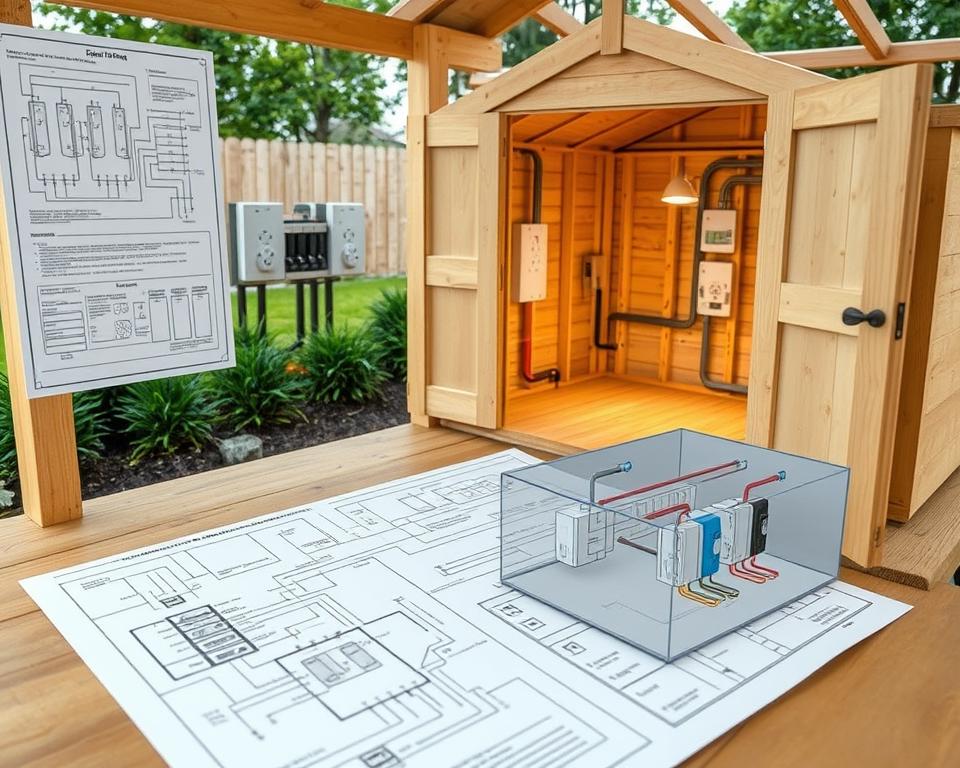
Calculating the electrical requirements for your garden shed is a critical step in creating a functional and safe outdoor workspace. Electrical load planning involves carefully assessing your shed’s potential power needs to ensure a reliable and efficient electricity supply.
Start by identifying the primary purpose of your shed. Different uses demand unique electrical considerations:
- Workshop with power tools
- Home office setup
- Storage with lighting requirements
- Hobby or craft space
Shed power calculation requires a systematic approach. List all electrical devices you plan to use, noting their wattage and anticipated usage frequency. This inventory helps determine the total electrical load and appropriate amperage for your installation.
Outdoor electricity usage varies significantly depending on your specific needs. Consider these key factors:
- Total number of anticipated electrical devices
- Maximum simultaneous power consumption
- Future expansion potential
- Seasonal usage variations
Pro tip: Always plan for 20% additional capacity beyond your current requirements to accommodate future upgrades or unexpected power needs.
Choosing the Right Cable Type and Size
Selecting the appropriate outdoor electrical cable for your garden shed is crucial for safety and performance. The right cable ensures reliable power supply while protecting against environmental challenges in the UK’s unpredictable weather conditions.

When considering electrical installations for garden buildings, understanding cable specifications becomes paramount. The armoured cable for sheds provides robust protection against external damage and environmental factors.
Underground Cable Considerations
Underground cable installation offers several advantages for garden electrical setups:
- Enhanced protection from weather elements
- Reduced visual disruption in garden landscape
- Better durability against physical damage
SWA Cable: Your Reliable Solution
Steel Wire Armoured (SWA) cable represents an excellent choice for outdoor electrical cable applications. Its unique construction provides multiple layers of protection:
| Cable Feature | Protection Level |
|---|---|
| Steel Wire Armour | Physical protection against mechanical damage |
| External Sheathing | Resistance to UV radiation and moisture |
| Insulation | Electrical safety and performance |
Weatherproof Cable Protection
Protecting your outdoor electrical cable requires strategic planning. Consider using conduit systems, waterproof junction boxes, and proper cable routing to maximise longevity and safety.
Always prioritise professional installation and adherence to UK electrical regulations when working with garden shed power supplies.
By carefully selecting the right armoured cable for sheds, you’ll ensure a reliable and safe electrical connection for your garden building.
How to Install Power Supply to a Garden Shed
Installing power to a garden building requires careful planning and precision. DIY shed electrics can be a challenging project that demands technical skills and strict safety protocols. Homeowners must understand the critical steps involved in garden building wiring to ensure a safe and functional electrical setup.
“Proper electrical installation transforms a simple garden shed into a functional workspace or utility room.” – UK Electrical Safety Foundation
The shed power installation steps involve several key stages:
- Assessing power requirements
- Selecting appropriate cables
- Planning the electrical route
- Preparing necessary tools
- Ensuring legal compliance
Before beginning any electrical work, it’s crucial to understand the legal requirements. In the United Kingdom, specific regulations govern electrical installations in external buildings. Not all aspects of garden building wiring can be completed as a DIY project. Some stages require certified professional intervention to meet safety standards.
DIY shed electrics demand meticulous attention to detail. Homeowners should prioritise safety, invest in quality materials, and be prepared to consult professional electricians for complex connections or certification processes.
Professional guidance can help prevent potential electrical hazards and ensure your garden shed’s power supply meets all necessary safety regulations.
Preparing the Installation Route
Planning your garden electrical layout requires careful preparation and strategic underground cable routing. Before digging any trenches, homeowners must take several critical steps to ensure a safe and efficient installation.
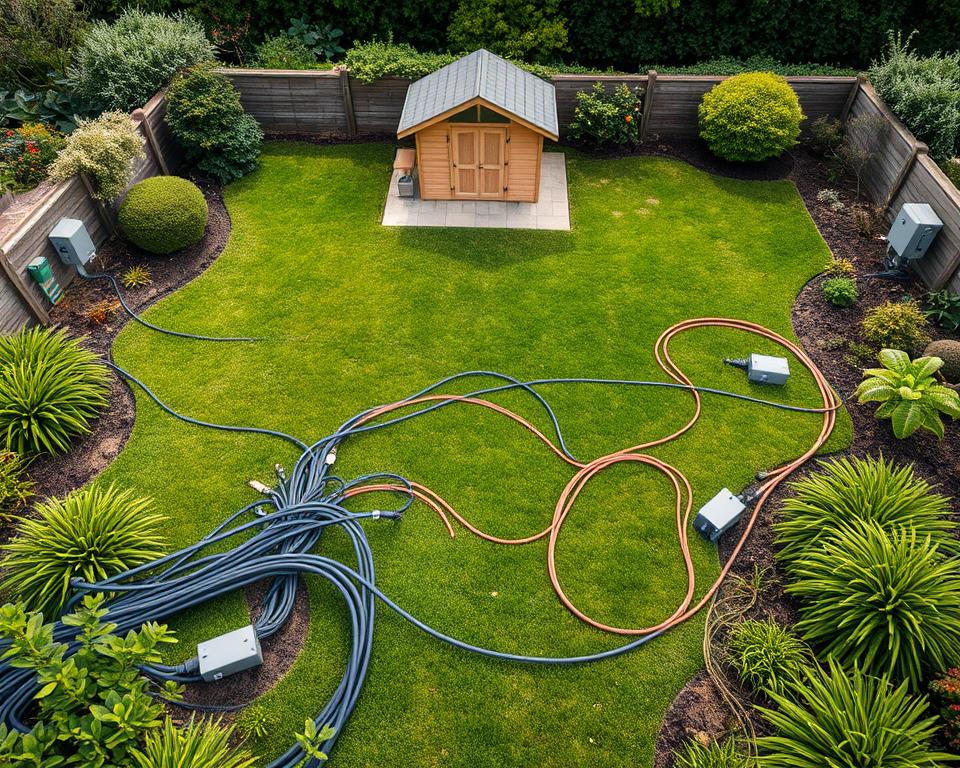
The success of your garden shed power supply depends on meticulous route preparation. Underground cable routing in the UK demands precision and adherence to specific guidelines.
Understanding Cable Trench Requirements
When establishing your cable trench depth in the UK, you’ll need to follow standard safety regulations. Typically, electrical cables require specific depth considerations:
- Standard residential cable trench depth: 500mm
- Minimum recommended depth: 450mm
- Maximum recommended depth: 750mm
Mapping Your Cable Path
Effective garden electrical layout involves strategic planning. Before digging, consider these essential steps:
- Contact local utility companies to verify underground service locations
- Use temporary marking paint to outline your proposed cable route
- Identify potential obstacles like tree roots, existing landscaping, or drainage systems
Ground conditions play a significant role in cable trench preparation. Different soil types—clay, rocky terrain, or sandy ground—will impact your excavation strategy.
Safety Tip: Always call utility location services before digging to prevent accidental damage to existing infrastructure.
Careful measurement and precise marking will help minimise landscape disruption while ensuring a smooth electrical installation process for your garden shed.
Installing the Consumer Unit in Your Shed
Setting up the shed consumer unit is a critical step in creating a safe and functional electrical system for your garden building. The outdoor distribution board serves as the central hub for garden building electrics, managing power distribution and protecting your electrical circuits.
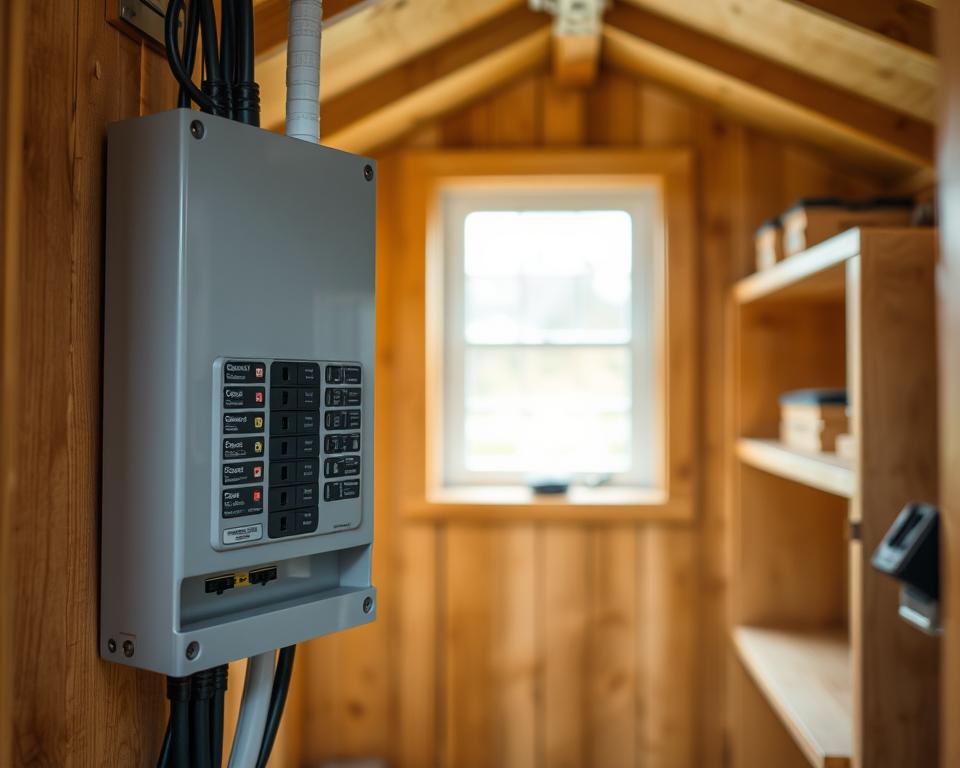
Choosing the right consumer unit requires careful consideration of your shed’s specific electrical needs. You’ll want to select a unit that can handle your anticipated power requirements while providing robust circuit protection.
- Determine total electrical load requirements
- Select appropriate circuit breaker capacity
- Ensure weatherproof mounting location
- Plan for future electrical expansion
When installing the consumer unit, location is paramount. Mount it in a dry, accessible area within your shed, typically at eye level for easy inspection and maintenance. Protect the unit from moisture using appropriate weatherproof enclosures designed for outdoor building electrics.
“Proper installation of your shed’s consumer unit is the foundation of a safe electrical system.”
Key installation steps include:
- Securely mount the consumer unit to a stable wall surface
- Ensure proper earthing connections
- Label each circuit breaker clearly
- Install protective covers
Remember to consult a qualified electrician if you’re uncertain about any aspect of the installation process. Safety should always be your primary concern when working with electrical systems.
Connecting to Your Home’s Main Power Supply
Establishing a safe and reliable electrical connection for your garden shed requires careful planning and precision. The main panel connection is a critical step in creating a functional electrical system that meets UK safety standards.
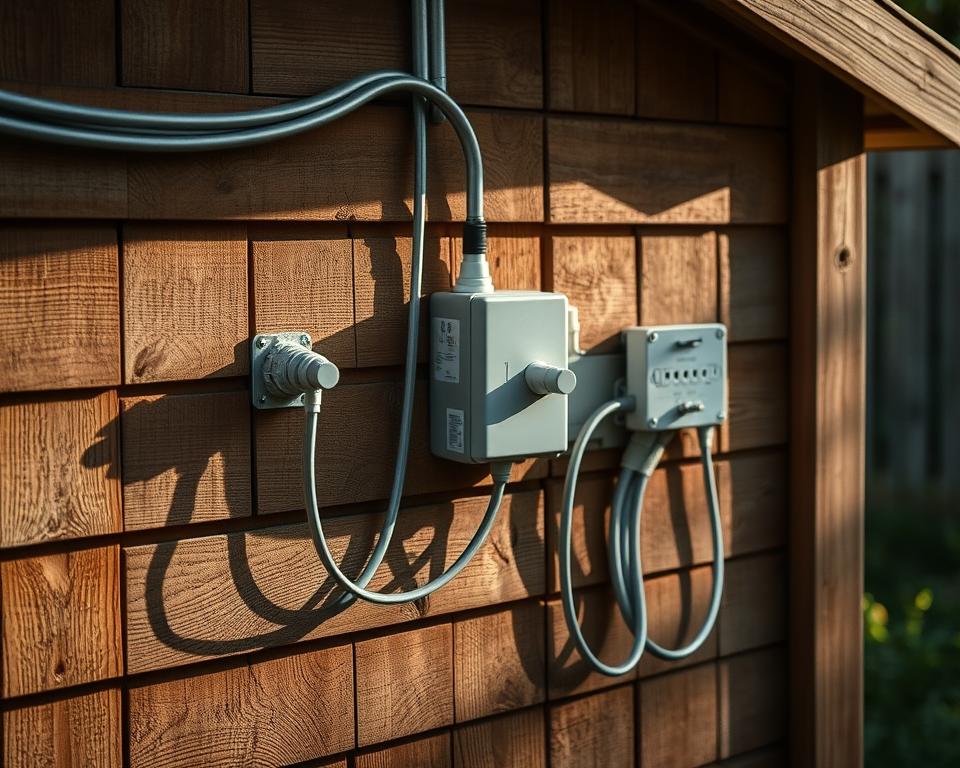
When preparing to connect your shed’s electrical supply, you’ll need to focus on three key aspects: circuit breaker installation, electrical earthing, and connection testing.
Circuit Breaker Installation
Installing a dedicated shed circuit breaker in your home’s consumer unit is essential for safety and proper electrical management. Choose a circuit breaker with the appropriate amperage for your shed’s power requirements:
- Assess total electrical load for the shed
- Select a circuit breaker rated slightly above expected usage
- Ensure compatibility with existing consumer unit
Electrical Earthing UK Requirements
Proper electrical earthing is crucial in the UK to prevent electrical hazards. The earthing system protects against electric shock and ensures safe operation of electrical equipment:
- Install a robust earth rod near the shed
- Connect earth cable to the main earthing terminal
- Verify earth connection resistance meets regulations
*Safety Tip*: Always disconnect the main power supply before working on any electrical connections.
Testing the Connection
After completing the installation, comprehensive testing is mandatory. Use professional electrical testing equipment to verify:
- Correct polarity
- Earth fault loop impedance
- Insulation resistance
- Continuity of protective conductors
By following these guidelines, you’ll create a safe and compliant electrical connection for your garden shed, meeting all UK electrical safety standards.
Installing Interior Wiring and Outlets
Designing the electrical layout for your garden office or shed requires careful planning and precision. A well-executed shed wiring diagram ensures safe and efficient garden office electrics that meet both functional and safety requirements.
When preparing for outdoor socket installation, consider these key factors:
- Circuit protection
- Cable routing
- Socket placement
- Weatherproofing
Start by creating a comprehensive wiring plan that maps out all electrical points. Prioritise safety by selecting RCD-protected sockets suitable for damp environments. Choose robust, waterproof electrical boxes designed specifically for exterior use.
| Socket Type | Recommended Location | Protection Level |
|---|---|---|
| Weatherproof Double Socket | External Wall | IP65 Rating |
| Internal Standard Socket | Interior Walls | Standard RCD Protection |
Secure cables using appropriate cable clips and conduits to prevent potential damage. Ensure all connections are tight and protected from moisture. Run cables along walls, keeping them away from potential impact zones.
For lighting, consider energy-efficient LED options that provide bright, consistent illumination while minimising power consumption. Install switches at convenient locations, maintaining a logical and accessible electrical layout.
Safety Features and Circuit Protection
Electrical safety is paramount when installing power in a garden shed. Protecting your outdoor electrical system requires careful consideration of specialised safety devices that prevent electrical hazards and equipment damage.
A robust garden shed RCD (Residual Current Device) forms the cornerstone of outdoor electrical safety. These critical components detect dangerous electrical current imbalances and immediately disconnect power, preventing potential electric shocks.
RCD Protection Essentials
When implementing garden shed RCD protection, consider these key aspects:
- Choose an RCD with appropriate sensitivity (typically 30mA)
- Install RCDs in easily accessible locations
- Test RCD functionality quarterly
- Ensure complete circuit coverage
Surge Protection for Sheds
Surge protection devices safeguard valuable electrical equipment from unexpected voltage spikes. These devices intercept potentially damaging electrical surges before they reach your shed’s internal circuits.
| Protection Type | Purpose | Recommended Usage |
|---|---|---|
| Type 1 Surge Protector | External protection | Main electrical incoming supply |
| Type 2 Surge Protector | Internal circuit protection | Distribution boards and key equipment |
Implementing comprehensive outdoor electrical safety measures ensures your garden shed remains a secure and functional space, protecting both your equipment and personal well-being.
Testing and Certification Requirements
Completing an electrical installation for your garden shed requires rigorous testing and professional certification. An electrical installation certificate serves as crucial documentation proving the safety and compliance of your electrical work.
NICEIC testing plays a vital role in ensuring electrical installations meet the highest safety standards. Professional electricians conduct comprehensive assessments to verify the integrity of your garden shed’s electrical system.
- Insulation resistance testing
- Earth continuity checks
- Polarity verification
- Circuit protection assessment
DIY electrical inspection can be challenging. While homeowners may complete some preliminary checks, certain aspects require professional expertise. Qualified electricians can provide an official electrical installation certificate that demonstrates your installation meets current UK regulations.
Key certification steps include:
- Initial visual inspection of wiring
- Detailed electrical system testing
- Comprehensive safety evaluation
- Documentation of findings
Obtaining a professional certification protects your property and ensures electrical safety. The NICEIC testing process verifies that your garden shed’s electrical installation complies with British electrical standards, giving you peace of mind and legal protection.
Maintenance and Troubleshooting Tips
Proper shed electrical maintenance is crucial for ensuring the safety and longevity of your garden power installation. Electrical systems in outdoor environments face unique challenges that require regular attention and proactive care.
Garden power troubleshooting starts with understanding the potential risks and implementing a systematic approach to monitoring your outdoor wiring issues.
Regular Safety Inspection Schedule
- Conduct visual inspections every 3-6 months
- Check for signs of wear, moisture damage, or corrosion
- Test all electrical safety devices
- Verify cable and connection integrity
Common Electrical Challenges in Garden Sheds
| Issue | Potential Cause | Recommended Action |
|---|---|---|
| Tripping Circuit Breaker | Overloaded Circuit | Reduce electrical load or upgrade circuit |
| Flickering Lights | Loose Connections | Inspect and tighten electrical connections |
| Moisture Intrusion | Inadequate Weatherproofing | Seal entry points and use waterproof components |
Understanding these maintenance strategies helps prevent potential electrical failures and ensures the safe operation of your garden shed’s power system.
Professional Intervention Guidelines
While some troubleshooting can be managed independently, complex electrical issues require professional expertise. Contact a qualified electrician if you encounter persistent problems or feel uncertain about any electrical repairs.
Safety should always be your primary consideration when dealing with electrical systems in outdoor environments.
Conclusion
Installing electrical power to your garden shed requires careful planning and meticulous attention to outdoor electrical safety. The shed electrics summary we’ve explored highlights the critical steps from initial design to final certification, ensuring your garden power installation meets UK regulatory standards.
Safety remains paramount when working with electrical systems. Whether you choose to undertake the project yourself or engage a professional electrician, understanding the fundamental principles of electrical installation will protect your property and personal wellbeing. Proper preparation, quality materials, and adherence to building regulations are essential for a successful garden shed electrical project.
Regular maintenance and periodic safety checks will guarantee the longevity and reliability of your garden shed’s electrical system. By investing time in thorough planning and execution, you create a functional, safe space that enhances your outdoor living environment. Remember that professional guidance is always recommended if you feel uncertain about any aspect of the installation process.
Your commitment to understanding electrical requirements and following best practices ensures a secure and efficient power supply for your garden shed. With the right approach, you can transform your outdoor space into a versatile, well-equipped area that meets your specific needs while maintaining the highest standards of electrical safety.
FAQ
Do I need professional certification for installing electricity in my garden shed?
Yes, in the UK, certain electrical installations require certification by a qualified electrician. While you can undertake some aspects of the installation, complex electrical work must be professionally certified, typically through organisations like the National Inspection Council for Electrical Installation Contracting (NICEIC).
What depth should I dig the cable trench for my garden shed’s electrical supply?
According to UK regulations, the standard cable trench depth for domestic installations is approximately 500mm. This depth helps protect the underground cables from accidental damage and ensures compliance with building standards.
What type of cable is best for underground garden shed electrical installations?
For garden shed electrical installations, Steel Wire Armoured (SWA) cable is recommended. This type of cable provides excellent protection against moisture, physical damage, and UV radiation, making it ideal for the variable British climate.
How many electrical outlets do I need in my garden shed?
The number of outlets depends on your shed’s intended use. For a workshop or home office, plan for at least 4-6 double sockets. Consider your current and potential future electrical equipment needs when designing the outlet layout.
What safety features are essential for a garden shed electrical installation?
Key safety features include Residual Current Devices (RCDs), surge protection devices, proper earthing, and weatherproof outlets. These components protect against electric shocks, voltage spikes, and environmental challenges in outdoor settings.
Can I install the electrical supply to my garden shed myself?
While some aspects can be DIY, it’s strongly recommended to consult or hire a qualified electrician. Complex tasks like connecting to the main power supply and final certification require professional expertise to ensure safety and regulatory compliance.
How often should I perform safety checks on my garden shed’s electrical installation?
Conduct visual inspections every 6 months and comprehensive electrical safety checks annually. Test RCD devices regularly and look for signs of wear, moisture damage, or potential electrical issues.
What type of consumer unit is best for a garden shed?
Choose a weatherproof consumer unit designed for outdoor or semi-outdoor environments. Ensure it has sufficient circuit capacity for your electrical needs and is mounted securely in a dry, accessible location within the shed.
Are there specific regulations for electrical installations in garden buildings in the UK?
Yes, garden shed electrical installations must comply with BS 7671 (IET Wiring Regulations) and building regulations. This includes requirements for cable protection, earthing, circuit protection, and professional certification.
What electrical load can a typical garden shed installation support?
Most garden shed installations can support a 30-60 amp supply, sufficient for powering workshop tools, lighting, and small appliances. The exact load depends on your specific electrical requirements and home’s main supply capacity.