
Can I Put a Gazebo Directly on the Grass?

Planning a gazebo installation can be an exciting project for UK homeowners looking to enhance their outdoor living spaces. Gazebo placement requires careful consideration, especially when contemplating direct lawn installation. While it might seem straightforward, the process of setting up outdoor structures like gazebos involves several critical factors that can impact both the structure’s stability and your garden’s health.
Lawn installation of gazebos isn’t as simple as just placing the structure on grass. Garden enthusiasts must evaluate ground conditions, understand potential risks, and prepare a suitable foundation. The success of your gazebo placement depends on multiple variables, including soil type, terrain, and the specific design of your outdoor structure.
Inhaltsverzeichnis
Key Takeaways
- Assess ground conditions before gazebo placement
- Consider short-term and long-term installation methods
- Protect lawn health during outdoor structure setup
- Evaluate weight and size of gazebo for proper installation
- Select appropriate foundation options for stability
Understanding the Basics of Gazebo Placement
Selecting the perfect gazebo for your garden requires careful consideration of multiple factors. Gazebo placement isn’t simply about finding an empty space, but understanding the nuanced requirements of different gazebo types and installation challenges.
Exploring Gazebo Types
Gazebo types vary significantly, each with unique characteristics affecting installation:
- Wooden gazebos: Classic design, heavier construction
- Metal gazebos: Lightweight, modern appearance
- Pop-up gazebos: Temporary, portable solutions
- Permanent structures: Substantial, fixed installations
Installation Challenges to Consider
When planning gazebo placement, several installation challenges emerge. Ground conditions play a critical role in determining suitable locations. Uneven terrain, soil composition, and drainage can significantly impact gazebo stability.
| Challenge | Potential Solution |
|---|---|
| Uneven Ground | Levelling base or foundation preparation |
| Soft Soil | Reinforced anchoring system |
| Water Drainage | Elevated platform or gravel base |
Weight and Size Considerations
Gazebo weight and size are crucial factors in successful installation. Larger gazebos require more robust foundations, while smaller structures offer greater flexibility in placement. A typical garden gazebo ranges from 3 to 5 metres, with weights varying between 50-250 kilograms depending on materials and design.
Understanding these fundamental aspects ensures a successful gazebo placement that enhances your outdoor living space while maintaining structural integrity.
Evaluating Your Garden’s Surface Conditions
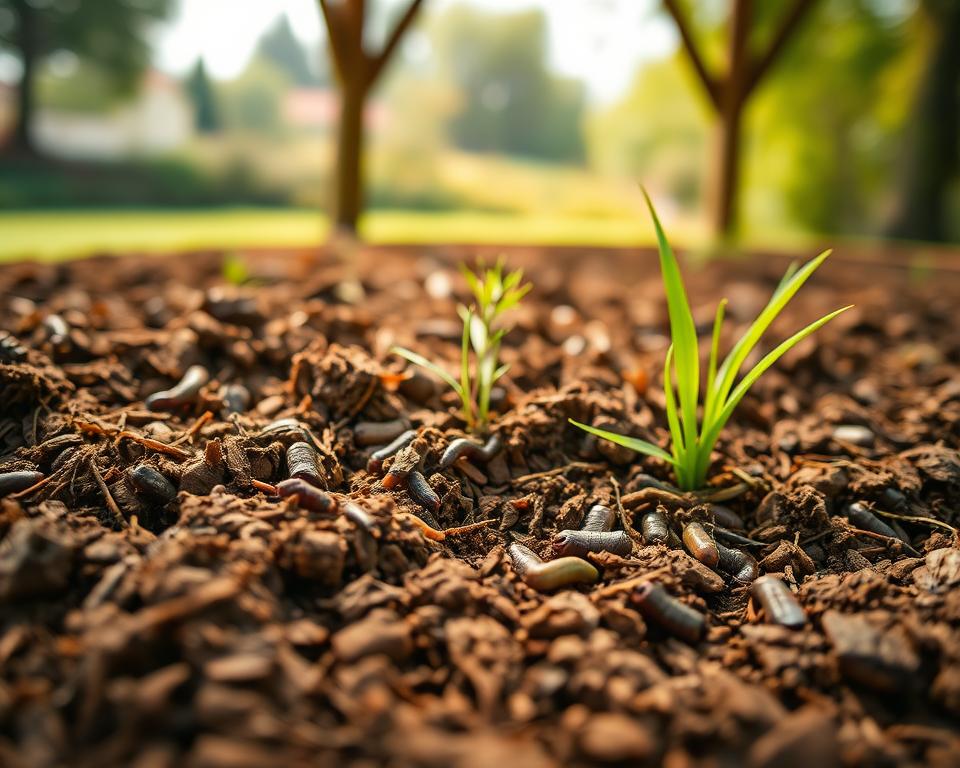
Understanding your garden terrain is crucial before installing a gazebo. A comprehensive soil assessment helps determine the suitability of your grass for supporting a permanent or temporary structure. Different garden environments present unique challenges that can impact grass health and gazebo stability.
Key factors to consider during garden terrain evaluation include:
- Soil composition and drainage capabilities
- Existing grass density and root system strength
- Ground slope and potential water accumulation areas
- Underlying soil moisture levels
Conducting a basic soil assessment requires careful observation. Start by walking across your garden and noting any soft spots, uneven surfaces, or areas with poor grass health. These could indicate potential problems for gazebo installation.
A thorough garden terrain examination prevents future structural issues and protects your lawn’s integrity.
Professional landscapers recommend checking soil compactness and drainage before placing any heavy outdoor structures. Loose or waterlogged soil can compromise both grass health and gazebo foundation, leading to potential damage or instability.
Visual inspection combined with simple tests can provide valuable insights into your garden’s readiness for a gazebo installation.
Can I Put a Gazebo Directly on the Grass?
Deciding to place a gazebo on your lawn requires careful consideration. Temporary gazebo placement and permanent gazebo installation each come with unique challenges that can significantly impact your garden’s appearance and health.
Garden enthusiasts often wonder about the implications of placing a gazebo directly on grass. The decision isn’t as straightforward as it might seem.
Short-term vs Long-term Installation
When considering temporary gazebo placement, gardeners have more flexibility. Short-term setups can work well for occasional events or seasonal gatherings. Key considerations include:
- Duration of placement
- Weight of the gazebo structure
- Ground conditions
- Frequency of movement
Potential Risks to Consider
Permanent gazebo installation poses greater risks to lawn damage. The constant weight and reduced sunlight can create significant stress on grass health.
- Compacted soil restricts root growth
- Reduced grass photosynthesis
- Potential fungal development
- Uneven grass discolouration
Impact on Grass Health
Grass care becomes crucial when installing a gazebo. Prolonged coverage can lead to yellowing, thinning, and potential grass death in affected areas.
Tip: Consider using protective ground covers or rotating gazebo placement to minimise lawn damage.
Preparing the Ground for Your Gazebo
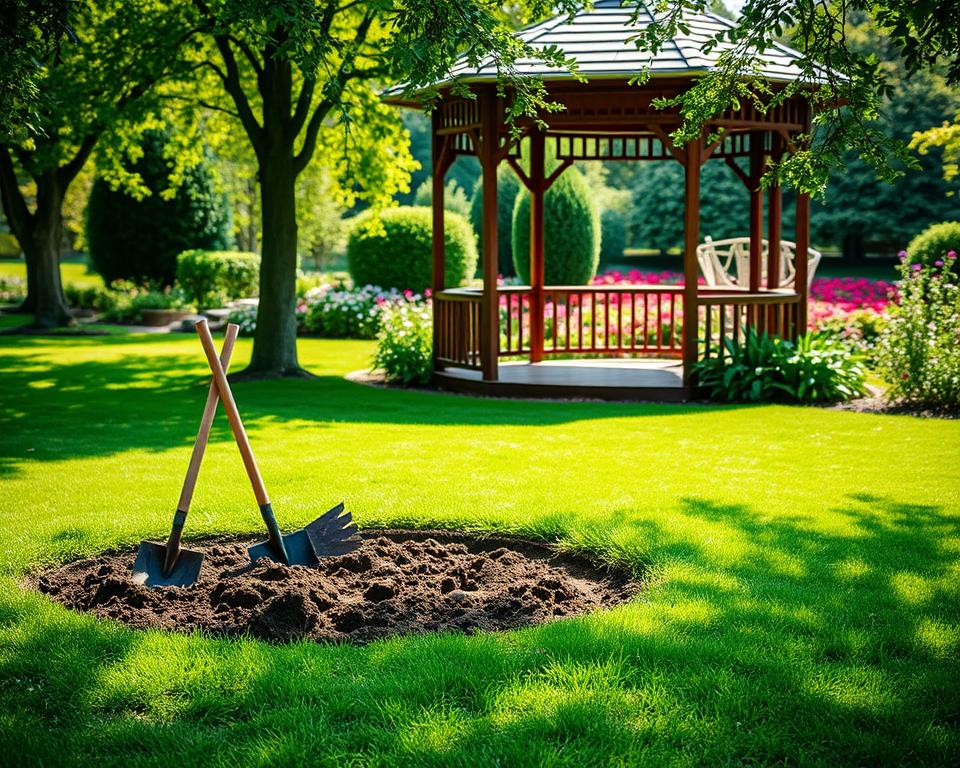
Successful gazebo installation starts with meticulous ground preparation. Before setting up your outdoor structure, you’ll need to invest time in creating a stable and level foundation. Proper ground preparation ensures your gazebo remains secure and stands the test of time.
Effective ground preparation involves several crucial steps:
- Clear the designated area of rocks, debris, and vegetation
- Measure and mark the exact gazebo footprint
- Check the ground’s natural gradient
- Remove top layer of grass and topsoil
Levelling the ground is critical for gazebo stability. Use a spirit level to ensure the surface is completely flat. Uneven terrain can cause structural stress and potential damage to your gazebo. Professional landscapers recommend removing approximately 10-15 cm of existing ground to create a solid base.
Soil compaction plays a vital role in ground preparation. After levelling, use a plate compactor to create a firm, dense surface. Compact the soil in layers, ensuring each section receives equal pressure. This process prevents future settling and provides a robust foundation for your gazebo.
A well-prepared ground is the secret to a long-lasting, stable gazebo installation.
Consider using landscaping fabric beneath your prepared surface to prevent weed growth and improve drainage. This additional step will protect your gazebo’s foundation and maintain its appearance over time.
Essential Foundation Options for Gazebo Installation
Selecting the right gazebo foundation is crucial for creating a stable and long-lasting outdoor structure. Different garden spaces and terrain types require specific installation approaches to ensure your gazebo remains secure and level.
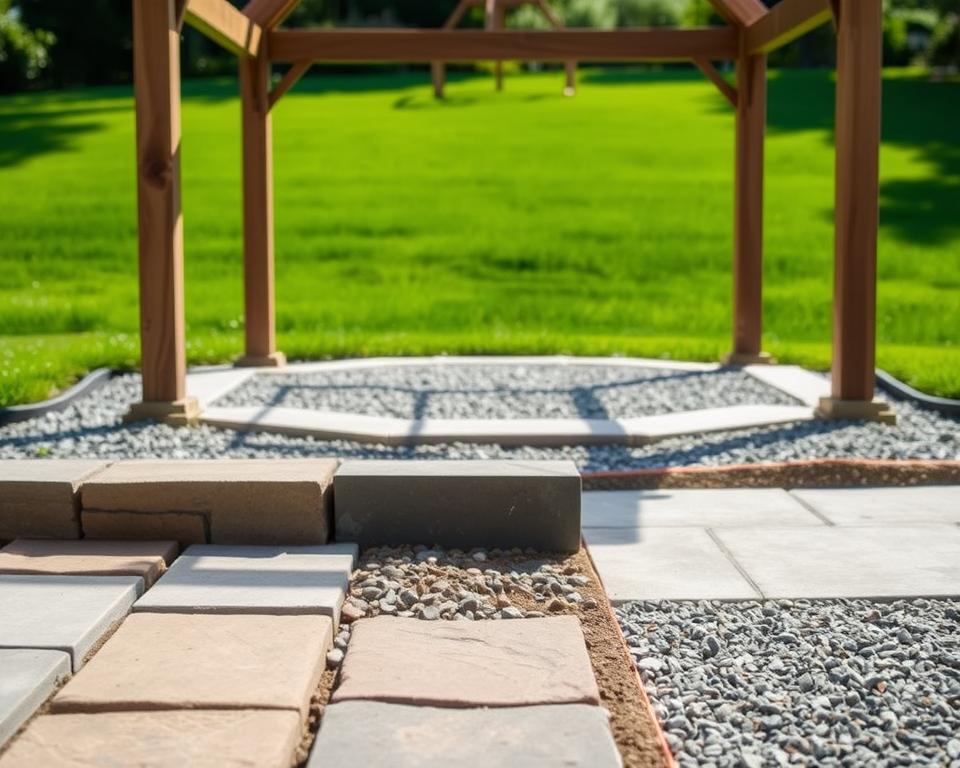
Creating a robust gazebo foundation involves several strategic choices that protect both your outdoor structure and the surrounding landscape. The right base will prevent sinking, maintain structural integrity, and enhance the overall aesthetic of your garden space.
Concrete Base Solutions
A concrete base provides the most permanent and stable gazebo foundation. This method offers several key advantages:
- Exceptional stability for heavy gazebo structures
- Prevents ground movement and settling
- Creates a level surface for precise installation
- Long-lasting durability in various weather conditions
Paving Slabs and Blocks
Paving slabs offer a versatile alternative to concrete bases for gazebo installation. These flexible foundation options provide excellent drainage and easier modification:
- Simple DIY installation process
- Better water drainage compared to solid concrete
- Easier to replace or adjust if needed
- Aesthetically pleasing garden integration
Deck Platform Alternatives
Decking presents an innovative solution for gazebo foundations, particularly in gardens with uneven terrain:
| Decking Feature | Benefit |
|---|---|
| Elevated Platform | Improves drainage and levels uneven ground |
| Aesthetic Appeal | Blends seamlessly with outdoor living spaces |
| Customisation | Can be designed to match existing garden design |
Each foundation option offers unique benefits. Careful consideration of your specific garden layout, soil conditions, and gazebo type will help you select the most suitable installation method.
Protecting Your Lawn During Gazebo Installation
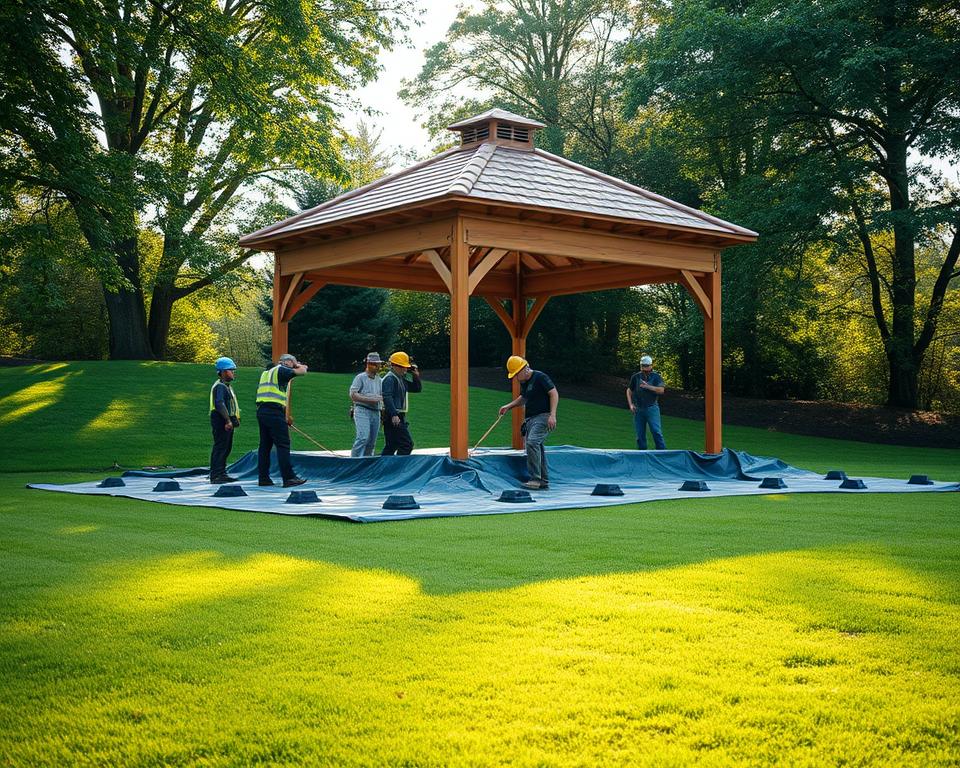
Installing a gazebo requires careful consideration to prevent damage to your precious lawn. Grass preservation is crucial during this process, as heavy structures can easily crush and kill grass underneath. Professional landscapers recommend several strategies to minimise lawn damage during gazebo placement.
Key lawn protection techniques include:
- Using specialised installation mats to distribute weight evenly
- Selecting optimal ground conditions for installation
- Preparing the surface before gazebo placement
- Implementing temporary protective ground coverings
Installation mats serve as a critical defence mechanism for grass preservation. These robust mats create a protective barrier between the gazebo’s base and delicate grass roots. Typically made from durable materials like high-density polyethylene, these mats prevent soil compaction and reduce direct pressure on grass.
Timing is another essential factor in lawn protection. Choose installation periods during active grass growth cycles, usually late spring or early autumn. This approach allows grass to recover more quickly from potential structural stress.
Smart lawn preservation starts with strategic planning and proper protective equipment.
After installation, focus on lawn recovery by gentle aeration, targeted watering, and minimal foot traffic around the gazebo area. These steps will help restore grass health and maintain your garden’s aesthetic appeal.
Temporary vs Permanent Gazebo Placement Methods
Choosing between temporary gazebos and permanent structures depends on your specific garden needs and usage patterns. Understanding the nuances of seasonal setup and year-round installation can help you make an informed decision that protects your outdoor space and investment.
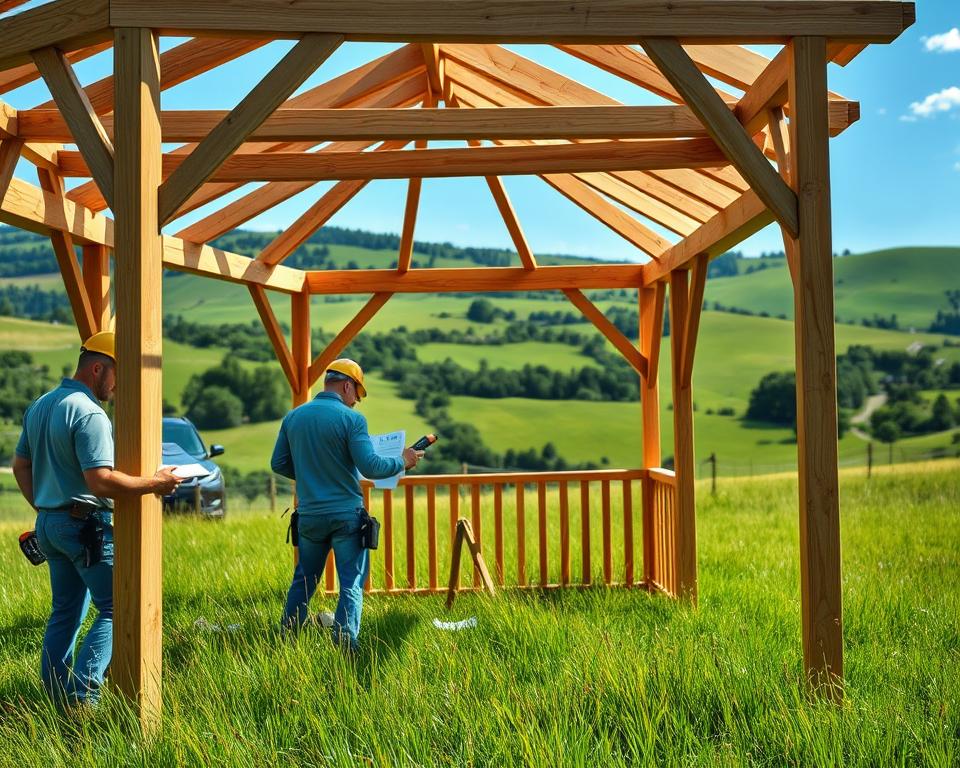
Homeowners have multiple options when considering gazebo placement. The right approach can significantly impact the functionality and longevity of your outdoor structure.
Seasonal Setup Techniques
Temporary gazebos offer flexibility for gardeners who want versatile outdoor spaces. These portable structures are ideal for:
- Summer parties and gatherings
- Occasional garden events
- Short-term shade solutions
“A well-planned seasonal setup can transform your garden without permanent commitment.” – Garden Design Expert
Year-round Installation Requirements
Permanent structures require more robust planning. Year-round gazebos need careful consideration of:
- Weather-resistant materials
- Solid foundation preparation
- Structural reinforcement
When selecting between temporary and permanent installations, consider your local climate, garden layout, and long-term aesthetic goals. Proper planning ensures your gazebo remains a beautiful and functional garden feature.
Maintenance Tips for Grass-Mounted Gazebos
Maintaining a gazebo on grass requires careful attention to both structure preservation and lawn care. Regular maintenance ensures your outdoor structure remains in top condition while protecting the underlying grass from potential damage.
Gazebo maintenance involves several key strategies to protect your investment and keep your garden looking pristine. Understanding the unique challenges of grass-mounted structures is crucial for long-term preservation.
- Inspect the gazebo foundation monthly for signs of grass compression
- Check for moisture buildup around structural supports
- Rotate the gazebo position periodically to prevent grass damage
- Clean and treat wooden surfaces annually
Lawn care becomes particularly important when a gazebo is permanently placed on grass. Grass health depends on receiving adequate sunlight and air circulation. Consider these protective measures:
| Maintenance Action | Frequency | Purpose |
|---|---|---|
| Lift gazebo base temporarily | Every 2-4 weeks | Allow grass to recover |
| Apply grass recovery treatments | Seasonally | Promote grass regrowth |
| Use ground protection mats | Continuous | Prevent direct grass compression |
Proactive maintenance helps prevent long-term damage to both your gazebo and the surrounding lawn. By implementing these strategies, you’ll ensure a beautiful, functional outdoor space that remains healthy and attractive throughout the seasons.
Weather Considerations and Seasonal Care
Protecting your gazebo from unpredictable British weather requires strategic seasonal maintenance. Weatherproofing is crucial to ensure your outdoor structure remains durable and attractive throughout the year.
Different seasons present unique challenges for gazebo protection. Winter demands special attention, with potential risks from heavy snow, frost, and persistent rainfall. Summer brings intense sunlight that can fade and weaken materials.
- Inspect waterproof sealants before winter arrives
- Remove snow accumulation to prevent structural damage
- Clean and dry the gazebo after rainy periods
- Use protective covers during extreme weather conditions
Seasonal maintenance involves regular checks and proactive care. Metal components require rust prevention treatments, while wooden structures need specialised wood preservatives to combat moisture damage.
Wind can pose significant risks to gazebo stability. Secure your structure with ground anchors or weighted base plates. These additional supports prevent potential displacement during stormy weather.
Consistent care extends your gazebo’s lifespan and maintains its aesthetic appeal.
Professional weatherproofing treatments can provide an extra layer of protection against environmental challenges. Consider investing in high-quality sealants and protective coatings specific to your gazebo’s material.
Conclusion
Installing a gazebo on your lawn requires careful consideration of multiple factors. The gazebo installation summary highlights the critical importance of ground preparation and choosing the right foundation for your outdoor structure. Your lawn placement decisions should balance aesthetic appeal with practical long-term maintenance needs.
Each garden presents unique challenges when setting up an outdoor structure. Professional outdoor structure advice suggests evaluating your specific landscape conditions, soil type, and drainage patterns before committing to a permanent gazebo location. Proper planning can help prevent potential damage to your lawn and ensure the structural integrity of your new garden feature.
Ultimately, a well-planned gazebo can transform your outdoor living space while preserving the health of your garden. By understanding ground preparation techniques, foundation options, and seasonal maintenance requirements, homeowners can create a beautiful and functional garden addition that enhances their exterior environment for years to come.
Remember that success lies in thorough research, careful installation, and ongoing attentive care. Your gazebo should not just be an attractive feature but a sustainable addition to your garden that provides enjoyment without compromising your lawn’s health and appearance.
FAQ
Can I place a gazebo directly on grass without any preparation?
While it’s possible to place a gazebo directly on grass, it’s not recommended for long-term use. You’ll need to consider ground preparation, weight distribution, and potential damage to your lawn. Short-term, lightweight gazebos might work temporarily, but permanent installations require proper foundation solutions.
What are the risks of putting a gazebo directly on grass?
Placing a gazebo directly on grass can lead to several issues, including uneven settling, grass damage, potential structural instability, and moisture-related problems. The weight of the gazebo can compress the soil, kill grass underneath, and create an unstable surface that may compromise the structure’s safety.
How can I protect my lawn when installing a gazebo?
To protect your lawn, consider using ground protection mats, temporary platforms, or creating a proper foundation with paving slabs or a concrete base. Avoid leaving the gazebo in one spot for extended periods, and rotate its position occasionally to prevent permanent grass damage.
What foundation options work best for gazebo installation?
The best foundation options include concrete bases, paving slabs, gravel beds, and wooden decking platforms. Each option provides stability, helps with drainage, and protects your lawn from direct weight and moisture impact.
How does weather affect a gazebo placed on grass?
Weather can significantly impact a gazebo on grass. Wet conditions can cause soil compression and instability, while extreme heat may dry out the ground. Rain and snow can create additional challenges with moisture and weight distribution, potentially damaging both the gazebo and the underlying grass.
Are there seasonal considerations for gazebo placement?
Yes, seasonal placement is crucial. Summer offers more stable ground conditions, while winter and spring can present challenges with moisture and soft soil. Consider using removable or portable gazebos during less favourable seasons to protect both the structure and your lawn.
How often should I move a gazebo on grass?
For the health of your lawn, it’s recommended to move the gazebo every few weeks if it’s a semi-permanent installation. This prevents grass from dying, allows sunlight and air circulation, and helps prevent soil compaction in a single area.
What type of gazebo works best on grass?
Lightweight, portable gazebos work best on grass for short-term use. Pop-up models or smaller, temporary structures are less likely to cause significant lawn damage. For permanent installations, choose gazebos with recommended foundation options that provide stability and protect the underlying grass.

