Is It Cheaper to Build or Buy a Shed in the UK? | Cost Guide
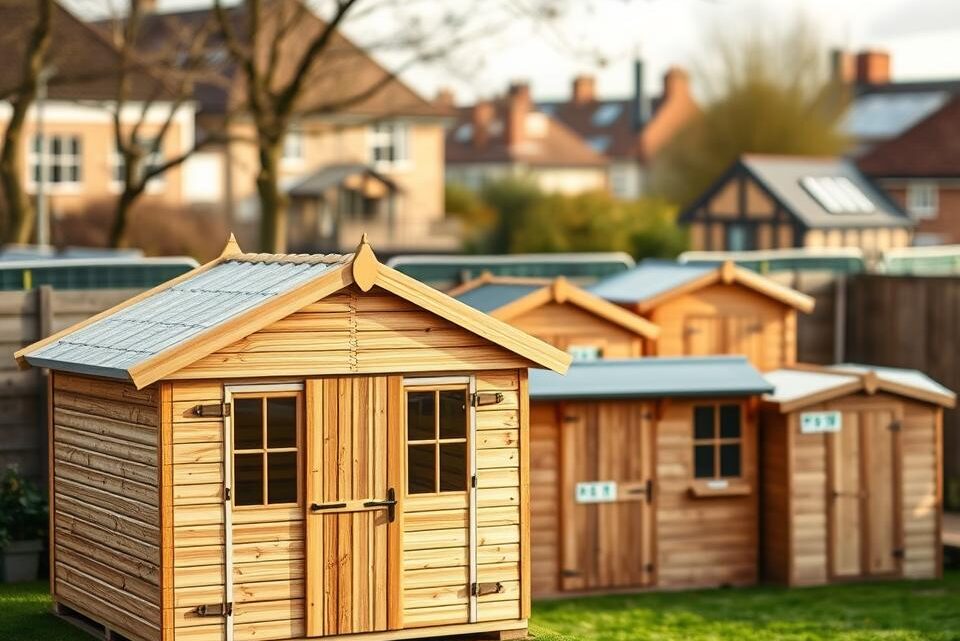
Garden storage solutions are a crucial consideration for UK homeowners seeking practical space management. Understanding shed costs UK can help you make an informed decision about whether to build or buy your garden structure. The build vs buy shed debate involves multiple factors that impact overall expenses and value.
Homeowners across Britain face the challenge of finding cost-effective storage options that suit their garden’s unique requirements. Factors like material prices, labour rates, and personal DIY skills play significant roles in determining the most economical approach to acquiring a garden shed.
This comprehensive guide will explore the intricacies of shed construction and purchasing, providing clear insights into the financial considerations UK residents must evaluate when planning their garden storage solution.
Inhaltsverzeichnis
Key Takeaways
- Shed costs in the UK vary widely based on materials and construction method
- DIY shed building can potentially reduce overall expenses
- Professional installation offers convenience but higher upfront costs
- Material selection significantly impacts total shed investment
- Regional labour rates influence construction expenses
- Planning permission might add unexpected costs to shed projects
- Long-term maintenance should be considered in initial budgeting
Understanding Shed Costs in the British Market
Navigating the UK shed market requires a comprehensive understanding of pricing dynamics, material costs, and regional variations. Homeowners and garden enthusiasts seeking to invest in a quality shed need to consider multiple factors that influence overall expenses.
The UK shed market presents diverse options catering to different budgets and requirements. Shed prices fluctuate based on several critical elements, including materials, size, and construction quality.
Current Market Prices for Ready-Made Sheds
Ready-made shed prices in the UK typically range across different categories:
- Budget wooden sheds: £300 – £800
- Mid-range metal sheds: £500 – £1,200
- Premium plastic sheds: £700 – £1,500
Material Cost Variations in the UK
Shed materials cost significantly impact overall pricing. Different materials offer unique advantages:
| Material | Average Cost per m² | Durability |
|---|---|---|
| Wooden Sheds | £45 – £75 | 15-20 years |
| Metal Sheds | £30 – £60 | 10-15 years |
| Plastic Sheds | £35 – £65 | 10-20 years |
Labour Rates Across Different Regions
Regional labour rates for shed installation vary significantly across the United Kingdom:
- London: £60 – £100 per hour
- South East: £50 – £85 per hour
- Northern England: £40 – £70 per hour
- Scotland: £45 – £75 per hour
Smart consumers research local market prices and compare multiple quotes to secure the best value for their shed investment.
Essential Factors Affecting Shed Construction Costs
Understanding the nuanced shed construction factors is crucial for anyone planning to build a shed in the UK. The total expense of your project depends on multiple interconnected elements that can significantly impact your budget.
Size plays a pivotal role in UK shed building costs. Smaller sheds naturally require fewer materials and less labour, while larger structures demand more resources. Typical garden shed dimensions range from:
- 2m x 2m (budget-friendly option)
- 3m x 3m (standard garden storage)
- 4m x 4m (spacious workshop alternative)
Design complexity further influences construction expenses. Intricate architectural designs with multiple windows, custom roofing, or specialised features will increase overall costs. Basic rectangular designs remain most economical for budget-conscious homeowners.
Material selection represents another critical factor in shed construction factors. Timber remains the most popular choice in the UK, with prices varying based on wood quality:
- Softwood: Most affordable option
- Pressure-treated timber: Mid-range pricing
- Hardwood: Premium cost with superior durability
Additional considerations like foundation requirements, electrical wiring, and seasonal material price fluctuations can also impact UK shed building costs. Careful planning and research help manage these potential expense variables.
Pro tip: Always obtain multiple quotes and consider local builders who understand regional pricing dynamics.
Ready-Made Shed Options and Price Ranges
Selecting the right UK ready-made shed requires understanding the diverse market offerings. From compact garden storage solutions to expansive workshop spaces, homeowners can find a shed that perfectly matches their needs and budget.
Navigating the UK shed market involves exploring various price points and quality levels. Different manufacturers provide unique solutions catering to diverse requirements.
Budget-Friendly Shed Models
Budget sheds offer practical storage solutions for cost-conscious consumers. These models typically range from £300 to £800, providing essential functionality without breaking the bank.
- Wooden overlap apex shed (6×4 feet)
- Metal garden storage unit
- Plastic resin construct shed
Premium Shed Solutions
Premium sheds represent top-tier craftsmanship and durability. These sophisticated structures cost between £1,500 and £5,000, featuring superior materials and advanced design elements.
| Shed Type | Price Range | Key Features |
|---|---|---|
| Luxury Wooden Workshop | £2,500 – £4,500 | Insulated, double-glazed windows |
| Contemporary Garden Studio | £3,000 – £5,000 | Electrical installations, modern design |
Installation Service Costs
Shed installation costs vary depending on complexity and location. Professional installation typically ranges from £200 to £800, ensuring proper setup and long-term stability.
- Basic installation: £200 – £400
- Complex site preparation: £500 – £800
- Additional groundwork: Prices vary
Investing in professional installation guarantees your shed’s optimal performance and longevity.
Is It Cheaper to Build or Buy a Shed in the UK?
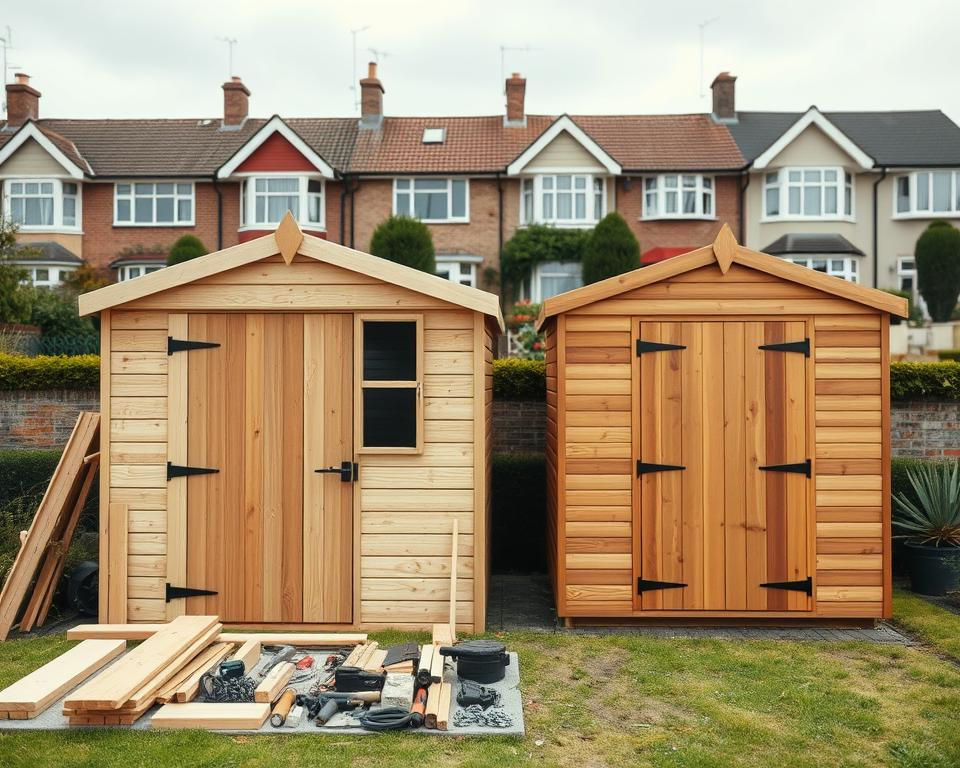
The cost comparison between building and buying a shed in the UK depends on several critical factors. Homeowners must carefully evaluate their specific needs, budget, and available resources before making a decision.
When considering the cost comparison build vs buy shed UK, key aspects emerge:
- Pre-built sheds typically range from £300 to £3,000
- DIY shed construction costs vary between £500 and £2,500
- Material expenses play a significant role in overall pricing
Budget-conscious individuals might find DIY construction more economical. The primary advantages include:
- Potential cost savings on labour
- Custom design flexibility
- Personal satisfaction of building
Professional shed purchases offer distinct benefits. Ready-made options provide:
- Quick installation
- Guaranteed quality
- Manufacturer warranties
Regional variations in material and labour costs significantly impact the total expense. Urban areas like London might incur higher construction expenses compared to rural regions.
Smart homeowners assess individual circumstances before deciding between building or buying a shed.
Ultimately, the most cost-effective approach depends on personal skills, time availability, and specific project requirements.
DIY Shed Building: Materials and Tools Required
Embarking on a DIY shed project requires careful planning and preparation. Understanding the essential DIY shed materials UK requires and the necessary shed building tools can transform your garden construction experience from daunting to achievable.
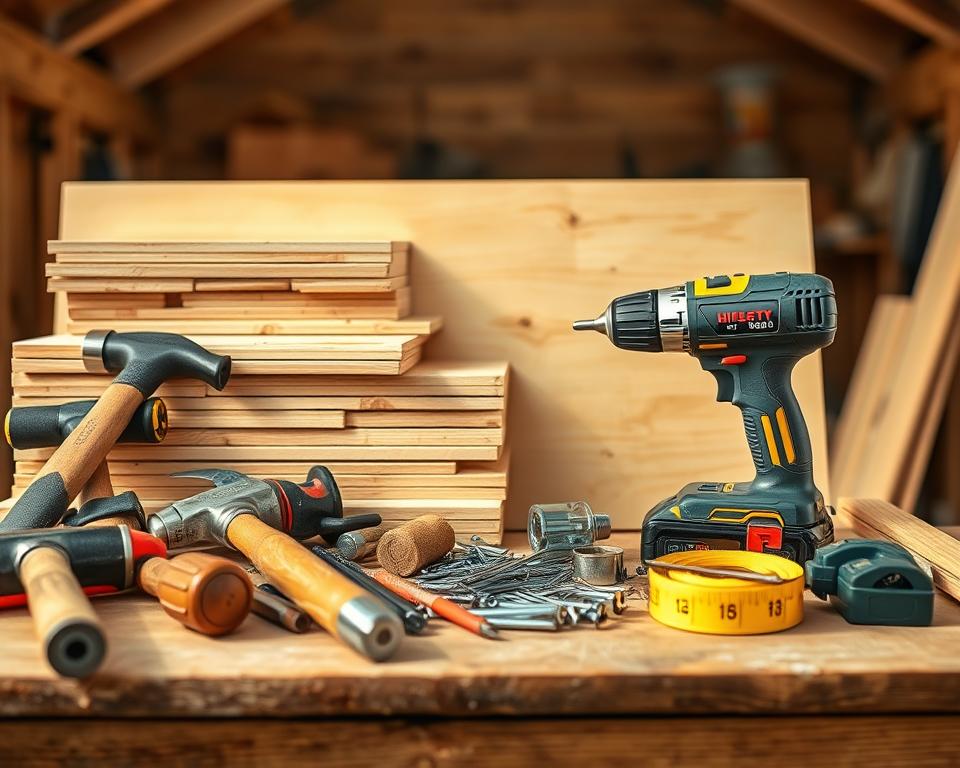
Crafting your own garden shed involves strategic selection of materials and tools. The right approach can help you manage hidden shed costs and create a functional outdoor storage solution.
Essential Building Materials Checklist
- Pressure-treated timber for base and framing
- Exterior-grade plywood for walls and roof
- Roofing felt and waterproof membrane
- Galvanised nails and screws
- Wood preservative treatment
- Weatherproof sealant
Required Tools and Equipment
- Power drill and drill bit set
- Circular saw
- Spirit level
- Measuring tape
- Hammer
- Safety equipment (goggles, gloves)
Hidden Costs to Consider
While DIY shed building can save money, unexpected expenses can arise. Budget for potential additional costs such as:
- Tool rental fees
- Waste removal
- Additional materials for mistakes
- Protective treatments
- Foundation preparation
Pro tip: Always purchase 10-15% extra materials to account for potential errors or miscalculations.
Planning Permission and Building Regulations for UK Sheds
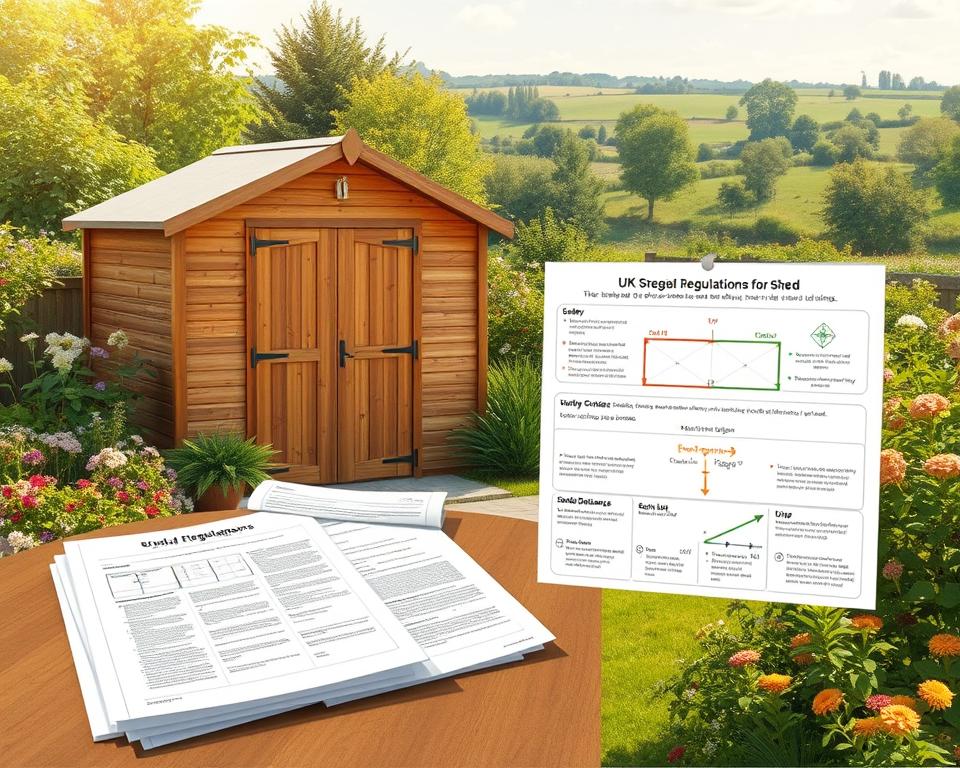
Navigating UK shed regulations can be tricky for homeowners. Understanding garden building permission is crucial before starting your shed project. Different rules apply depending on the size, location, and intended use of your garden building.
Most garden sheds fall under permitted development rights, which means you typically won’t need planning permission. But several key conditions must be met:
- The shed must be single-storey
- Total floor area cannot exceed 15 square metres
- Maximum height should be 2.5 metres
- Located at least 2 metres from any property boundary
UK shed regulations become more complex in certain scenarios. Properties in conservation areas, listed buildings, or areas with specific planning restrictions require additional scrutiny. Homeowners should always check local council guidelines before construction.
Garden building permission becomes mandatory if your shed:
- Covers more than 50% of your garden space
- Will be used as living accommodation
- Is located in front of your house’s principal elevation
- Exceeds permitted height restrictions
Professional advice from local planning authorities can help you navigate these regulations effectively and avoid potential legal complications.
Time Investment: Building vs. Buying Comparison
When considering a shed project, understanding the time investment is crucial for homeowners across the UK. The choice between building your own shed or opting for professional shed installation UK depends on several key factors that impact your overall project timeline.
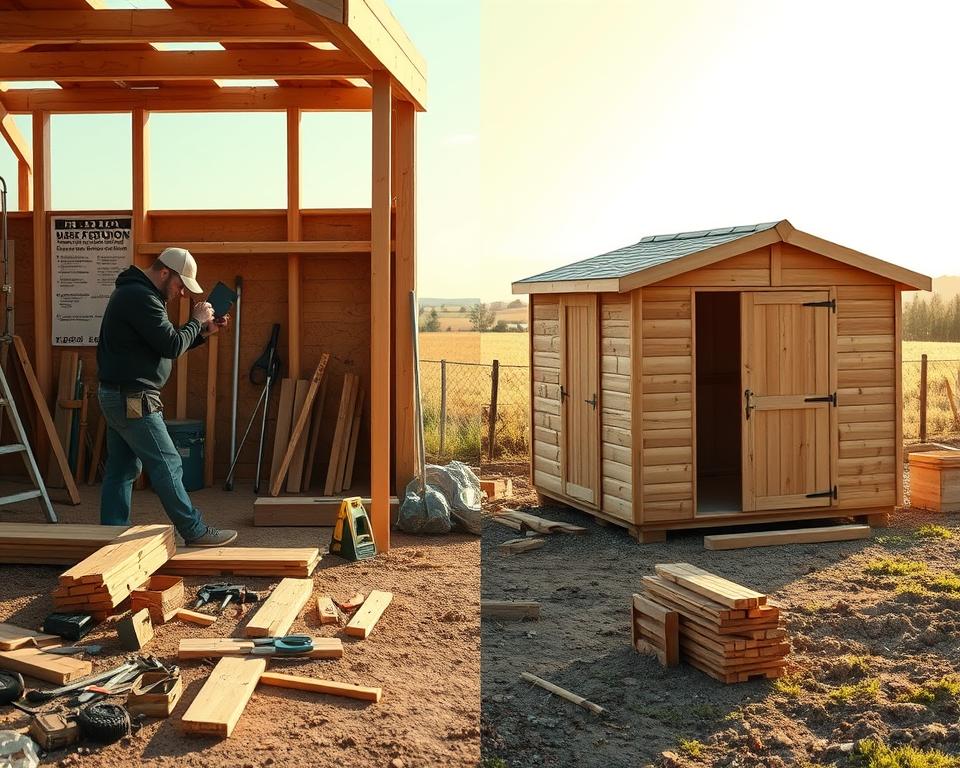
DIY shed building time can vary significantly based on your skills and available resources. Typically, a shed building time for an experienced DIY enthusiast ranges from two to five weekends.
DIY Construction Timeline Breakdown
- Planning and design: 1-2 days
- Site preparation: 1 day
- Foundation work: 1-2 days
- Framing and walls: 2-3 days
- Roofing and finishing: 2-3 days
Professional Installation Options
Professional shed installation UK offers a significantly faster alternative. Experienced contractors can complete a standard shed installation within 1-2 days, eliminating the need for personal time investment and potential construction challenges.
Professional installation ensures precision and saves valuable personal time.
Your decision should balance personal skills, available time, and budget constraints. While DIY might save money, professional services provide efficiency and guaranteed quality.
Long-Term Value and Maintenance Considerations
Investing in a shed requires careful consideration of long-term value and shed maintenance in the UK. Property owners must understand that a well-maintained shed can significantly enhance outdoor storage solutions and potentially increase property value.
Effective shed maintenance UK strategies involve several key approaches:
- Regular annual inspections for structural integrity
- Treating wooden surfaces with weatherproof sealants
- Checking and replacing damaged roofing materials
- Ensuring proper drainage around the shed’s foundation
The long-term shed value depends on multiple factors, including material quality, construction method, and consistent upkeep. Wooden sheds typically require more maintenance compared to metal or plastic alternatives. Homeowners should budget for periodic repairs and protective treatments to extend their shed’s lifespan.
Cost-effective maintenance can help preserve your shed’s functionality and aesthetic appeal. Proactive care prevents expensive replacements and maintains the structure’s overall value. Consider investing in high-quality initial materials and implementing a structured maintenance routine.
A well-maintained shed is not just a storage space, but a valuable asset to your property.
By understanding and implementing comprehensive maintenance practices, UK homeowners can maximise their shed’s durability and long-term financial worth.
Popular Shed Styles and Their Cost Implications
Selecting the right UK garden shed styles can significantly impact your outdoor space and budget. Garden sheds have evolved from simple storage solutions to versatile structures that complement modern landscaping designs.
The UK market offers diverse shed options to suit different preferences and budgets. Understanding these variations helps homeowners make informed decisions about their garden investments.
Traditional Garden Sheds
Classic wooden sheds remain a staple in British gardens. These traditional designs typically feature:
- Apex roof configurations
- Timber panel construction
- Compact 6×4 or 8×6 footprints
- Prices ranging from £300-£800
Modern Design Options
Contemporary modern shed designs are transforming garden aesthetics. These innovative structures incorporate:
- Sleek metal and composite materials
- Minimalist architectural lines
- Enhanced weather resistance
- Prices between £800-£2,500
Custom Solutions
For those seeking unique garden spaces, custom sheds offer personalised solutions. Bespoke designs allow homeowners to create:
- Tailored dimensions
- Specific architectural styles
- Integrated functional features
- Prices from £1,500-£5,000
Choosing the right shed style requires balancing aesthetic preferences with practical considerations and budget constraints.
Conclusion
Navigating the UK shed cost landscape requires careful consideration of multiple factors. The build or buy shed decision ultimately depends on your personal circumstances, budget, and DIY skills. Our comprehensive analysis reveals that while purchasing a ready-made shed offers convenience, constructing your own can provide significant cost savings.
When evaluating your UK shed cost summary, consider key aspects such as material prices, labour rates, and your available time. Homeowners with basic carpentry skills might find DIY shed building more economical, whereas those with limited time or expertise may prefer professional installation. The market offers diverse options to suit various budgets and requirements.
Each approach presents unique advantages. Pre-built sheds provide immediate solutions with guaranteed quality, while custom-built structures allow for personalisation and potential cost reduction. Your specific needs—whether storage, workspace, or garden aesthetic—will ultimately guide the most suitable choice for your property.
Ultimately, the best shed solution balances practicality, affordability, and personal preference. By carefully assessing your individual requirements and local market conditions, you can make an informed decision that meets both your functional needs and financial constraints in the UK shed market.
FAQ
Do I need planning permission to build a shed in my garden?
In many cases, you won’t need planning permission for a shed, but there are specific conditions. Generally, sheds under 2.5 metres in height and covering less than 50% of your garden area are permitted. However, factors like proximity to property boundaries, total garden coverage, and your property’s location (such as conservation areas) can affect this. Always check with your local planning authority for precise guidelines.
What are the most cost-effective materials for building a shed?
Timber remains the most affordable and versatile material for shed construction in the UK. Pressure-treated softwood offers a good balance between cost and durability. Overlap timber and OSB board are particularly budget-friendly options. Metal and plastic sheds can be competitively priced for smaller structures, but timber provides more customisation possibilities.
How long does a typical shed last in British weather conditions?
With proper maintenance, a well-constructed shed can last 10-20 years in the UK’s challenging climate. Wooden sheds typically last 10-15 years if regularly treated and protected from moisture. Metal sheds can last up to 20 years, while high-quality plastic sheds might reach 15-20 years. Regular maintenance, including annual treatments and repairs, significantly extends a shed’s lifespan.
Can I install electricity in my garden shed?
Yes, but you’ll need to follow strict electrical safety regulations. It’s recommended to hire a qualified electrician registered with a competent person scheme (such as NICEIC or ELECSA). They can ensure proper installation, earth bonding, and compliance with Part P of the Building Regulations. DIY electrical work is not advised due to safety and legal considerations.
What are the typical hidden costs when building a shed?
Hidden costs can include foundation preparation, which might require concrete bases or hardcore underlayment. Additional expenses often arise from necessary tools, extra materials for mistakes, delivery charges, and potential waste removal. Don’t forget potential costs for weatherproofing treatments, additional hardware like locks, and any required permits or professional consultations.
How do I protect my shed from damp and rot in the UK’s wet climate?
Protecting your shed requires a multi-step approach. Use pressure-treated timber as a base, ensure proper ventilation, apply annual wood preservative treatments, and consider a raised foundation to prevent ground moisture. Install felt or rubber roofing with good overlap, and regularly check and replace any damaged seals or boards. Maintain a gap between stored items and shed walls to prevent condensation.
Is it cheaper to build or buy a pre-fabricated shed?
The answer depends on your specific circumstances. Pre-fabricated sheds are often cheaper and quicker to install, with prices ranging from £300 to £3,000. DIY construction can be more cost-effective for custom designs but requires significant time, skill, and potentially additional tools. Consider your budget, time, and technical skills when making this decision.
What size shed should I choose for my garden?
Shed size depends on your intended use and available garden space. For basic garden storage, a 6×4 foot shed works well. Gardening enthusiasts might prefer 8×6 foot models, while workshops or larger storage needs might require 10×8 foot or larger structures. Always measure your garden space, consider local planning restrictions, and leave room for access and maintenance.